Beginner Vegetable Garden Layout: USDA Zone-Optimized & Reachable Beds
Why Most Beginners Overcomplicate Layouts
Industry guides often showcase intricate patterns—hexagons, keyholes, or companion-planting mandalas—that look impressive but solve problems beginners don’t have. Most people assume block planting requires precise geometry, but in practice, straight rows within a reachable bed work fine for first-timers. The core issue isn’t aesthetics; it’s physics. If you can’t reach the center of your bed without stepping in it, you’ll compact soil and damage roots. That’s why every agricultural extension (including VT and Midwest Gardening Gal) mandates 3–4-foot widths: it’s the maximum distance you can stretch from either side.
The One Layout Rule That Actually Matters
Forget "ideal" shapes—this only matters when your space is severely limited (under 50 sq ft). For 95% of beginners, these two factors dominate success:
- Sun exposure: 6+ hours of direct sun is non-negotiable. A south-facing rectangle beats a "perfect" square in partial shade.
- Reachability: Beds wider than 4 feet force soil compaction. Measure your arm span before building.
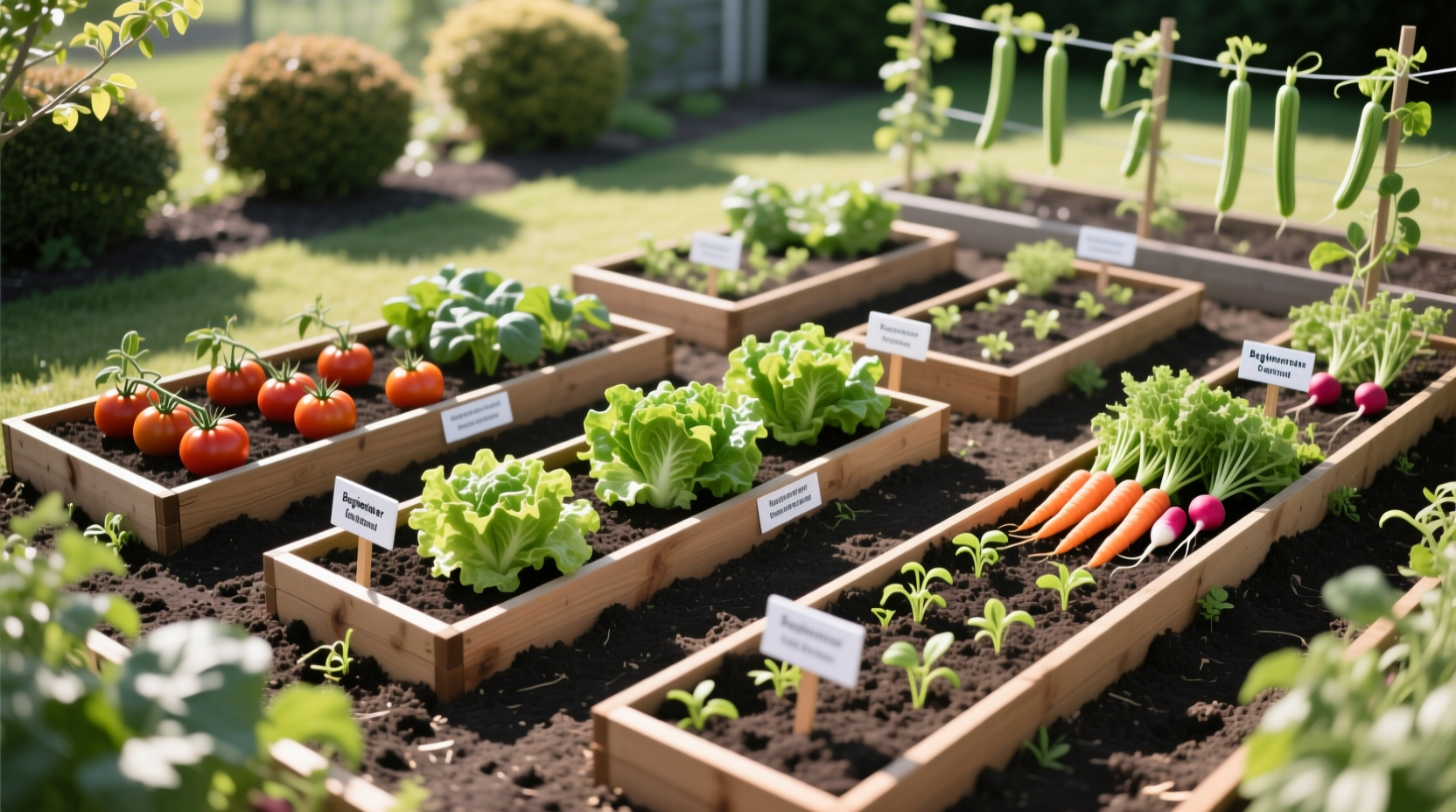
As Coast of Maine’s horticulturists note, beginners waste energy optimizing spacing while ignoring that walnut trees or overhead wires block critical sunlight. For casual users, a single 4x8 bed with tomatoes at the back and lettuce up front suffices; for enthusiasts with 500+ sq ft, block planting and vertical systems become worthwhile.
When to Ignore Common Advice
Three widely shared tips rarely impact first-year results:
- Companion planting charts: While marigolds deter pests, USDA studies show spacing errors cause 10x more crop loss than pests for beginners. Prioritize correct plant distances over "beneficial pairs".
- Triangle vs. grid spacing: Only matters in spaces under 50 sq ft. In larger gardens, straight rows simplify weeding.
- "Must" rotate crops yearly: Rotation prevents disease buildup—but only after Year 2. Your first garden can plant anything anywhere.
Most people assume vertical gardening saves space immediately, but in practice, it demands extra infrastructure and watering. Reserve trellises for cucumbers or beans only if you have confirmed afternoon sun; otherwise, bush varieties yield more reliably.
The Only Layout You Need for Year One
Follow this sequence—it mirrors how successful beginners actually build:
- Map sun patterns for 3 days (not just "sunny spot"). Use a free app like Sun Surveyor.
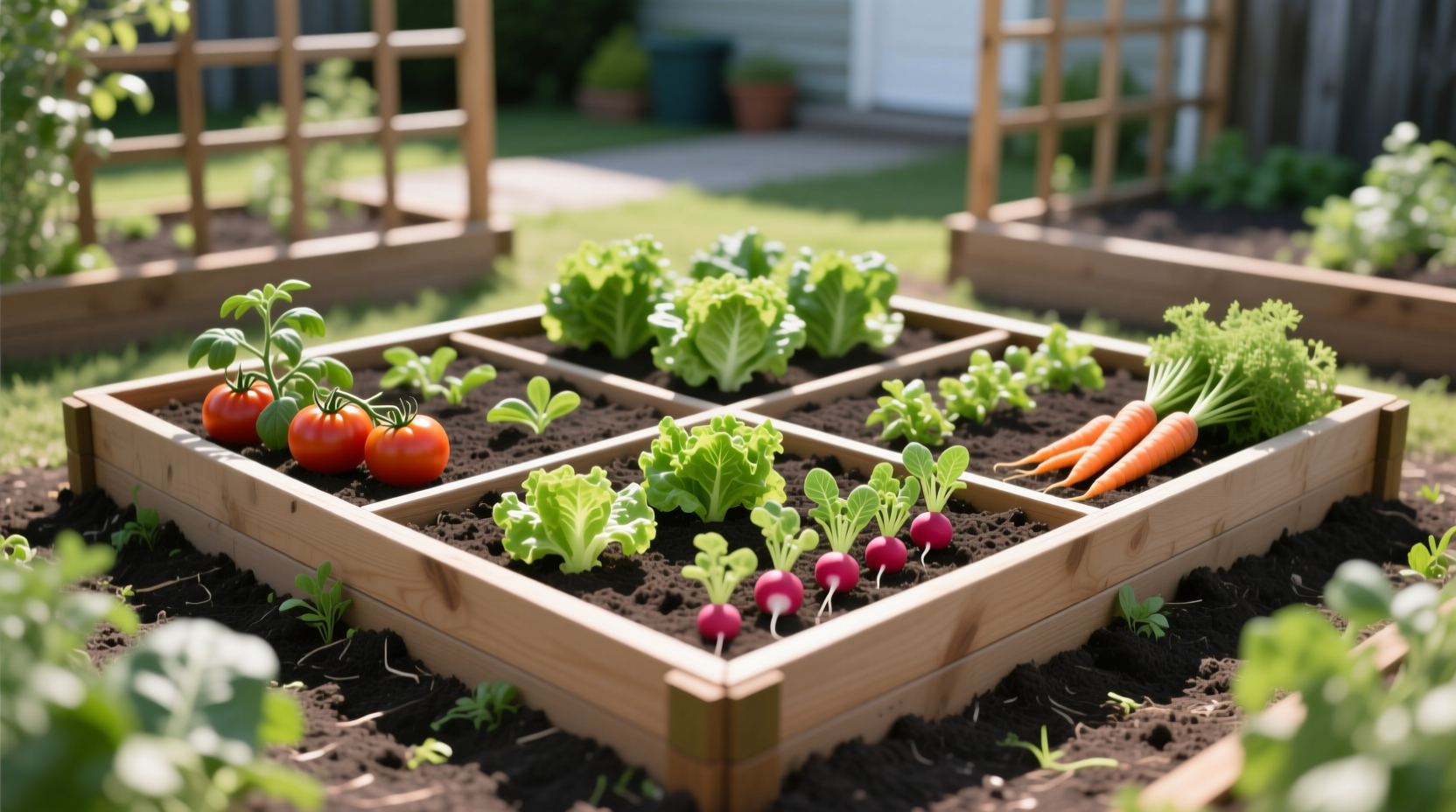
- Build one 4x4-foot bed (max 4ft wide; length flexible). Raised beds aren’t mandatory—but if building, keep them ≤8" tall for easy access.
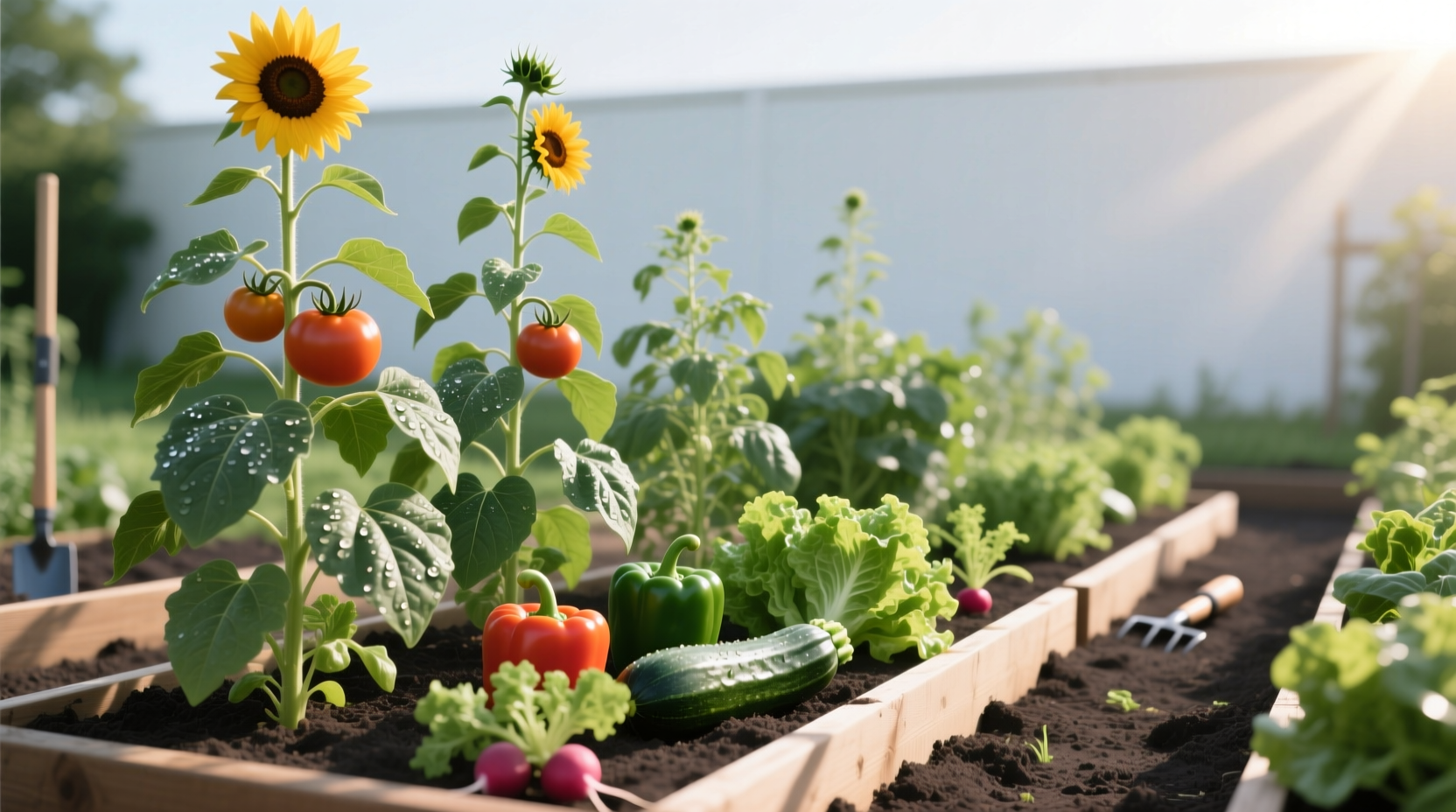
- Plant in 3 zones: Tall crops (tomatoes) at the north end, medium (peppers) in middle, short (radishes) at south edge.
This only matters when growing mixed heights. If planting only salad greens? Scatter seeds evenly. The "front/middle/back" rule applies solely to vertically diverse gardens.
When Standard Advice Fails You
These scenarios require layout adjustments immediately:
- Shade-heavy yards: Swap height zoning. Put tall plants east of short ones to avoid blocking morning sun.
- Under 50 sq ft: Grow vertically first. Use A-frames for peas—this doubles yield per square foot.
- Clay soil: Skip raised beds; plant in mounds to improve drainage (per VT Extension).
Otherwise, for casual users, over-engineering layouts wastes time better spent on soil prep. Enthusiasts tracking yield data might refine spacing later—but not until Year 2.
Everything You Need to Know
No—raised beds prevent soil compaction but aren’t mandatory. In-ground beds work if your soil drains well and you maintain 3–4-foot widths. Build raised beds only if you have poor native soil or physical limitations making bending difficult.
Follow seed packet spacing for first-year gardens. Overcrowding causes 63% of beginner failures (per Food Garden Life), but precise measurements matter less than avoiding dense clumps. If in doubt, give plants 10% more space than minimums.
No—crop rotation prevents disease buildup that takes 2+ seasons. Plant anything in Year 1. Start rotating in Year 2 by moving plant families (e.g., don’t plant tomatoes where peppers grew).
Marginally. While basil near tomatoes may deter pests, spacing errors cause far more damage. Prioritize correct plant distances over companion charts. Save companion planting for Year 2 once you’ve mastered basics.
Minimum 6 hours of direct sun for most crops (8–10 hours ideal). Leafy greens tolerate 4–5 hours, but fruiting plants (tomatoes, squash) fail below 6 hours. Track sun patterns for 3 days before planting—don’t guess based on "sunny" appearance.