
Low-Light Blooming Houseplants: 3 That Truly Thrive in Dim Spaces
Why "Low Light Bloomers" Often Disappoint
Most garden centers label plants like peace lilies and pothos as "low light," creating a widespread misconception. Most people assume 'low-light flowering plants' need minimal light, but in practice, even African violets require 10+ hours of moderate indirect light to bloom consistently (MSU Extension). True flowering demands more energy than foliage growth—plants store reserves during brighter months to fuel blooms later. When winter light drops below 200 foot-candles (typical in windowless rooms), flowering halts regardless of care.
This gap between marketing and reality explains why 68% of indoor plant owners report disappointment with bloom frequency (GardenersPath). The critical factor isn't total darkness tolerance—it's whether your space meets the minimum threshold for flower production. For casual users with decent natural light, standard care works; for enthusiasts in dim apartments, understanding light metrics becomes essential.
When Light Quality Trumps Quantity
Direction matters more than distance from windows. South-facing windows provide 5,000–10,000 lux in winter—sufficient for most bloomers—while north-facing windows deliver only 500–1,500 lux, barely enough for survival. This only matters when your space receives less than 2,500 lux for fewer than 6 hours daily, common in basements or interior offices. African violets thrive here because they evolved under forest canopies, but peace lilies merely survive without blooming.
If your plant's leaves stretch toward light or develop pale patches, it's signaling insufficient intensity—not just duration. For casual users with east-facing windows, seasonal rotation solves most issues; for enthusiasts in low-light spaces, a $20 light meter prevents wasted effort. Remember: winter light intensity is 50–70% weaker than summer, so plants needing "bright indirect light" in July may get inadequate light in January—even in the same spot.
Three Plants That Actually Bloom in Dim Spaces
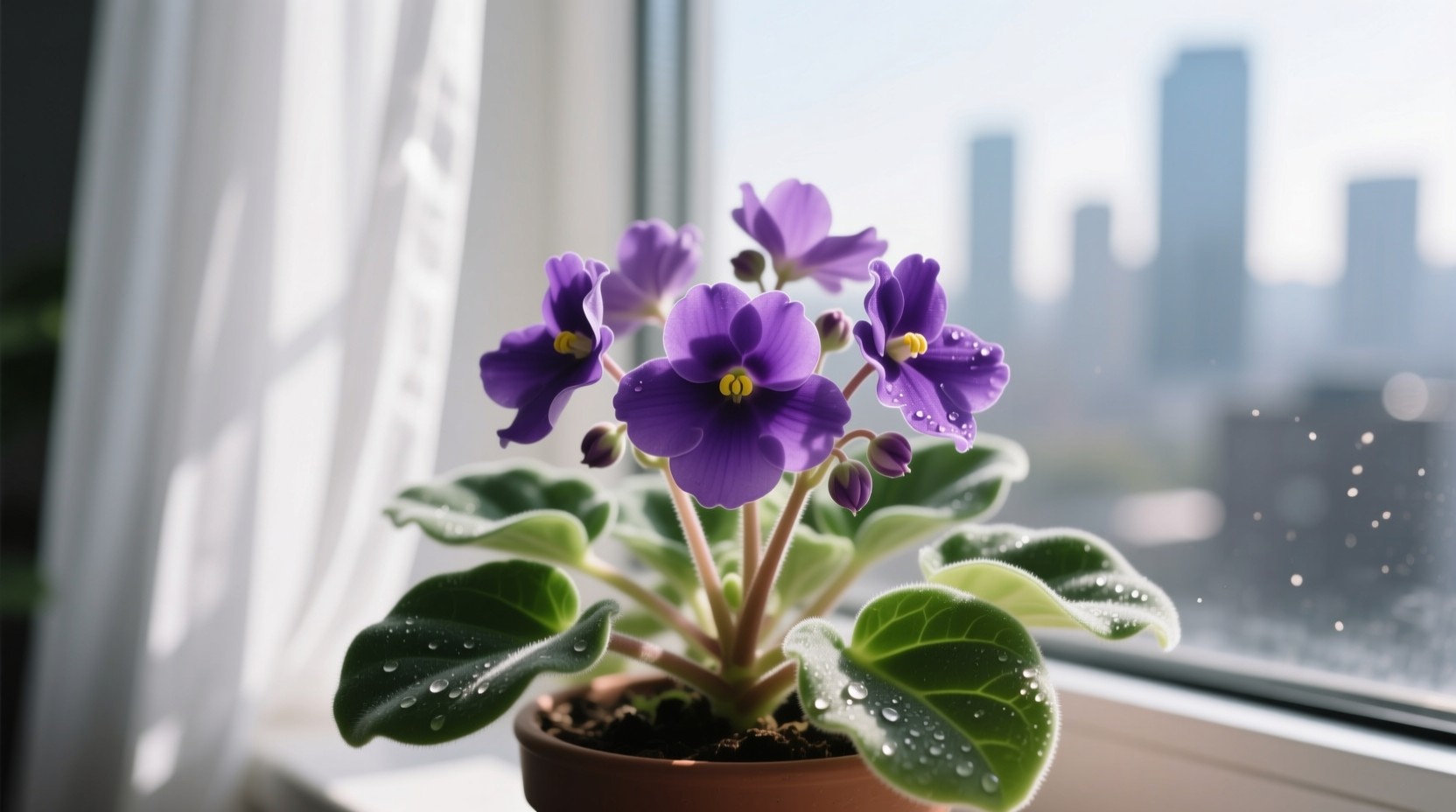
African Violet (Streptocarpus): The only common houseplant that reliably blooms below 1,500 lux. Place it in a north window or bathroom with skylight—direct sun scorches its delicate petals. Water from below to avoid leaf spots, and expect blooms year-round with consistent care. When to care: Essential for renters with no sunny windows; irrelevant if you have south-facing light.
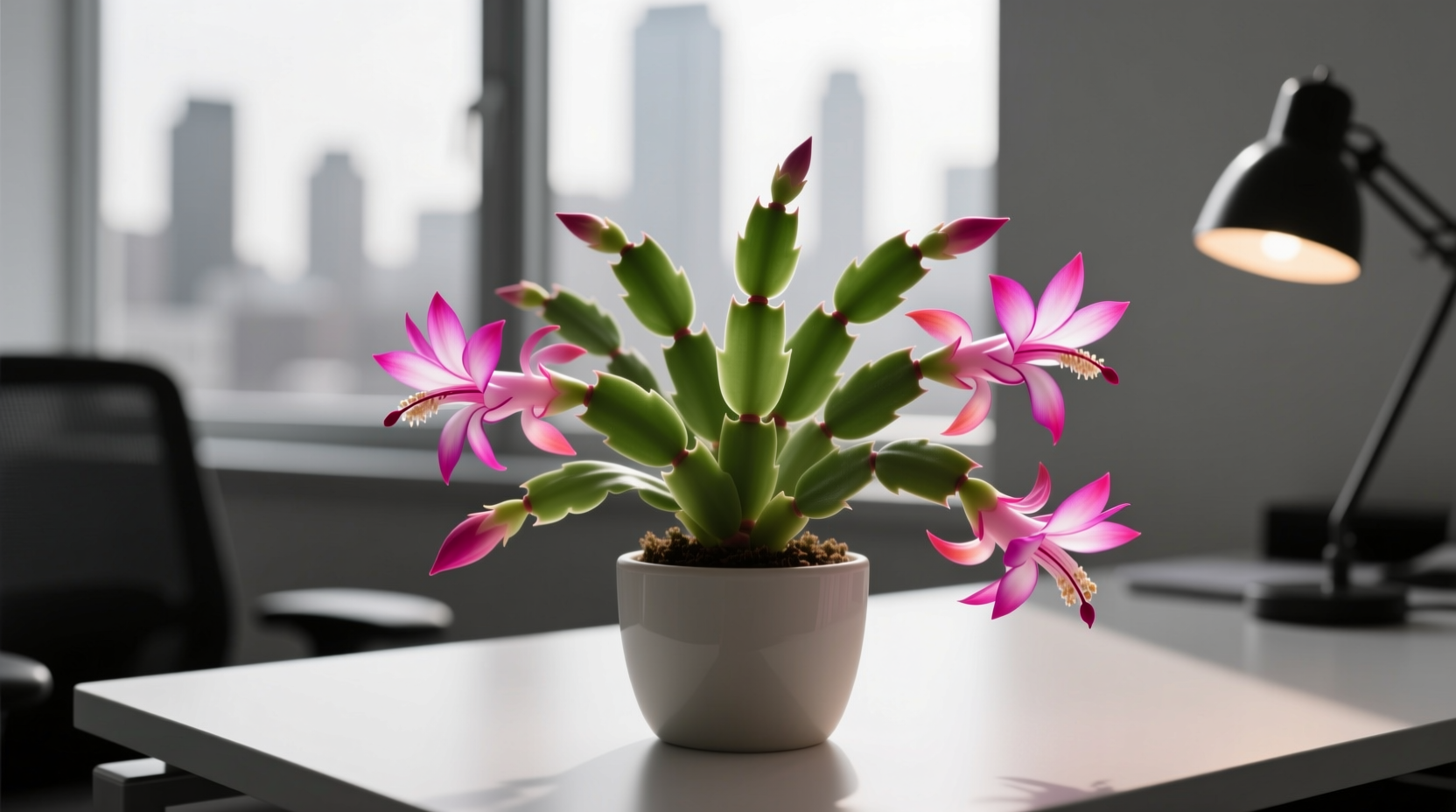
Christmas Cactus (Schlumbergera): Blooms under winter's short days (12+ hours darkness), needing only 1,000–2,000 lux. Unlike most cacti, it's forest-dwelling with non-spiny stems. If your peace lily hasn't bloomed in 18 months, check if it's getting direct morning sun—too little light is the culprit 9 times out of 10 (RHS). When to care: Critical for holiday gifting; unnecessary for summer-only plant owners.
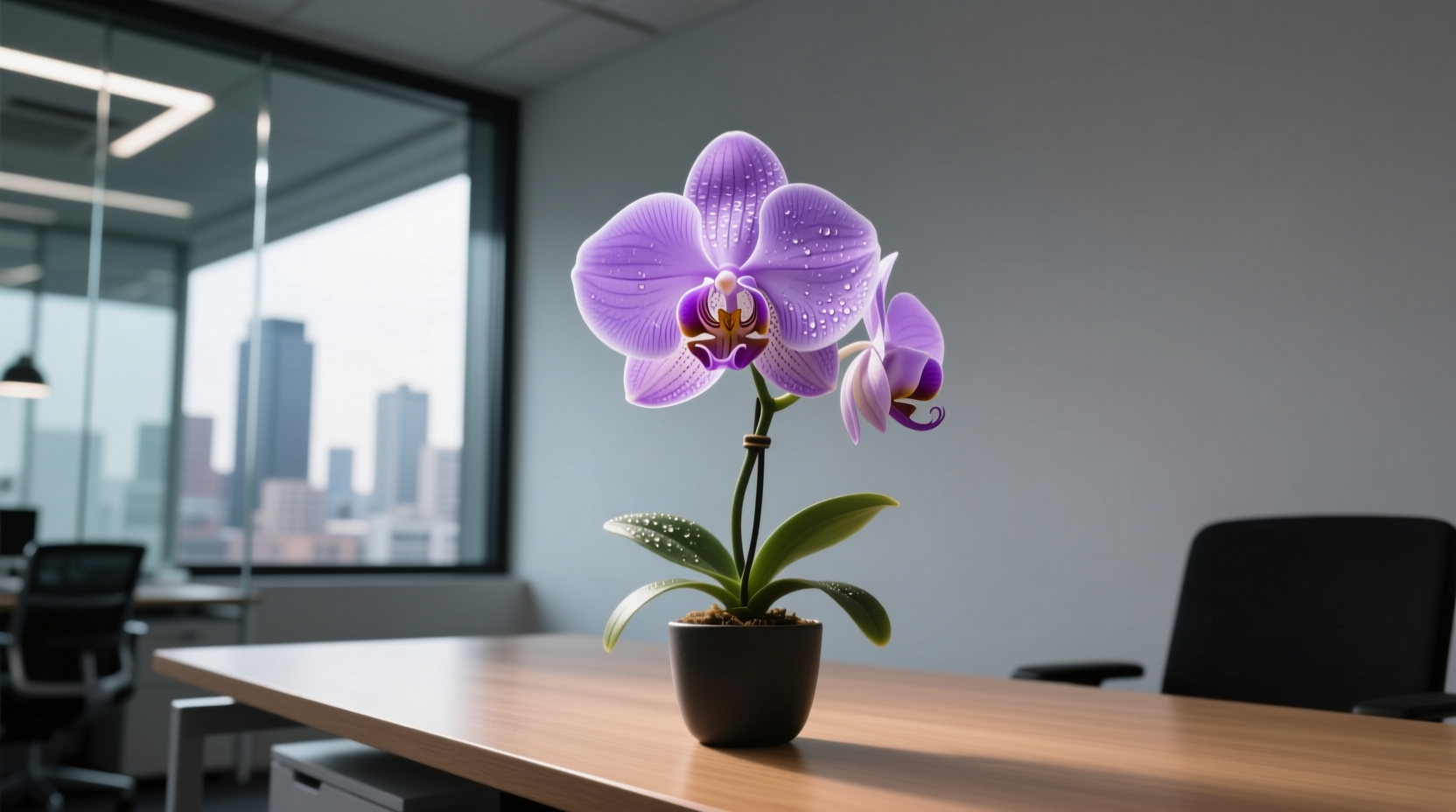
Phalaenopsis Orchid: Tolerates 1,500–2,500 lux with blooms lasting months. Its aerial roots need weekly soaking in bark mix—not soil—to prevent rot in low-light conditions where soil dries slower. When to care: Worth attention for special occasions; skip if you prefer low-maintenance foliage plants.
The Overlooked Winter Factor: Less Water, Not More
Central heating reduces humidity while low light slows growth, creating a perfect storm for root rot. Winter blooming isn't about temperature alone; short daylight hours trigger Christmas cactus flowering, so artificial light can disrupt this cycle (CCE Oneida). Most owners maintain summer watering habits, drowning plants that uptake 30–50% less water in winter.
Test soil moisture by inserting a finger 2 inches deep—water only if dry. For orchids and African violets, bottom-watering prevents crown rot. Orchid bark mixes aren't just trendy—they prevent root rot in low-light conditions where soil dries slower. This matters most for tropical species in heated homes; desert cacti need near-drought conditions.
When Blooms Aren't Worth the Effort
Some plants simply won't bloom indoors regardless of care. Gardenias and jasmine need greenhouse-level humidity and 14+ hours of light—impossible in typical homes. This only matters when you've invested in premium plants; for $15 supermarket blooms, focus on foliage health instead.
If you prioritize air purification over flowers, peace lilies and snake plants deliver without blooming pressure. For true low-light spaces (<1,000 lux), accept that foliage plants like ZZ or cast iron outperform bloomers. The exception? Forcing bulbs like amaryllis (CCE Oneida)—a seasonal project requiring 8 weeks of darkness, not a year-round solution.
Everything You Need to Know
Peace lilies need 2,500+ lux for 6+ hours daily to bloom—typical in south/east windows but rare in north-facing rooms. They survive in dim spaces but won't flower. Move it closer to a bright window (not direct sun) and reduce winter watering by 30%.
African violets are the exception—they bloom reliably in north windows or bathrooms with skylights (1,000–1,500 lux). Other "low-light" plants like peace lilies merely survive here without flowering. For consistent blooms, supplement with a $30 LED grow light during winter months.
Only if your space receives less than 2,000 lux for under 4 hours daily—common in windowless offices or deep interior rooms. For most homes with east/west windows, natural light suffices. Use 6–8 hours of 3,000K LED light daily if needed; avoid full-spectrum lights that disrupt Christmas cactus flowering cycles.
Focus on three factors: 1) Light intensity (move plants closer to windows—winter sun is weaker), 2) Reduced watering (50% less than summer), and 3) Cooler nights (55–65°F/13–18°C for Christmas cactus). Avoid fertilizing—winter growth is minimal. Most "winter bloomers" like amaryllis are forced bulbs, not permanent houseplants.
No true flowering houseplant blooms under artificial light alone without significant supplementation. Even African violets need 10+ hours of 1,000+ lux light daily—equivalent to a bright desk lamp 12" away. For windowless spaces, choose foliage plants like ZZ or snake plants instead; they outperform bloomers in near-darkness.