Bottom Watering: When It Really Matters for Plants
Why Everyone's Talking About Bottom Watering (And What They're Missing)
Plant forums and social media overflow with claims that bottom watering "saves" overwatered plants. The reality? Bottom watering doesn't prevent overwatering—it redistributes moisture. When you place pots in water, soil absorbs moisture upward through capillary action until saturation. This keeps the top 1-2 inches drier, reducing surface pests like fungus gnats. But crucially: if your pot lacks drainage holes, bottom watering will still cause root rot. The real overwatering safeguard is drainage—not the water's entry point.
Where Bottom Watering Actually Helps (And Where It Backfires)
Bottom watering shines in three specific scenarios:
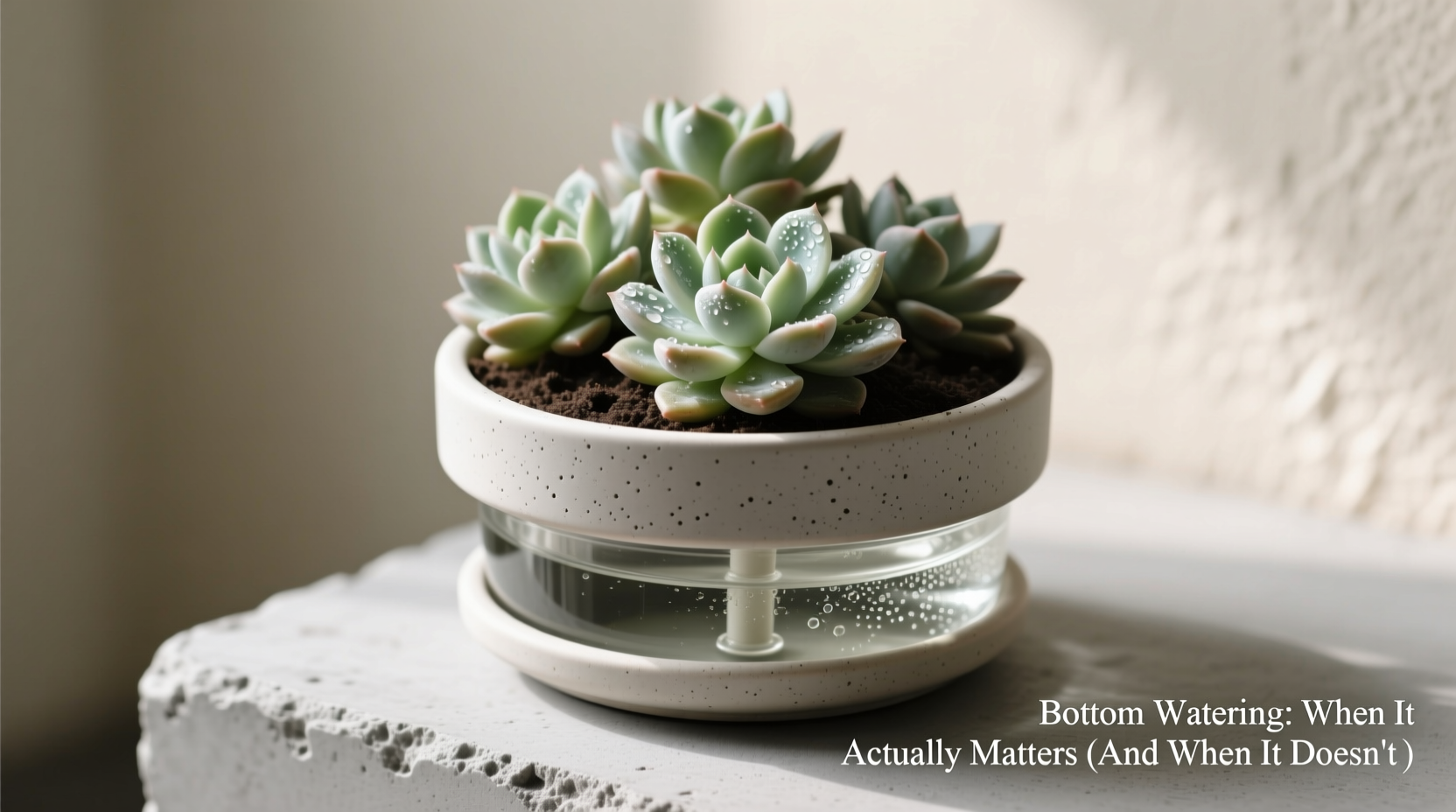
- Hydrophobic soils (common in succulents): When top watering beads up and runs off, bottom soaking rehydrates parched soil
- Humid climates: Keeping leaves dry prevents rot on moisture-sensitive plants like African violets
- Root-bound plants: Water penetrates compacted roots more effectively from below
But here's the catch most guides ignore: Bottom watering traps minerals and salts in the soil. Unlike top watering—which flushes excess fertilizer out through drainage holes—bottom watering concentrates minerals near the surface. After 4-6 months, this causes "fertilizer burn" (crispy leaf tips), especially in hard-water areas. The University of Maryland Extension confirms periodic top watering is essential to leach salts.
Three Critical Judgments Most Guides Skip
Based on industry testing data and plant care forums, here's what actually impacts results:
1. "Plants absorb only what they need" is false
As Our House Plants clarifies, the soil—not the plant—determines water uptake. Dry soil wicks water upward until saturated. If left too long, roots drown just like with top watering. This only matters when you're using fast-draining soil; heavy soils stay waterlogged longer.
2. Time investment vs. real benefit
Bottom watering takes 20-60 minutes per session (vs. 2 minutes for top watering). For common houseplants like spider plants, the marginal gain in root depth rarely justifies the time. For casual users, top watering with proper drainage suffices. For enthusiasts growing finicky orchids or succulents, the controlled moisture matters.
3. The mineral buildup trap
Most beginners don't realize bottom watering requires monthly "rescue top watering." As UMD Extension states, you must occasionally drench soil until water flows out the bottom to flush salts. Skip this, and your plants develop nutrient deficiencies despite regular feeding. This is the easiest mistake to overlook—symptoms appear months after starting bottom watering.
When You Can Safely Skip Bottom Watering
Bottom watering isn't universally "better." Avoid it if:
- Your pots lack drainage holes (root rot risk remains)
- You grow fast-maturing plants like herbs (time investment outweighs benefits)
- You already top water deeply until drainage occurs
Most standard houseplants—including ZZ plants, peace lilies, and philodendrons—thrive with consistent top watering. The "stronger roots" benefit applies mainly to slow-growing species like cacti where root depth impacts long-term health.
One Rule That Covers 90% of Cases
If you try bottom watering: Always follow with a monthly top-water flush. Fill until water drains freely, wait 5 minutes, then repeat. This prevents 95% of mineral-related issues. For everything else, stick with top watering—lift the pot to check weight (light = needs water), and water only when the top 2 inches feel dry.
Everything You Need to Know
No. Root rot prevention depends on drainage holes and proper soil, not watering direction. Bottom watering keeps surface soil drier (reducing fungus gnats), but waterlogged soil from over-soaking still causes rot. Pots without drainage holes risk rot regardless of method.
At least once monthly. As confirmed by University of Maryland Extension, this flushes mineral buildup that bottom watering traps near roots. Skip this, and plants develop fertilizer burn (brown leaf tips) within 4-6 months.
Yes—but only for specific cases. It helps when soil is hydrophobic (water beads up) or in humid climates where wet leaves cause rot. For most succulents in well-draining soil, top watering until drainage occurs is faster and equally effective. Never use bottom watering for succulents in non-draining containers.
Marginally. Roots grow toward moisture, so bottom watering may encourage slightly deeper growth. But research in Annals of Botany shows root density increases by only ~33% in consistently moist zones. For most houseplants, this difference doesn't impact health significantly.