
Cacti vs Succulents: Spot the Difference with Areoles
Why Everyone Confuses Cacti and Succulents
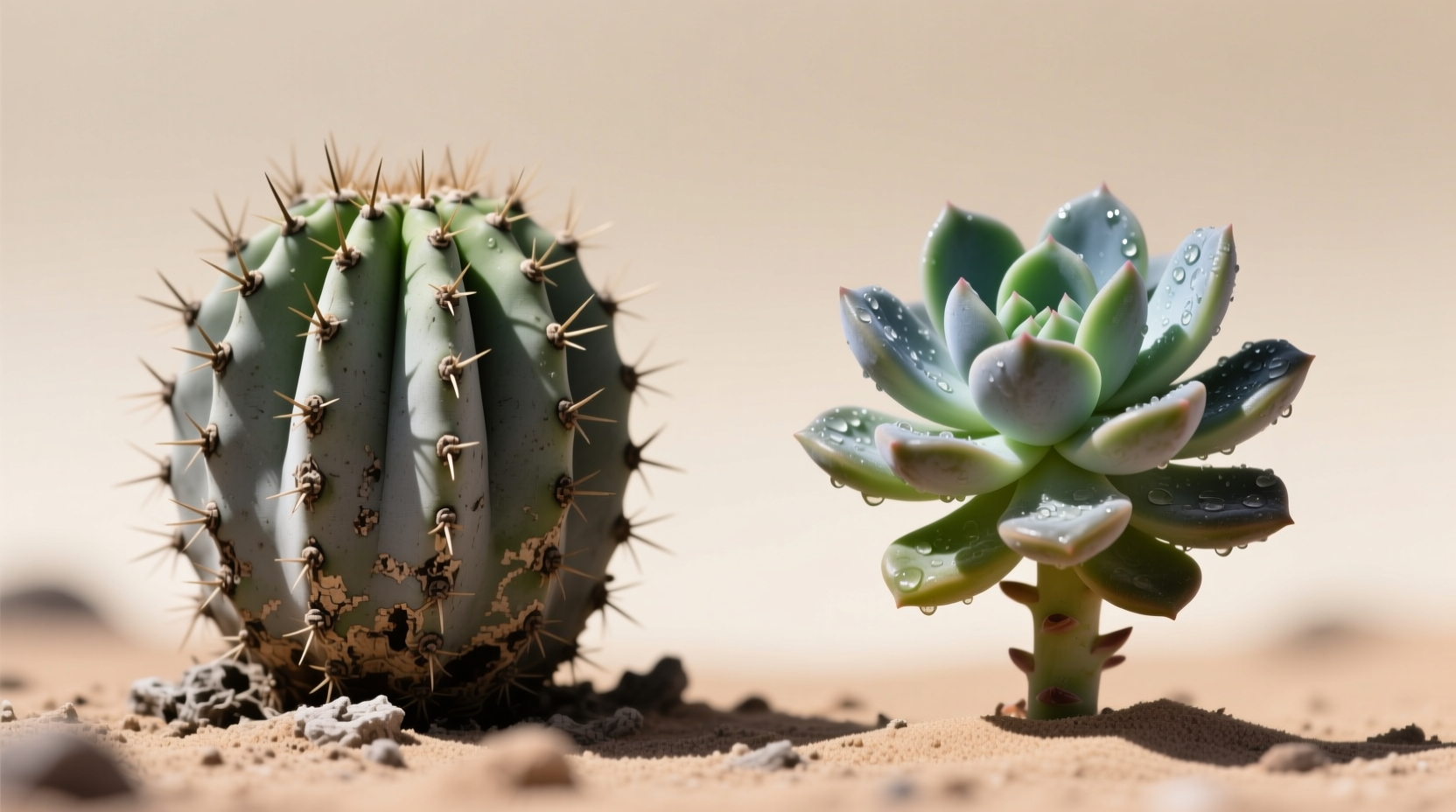
Plant retailers and social media often lump cacti with succulents because both store water in fleshy parts. This isn’t technically wrong—cacti belong to the succulent family—but it hides crucial differences. The USDA’s plant classification guidelines clarify: cacti form their own botanical family (Cactaceae) defined by areoles, while succulents span 60+ plant families like Crassulaceae (jade plants) or Aizoaceae (living stones).
Where Most People Go Wrong (And Why It Backfires)
Mistake #1: Using identical care for all "succulents". True cacti (e.g., Barrel or Prickly Pear) need 30% less water than non-cactus succulents like Aloe or Haworthia. Overwatering desert cacti causes root rot—Royal Horticultural Society data shows it’s the #1 cause of death for indoor cacti.
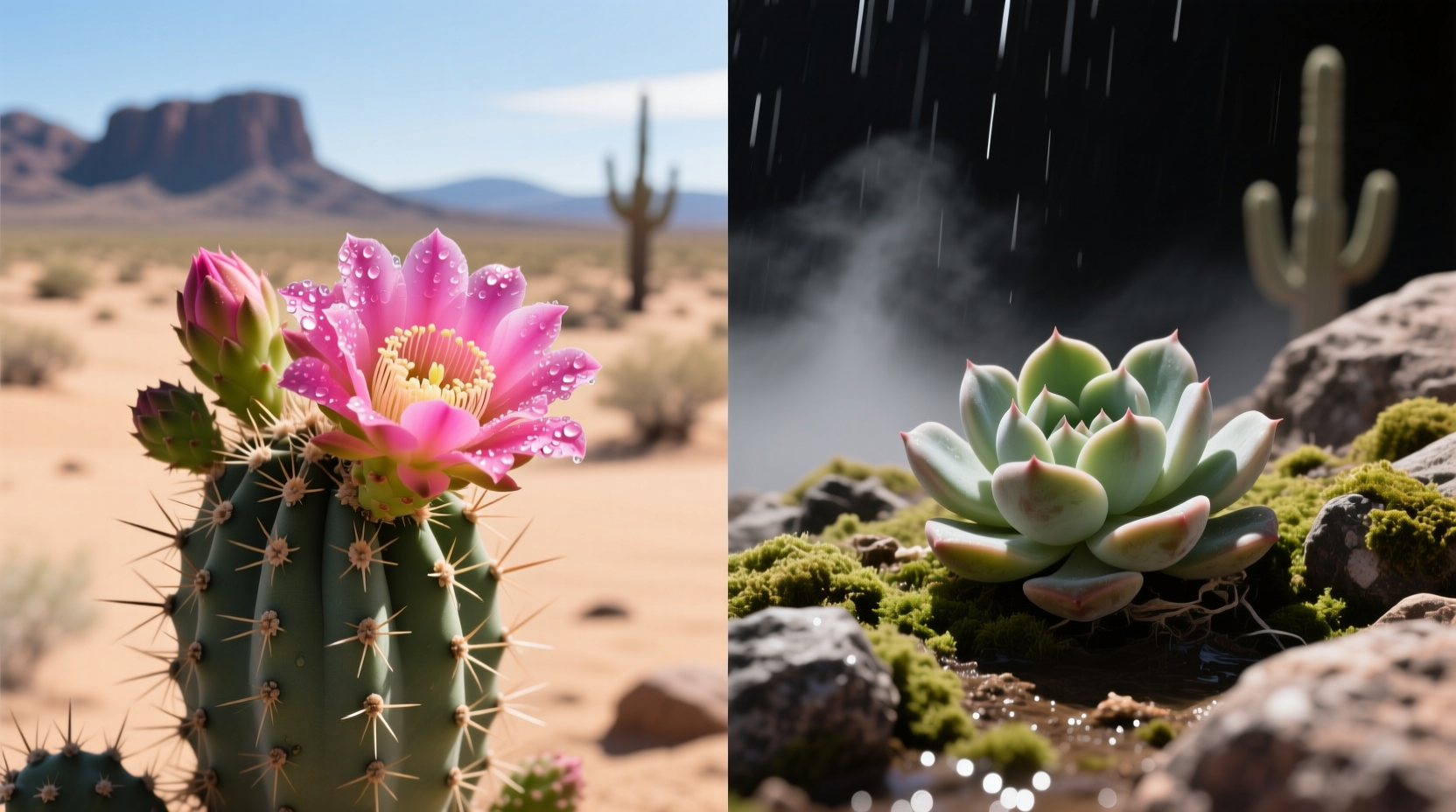
Mistake #2: Ignoring seasonal needs. Many desert cacti enter winter dormancy and require near-zero water, while tropical succulents (like String of Pearls) grow year-round. Watering both monthly in December kills cacti but sustains succulents.
Most people assume X, but in practice Y: "All spiky plants are cacti" → But Euphorbias (like Crown of Thorns) mimic cacti with spines yet lack areoles and secrete toxic sap. Mistaking them for cacti risks skin irritation.
When the Difference Actually Matters
This only matters when: You’re growing plants from arid regions (Southwest US, Mexico, Atacama Desert). True cacti need:
- Soil with 70% mineral grit (vs. 50% for most succulents)
- Complete winter drought (succulents tolerate light watering)
- Brighter, direct sun exposure
For casual users... growing common "succulent" kits (Jade, Pachyveria), focus on light and drainage—not botanical labels. For enthusiasts... collecting rare species like Ariocarpus, misidentifying a cactus as a generic succulent means fatal overwatering.
The One Rule That Solves 90% of Problems
If you remember nothing else: Check for areoles. These fuzzy, cushion-like bumps (where spines grow) exist ONLY on cacti. No areoles? It’s a succulent but not a cactus. This instantly tells you:
- Areoles present → Treat as desert-adapted: water deeply but infrequently, use gritty soil
- No areoles → Likely tropical: water when top 2 inches dry, tolerate richer soil
Experience-based judgment: Retail "cactus mix" soil often works for non-cactus succulents too—but dilute it with 30% compost for tropical varieties. Pure cactus soil drowns Echeverias.
Who Shouldn’t Worry About This
Unless you’re growing heritage species or troubleshooting chronic issues, casual growers can skip the botany. Focus on observable traits:
- Thick, woody stems + spines in clusters? → Likely cactus (water sparingly)
- Rosette shape + smooth leaves? → Succulent like Graptopetalum (water moderately)
This only matters when... your plant isn’t thriving despite "standard" succulent care. Yellowing + mushy base? If it’s a true cactus, you’re watering too much. If it’s a succulent like Gasteria, it might need less sun.
Everything You Need to Know
Yes. Cacti are a specialized subgroup of succulents. All cacti store water in stems/leaves (the definition of succulents), but not all succulents are cacti—only those in the Cactaceae family with areoles.
Only for true cacti and desert-adapted succulents like Agave. Tropical succulents (e.g., Burro’s Tail) need more organic matter—mix cactus soil 50/50 with potting compost to prevent drying out too fast.
True cacti require winter dormancy (cool, dry rest period) to bloom. If treated like a tropical succulent with year-round watering, they won’t flower. Check for areoles—if absent, it’s likely a non-cactus succulent with different needs.
Generally, yes. Most true cacti need 6+ hours of direct sun, while shade-tolerant succulents like Haworthia burn in full sun. Desert cacti evolved under intense UV exposure; tropical succulents often grow under partial canopy.