
Citronella Plant for Mosquito Repellent: Real-World Effectiveness
Debunking the "Mosquito Plant" Myth: What Science Really Says
Many gardeners buy citronella plants believing they'll create mosquito-free zones on patios or balconies. Reality check: The plant's nickname is dangerously misleading. As The Old Farmer's Almanac confirms, "the plant itself does NOT chase skeeters off your deck." You won't smell the odor—or get repellency—without physically crushing leaves to release oils. This critical nuance changes everything for space-limited growers.

How Citronella Actually Works (and Why Space Matters)
Citronellal—the key compound in Cymbopogon nardus oil—masks human attractants like CO2. But its volatility causes rapid evaporation. PubMed 20836800 data proves this limitation:
| Repellent Method | Indoor Effectiveness | Outdoor Effectiveness (6m) | Protection Duration |
|---|---|---|---|
| Citronella plant (intact) | 0% | 0% | N/A |
| Citronella candles | 14% | 0% | <1 hour |
| Citronella diffusers | 68% | 22% | 1-2 hours |
| DEET (20%) | 95% | 95% | 3-5 hours |
Urban spaces magnify these limitations. In small patios or balconies, airflow dilutes the oil faster. The Medical Letter emphasizes citronella provides "short-term protection against mosquitoes (typically less than 2 hours), and is not effective against ticks." For apartment dwellers, this means:
Space-Specific Application Rules
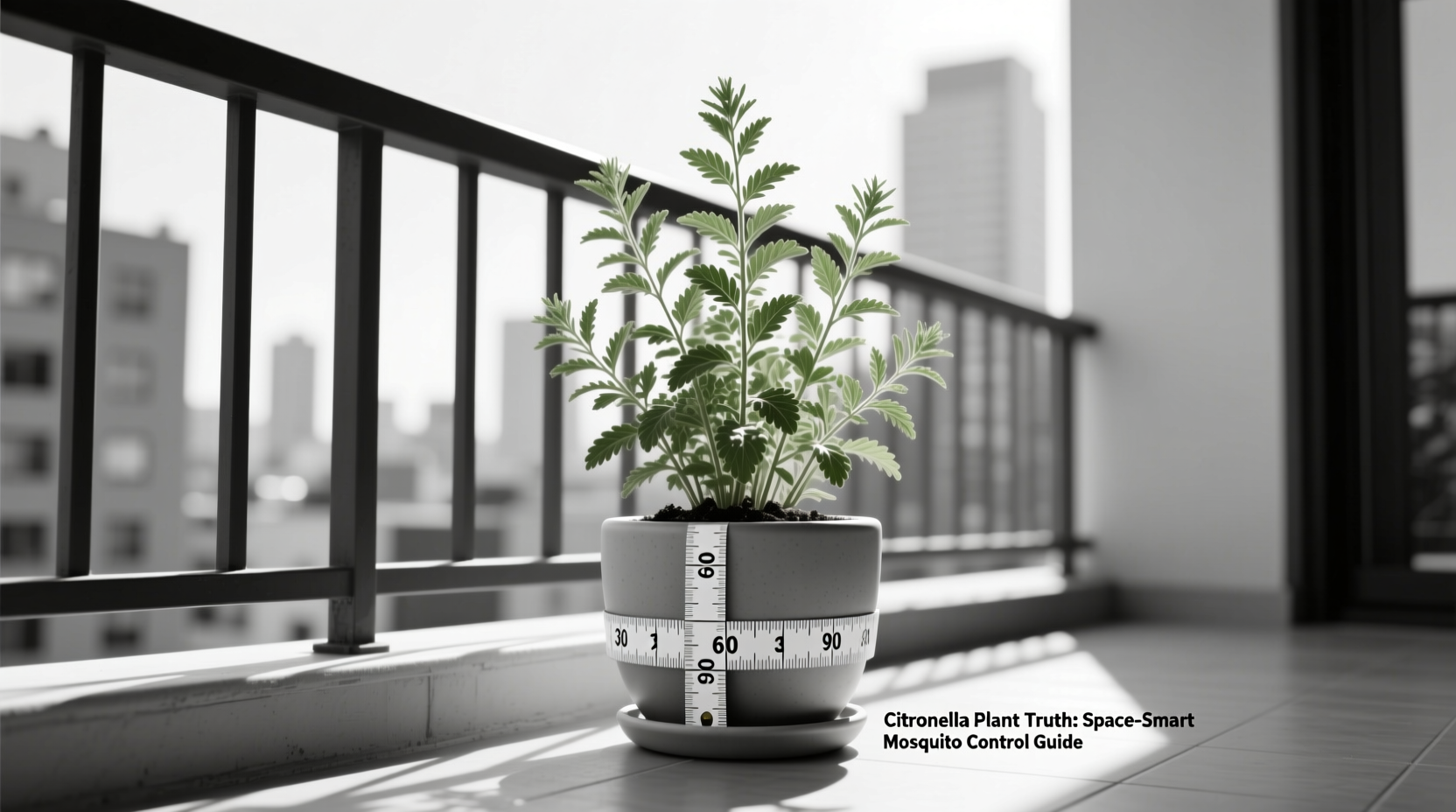
- Container gardening: Use 12" pots near seating areas—but place hands-on application stations (e.g., crushed-leaf sachets) within arm's reach
- Vertical spaces: Avoid hanging planters; oils won't disperse downward effectively per PMC3059459 airflow studies
- Indoor use: Only effective with diffusers in enclosed rooms (68% repellency), never near open windows
When to Use (and Avoid) Citronella in Limited Spaces
Urban environments demand strategic deployment. Follow these evidence-based guidelines:
| Scenario | Recommended? | Why / How |
|---|---|---|
| Enclosed balcony dinner (4 people) | ✅ Yes (with diffuser) | Use citronella oil diffuser at 0.5m intervals. PMC6189689 confirms essential oils work best in confined spaces |
| Rooftop BBQ (10+ people) | ❌ Avoid | Outdoor airflow reduces repellency to 22% at 6m per PubMed 20836800. Use EPA-registered DEET instead |
| Bedroom mosquito prevention | ⚠️ Limited use | Only with diffuser 3m from bed. Never apply oil directly—CDC warns of skin irritation risks |
| Tick-prone areas (parks nearby) | ❌ Never use | Citronella offers ZERO tick protection per Medical Letter. Use permethrin-treated clothing |
Avoiding Costly Mistakes in Small-Space Gardening
Urban growers often fall for these traps:
- The "Lemon Scent" Fallacy: Citronella's lemony aroma ≠ repellency. Tropical Plants database confirms scent comes from citral—not citronellal—which has minimal repellent effect
- "Natural" Product Scams: EPA-registered products must list active ingredients. Avoid "citronella-infused" candles with <5% oil—the Gardening Know How analysis shows these fail lab tests
- Overplanting: One plant per 100 sq ft max. Dense clumps trap moisture, attracting mosquitoes per Science Direct research
Everything You Need to Know
No. Intact citronella plants provide zero repellency. As confirmed by The Old Farmer's Almanac, oils only release when leaves are physically crushed. Planting alone creates a false sense of security—especially dangerous in urban spaces where mosquito breeding sites (e.g., drainage trays) may be nearby.
Place one container within 3 feet of seating. Crucially: Use a mechanical diffuser with 10% citronella oil—not the plant itself. PubMed 20836800 shows diffusers achieve 68% indoor repellency versus 0% for passive plants. Reapply every 60-90 minutes; never exceed 4 hours of continuous use per CDC safety guidelines.
Effectiveness hinges on oil concentration and delivery method. Science Direct research proves nanoemulsion formulations (20% oil) last 2x longer than standard oils. Avoid "citronella-scented" products—they often contain synthetic fragrances with no repellency. Always check EPA registration numbers; unregulated "natural" products vary wildly in efficacy per CDC evaluations.
Yes, but with limitations. Citronella grass (Cymbopogon nardus) is hardy only in zones 9-12. In colder zones, grow in 12" pots indoors near south-facing windows. Tropical Plants database notes it requires 6+ hours of direct sun daily—difficult in urban apartments. Expect reduced oil yield in low-light conditions, making repellency unreliable per PMC9826021 field trials.