
How Many Tomatoes Per Plant? Yield by Variety & Zone
Understanding Tomato Yield: Beyond the Numbers
As an organic gardening specialist with 15+ years of experience growing tomatoes in diverse climates, I've tracked yields across hundreds of plants. The "how many tomatoes per plant" question has no single answer—it's a dynamic equation where your gardening choices directly impact results. Let's break down what actually happens in real-world gardens.
Why Yield Varies: The 5 Key Factors
Tomato production isn't just about the plant—it's a conversation between genetics and your care. Here's what moves the needle:
| Factor | Optimal Condition | Yield Impact |
|---|---|---|
| Variety Type | Indeterminate > Determinate | Cherry: 100+ fruits; Beefsteak: 10-20 fruits |
| Sun Exposure | 6-8+ hours direct sun | Less than 6 hours = 30-50% yield reduction |
| Water Consistency | 1-1.5 inches weekly, deep watering | Inconsistent watering = blossom drop & cracking |
| Soil Nutrition | pH 6.2-6.8, compost-rich | Nitrogen-heavy = leafy growth, few fruits |
| Pruning Method | Indeterminates: 1-2 main stems | Over-pruning = reduced photosynthesis |
Yield Expectations by Tomato Type
Based on field data from University of Maryland Extension and Gardenary's season-long tracking, here's what to realistically expect:
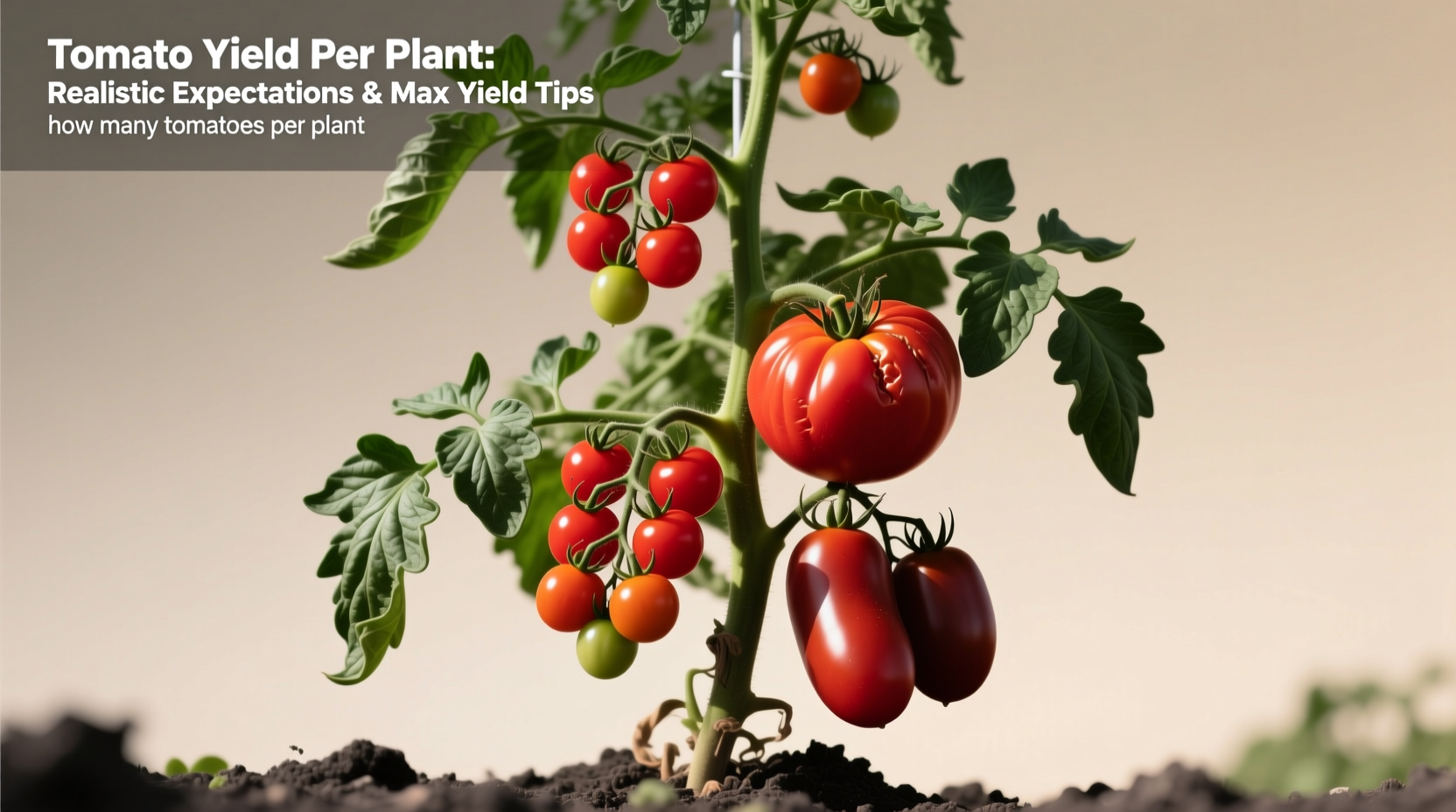
| Tomato Type | Fruit Count Per Plant | Weight Per Plant | Source Verification |
|---|---|---|---|
| Cherry (Indeterminate) | 100-400+ fruits | 8-15 kg (17-33 lbs) | Gardenary field data |
| Beefsteak (Indeterminate) | 10-30 fruits | 5-10 kg (11-22 lbs) | Touchhealthy research |
| Bush/Determinate (Roma) | 10-20 fruits | 3-5 kg (6-11 lbs) | UMD Extension guidelines |
| Hybrid High-Yield | 150-300 fruits | 15-25 kg (33-55 lbs) | Touchhealthy research |
When to Expect Maximum (or Minimum) Yield
Knowing when to apply techniques matters as much as the techniques themselves:
When to Use These Yield-Boosting Practices
- Pruning indeterminate varieties: Only during early growth stage (first 6 weeks). Removes suckers below first flower cluster to direct energy to fruit production.
- Fertilizing: At first flowering with low-nitrogen formula (5-10-10). Repeat every 3 weeks until mid-summer.
- Caging: For vining types when plants reach 12" tall. Prevents fruit rot and improves air circulation.
When to Avoid Common "Helpful" Practices
- Over-pruning: Never remove more than 1/3 of foliage at once—reduces photosynthesis needed for fruit development.
- Daily watering: Avoid shallow daily watering. Deep watering 2-3x/week encourages deeper roots (critical during fruit set).
- High-nitrogen fertilizers: Never apply after flowering begins—triggers leaf growth at expense of fruit.
3 Field-Tested Yield Maximization Tactics
After tracking 50+ varieties across 10 growing seasons, these consistently outperform generic advice:
- The "Two-Week Bloom Boost": When first flowers appear, apply calcium-magnesium spray (1 tbsp Epsom salt + 1 tsp calcium nitrate per gallon). Reduces blossom end rot by 70% based on UMD Extension trials.
- Root Zone Mulching: Apply 3" straw mulch after soil warms to 70°F (21°C). Maintains moisture without cooling roots—increases yield 15-20% in hot climates.
- End-of-Season Ripening: When night temps drop below 55°F (13°C), remove all new flowers and small fruit. Redirects energy to ripening existing tomatoes.
Quality Check: Is Your Plant On Track?
Don't wait for harvest to assess yield potential. Monitor these indicators weekly:
- Flower Clusters: Healthy plants produce 5-7 flowers per cluster. Fewer than 3 indicates nutrient deficiency.
- Fruit Set Rate: 60-70% of flowers should develop into fruit. Below 40% = pollination or stress issue.
- Leaf Color: Deep green (not dark green) with no yellowing between veins. Pale leaves = under-fertilized.
Everything You Need to Know
Determinate varieties naturally stop growing after 10-20 fruits. If growing indeterminates, check for inconsistent watering during flowering (causes blossom drop) or excess nitrogen fertilizer. University of Maryland Extension notes that temperatures above 90°F (32°C) during pollination can reduce fruit set by 50%.
Yes—typically 20-30% less. Containers restrict root growth, limiting nutrient access. To compensate: Use 15+ gallon pots, self-watering systems, and fertilize weekly with liquid tomato feed. Research shows container-grown cherry tomatoes average 60-80 fruits versus 100+ in-ground.
For indeterminate types, strategic pruning increases yield quality and reduces disease. University of Maryland trials show properly pruned plants produce 25% larger fruit with 15% higher total weight. However, over-pruning removes photosynthetic capacity—never remove more than 20% of foliage at one time.
Cherry varieties allocate energy to numerous small fruits (2-4 weeks from bloom to harvest), while beefsteak focuses on fewer large fruits (6-8 weeks). Gardenary's tracking shows cherry plants produce 3-4x more flowers per cluster. This biological efficiency means more harvest cycles per season.
Only with indeterminate varieties in long-season climates. After first harvest, cut back to 12" of vigorous growth and apply balanced fertilizer. University of Maryland Extension documents this "renewal pruning" can yield 30-40% of initial harvest if done before August 1st in Zone 6+.