
Why Water Propagation Fails for Succulents (Zone-Specific Fixes)
Why Water Propagation Seems Tempting (But Backfires)
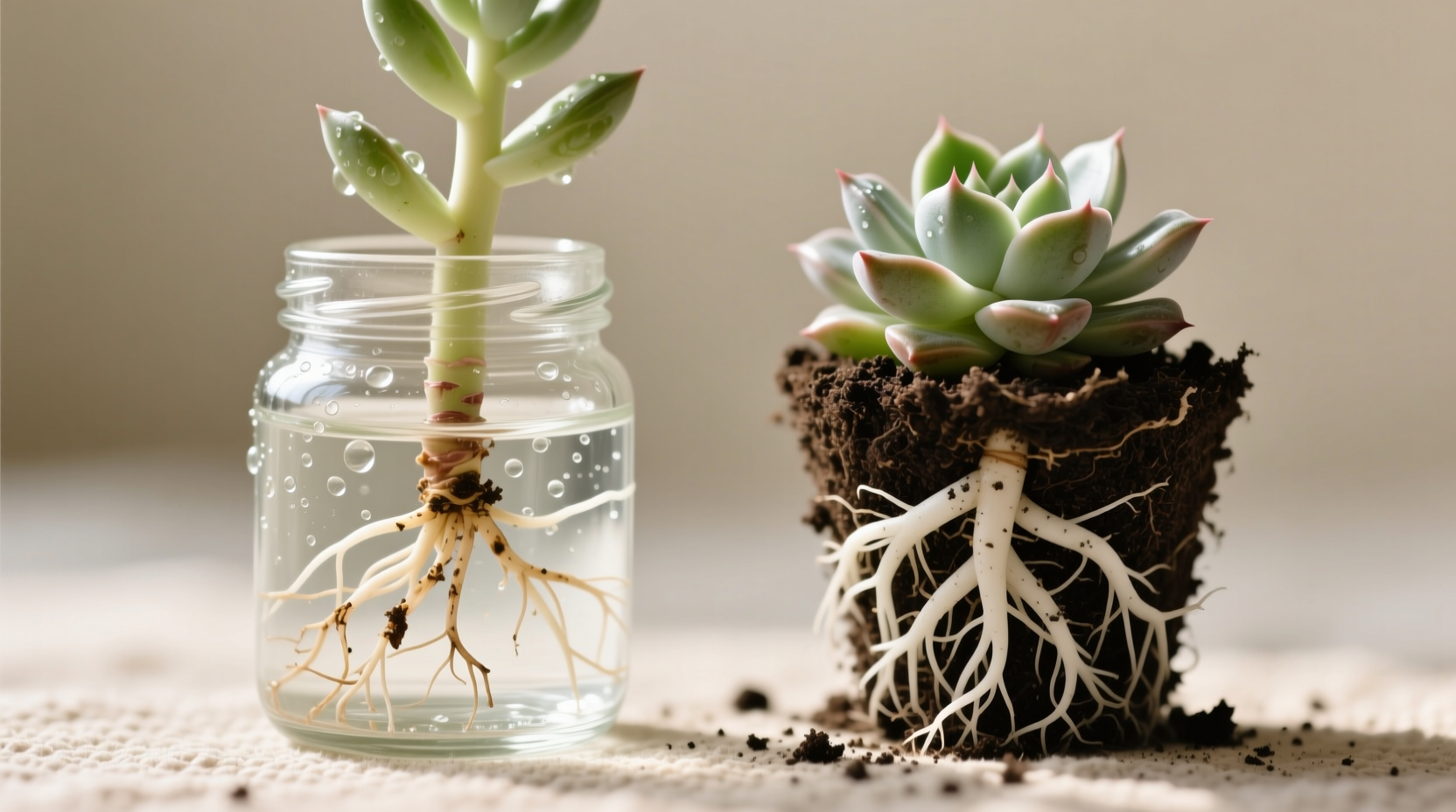
Water propagation dominates social media because it’s visually dramatic—you see roots form in days. Most people assume X, but in practice Y: clear water roots ≠ healthy succulent roots. Water triggers fragile, oxygen-dependent roots that rot instantly when moved to soil. Soil roots develop thicker casings for dry conditions—a biological adaptation water can’t replicate.
The Critical Mistake 90% of Gardeners Make
Beginners often wait for long water roots before transferring to soil. This only matters when you want guaranteed failure: longer water roots = more shock during transfer. University studies show roots over 1 inch have near-100% mortality. For casual users wanting quick results, this step feels logical. For enthusiasts preserving rare varieties, it’s catastrophic.
Most people assume X, but in practice Y: seeing roots ≠ readiness for soil. Succulents need calloused cuttings in dry soil—not water—to trigger proper root development. This is the easiest step to skip but most impacts survival.
When Water Propagation Might Work (Rarely)
Water propagation succeeds only in two narrow cases:
- Temporary displays: For 2-3 weeks as desk decor (e.g., holiday centerpieces). Don’t expect long-term growth.
- Hybrid succulents like Graptopetalum: Some tolerate water better, but still need soil within 10 days.
This only matters when you prioritize aesthetics over plant health. For actual propagation? Soil is non-negotiable.
The Only Reliable Method: Soil Propagation
If you only remember one thing: dry soil beats water every time. Here’s why it works:
- Cuttings callous for 3-7 days (critical for sealing moisture loss)
- Planted in gritty, dry soil (perlite/sand mix)
- Watered lightly after 1-2 weeks—only when soil is bone-dry
For casual users, this seems slower than water. For enthusiasts, it’s the only method preserving genetic lines. Most failures happen when beginners water too soon—wait until leaves slightly wrinkle.
Who Should Absolutely Avoid Water Propagation
Water propagation fails for:
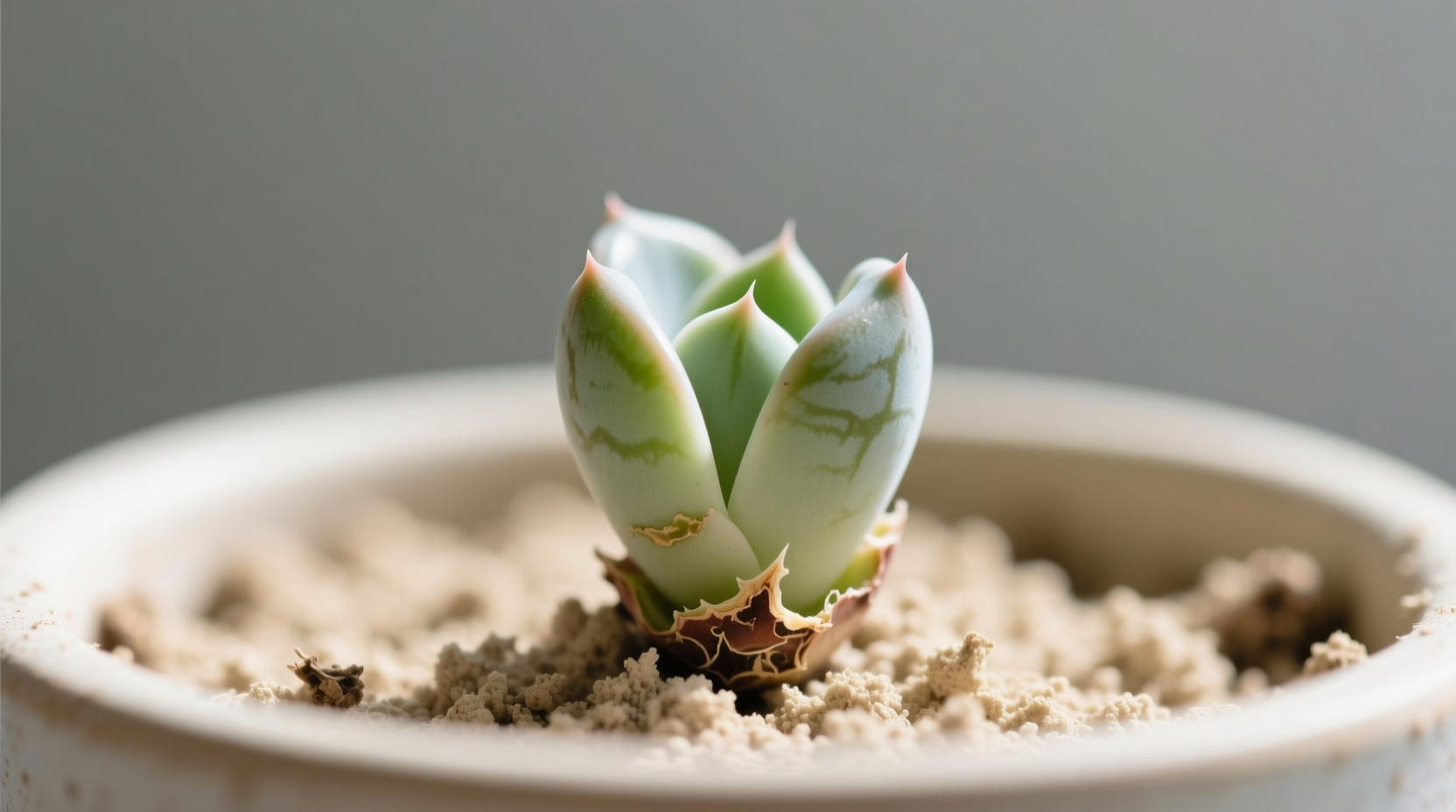
- Echeveria, Haworthia, or Aloe: Thick-leaved types rot fastest in water
- Novice gardeners: Misjudging transfer timing causes 95% of deaths
- Cold climates: Slow-drying soil + water roots = guaranteed rot
For collectors preserving rare specimens, water propagation risks irreplaceable plants. For apartment dwellers with one succulent? Soil propagation takes identical effort with higher success.
Everything You Need to Know
Technically yes, but 80% die within weeks after soil transfer. University of Florida research confirms water roots lack the structure to survive dry conditions. Soil propagation succeeds 90%+ of the time.
Water roots develop thin, oxygen-dependent tissue. When moved to soil, they suffocate and rot because soil lacks constant oxygen. This biological mismatch causes rapid decay—visible within 3-5 days post-transfer.
Water shows roots in 7-10 days but fails long-term. Soil takes 2-4 weeks for roots but yields hardy plants. The slight delay prevents 80% of failures—making soil faster for actual results.
Yes for observation, but don’t transfer to soil. Water roots die during transition. Instead, check soil moisture with a stick—if dry 1 inch down, roots are forming. This avoids the #1 mistake of premature transfer.