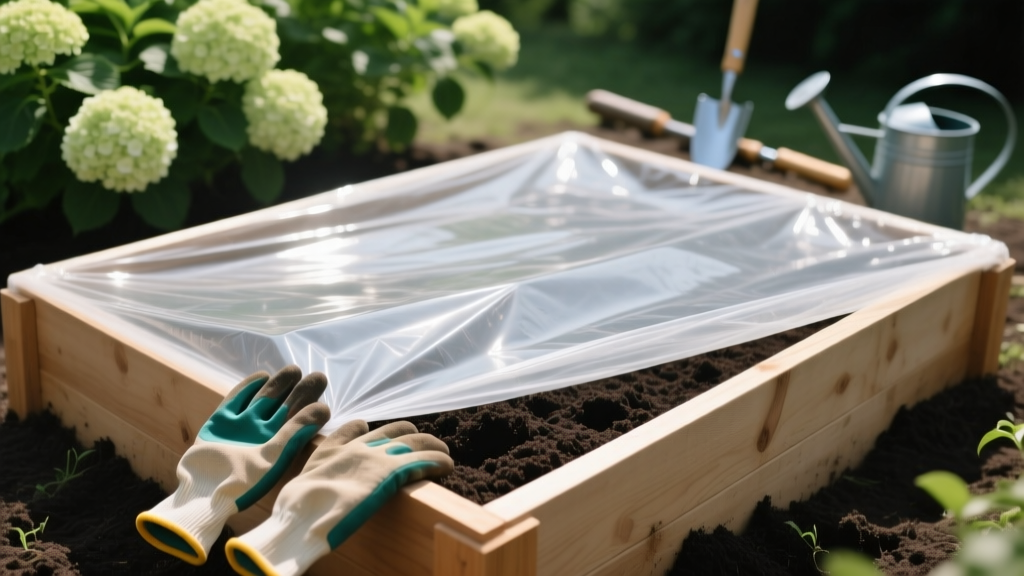
How to Solarize Soil Before Planting Hydrangeas
You prep the bed, buy a beautiful hydrangea, dig a perfect hole…and by midsummer the plant looks like it’s stuck in slow motion. Leaves yellow, growth stalls, and you start seeing mushrooms, gnats, or a suspicious patch of weeds that refuses to die. I’ve watched home gardeners blame the hydrangea, the fertilizer, the weather—when the real problem was already in the soil: a heavy load of weed seeds, fungus, or root-rot organisms waiting for a fresh host.
Soil solarization is one of those old-school, low-tech moves that feels almost too simple: you trap the sun’s heat under clear plastic long enough to cook the top layer of soil. Done right, it can knock back weeds, certain soilborne diseases, and some nematodes—giving hydrangeas a cleaner start without reaching for broad-spectrum chemicals.
This article walks you through a practical, field-tested solarization plan tailored to hydrangea beds—plus what to do afterward so you don’t undo the benefits.
What soil solarization actually does (and what it doesn’t)
Solarization works by heating moist soil under clear plastic during the hottest part of the year. The combination of heat + moisture is what does the heavy lifting. In the top few inches, temperatures can rise high enough to kill many weed seeds and weaken disease organisms.
“Solarization is most effective when soil temperatures are raised to lethal levels for soilborne pests for sustained periods, typically 4 to 6 weeks during the hottest months.” — UC ANR Integrated Pest Management Program (University of California), Soil Solarization guidance (updated 2023)
What it helps with (best results in the top 6–8 inches / 15–20 cm):
- Annual weeds and many weed seeds
- Some soilborne fungi (certain damping-off and root-rot contributors)
- Some nematode pressure (varies by species and depth)
- “Resetting” a tired bed before installing shrubs
What it won’t fix:
- Deep perennial weed roots (bindweed, bermudagrass) unless you’re extremely thorough and conditions are ideal
- Bad drainage (hydrangeas hate soggy feet—solarization won’t change soil structure much)
- Wrong pH or nutrient imbalance (it’s not fertilizer)
If your hydrangea site is chronically wet or compacted, treat drainage as a separate project. Solarization is a sanitation tool, not a magic wand.
Best timing for solarizing soil before hydrangeas
Timing is the difference between “this worked great” and “I basically warmed the ground.” Aim for the hottest, sunniest window you can manage.
Ideal season and duration
- Best months: Mid-summer (often June–August in many regions)
- Minimum duration: 4 weeks
- Better duration: 6 weeks (especially in cooler coastal or northern areas)
- Target soil temps: You’re aiming to push the top layer into the 110–140°F range (about 43–60°C) during peak heating, though exact temperatures depend on weather and soil type.
Solarization is well documented by extension programs; for example, UC ANR notes the 4–6 week hot-season window as typical, and Oregon State University Extension describes solarization as a warm-season technique dependent on high solar radiation (OSU Extension, 2022).
Scenario #1: You want to plant hydrangeas this fall
Start solarization in early-to-mid summer. Pull plastic off in late summer, then plant in early fall once temperatures moderate. This is one of my favorite schedules because hydrangeas establish roots well in fall, and you avoid heat stress.
Scenario #2: You missed summer and it’s already September
If days are cooling, solarization becomes unreliable. In that case, switch tactics: remove weeds manually, add compost, and use a 3–4 inch mulch layer to suppress weeds while you wait for a better solarization window next year.
Scenario #3: Your bed gets only half-day sun
Solarization needs strong sun. If the site is shaded by trees or buildings for much of the day, you’ll get weaker heating and weaker pest control. Consider solarizing in an adjacent sunny area (or in raised beds/containers) if possible, or use alternative methods like sheet mulching (slower, but reliable in shade).
Tools and materials (don’t skimp on the plastic)
Most solarization failures I see come from flimsy plastic, poor edge sealing, or dry soil.
- Clear plastic sheeting: 1–2 mil for maximum heat (tears easily) or 3–6 mil for durability (still heats well). Clear works better than black for solarization because it transmits sunlight and traps heat.
- Soaker hose or sprinkler to thoroughly wet soil before covering
- Shovel and rake to smooth the surface
- Soil thermometer (optional but useful; even a basic probe helps)
- Landscape staples, boards, soil, or sandbags to seal edges
Step-by-step: Solarize the bed the way a pro would
Plan on spending an hour or two up front, then letting the sun do the work.
1) Clear and prep the site
- Remove existing plants, big roots, and rocks. For tough perennial weeds, dig out as much root mass as you can.
- Break up clods and rake the soil smooth. A smooth surface helps plastic contact the soil and prevents air pockets.
- If you’re amending soil for hydrangeas (compost, pine fines, etc.), do it before solarizing so the whole mix gets treated.
2) Water deeply (moisture is not optional)
Moist soil conducts heat better than dry soil and also makes pests more vulnerable. Water the area to a depth of about 12 inches. Practically, that often means running a sprinkler long enough to deliver around 1–2 inches of water (more if your soil is sandy and drains fast). If you have a soaker hose, run it until the soil is evenly damp, not muddy.
3) Lay clear plastic tightly
- Cover the entire bed with clear plastic, allowing at least 12 inches extra around all edges.
- Pull it taut so it’s in close contact with the soil.
- Bury edges 4–6 inches deep in soil or pin them down with boards/sandbags. Tight sealing traps heat and prevents wind from turning your work into a sail.
4) Keep it sealed for 4–6 weeks
Resist the urge to peek. Every time you lift plastic, you dump heat. Patch holes immediately with clear tape or overlapping plastic.
5) Remove plastic carefully and don’t “deep dig” afterward
When time is up, pull the plastic and avoid deep tilling. Deep turning can bring up untreated weed seeds from below the heated zone. If you need to loosen soil, do it shallowly (top 2–3 inches) and then mulch.
Solarization vs. other methods (with real numbers)
Sometimes solarization is the right tool, sometimes not. Here’s how it stacks up against a couple of common alternatives.
| Method | Typical time to work | Best season | Weed seed control (top 6") | Soil disturbance | Notes for hydrangeas |
|---|---|---|---|---|---|
| Clear-plastic solarization | 4–6 weeks | Hottest months | High (when soil reaches ~110–140°F / 43–60°C) | Low | Great pre-plant sanitation; follow with compost + mulch to support soil life. |
| Sheet mulching (cardboard + mulch) | 8–16 weeks | Any time | Medium (suppresses germination) | Very low | Excellent for shaded beds where solarization won’t heat enough. |
| Hand removal + repeated shallow hoeing | 3–8 weeks (ongoing) | Any time | Medium (depends on diligence) | Medium | Works, but you must stay after new flushes; mulch is still essential. |
Comparison analysis in plain terms: solarization is faster than sheet mulching (often 4–6 weeks vs. 8–16 weeks), and it can reduce disease pressure more directly because you’re using heat rather than just blocking light. But solarization demands strong sun and warm weather; sheet mulching is slower yet dependable in shade.
Soil setup for hydrangeas after solarization
Solarization “cleans” the top layer, but hydrangeas still need the right soil structure and chemistry. This is where many gardeners miss the second half of the job.
Texture, drainage, and organic matter
Hydrangeas want moisture-retentive soil that still drains well. After solarization:
- Work in 2–4 inches of finished compost into the top 6–8 inches (shallow incorporation is enough).
- If your soil is heavy clay, consider adding pine bark fines or aged shredded bark to improve structure over time.
- Form a slightly raised planting area (even 2–3 inches higher) if water tends to sit after rain.
pH and bloom color (quick reality check)
If you’re aiming for blue flowers, you’ll be managing soil pH and aluminum availability—solarization won’t handle that for you. Bigleaf hydrangeas (Hydrangea macrophylla) commonly shift color based on pH:
- Bluer blooms: often around pH 5.2–5.5
- Pinker blooms: often around pH 6.0–6.5
Get a soil test before you start chasing color. Many state extension services recommend soil testing as the only reliable way to guide lime/sulfur decisions (for example, Clemson Cooperative Extension soil testing guidance, 2020).
Light: solarize in sun, then remember what hydrangeas actually like
Here’s a common mental trap: you solarize in full blasting sun and then assume that’s the perfect hydrangea spot. Not always.
Most hydrangeas do best with:
- Morning sun + afternoon shade (especially in hot-summer climates)
- 4–6 hours of sun is plenty for many types
- Too much afternoon sun often leads to wilting and scorched edges, even when watered
If the only place you can solarize is full sun but you plan to plant hydrangeas in a brighter-than-ideal spot, be ready to compensate with better irrigation and mulch—or choose a tougher type (like panicle hydrangea, H. paniculata) that tolerates more sun.
Watering hydrangeas after solarization (the first 8 weeks matter most)
Solarized soil can be left a bit “fluffier” on top once you start working it, and it may dry faster than you expect—especially if you incorporated compost. Hydrangeas are not drought shrubs during establishment.
Establishment watering schedule
- Week 1–2: Water deeply every 2–3 days if there’s no rain.
- Week 3–8: Water deeply once per week (twice per week during heat waves).
- Goal: Consistently moist soil in the root zone, not standing water.
A good “deep watering” target is roughly 1 inch of water per week from rain/irrigation combined, adjusted for heat and soil type. In sandy soil, you may need smaller amounts more often; in clay, water slower and less frequently to avoid saturation.
Mulch: your watering insurance policy
Apply 2–3 inches of mulch (leaf mold, shredded bark, pine straw). Keep it 2–3 inches away from the stem base to prevent rot.
Feeding hydrangeas in a newly solarized bed
After solarization, you’re essentially planting into a bed with reduced weed competition—great. But don’t mistake that for a cue to overfertilize. Overfeeding pushes leafy growth, fewer blooms, and softer tissue that attracts pests.
A practical feeding plan
- At planting: Skip strong fertilizers in the hole. Mix compost into the bed instead.
- After 4–6 weeks (spring/summer plantings): If growth looks weak, use a balanced slow-release fertilizer at label rate (common garden blends like 10-10-10 or similar). Water it in well.
- For established shrubs: One spring feeding is often enough; more is not better.
If you’re adjusting bloom color (aluminum sulfate for blueing, lime for pinking), follow soil test recommendations and apply carefully—those products are not “general fertilizer.”
Common problems after solarization (and how to fix them fast)
Solarization is straightforward, but a few predictable snags show up again and again.
Troubleshooting: Plastic keeps blowing off
- Symptoms: Edges lift, plastic flaps, holes appear.
- Fix: Bury edges 4–6 inches deep all around, not just at corners. Add boards or sandbags every 2–3 feet in windy areas.
- Pro tip: Overlap seams by 12 inches and tape them; wind finds weak points.
Troubleshooting: Weeds survive under the plastic
- Symptoms: Green weeds still growing after 4–6 weeks.
- Likely causes: Soil wasn’t wet enough; plastic wasn’t tight; temperatures weren’t high enough (too much shade, wrong season).
- Fix:
- Re-wet soil and re-cover for another 2–4 weeks.
- If the site is shaded, switch to sheet mulching for 8–16 weeks.
- For tough perennials, dig roots and then solarize again.
Troubleshooting: Soil smells sour or “off” when you remove plastic
- Symptoms: Funky odor, slimy surface in spots.
- Likely causes: Soil stayed waterlogged; poor drainage; plastic sealed during a rainy stretch with puddling underneath.
- Fix: Let the soil air out for 3–7 days. Rake the surface lightly. If drainage is poor, amend structure (compost + bark fines) and consider raising the bed slightly before planting hydrangeas.
Troubleshooting: Hydrangea wilts daily even though you watered
- Symptoms: Plant droops in afternoon, recovers at night; leaf edges scorch.
- Likely causes: Too much afternoon sun; shallow watering; mulch too thin; newly planted roots not established.
- Fix:
- Deep water early morning; aim to wet soil 8–12 inches deep.
- Add 2–3 inches mulch.
- Provide temporary shade cloth (30–40% shade) for 2–3 weeks during extreme heat.
Real-world cases: how solarization plays out in home gardens
Case 1: Replacing a struggling hydrangea in a disease-prone bed
A common scenario: a hydrangea dies back year after year, and when you pull it, roots look sparse or dark. Solarization won’t solve waterlogged soil, but it can reduce the background load of certain pathogens in the top layer. The win here comes when you pair solarization with drainage improvements: incorporate compost, avoid planting too deep, and keep mulch pulled back from the crown.
Case 2: Starting a hydrangea hedge where crabgrass has ruled for years
Crabgrass and annual weeds are where solarization shines. Prep the bed in early summer, solarize for 6 weeks, then plant in fall. You’ll still get some weeds (nature always finds a way), but the pressure is dramatically lower—meaning less hand weeding around tender new hydrangea roots.
Case 3: Garden bed under a maple canopy (bright shade)
This one trips people up: hydrangeas might love the light conditions, but solarization struggles without strong sun. In that case, sheet mulching is usually the better pre-plant step. If you insist on solarization, do it in the sunniest window, prune lower limbs if appropriate, and extend the duration toward 6–8 weeks—but go in knowing results may be mixed.
Common problems for hydrangeas (after planting) and how soil prep helps
Solarization is just your starting line. Here are the hydrangea issues I see most, with quick fixes that tie back to soil prep.
Yellowing leaves (chlorosis)
- Symptoms: Yellow leaves with green veins, slow growth.
- Most common causes: High pH locking up iron; poor drainage damaging roots.
- Solutions: Soil test first. If pH is high, adjust gradually; improve drainage and avoid overwatering. Compost helps, but pH management is the real fix.
Lots of leaves, few blooms
- Symptoms: Healthy green growth, minimal flowers.
- Most common causes: Too much nitrogen; pruning at the wrong time (bigleaf types bloom on old wood); too much shade.
- Solutions: Ease up on fertilizer; confirm hydrangea type before pruning; ensure at least 4 hours of good light.
Root rot and stem dieback
- Symptoms: Sudden wilting, blackened stems near base, poor root system.
- Most common causes: Waterlogged soil, mulch piled against the crown, planting too deep.
- Solutions: Plant with crown slightly above grade; keep mulch 2–3 inches away from stems; correct drainage. Solarization can reduce pathogen pressure, but drainage is the deciding factor.
Smart aftercare: keep your solarization gains
Once you’ve done the work, protect it:
- Mulch immediately after planting to block new weed seeds from sprouting.
- Avoid deep turning of the bed for the first season; disturb soil as little as practical.
- Use drip or soaker hoses where possible to keep foliage dry and reduce disease pressure.
- Spot-weed early: pull weeds when they’re under 3 inches tall. Small weeds are a 30-second job; big weeds are a Saturday.
Solarization is a classic master-gardener trick because it’s simple, cheap, and surprisingly effective when conditions are right. Pick the hottest window, wet the soil deeply, seal the plastic like you mean it, and give it the full 4–6 weeks. Then shift gears—build hydrangea-friendly soil, water steadily through establishment, and mulch like it’s part of your irrigation system. That’s how you turn “pretty plant” into a hydrangea that actually settles in and starts performing.
Sources: University of California Agriculture and Natural Resources, Integrated Pest Management Program (UC ANR IPM), “Soil Solarization” (updated 2023). Oregon State University Extension Service, guidance on soil solarization and warm-season soil heating methods (2022). Clemson Cooperative Extension, soil testing and amendment guidance (2020).