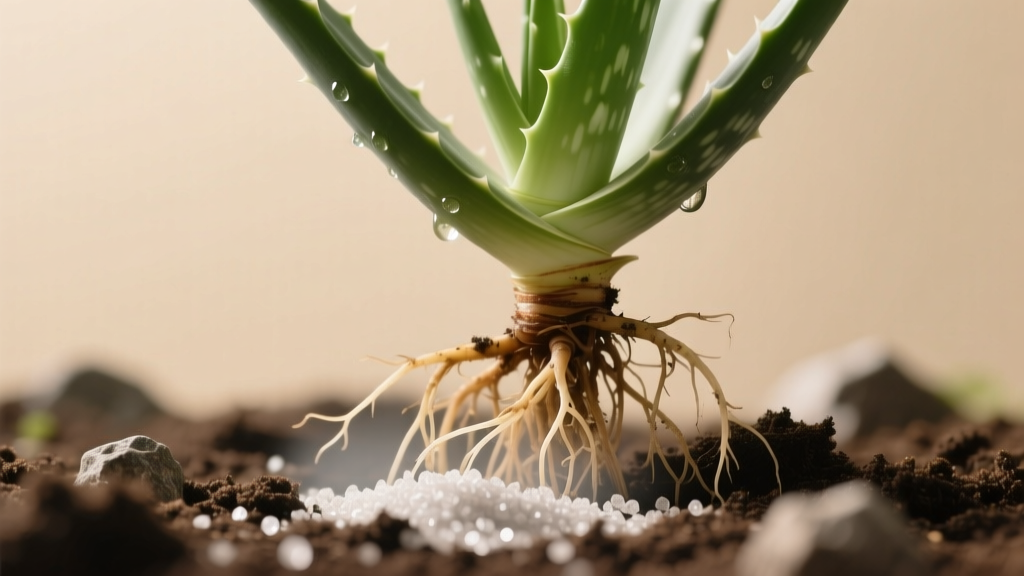
Rock Phosphate for Aloe Vera Root Development
You repot your aloe, give it a week to “settle in,” and then… nothing. The leaves don’t plump up, the plant wobbles in the pot, and when you gently tug, the root ball feels like it never grabbed the new soil. Here’s the surprise: in many home setups, aloe isn’t starving for nitrogen at all—it’s stuck because the root zone chemistry and phosphorus availability don’t line up with how succulents actually build new roots. Rock phosphate can help in the right soil, at the right rate, and with the right expectations. Used wrong, it does absolutely nothing (or worse, interferes with other nutrients).
I’ve used rock phosphate as a slow, steady “root insurance policy” when I’m mixing gritty soils from scratch, especially for aloes that need to anchor after division or repotting. But it’s not a quick fix like a liquid bloom booster—and that difference matters if your aloe is already stressed.
What rock phosphate really does (and when it doesn’t)
Rock phosphate is a mined mineral (mostly apatite) that releases phosphorus (P) slowly as it reacts with acids in the soil. Phosphorus is central to root growth, energy transfer (ATP), and overall plant establishment. The catch: it’s most useful in mildly acidic to near-neutral mixes, and least useful in strongly alkaline, very dry, or highly calcareous conditions where it becomes chemically tied up.
Most aloes prefer a mineral-heavy, fast-draining medium and slightly acidic to neutral pH. Many home gardeners, though, unintentionally push their pots alkaline by using hard tap water, limestone gravel, or repeated applications of certain amendments. That’s where rock phosphate can stall—because it needs some acidity and moisture cycling to dissolve.
“Phosphorus availability is strongly affected by soil pH; it is generally most available in the pH range of about 6.0 to 7.0.” — Penn State Extension (updated guidance; commonly cited in nutrient management publications, 2023)
For succulents, the goal isn’t maximum phosphorus—it’s consistent phosphorus in a root zone that stays airy. Think of rock phosphate as a slow-release background amendment, not a rescue product.
Real-world scenarios: when rock phosphate helps aloe (and when to skip it)
Scenario 1: Post-division pups that won’t anchor
You separated aloe pups, let the cuts callus, and potted them up. Three weeks later, they still wobble, and you’re tempted to water more. This is where a small, well-mixed amount of rock phosphate can support root initiation—if the mix isn’t too alkaline and you aren’t overpotting. Pair it with correct watering cadence (more on that below) and bright light.
Scenario 2: Big aloe in a decorative pot that dries unevenly
Wide ceramic pots often dry fast on the edges and stay damp in the center. Roots avoid the soggy middle, and you get a “lazy” root system that never explores. Rock phosphate won’t fix water distribution. In this case, fix the soil structure and watering technique first; use rock phosphate only as a background amendment.
Scenario 3: Gritty mix made from inert ingredients
If you build a mix from pumice/perlite/grit and only a small fraction of compost or coir, there may be very little nutrient reserve. Rock phosphate shines here because it adds long-term phosphorus without making the mix salty. It’s not the only tool, but it’s a good one.
Scenario 4: Hard water + limestone = chronic micronutrient issues
If your water is hard and your topdress is limestone gravel, pH creeps up. You start seeing pale growth and weak roots even though you fertilize. In that setup, rock phosphate often becomes ineffective. You’ll get more mileage from correcting pH drivers and using a balanced fertilizer with micronutrients rather than adding more mineral phosphate.
Soil first: the root zone aloe needs
Aloe roots want oxygen more than they want “rich” soil. If your mix compacts, stays wet for days, or forms a crust, root development slows no matter what you feed. Start with a fast-draining base, then layer nutrients in modest amounts.
A proven aloe mix (by volume)
- 50% pumice (or perlite, but pumice holds structure better)
- 25% coarse sand or crushed granite (avoid limestone if you have hard water)
- 25% quality potting soil or fine compost (screened, not chunky)
Aim for a finished pH around 6.0–7.0 if you can. If you don’t have a pH meter, at least avoid stacking alkaline factors (hard water + limestone gravel + lots of ash).
Where rock phosphate fits in the mix
For container aloe, I keep rates conservative. Too much mineral amendment can unbalance calcium, iron, and zinc availability and can push you into “more problems, not more roots.”
Practical rate (containers):
- 1–2 teaspoons of rock phosphate per 1 gallon of potting mix (roughly 5–10 mL per 3.8 L)
- Or 1 tablespoon per 2 gallons of mix for larger batches
Mix it thoroughly through the soil; don’t dump it in a layer at the bottom. Aloe roots explore where conditions are best—if the bottom stays wet, they won’t go there regardless of nutrients.
Timing: incorporate at potting/repotting time, then let watering cycles and normal microbial activity do the slow work over 8–16 weeks. That’s the realistic window where you may notice improved anchoring and steadier new growth.
Watering: the fastest way to ruin (or build) roots
If I could fix only one thing for most struggling aloes, it’s watering rhythm. Rock phosphate cannot compensate for roots that are repeatedly suffocated.
How often to water (with real numbers)
Indoors in a typical home, aloe often needs watering about every 14–28 days, depending on light, pot material, and season. In bright summer conditions outdoors (warm and breezy), it might be closer to every 7–14 days.
Instead of a calendar, use a simple test:
- Stick a wooden skewer or chopstick 2–3 inches into the mix.
- Leave it for 10 seconds, pull it out.
- If it comes out cool/damp or with soil stuck to it, wait. If it’s dry and clean, water.
How much to water
When you do water, water thoroughly until you get runoff, then empty the saucer. A rough target is 10–20% runoff volume. This flushes salts and wets the full root zone—important when using any mineral amendment.
Temperature matters
Aloe roots slow down in cold, wet soil. If nighttime temps are consistently below 50°F (10°C), water far less often. If your aloe sits on a cold windowsill in winter, you can easily keep the mix damp for a week longer than you realize—and that’s root rot territory.
University guidance on houseplant watering consistently emphasizes adjusting frequency to light and temperature rather than routine schedules; this aligns with general Extension recommendations for container plants (e.g., University of Minnesota Extension houseplant watering guidance, 2020).
Light: the hidden driver of root development
Root growth follows photosynthesis. If an aloe is living in dim light, it won’t build a strong root system even if phosphorus is available. It simply doesn’t have the energy.
Targets that work in real homes
- Bright window: South or west exposure is ideal (northern hemisphere).
- Grow light option: Keep the light 8–14 inches above the plant for many common LED grow lights, and run it 10–12 hours daily (adjust based on your light’s strength and plant response).
- Acclimation: If moving outdoors, increase sun over 7–10 days to avoid scorch.
When light improves, you’ll often see roots respond within a month—faster than rock phosphate alone could ever deliver.
Feeding aloe: rock phosphate vs other options (with a comparison table)
Aloe doesn’t need heavy feeding, but it does need balanced nutrition in small amounts. Rock phosphate provides mostly phosphorus (and some calcium and trace elements), but it won’t supply nitrogen, potassium, or magnesium in meaningful amounts.
| Feeding method | Typical P availability speed | Best use case | Risk profile in pots | Practical dose for aloe |
|---|---|---|---|---|
| Rock phosphate (mixed into soil) | Slow: noticeable over 8–16 weeks | Long-term root support in fresh, gritty mixes | Low burn risk; can be ineffective in high pH | 1–2 tsp per 1 gallon of mix |
| Balanced liquid fertilizer (e.g., 10-10-10 diluted) | Fast: days to 2 weeks | Active growth periods (spring/summer), especially in inert mixes | Moderate burn/salt risk if overapplied | 1/4 strength every 4–6 weeks |
| Bone meal (mixed into soil) | Medium: weeks | When you want P + some N in mildly acidic mixes | Can attract pests in some settings; varies by product | Follow label; commonly 1–2 tbsp per gallon of mix |
| Mycorrhizae inoculant | Indirect: supports uptake if conditions suit | At transplant time to reduce shock | Variable results in succulents; must avoid overwatering | Light dusting on roots per label |
A practical feeding schedule that doesn’t backfire
For most home aloes:
- Spring to late summer: feed lightly every 4–6 weeks with a balanced fertilizer diluted to 1/4 strength.
- At repotting: incorporate rock phosphate at the rates above if your mix is low in nutrient reserves.
- Fall/winter: stop feeding or reduce drastically if growth slows and temperatures drop.
Colorado State University Extension notes that phosphorus is relatively immobile and can become unavailable depending on soil chemistry; they also emphasize that over-fertilization does not improve plant health and can worsen issues in containers (Colorado State University Extension nutrient management publications, 2019).
Step-by-step: using rock phosphate during repotting for better roots
This is my go-to method when I want steady rooting without pushing soft, weak growth.
- Choose the right pot size: only 1–2 inches wider than the root mass. Overpotting keeps soil wet too long.
- Make the mix: use the 50/25/25 blend above.
- Add rock phosphate: 1–2 tsp per gallon of mix. Blend thoroughly.
- Inspect roots: trim only mushy/black roots with sterile scissors.
- Set planting depth: keep the crown above the soil line; don’t bury the stem.
- Wait to water: if you trimmed roots or had any damage, wait 3–7 days before the first watering so cuts can dry and seal.
- First watering: water deeply once, then let it dry down fully.
If you do everything right, the first sign of success is usually stability: the plant stops rocking and resists a gentle nudge. Leaf plumping often follows.
Common problems (and what they look like in real life)
Problem: Aloe won’t root after repotting
Symptoms: plant wobbles; no new growth after 4–6 weeks; lower leaves slowly shrivel.
Likely causes: low light, overpotting, mix staying wet, or cold conditions.
Fix:
- Move to brighter light (or add a grow light 10–12 hours daily).
- Confirm the pot isn’t oversized; downsize if needed.
- Let soil dry fully between waterings; use the skewer test.
- Ensure temps stay above 60°F (16°C) for active rooting when possible.
Where rock phosphate fits: helpful only if the basics are already corrected; otherwise it’s background noise.
Problem: Leaves turn thin, dull, and slightly purple
Symptoms: slow growth; older leaves can develop a muted purplish cast (varieties differ).
Likely causes: stress from cold, intense sun after a move, or nutrient imbalance (sometimes phosphorus-related, often just stress).
Fix:
- Stabilize conditions first: consistent light, warm temps, and correct watering.
- Feed lightly during active growth: 1/4-strength balanced fertilizer every 4–6 weeks.
- If you’re using rock phosphate, be patient—think 2–4 months, not days.
Problem: Root rot (the big one)
Symptoms: mushy base, sour smell, black roots, leaves collapsing from the center.
Likely causes: frequent watering, dense soil, poor drainage, or cold + wet conditions.
Fix (triage):
- Unpot immediately and remove all wet soil.
- Cut away black/mushy roots and any soft stem tissue.
- Let the plant air-dry in shade for 24–72 hours (longer if the base was very wet).
- Repot into a dry, gritty mix. Do not water for 7 days.
Rock phosphate note: don’t add extra amendments during rot recovery. Focus on aeration and drying cycles. Once the plant is stable and showing new roots, you can use a light feeding plan.
Problem: White crust on soil and pot rim
Symptoms: mineral buildup; leaf tips may brown; growth slows.
Likely causes: hard water salts and fertilizer accumulation.
Fix:
- Flush the pot with clean water until you get heavy runoff (20% or more), then let it dry.
- Consider switching to filtered/rain water for at least every other watering.
- Reduce fertilizer frequency.
Rock phosphate note: it’s not a salty fertilizer, which is good. But if pH is high from minerals, its phosphorus may be less available—so address the crust issue, not just nutrients.
Troubleshooting: symptoms-to-solutions quick hits
These are the patterns I see most in home aloe care.
Symptom: Aloe leans toward the window and keeps tipping
- Cause: insufficient light from one direction; roots stay shallow.
- Solution: rotate the pot 1/4 turn weekly; increase light intensity. Rock phosphate won’t stop leaning without better light.
Symptom: New leaves are small and tight, plant looks “stuck”
- Cause: cold temps, compacted soil, or a root system that never re-established after repotting.
- Solution: warm location (aim for 65–80°F / 18–27°C during active growth), repot into a gritty mix, and water only when fully dry. Add rock phosphate only at repot time as a slow support.
Symptom: Fast growth but weak, floppy leaves
- Cause: too much nitrogen, low light, or overly rich soil holding water.
- Solution: reduce feeding, increase light, and shift to a leaner mix. Rock phosphate alone won’t cause flop, but pairing it with heavy nitrogen can.
Rock phosphate dos and don’ts (from someone who’s overdone it before)
Do
- Use modest rates: 1–2 tsp per gallon of mix is plenty for aloe.
- Blend thoroughly through the root zone.
- Pair with strong light and proper drying cycles—this is where root development really happens.
- Expect slow results over 8–16 weeks.
Don’t
- Don’t top-dress thick layers and expect it to “water in” quickly in a dry succulent pot.
- Don’t use it as a substitute for balanced nutrition; aloe still needs small amounts of N and K.
- Don’t keep adding phosphorus if your plant isn’t rooting—fix soil structure, pot size, temperature, and light first.
- Don’t assume “more mineral equals more roots.” In containers, restraint beats enthusiasm.
A realistic way to judge success
If you incorporate rock phosphate during repotting and your care fundamentals are solid, here’s what I’d look for:
- Within 2–4 weeks: plant stabilizes; less wobble; leaves stop wrinkling (assuming watering is correct).
- Within 8–16 weeks: more confident new growth; better drought tolerance between waterings because the root system is wider and deeper.
- By 6 months: pups form more reliably in healthy, mature plants—mostly because overall vigor is up, not because phosphorus “forced” it.
If nothing improves after 8–10 weeks, don’t keep adding amendments. Unpot and inspect roots. The plant will tell you what’s happening underground—rock phosphate can’t argue with a soggy, airless mix or a pot that never dries.
That’s the honest truth about rock phosphate and aloe: it’s a useful background tool for root development when your soil chemistry and care habits give it a chance to work. Nail the light, respect the dry-down, keep the mix gritty, and use mineral amendments with a light hand. Your aloe will reward you with the kind of root system that makes the whole plant look calmer—upright, steady, and ready to grow when the season is right.