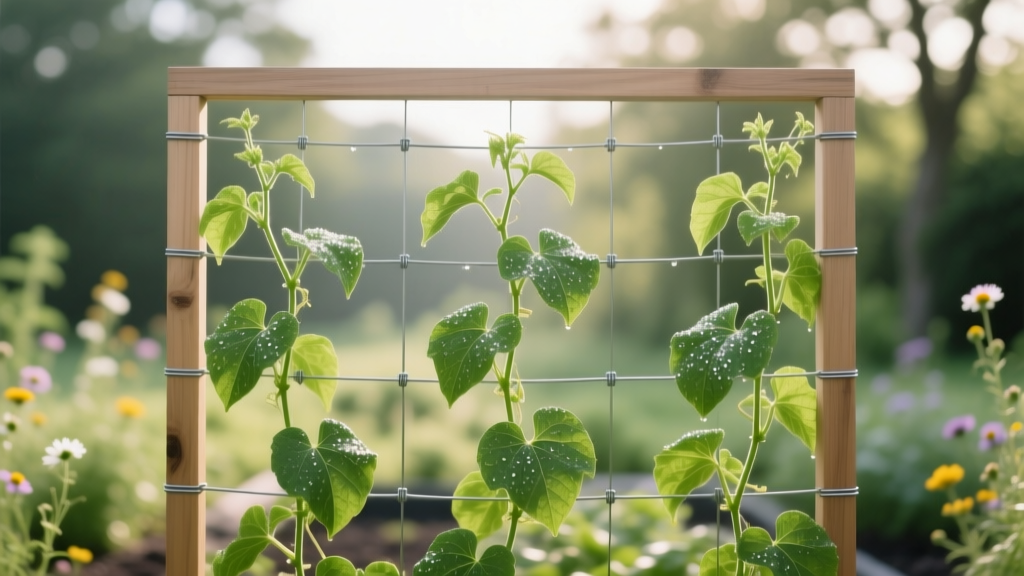
How to Trellis Native Plants with SCROG
The first time I tried to “let the natives do their thing,” my backyard turned into a polite riot: tall stems flopped into paths, flower stalks snapped in a summer thunderstorm, and the whole patch shaded itself so hard that the lower leaves yellowed by mid-July. I didn’t want to cage native plants with stiff stakes (they’re supposed to look natural, after all), but I also didn’t want half my blooms face-down in the mulch.
That’s where SCROG—short for “screen of green”—quietly shines outside of its better-known use in other gardening circles. In plain home-gardener terms, SCROG is a horizontal net or screen you weave stems through so plants share support, spread out evenly, and catch more light. Done right, it’s a low-profile trellis that keeps native perennials upright, storm-resistant, and more floriferous, without looking like you built a scaffolding project in the yard.
This guide is written the way I teach it in a real garden: what to build, when to start, how to water and feed under a screen, and how to troubleshoot the stuff that actually goes wrong—mildew, snapped stems, drought stress, and the classic “I waited too long and now it’s a jungle.”
What SCROG Looks Like in a Native Plant Bed
SCROG for native plants is a horizontal support grid set over a planting area. Instead of tying each stem to a stake, you guide stems outward under/through the net as they grow. The result is a flatter, wider canopy with better light penetration, less flopping, and fewer breakages in wind.
- Best for: Tall or floppy natives (1–6 ft), clump-formers, prairie-style beds, pollinator patches, and mixed borders.
- Not ideal for: Woody shrubs (they need different training), tiny groundcovers, or plants you don’t want spread laterally.
- Typical screen height: 12–24 inches above soil for most perennials (adjust by species and expected height).
One reason it works is physics: a horizontal grid creates many small support points rather than a few big ones. That distributes wind load and keeps stems from leaning as a group.
Real-World Scenarios: Where SCROG Pays Off
Scenario 1: Storm-prone yards with tall natives
If your summer includes thunderstorms and gusty fronts, tall plants like Joe Pye weed (Eutrochium spp.) or cup plant (Silphium perfoliatum) can lodge (lean over) or snap. A SCROG net set at 18 inches with a second layer at 36 inches can cut storm damage dramatically because stems brace each other.
Scenario 2: Small gardens that need order without looking formal
In a 4 ft x 8 ft bed, it’s easy for one aggressive native to shade out neighbors. SCROG training spreads the dominant plant outward, letting light reach shorter species beneath. You get a fuller “meadow” look without one plant hogging the skylight.
Scenario 3: Pollinator gardens where airflow matters
Powdery mildew and leaf spot love crowded, stagnant canopies. A flattened, evenly spaced canopy improves airflow and sun exposure. That reduces disease pressure, especially late summer when dew lingers and plants are at peak density.
Native Plants That Respond Well (and Ones That Don’t)
Use SCROG on plants that can bend while young and keep growing after light training. If a stem is brittle at 8 inches tall, it’s a poor candidate.
- Great candidates: bee balm (Monarda fistulosa), obedient plant (Physostegia virginiana), asters (Symphyotrichum spp.), goldenrods (Solidago spp.), blazing star (Liatris spicata), culver’s root (Veronicastrum virginicum), ironweed (Vernonia spp.).
- Good with care: Joe Pye weed, switchgrass (Panicum virgatum), prairie dropseed (Sporobolus heterolepis) — train early; don’t force thick stems through small squares.
- Skip SCROG: milkweed with brittle stems (some Asclepias spp. can snap if handled late), woody natives (buttonbush), plants you want upright as accents (some ornamental grasses look best untrained).
SCROG vs. Stakes vs. Tomato Cages (with Real Numbers)
Most gardeners already own stakes or cages. Here’s how the methods compare in a native bed.
| Support Method | Typical Cost (per 4x8 bed) | Install Time | Storm Resistance | Look in a Naturalistic Bed | Best Plant Height Range |
|---|---|---|---|---|---|
| SCROG net on stakes | $15–$35 (net + 6–8 stakes) | 30–60 minutes | High (distributed support) | Low-visibility once plants fill in | 2–6 ft |
| Single stakes + ties | $10–$30 (stakes + soft ties) | 45–90 minutes (ongoing) | Medium (failure at tie points) | Visible, can look fussy | 2–7 ft |
| Tomato cages (metal) | $30–$80 (3–5 cages) | 20–40 minutes | Medium (top-heavy in wind) | Very visible, “vegetable garden” vibe | 2–5 ft |
If you’re supporting a mixed native planting, SCROG usually wins for labor over the whole season because you guide stems for a few weeks, then you’re done.
Materials and Build: A Practical SCROG Setup for Natives
You don’t need specialty gear. The goal is a grid that’s strong, weatherproof, and easy on stems.
- Netting: UV-stable trellis netting (plastic) or soft polypropylene. Aim for 4–6 inch squares for mixed perennials.
- Stakes: 1x1 wooden stakes, metal T-posts, or fiberglass rods. For a 4x8 bed, 6–8 stakes is typical.
- Fasteners: zip ties, garden twine, or stainless staples (avoid thin wire that cuts stems).
- Optional: a second net layer for very tall plants (set 12–18 inches above the first).
Step-by-step: Installing SCROG in a perennial bed
- Install stakes early (when shoots are 6–10 inches tall). Push stakes 8–12 inches into the soil so they don’t wobble.
- Set net height at 12–24 inches above soil level for most natives. If the plant matures at 4–5 ft, start around 18 inches.
- Tension the net so it’s snug like a trampoline, not sagging. Sagging nets create “pockets” that trap stems and funnel water.
- Weave, don’t force stems as they grow: guide them sideways under a square, then let them rise through the next opening.
- Stop training once stems thicken and flower buds set—usually when plants reach about 50–70% of final height.
“Support systems work best when installed before plants need them—waiting until after lodging starts often causes more stem breakage than the wind did.” — University of Minnesota Extension, staking and supporting garden plants (2023)
Light: Using SCROG to Fix Shading and Stretching
Most prairie and meadow natives want full sun: 6+ hours of direct light. In part shade, plants often stretch, lean, and flop—exactly the behavior SCROG can help manage, but only to a point.
- Full sun beds: SCROG spreads growth laterally, improving bloom density and reducing self-shading.
- Part shade beds (3–5 hours): Use a higher net (18–24 inches) and be gentle; shaded stems are softer and snap more easily if bent late.
- Heat reflection zones: Near pavement, plants may grow faster and taller early. Install your net 1–2 weeks earlier than usual.
Soil: Getting Roots Right Under a Screen
A SCROG net doesn’t replace good soil—it reveals it. When roots are weak, top growth gets floppy and disease-prone no matter what you do overhead.
Texture and drainage targets
- Ideal: Loam to sandy loam with steady moisture and good drainage.
- Heavy clay: Don’t “fix” it by digging deep and adding a little compost to the hole (that can create a bathtub effect). Instead, top-dress with 1–2 inches of compost each spring and consider a slightly raised bed (3–6 inches).
- Very sandy soils: Add organic matter annually and mulch to reduce drying. SCROG helps reduce wind desiccation by keeping plants interlaced, but you’ll still need consistent watering.
For many native perennials, moderate fertility is better than rich soil. Overly rich beds cause lush, weak stems that flop even with support.
Watering: How to Keep SCROG’d Natives Hydrated (Without Encouraging Mildew)
Once the screen is in place, watering becomes a “below the canopy” job. Overhead sprinklers can sit water on leaves and increase foliar disease, especially in crowded patches.
Baseline watering numbers
- New plantings (first season): Aim for about 1 inch of water per week (rain + irrigation), delivered in 1–2 deep waterings.
- Established natives (year 2+): Many do fine with rainfall, but during dry spells longer than 10–14 days, water deeply.
- Deep watering target: Moisten soil down 6–8 inches. A soil probe or even a long screwdriver tells the truth.
Drip lines or soaker hoses under mulch are ideal under SCROG. If you must use a hose, water early in the day so foliage dries fast.
Case: Drought + SCROG in midsummer
In a hot stretch (highs above 90°F for several days), a screened bed can look deceptively okay until it suddenly doesn’t—because foliage is supported and not wilting outward. Watch for subtle signs: dull leaf color, slower growth, and lower leaves crisping. Water deeply, then add 2–3 inches of mulch (keep it an inch away from crowns).
Feeding: Fertilizer and Compost Without Making Plants Flop
Most native plants need less feeding than traditional garden perennials. The biggest mistake I see is heavy nitrogen fertilizer in spring—plants shoot up soft and tall, then slump under their own weight.
Practical feeding plan
- Spring: Top-dress with 1 inch of finished compost, especially in sandy or depleted soils.
- Skip high-N lawn fertilizers anywhere near the bed. If you use granular fertilizer, choose something mild (for example, 3-1-2 ratio) and apply at half the label rate.
- Midseason: If plants are pale and growth is stalled, use a light compost tea or a small side-dress of compost—not a big fertilizer hit.
Research and extension guidance consistently warns that excess nitrogen increases weak, succulent growth and lodging risk. That’s exactly what we’re trying to prevent with SCROG. (North Carolina State Extension, nutrient management and plant growth, 2022)
Timing: When to Start Training (and When to Stop)
SCROG is forgiving, but timing matters. Most breakage happens when gardeners try to bend mature, stiff stems.
- Start: when shoots are 6–10 inches tall and still flexible.
- Prime training window: the next 2–4 weeks, depending on growth rate.
- Stop: once stems are firm and flower stalks are clearly forming—usually around 50–70% of final height.
Common Problems (and How to Fix Them)
Problem: Stems snapping during training
Symptoms: A crisp crack when you guide a stem; the top wilts within hours.
Likely causes: Training too late; net squares too small; bending in cool weather when stems are brittle.
Fix:
- Train earlier next season (start at 6–10 inches).
- Use 6-inch squares for thick-stemmed species (Joe Pye weed, cup plant).
- On damaged stems, make a clean cut below the break and let the plant regrow side shoots.
Problem: Powdery mildew or leaf spot under the canopy
Symptoms: White powdery coating, speckled leaves, premature yellowing—often late summer.
Likely causes: Canopy too dense; overhead watering; poor airflow; susceptible species like bee balm.
Fix:
- Thin selectively: remove 10–20% of the most crowded stems at the base.
- Water at soil level, morning only.
- Avoid high-nitrogen feeding that pushes dense growth.
Extension offices routinely recommend improving airflow and avoiding overhead irrigation to reduce powdery mildew pressure. (Cornell Cooperative Extension, powdery mildew management, 2021)
Problem: Net sagging into the plants
Symptoms: The screen droops; stems tangle; rainwater pools; plants look “compressed.”
Likely causes: Not enough stakes; net not tensioned; cheap netting stretching in heat.
Fix:
- Add stakes so spacing is about 2–3 ft apart.
- Re-tension and secure with additional ties.
- Switch to UV-stable netting next season.
Problem: Plants grow tall above the screen and still flop
Symptoms: Lower stems are supported, but the top third leans or collapses after rain.
Likely causes: Only one net layer used for very tall plants; overly rich soil; too much shade causing stretching.
Fix:
- Add a second screen 12–18 inches above the first (install early enough to guide stems into it).
- Dial back fertility; stop nitrogen applications.
- In part shade, choose shorter natives or move the tallest ones to full sun.
Troubleshooting by Symptom: Quick Diagnostics
- Lower leaves yellowing while top is green: often shading + dense canopy. Spread stems outward, remove a few crowded shoots, and ensure 6+ hours of sun if possible.
- Brown leaf edges in hot weather: drought stress or hot wind. Deep water to 6–8 inches and mulch 2–3 inches.
- Few flowers, lots of leaves: too much nitrogen or too much shade. Reduce feeding, and make sure the canopy isn’t blocking itself—SCROG should widen the plant, not pile it up.
- Plants “freeze” after training: you may have over-bent too many stems at once. Train gradually over several days, especially if stems are thick.
SCROG Maintenance Through the Season
Once plants have filled in, SCROG becomes almost invisible—and that’s the goal. Your job shifts from training to monitoring.
Weekly check (10 minutes)
- Look for stems rubbing on netting; reposition gently.
- Check ties and stake stability after storms.
- Spot early mildew and thin lightly before it spreads.
Midseason adjustment
If growth is explosive, do one more round of gentle weaving when stems are still pliable. If stems are already rigid, don’t force it—add a second support layer instead.
End-of-Season: Cutting Back and Resetting the Screen
After frost, you can handle cleanup two ways depending on your wildlife goals and your tolerance for winter structure.
- Leave stems for habitat: Many gardeners leave standing stems through winter for native bees and birds. In that case, leave the screen in place and cut back in early spring when daytime temps are consistently above 50°F.
- Tidy fall cutback: Cut stems at 6–12 inches and remove the net to store it. This is cleaner, but you lose some winter interest and habitat value.
If you reuse netting, rinse and dry it before storage so it doesn’t become a disease “memory” for next year. Replace netting that’s brittle or stretched—support is only as good as the grid.
Once you’ve run SCROG in a native bed for a season, you’ll notice something surprising: the garden looks more natural, not less. Plants stand where they’re meant to stand, flowers face up instead of sideways, and the whole patch reads like a stable plant community rather than a rowdy crowd after a rainstorm. That’s the quiet win—less fussing, more bloom, and fewer snapped stems when summer weather does what summer weather always does.