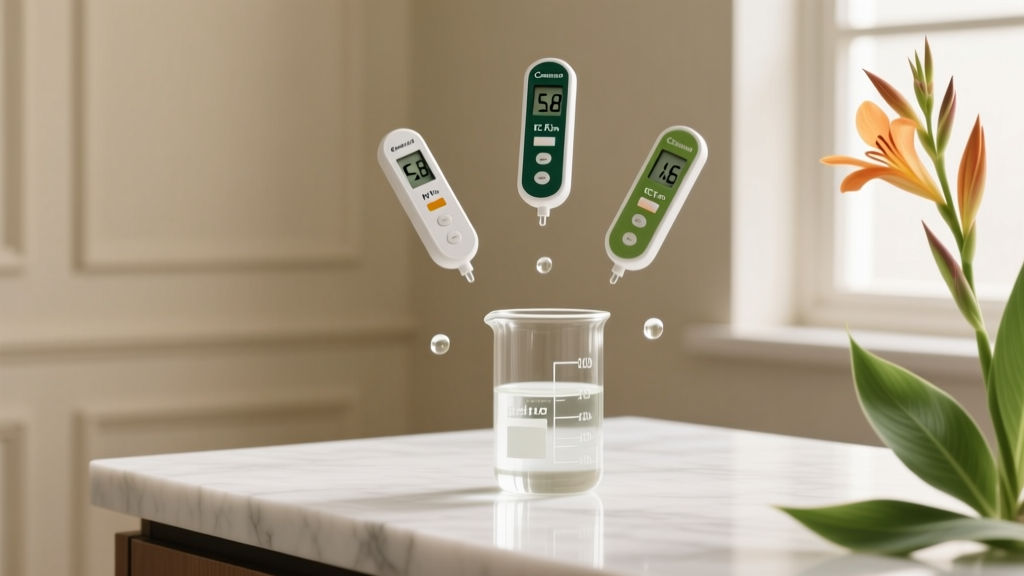
Reading EC and pH for Canna Lilies Nutrient Solution
You mix up a fresh reservoir, set your canna lilies under bright light, and within a week the leaves start showing rusty edges and the new growth looks smaller than it should. You swear you followed the fertilizer label—so why do the plants look underfed (or fried)? Nine times out of ten, the answer is hiding in two numbers most home gardeners don’t measure often enough: EC (electrical conductivity) and pH. Cannas are vigorous feeders, but they’re also very honest—if your solution is too strong, too weak, or the pH is out of range, they’ll tell you fast.
This guide is about reading EC and pH in a practical, do-this-next way, specifically for canna lilies (Canna spp.) grown in containers, semi-hydro, hydroponics, or any setup where you’re mixing a nutrient solution. You’ll get target ranges, step-by-step testing, and real-world troubleshooting—because the “perfect” number is less important than what your plant is actually doing.
What EC and pH actually tell you (and why cannas care)
EC is a snapshot of how many dissolved salts (nutrients) are in your solution. Higher EC generally means a stronger nutrient mix. It doesn’t tell you which nutrients are present—just the overall concentration.
pH affects nutrient availability. If pH drifts too high or too low, cannas can show deficiency symptoms even when EC looks “perfect,” because the roots can’t access what’s there.
Most home growers get tripped up by one of these three situations:
- EC is fine, pH is off: leaves yellow or pale, growth slows, odd spotting appears.
- pH is fine, EC is off: burned edges (too high) or weak, thin stems (too low).
- Both numbers look fine, but the plant still struggles: temperature, oxygen at the roots, or salt buildup in the pot is the real culprit.
For general reference on soluble salts and their impact on container-grown plants, see the University of Massachusetts Amherst Extension greenhouse guidance on substrate EC and fertility management (UMass Extension, 2019). For pH effects on nutrient availability and recommended ranges in soilless culture, North Carolina State University’s floriculture resources are also a solid baseline (NC State Extension, 2020).
Target EC and pH ranges for canna lilies (actionable numbers)
Cannas are not delicate seedlings—they’re bold, fast growers. But they still respond best to a sensible range rather than a “crank it up” feeding approach.
Practical targets (home grower friendly)
- pH target: 5.8–6.3 (safe working range: 5.6–6.5)
- EC target for active growth: 1.6–2.2 mS/cm
- EC for small divisions/newly potted rhizomes: 0.8–1.2 mS/cm
- EC in hot weather (> 86°F / 30°C): aim lower, 1.4–1.8 mS/cm to reduce stress
- Reservoir temperature: keep solution around 65–75°F (18–24°C) if possible
If you only remember one thing: hold pH steady near 6.0, then adjust EC based on growth speed, leaf color, and weather.
Testing EC and pH the right way (so your numbers mean something)
EC and pH meters are only as good as the habits behind them. Here’s how to get readings you can trust.
Step-by-step: measuring EC and pH (in 5 minutes)
- Calibrate weekly if you’re actively growing cannas indoors or in hydro. At minimum, calibrate every 2–4 weeks.
- Rinse the probe with distilled water (not tap—tap can skew readings).
- Stir the reservoir or mix sample water well before testing; stratification is real.
- Measure EC first, then pH (pH probes are more sensitive to contamination).
- Record numbers with date, plant stage, and weather. A simple notebook beats memory every time.
Make sure you’re speaking the same EC “language”
Some meters read EC (mS/cm), others read PPM/TDS. PPM isn’t universal—there are different conversion scales. If your meter shows PPM, check which factor it uses (commonly 500 or 700). As a rough guide:
- 1.0 mS/cm ≈ 500 ppm on a 500-scale meter
- 1.0 mS/cm ≈ 700 ppm on a 700-scale meter
For clarity, this article uses mS/cm for EC targets.
Watering and solution management (where most EC/pH problems start)
Cannas love moisture, but “constantly wet” can mean two very different things: oxygen-rich hydroponic flow, or stagnant, sour potting mix. Your approach changes how you interpret EC and pH.
Scenario 1: Container canna with heavy watering (salt buildup trap)
If you’re watering a potted canna daily in summer, you can still get salt buildup because water evaporates and leaves salts behind. The pot may look healthy—until leaf edges crisp and older leaves bronze.
What to do:
- Every 2–3 weeks, do a “mini-leach”: water until you get 15–20% runoff.
- Once a month in peak growth, flush with plain water adjusted to pH 6.0–6.3.
- If runoff EC is more than 1.0 mS/cm higher than your input, you’re accumulating salts—reduce feed strength and flush.
Scenario 2: Hydro/semi-hydro canna with a reservoir (pH drift reality)
In reservoirs, pH tends to drift as plants feed—often upward. You’ll see the pH creep from 6.0 to 7.0 in a few days, and suddenly iron and manganese become less available.
Good routine:
- Top off with plain water (pH-adjusted) daily or every other day.
- Replace the whole reservoir every 7–14 days.
- Correct pH in small steps: aim to change no more than 0.3–0.5 pH units at a time.
Scenario 3: Outdoor canna in extreme heat (EC that was fine yesterday becomes too hot today)
At 90–95°F (32–35°C), cannas transpire hard. A strong feed that worked at 75°F can become harsh. Leaf margins burn first, then older leaves yellow.
Heat adjustment: drop your EC by about 0.2–0.4 mS/cm and increase plain-water irrigations. Keep pH steady.
Soil and media choices (how they change your EC/pH strategy)
“Soil” for cannas can mean garden beds, potting mix, coco coir, LECA, or a peat-based soilless blend. Each one buffers pH and holds salts differently.
Best media traits for cannas in containers
- Fast drainage but consistent moisture retention
- Air at the roots (cannas hate sour, stagnant conditions)
- Some buffering so pH doesn’t swing wildly (peat-based mixes typically buffer more than pure coco/LECA)
If you’re using coco coir, pay extra attention to calcium and magnesium balance; coco can tie up Ca/Mg. In practice, that means you may need a Cal-Mag supplement and tighter EC control.
Light and temperature: how they change your ideal EC
Here’s a rule I’ve seen play out in greenhouse after greenhouse: more light and warmth = cannas can use more feed. Low light = the same EC becomes too strong because the plant isn’t growing fast enough to use it.
- Full sun outdoors (6–8+ hours): EC can often sit happily at 1.8–2.2 mS/cm in mild temps.
- Bright indoor grow lights: aim for 1.4–1.8 mS/cm unless you’re truly running high PPFD and warm temps.
- Cool conditions (< 60°F / 16°C): reduce EC; uptake slows and salts accumulate.
“Most nutrient problems are really growth-rate problems—when the plant slows down, the fertilizer program has to slow down too.” — greenhouse fertility guidance summarized from university floriculture training materials (NC State Extension, 2020)
Feeding cannas: a practical EC/pH program that works
Cannas respond best to steady feeding rather than occasional heavy doses. Think “consistent breakfast,” not “big buffet once a month.”
A simple growth-stage feeding plan
- New rhizomes/divisions (first 2–3 weeks): EC 0.8–1.2, pH 5.8–6.3
- Active vegetative growth: EC 1.6–2.2, pH 5.8–6.3
- Bloom push (once tall and robust): stay near EC 1.8–2.2; don’t chase flowers by spiking EC—keep pH stable and ensure adequate potassium
- Late season slowdown: EC 1.0–1.4, especially if nights cool below 55°F (13°C)
Method comparison: constant feed vs weekly feed (with numbers)
Two common home-gardener approaches can both work, but they behave differently in pots and reservoirs.
| Method | Example EC target | How often | Pros | Common failure point |
|---|---|---|---|---|
| Constant feed (recommended for containers/hydro) | 1.6–2.0 mS/cm | Every watering / continuous reservoir | Steady growth, fewer swings, easier troubleshooting | Salt buildup if you never leach/flush; pH drift in reservoirs |
| Weekly feed + plain water | 2.2–2.6 mS/cm on feed day | Feed every 7 days; plain water in between | Simple schedule, less meter use | Root stress from spikes; can underfeed in high growth/light |
If you’re growing cannas in a decorative container and you can’t easily measure runoff EC, constant feed at a moderate EC is usually safer than periodic high-strength feedings.
Common problems: reading the plant, then confirming with EC/pH
Cannas are expressive. The trick is learning which symptoms point to EC, pH, or something else (like pests or cold roots).
Symptom: Leaf tips and edges turn brown and crispy
Most likely cause: EC too high, or salt buildup in the potting mix. Heat and dry air can make it worse.
What to check:
- Input EC (what you’re feeding)
- Runoff EC (what’s leaving the pot), if possible
- Temperature: is it above 86°F/30°C?
Fix:
- Flush with pH-adjusted water (aim pH 6.0–6.3) until runoff EC drops closer to input.
- Reduce feed by 0.3–0.5 mS/cm for the next 7–10 days.
- In heat, provide afternoon shade or move containers out of reflective heat pockets.
Symptom: New leaves are pale, yellow, or striped (older leaves still green)
Most likely cause: micronutrient lockout from high pH (especially iron). Cannas will often show this when pH climbs above 6.8–7.2 in a reservoir or alkaline tap water system.
Fix:
- Bring pH back to 5.8–6.3.
- If your tap water alkalinity is high, consider blending with RO/distilled water or using an acid-based pH down consistently.
- Don’t immediately raise EC—solve pH first.
Symptom: Slow growth, thin stems, smaller leaves
Most likely cause: EC too low for the light level, or the plant is root-bound/cold.
What to do:
- Confirm EC is at least 1.4–1.6 during active growth (more light can justify 1.8–2.2).
- Check root temperature; if your solution/media is sitting at 55–60°F (13–16°C), growth will crawl.
- Up-pot if the container is packed with rhizomes and roots.
Symptom: Brown spots, ragged tears, leaf splitting
Most likely cause: wind damage, mechanical tearing as leaves unfurl, or fungal spotting when leaves stay wet overnight.
How EC/pH fits in: plants under salt stress (high EC) spot and tear more easily, but EC isn’t usually the sole cause.
Fix:
- Water early in the day so leaves dry before night.
- Improve airflow and avoid overhead watering late.
- Keep EC within target and avoid harsh spikes.
Troubleshooting: when your EC and pH won’t behave
Sometimes the plant isn’t the problem—the system is. Here are the stubborn situations I see most often with cannas.
Problem: pH keeps rising every day
Likely causes: high alkalinity water, fast vegetative uptake, or not changing the reservoir often enough.
Solutions:
- Replace the reservoir every 7–14 days instead of endlessly topping off.
- Use lower-alkalinity water (blend with RO) if your starting pH and alkalinity are high.
- Adjust pH in small corrections (no more than 0.5 pH units per adjustment).
Problem: EC keeps climbing even though you’re not adding fertilizer
Likely causes: evaporation and plant water uptake concentrates salts, especially in warm rooms or outdoors.
Solutions:
- Top off with plain, pH-adjusted water between feedings.
- In containers, ensure regular runoff (aim for 15–20%).
- Lower baseline EC by 0.2–0.4 and watch new growth for improvement.
Problem: EC is “perfect,” pH is “perfect,” but leaves still look off
At that point, expand your investigation:
- Pests: spider mites love cannas in hot, dry spots; look for stippling and fine webbing.
- Oxygen: stagnant water or waterlogged mix suffocates roots; new leaves emerge small and stressed.
- Temperature swings: cold nights below 50–55°F (10–13°C) can stall uptake for days.
- Rhizome crowding: a pot jammed with rhizomes can struggle to balance water and nutrients.
Common questions I hear from home gardeners (answered plainly)
Should I chase a specific EC number, or watch the plant?
Use EC as a steering wheel, not a finish line. If your canna is in full sun, warm, and pushing big leaves, an EC around 1.8–2.2 often performs well. If growth slows from cool weather or lower light, drop EC even if the “chart” says otherwise.
Do cannas prefer higher nitrogen?
They like nitrogen during vegetative growth, but they don’t like salt stress. I’d rather see a canna at EC 1.8 with stable pH than one at EC 2.6 that’s burning and oscillating between flushes.
How often should I measure?
When you’re learning your system: measure 2–3 times per week. Once stable: weekly is fine, with an extra check during heat waves or rapid growth spurts.
A simple weekly routine that keeps cannas thriving
If you want one reliable rhythm that prevents most EC/pH drama, use this:
- Twice weekly: measure EC and pH; write it down.
- Weekly: inspect new leaves (color, size, edge burn) and check undersides for mites.
- Every 7–14 days (reservoir): dump and remix fresh solution at target EC/pH.
- Every 2–3 weeks (containers): water to 15–20% runoff to prevent salt buildup.
- Monthly in peak season: one full flush with pH-adjusted water, then resume feeding at a moderate EC.
Cannas reward consistency. When your EC sits in a sane band, your pH stays steady around 6.0, and your watering practices prevent salt concentration, the plants stop “mysteriously” declining and start doing what they’re built to do—grow fast, throw big tropical leaves, and bloom like they mean it.
Sources: University of Massachusetts Amherst Extension greenhouse fertility/EC guidance (UMass Extension, 2019); North Carolina State University floriculture/soilless media pH and nutrient availability resources (NC State Extension, 2020).