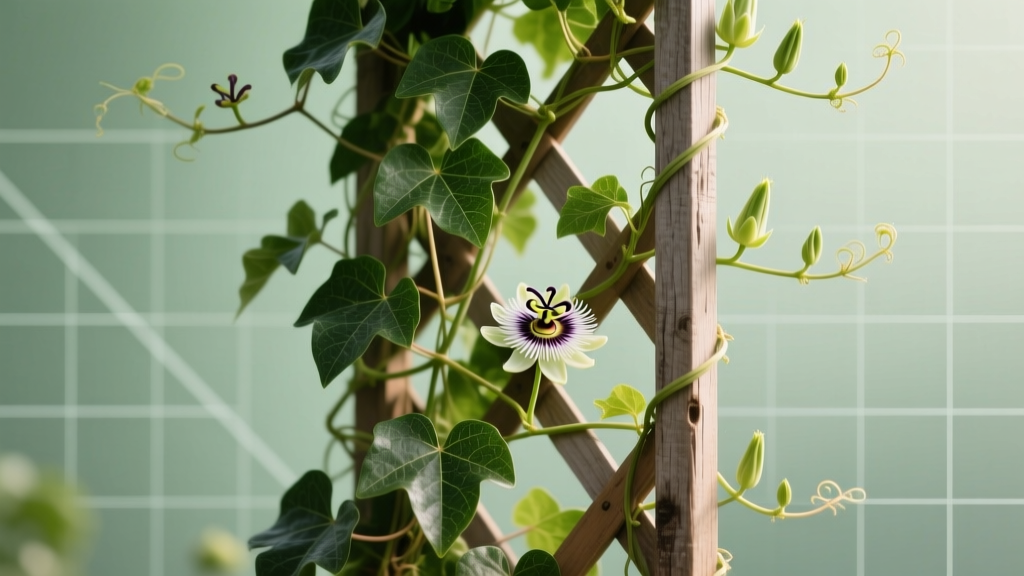
Monster Cropping Techniques for Climbing Plants
You prune a climbing plant hard, stick the cuttings in a tray, and expect a tidy little start. Then something strange happens: instead of one clean leader, you get a hedgehog of shoots—thicker stems, more side branches, and a plant that wants to “bush out” before it climbs. That’s monster cropping in a nutshell. It’s a technique growers originally leaned on with vigorous vines (especially indoors), but it translates beautifully to many home-garden climbers when you want fuller growth, more flowering points, or faster coverage of a trellis.
The catch is that monster-cropped cuttings don’t behave like normal cuttings. They drink differently, root differently, and they can sulk if you treat them like a standard softwood start. Below is the approach I use when I want dense, multi-stem climbers that can be trained into screens, arches, and fruiting walls without waiting two seasons to get volume.
What “monster cropping” means (and what it doesn’t)
Monster cropping is the practice of taking cuttings from mature, actively growing vines (often from flowering or post-flowering growth), rooting them, and then forcing a reset back into vegetative growth. That “reset” triggers irregular, vigorous branching—great for making a climbing plant that’s thick at the base and loaded with training options.
This is not the same as:
- Simple tip cuttings: taken from fresh, non-flowering tips for quick, predictable rooting.
- Layering: bending a stem to root while still attached (more reliable, slower, less branching chaos).
- Hard rejuvenation pruning: done on the mother plant rather than on cuttings.
Best candidates are climbers that root readily from cuttings and respond well to training: pothos (Epipremnum), philodendron, hoya (some species), passionflower (Passiflora), certain jasmines, ivy, many vining houseplants, and some ornamentals like bougainvillea (with patience). For woody climbers, monster cropping can still work, but timing and humidity control matter more.
Three real-world cases where monster cropping shines
Case 1: The “bare ankles” trellis problem. Your climber looks great up top but has a naked lower 2–3 feet. Monster-cropped cuttings planted at the base can create a dense skirt of new stems to weave into the bottom of the support.
Case 2: One vine, one leader, not enough coverage. You want a privacy panel by midsummer, not next year. Monster-cropped starts often throw 6–12 usable shoots in the first push, giving you more tie-in points fast.
Case 3: You inherited a leggy indoor climber. Many indoor climbers (pothos/philodendron) get long and sparse in low light. Monster cropping plus better light can restart them with compact nodes and branching, making a fuller plant for poles or wall training.
Method comparison: monster cropping vs standard cuttings vs layering
| Propagation method | Typical rooting time (most easy climbers) | Branching response after rooting | Risk level | Best use |
|---|---|---|---|---|
| Monster cropping (mature/flowering wood) | 21–45 days | High (often 3–10+ shoots from odd nodes) | Medium | Fast fullness, many training leaders, base density |
| Standard vegetative cuttings (softwood/tip) | 10–21 days | Moderate (usually 1–3 leaders unless topped) | Low | Predictable starts, quick turnover, uniform plants |
| Layering (ground or air layering) | 30–90 days | Moderate (branching depends on pruning later) | Low | Highest success rate, hard-to-root climbers |
Those rooting windows assume good conditions: 22–26°C (72–79°F), steady moisture, and bright (not scorching) light. Cool rooms (under 18°C/65°F) can double the wait time.
Step-by-step: how to monster crop climbing plants
1) Pick the right cutting (timing and size)
Look for semi-mature sections with multiple nodes. For most climbers, a 10–15 cm (4–6 inch) cutting with 2–4 nodes is the sweet spot—enough stored energy to push roots, not so big it collapses from water loss.
- Best timing outdoors: late spring through midsummer, when night temps stay above 15°C (59°F).
- Best timing indoors: any time you can keep temps 22–26°C and provide strong light.
If your plant is actively flowering, you can still take cuttings—just understand the cutting may take longer to “decide” it’s vegetative again. Removing flowers or buds helps reduce the energy drain.
2) Prep the cutting (clean cuts, fewer leaves, more nodes)
- Use clean pruners (wipe blades with isopropyl alcohol).
- Cut just below a node (nodes are where rooting hormones and meristem tissue are concentrated).
- Strip leaves from the lower 1–2 nodes so no foliage sits in the medium.
- Keep 1–2 leaves at the top; if they’re large, cut them in half to reduce transpiration.
If you use rooting hormone, use it sparingly. Many climbers root readily without it, but for slower woody types, a light dusting can speed things up.
3) Choose your rooting setup (humidity and air matter)
Monster-cropped cuttings like high humidity but hate stagnant conditions. Aim for 70–85% relative humidity with some air exchange. A clear dome works, but crack it daily.
Two reliable approaches:
- Perlite/peat or coco blend: fast rooting with good oxygen.
- Sphagnum + perlite (50/50 by volume): excellent for climbers prone to rot in heavy mixes.
Extension guidance commonly emphasizes sanitation and oxygen in propagation media. The North Carolina State Extension notes that rooting media should be well-aerated and kept moist but not waterlogged to reduce decay (North Carolina State Extension, 2019).
“Successful propagation is mostly about managing water loss from the cutting while roots are forming—high humidity helps, but oxygen at the stem base is what keeps rot from winning.” — summarized from principles outlined by RHS propagation guidance (Royal Horticultural Society, 2023)
Light: brighter than you think (but not roasting)
Monster-cropped cuttings need enough light to rebuild a vegetative engine, but they don’t have roots yet, so harsh sun can desiccate them fast. Indoors, I aim for bright, indirect light or a grow light set to 12–14 hours/day. Outdoors, use bright shade—think morning sun, afternoon protection.
Practical targets:
- Indoor window: 0.5–1 m (1.5–3 ft) back from a sunny window, depending on intensity.
- Under lights: keep many common LED grow lights about 30–45 cm (12–18 in) above the canopy (adjust to your fixture and plant response).
If you see leaf curl and crispy edges within 48 hours, that’s usually too much light/heat for a rootless cutting. Move it back and increase humidity slightly.
Soil and potting up: the “air first” mix for monster-cropped vines
Once you see roots poking from drain holes or you feel resistance when you gently tug (usually around 3–6 weeks), pot up into a mix that supports fast growth but doesn’t stay soggy. Monster-cropped plants often explode with shoots; a suffocating mix will stall them.
A dependable mix for many climbers (houseplant and patio vines alike):
- 40% high-quality potting mix
- 30% perlite or pumice
- 20% fine orchid bark (or pine bark fines)
- 10% worm castings or compost (optional, go easy)
Pot size matters. Start in a pot only 2–5 cm (1–2 in) wider than the rooted plug. Oversized pots stay wet too long and invite fungus gnats and stem rot.
Watering: keep it evenly moist, not “wet”
Watering is where most monster-cropping attempts fail—usually from love, not neglect. Cuttings without roots don’t “drink” the way established plants do. They mostly lose moisture through leaves, and the stem base needs oxygen to form roots.
While rooting (first 2–4 weeks)
- Mist only if humidity is low; don’t keep foliage constantly dripping.
- Moisten the medium thoroughly, then let the top 1–2 cm dry slightly before re-wetting.
- If using a dome, wipe excess condensation and vent daily for 10–20 minutes.
After potting up
Water deeply until you get runoff, then wait until the top 2–3 cm (1 inch) feels dry for most container-grown climbers. Outdoors in heat, that might be every 1–3 days; indoors it might be every 5–10 days, depending on light and pot size.
According to general container watering guidance, plants in pots require more frequent monitoring because they dry faster than in-ground plantings, especially in warm, windy conditions (University of Minnesota Extension, 2020).
Feeding: when to start, what to use, and how much
Don’t fertilize unrooted cuttings. Wait until you see active new growth and roots are established (typically 2–3 weeks after potting up, or 4–8 weeks from stick-in time).
My practical feeding schedule for monster-cropped climbers in containers:
- Week 0–4 (rooting): no fertilizer
- Week 4–8: half-strength balanced liquid feed (for example, 10-10-10 or 20-20-20 at 1/2 label rate) every 10–14 days
- After training begins: full-strength at label rate every 2–4 weeks, or a slow-release fertilizer applied per package directions
For flowering climbers, switch to a bloom-leaning formula once you’ve built structure (don’t rush this). If you push bloom too early, you get flowers on thin, poorly trained stems.
Training and pruning: turning “monster” growth into a well-mannered climber
The whole point of monster cropping is extra shoots—so use them. The trick is to train early while stems are flexible.
Basic training workflow
- Install support at pot-up: trellis, strings, moss pole, or wires. Don’t wait until roots fill the pot.
- Select 3–7 main leaders (depending on plant vigor and support width).
- Tie in weekly with soft ties; aim for gentle curves, not sharp bends.
- Pinch tips once leaders reach 20–30 cm (8–12 in) if you want even more branching.
If you’re building coverage on a trellis panel, spread leaders like a fan. If you’re aiming for a tall pillar, spiral them upward and remove the weakest interior shoots for airflow.
Common problems (and fixes that actually work)
Problem: Cuttings wilt hard within 24–72 hours
Symptoms: drooping leaves, curling edges, stems still green but limp.
Most likely causes: humidity too low, too much leaf area, too much light/heat.
Fix:
- Increase humidity to roughly 70–85% (dome, bag, or humidifier).
- Reduce leaf area: cut remaining leaves by 1/2.
- Move to bright shade; keep temps 22–26°C.
Problem: Stem base turns brown/black and mushy (rot)
Symptoms: foul smell, stem collapses at the medium line, leaves yellow quickly.
Most likely causes: waterlogged medium, poor airflow, contaminated tools/medium.
Fix:
- Take a fresh cutting above the rot line and restart in a more aerated mix (add 30–50% perlite).
- Vent the dome daily; don’t let water pool in trays.
- Sanitize tools; start with clean pots.
Problem: Roots form, but new growth is twisted, tiny, or stalled
Symptoms: tight, distorted leaves; multiple tiny shoots that don’t extend.
Most likely causes: low light, cold nights, nutrient deficiency after pot-up.
Fix:
- Increase light duration to 12–14 hours/day indoors.
- Keep temps above 18°C (65°F), ideally 22–26°C.
- Begin half-strength feeding once you see active roots and growth (every 10–14 days).
Problem: Fungus gnats in propagation trays
Symptoms: tiny black flies, larvae in wet medium, slower rooting.
Most likely causes: medium staying too wet; organic-heavy mix.
Fix:
- Let the surface dry a bit more between waterings (top 1–2 cm).
- Use yellow sticky traps for adults.
- Top-dress with a thin layer (1 cm) of coarse sand or fine gravel to discourage egg-laying.
Problem: Lots of shoots, but they snap when you train them
Symptoms: brittle stems, cracking at bends.
Most likely causes: low humidity during rapid growth, inconsistent watering, too much direct sun too soon.
Fix:
- Train earlier—when shoots are 10–20 cm long and pliable.
- Water evenly; avoid extreme dry-down cycles.
- Harden off gradually: increase sun exposure by 30–60 minutes/day over 7–10 days for outdoor placements.
Water, soil, and light adjustments by plant type (quick practical notes)
Monster cropping works across many climbers, but you’ll get better success if you match conditions to the plant’s natural preferences.
- Tropical indoor climbers (pothos, philodendron): prioritize warmth (22–26°C), bright indirect light, airy mix; avoid cold windowsills under 18°C.
- Flowering woody climbers (jasmine, bougainvillea): take semi-hardwood cuttings, keep humidity high but airflow higher; expect longer rooting (4–8 weeks or more) and don’t overwater.
- Fast herbaceous climbers (passionflower in warm weather): root readily with strong light and warmth; once rooted, they can drink heavily in growth spurts—check moisture daily in summer.
A practical “monster cropping” calendar you can follow
If you like a schedule, here’s one that fits most home setups:
- Day 0: take 10–15 cm cuttings, strip lower nodes, stick into airy medium, dome on
- Day 1–10: keep 22–26°C, vent daily, keep medium evenly moist
- Day 14–30: watch for callus and first roots; remove any yellowing leaves
- Day 21–45: pot up when rooted; start training immediately
- Week 6–10: begin half-strength feeding every 10–14 days; select leaders and pinch if desired
When monster cropping is a bad idea
Skip it if the mother plant is stressed (pests, drought, nutrient deficiency) or if you can’t provide warm temperatures and steady humidity. Also skip it for plants that are notorious for refusing cuttings in your conditions—layering will outperform monster cropping for reliability.
And if your goal is just “one vine that climbs fast,” standard vegetative cuttings plus a single strong leader is simpler. Monster cropping is for gardeners who want structure: multiple leaders, thicker bases, and more options for training.
Once you’ve done it a couple of times, you’ll start seeing opportunities everywhere—especially when you prune back an overgrown climber and realize those “mature” trimmings aren’t waste. Treat them like the high-energy, slightly unpredictable material they are: warm, bright, humid, and airy at the roots. Do that, and monster-cropped climbers will reward you with the kind of dense coverage that usually takes a lot more time.