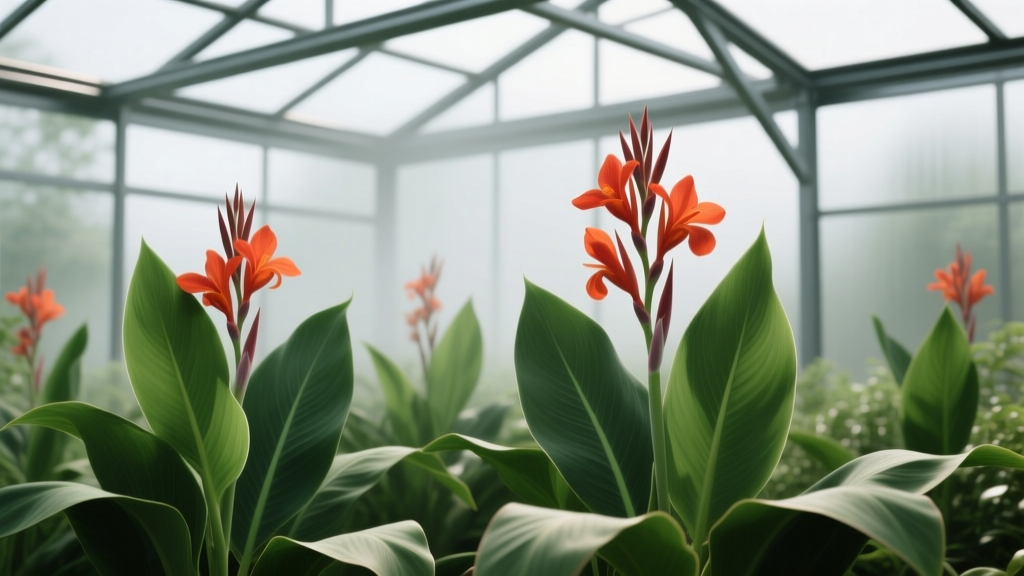
Shade Paint for Greenhouse-Grown Canna Lilies
The first time you see it, it’s confusing: your greenhouse cannas look like they’re thriving—tall, lush, fast-growing—then the newest leaves start to bleach at the tips, the flower buds stall, and by mid-afternoon the pots are hot enough to sting your palm. Outside, the same cultivar might handle full sun fine. Inside a greenhouse, though, light behaves differently. Glass (or poly) concentrates heat, limits air movement, and can push leaf temperatures well beyond what the air thermometer says. That’s where shade paint earns its keep—especially for canna lilies grown under cover.
I’m going to walk you through how to use shade paint to keep greenhouse-grown cannas productive and unblemished, without turning them into floppy, low-flower plants. Along the way we’ll cover watering, soil, feeding, light management, common problems, and a few real-life scenarios I’ve seen (and caused) myself.
Why cannas struggle in a greenhouse (and why shade paint helps)
Canna lilies (Canna spp.) love bright light and heat, but greenhouse conditions can create a mismatch: very high solar gain and leaf temperature with limited root-zone buffering in pots. It’s common to see midday leaf scorch even when the air temperature reads a “reasonable” 80–85°F (27–29°C). Under strong sun, leaf surface temperatures can jump much higher than ambient, especially when ventilation is limited.
Shade paint works differently from shade cloth. It reduces solar radiation before it enters the greenhouse, cutting heat load on the structure and plants. Because it’s applied to the outside of the glazing, it can lower internal temperatures more effectively than hanging cloth inside (which shades plants but still allows heat into the house).
“External shading is often the most effective method to reduce solar heat gain because radiation is intercepted before it enters the greenhouse.” — University of Florida IFAS Extension, Greenhouse Cooling and Ventilation publication (revised 2020)
Extension publications consistently emphasize that managing radiation and heat is central to greenhouse success. For example, Ohio State University Extension notes that shade is a key tool for reducing summer heat stress in greenhouses, often paired with ventilation and evaporative cooling (Ohio State University Extension Bulletin, 2019).
Light management: picking the right shade paint rate for cannas
For cannas, the goal is usually preventing scorch and heat stall without sacrificing flowering. In most home greenhouses, that means a 30% to 50% shade reduction during the brightest part of the season.
Target shade percentages (practical starting points)
- 30% shade: Good for spring/early summer, or bright houses with excellent venting. Often enough to stop tip scorch while keeping blooms strong.
- 40% shade: A solid “middle” setting for many hobby greenhouses from late spring through August.
- 50% shade: Best for very sunny climates, low ventilation, or if you regularly see leaf temperatures spike and buds stall.
Concrete numbers to keep in mind while you dial it in:
- Apply shade paint when daytime highs in the greenhouse regularly exceed 85°F (29°C).
- Try to keep midday leaf scorch risk down by holding canopy temperatures closer to 80–90°F (27–32°C), not 100°F+.
- Many shade paints are applied at 1:5 to 1:10 dilution with water depending on the product and target shade—always follow the label, then test a small section.
- Recoat intervals often run 6–12 weeks in strong sun or heavy rain regions.
- Plan to remove or weather off shading as days shorten, often by early September in temperate climates if you want late-season flowering under cover.
Shade paint vs shade cloth (with real-world tradeoffs)
| Method | Typical Shade Range | Heat Reduction Effect | Flexibility | Best Use Case for Cannas |
|---|---|---|---|---|
| Shade paint (external) | 20–60% | High (blocks radiation before entry) | Medium (seasonal; removal takes effort) | Summer scorch prevention; steadier temps for flowering |
| Shade cloth (internal) | 30–70% | Moderate (heat still enters structure) | High (open/close or swap cloths) | Quick response to heat waves; mixed plant collections |
| Whitewash / DIY lime wash | Variable (hard to control) | Moderate to high | Low (uneven; messy removal) | Budget setups; acceptable if you can tolerate variability |
If your cannas are your “featured plant” and you want predictable performance, commercial shade paint is easier to calibrate than DIY mixes. If you grow a lot of light-hungry crops (tomatoes, peppers) alongside cannas, consider painting only a section of the roof or using paint plus a retractable cloth so you can keep a high-light zone.
How to apply shade paint without regrets
A sloppy application is the fastest way to hate shade paint. Do it once, do it right.
- Pick a calm, dry day with temperatures between 55–80°F (13–27°C). Wind makes overspray and streaks.
- Clean the glazing first. Dust and algae cause uneven coverage. A quick wash improves adhesion and uniformity.
- Mix carefully. Use a bucket and drill mixer; follow label dilution. Most products settle fast.
- Test a small patch (one roof panel). Let it dry and check light levels/plant response for 48 hours.
- Apply evenly with a sprayer or roller designed for greenhouse use. Two light coats beat one heavy coat.
- Record your mix ratio and date. Next year you’ll thank yourself.
Removal matters, too. Many greenhouse shade paints are designed to weather off gradually; others require a remover solution. If your fall crops need more light, choose a product you can remove on schedule instead of waiting on storms.
Watering cannas under shade paint: less panic, more consistency
Once you shade the house, you’ll usually water a bit less frequently—but cannas are still thirsty in active growth. The mistake I see is swinging from “daily soaking” to “forgetting for three days” because the greenhouse feels cooler. Cannas want a steady supply, especially in pots.
Pot watering targets (actionable)
- In peak growth, expect to water every 1–2 days in 2–5 gallon containers, even with shading, depending on ventilation and potting mix.
- Water until you get 10–15% runoff from the drainage holes. This helps prevent salt buildup from fertilizer.
- If you use saucers, don’t let pots sit flooded for days. Aim for “consistently moist,” not “stagnant.”
- Morning watering (before 10 a.m.) reduces humidity spikes overnight and helps leaves dry faster.
Scenario #1: “I shaded the greenhouse and now my cannas are droopy”
This happens when shading lowers evaporation and the mix stays wet longer—especially in heavy peat mixes. Droop can be underwatering (wilting) or overwatering (root stress). Here’s how to tell quickly:
- If the mix is dry 2 inches down and leaves are limp: water deeply now, then check again the next morning.
- If the mix is wet and cool and leaves are limp or yellowing: stop watering for a day, increase air movement, and check roots for rot.
A simple habit: lift the pot. A canna in active growth should feel noticeably lighter before you water again, even if the surface looks damp.
Soil and potting: the root zone is your temperature buffer
In a greenhouse, your canna’s root zone can swing hard—hot in sun, cold at night, and prone to staying wet when shaded. A resilient potting mix reduces stress.
A greenhouse-friendly canna mix (works in containers)
- 50–60% high-quality potting mix (peat/coir-based)
- 20–30% composted bark or pine fines (adds air space)
- 10–20% perlite or pumice (prevents waterlogging)
Aim for a pH around 6.0–6.8. If you’re using a lot of compost, be cautious: it can hold water and salts in containers.
Container size matters more than people think
Cannas are vigorous. In a greenhouse, small pots overheat and dry fast (or stay sour if shaded and overwatered). For most full-size cultivars:
- Use at least a 3–5 gallon pot per rhizome division.
- For tall cultivars (5–6 ft), step up to 7–10 gallons if you want continuous bloom and less daily watering.
Feeding: shade paint changes growth rate, so adjust fertilizer
Cannas are heavy feeders when they’re growing fast. But after shading, growth may become a little less “rocket ship,” which is usually good—stronger leaves, less scorch—but it means you should fertilize with intention, not habit.
Practical fertilizing schedule
- At planting: incorporate a controlled-release fertilizer labeled for containers (follow the bag rate). Many home gardeners do well with a product in the 10-10-10 to 14-14-14 range.
- During active growth: apply a liquid feed every 7–14 days at 1/2 strength if using a general-purpose fertilizer.
- If you want more blooms than leaves, avoid pushing high nitrogen all season. Shift to a bloom-leaning ratio once plants are established.
Salt buildup is common in greenhouses because pots don’t get rain flushing. That’s why the earlier 10–15% runoff target matters. If you see white crust on the soil surface or pot rim, flush with clear water once, then resume feeding at a lighter rate.
For greenhouse fertility best practices (including leaching fractions and EC management), extension references are helpful. See University of Massachusetts Extension’s greenhouse crop management resources (UMass Extension, 2023) for practical guidance on avoiding soluble salt issues in container culture.
Common problems (and fixes) when using shade paint on cannas
Symptom: Leaf tips turn tan/white and crisp (scorch)
Most likely causes: too much direct radiation, high leaf temperature, inconsistent watering, or salt stress.
Fix it:
- Increase shading from ~30% to 40–50% if scorch persists for 3+ sunny days.
- Water earlier in the day and check that the pot isn’t drying to bone-dry between waterings.
- Flush salts once (water heavily to get generous runoff), then reduce fertilizer strength for 2 weeks.
- Add airflow: a horizontal airflow fan can reduce boundary-layer heat on leaves.
Symptom: Big leaves, few flowers
Most likely causes: too much shade, too much nitrogen, or warm nights.
Fix it:
- If you’re at 50–60% shade, try backing down (or removing paint on a section) to land closer to 30–40%.
- Switch from a high-N feed to a more balanced or bloom-forward fertilizer for 3–4 weeks.
- Keep plants spaced: crowded cannas shade each other and reduce flower initiation.
Symptom: Leaves split and shred easily
Most likely causes: airflow stress (fans/vents), low humidity swings, or fast growth with soft tissue.
Fix it:
- Adjust fan direction so it circulates air without blasting the plants.
- Don’t over-fertilize nitrogen during heat waves; soft growth tears more easily.
- Stake tall varieties early—waiting until they flop invites damage.
Symptom: Yellowing lower leaves and a sour smell in the pot
Most likely causes: waterlogged mix and root stress, often after shading reduces evaporation.
Fix it:
- Let the pot dry slightly (not bone dry) before watering again.
- Increase aeration: poke a few holes in the mix with a chopstick, or repot into a barkier mix if the plant is valuable.
- Check drainage holes for blockage.
Three real-world greenhouse scenarios (and what actually works)
Scenario #2: Heat wave hits, buds stall, and the greenhouse won’t cool down
If outside temps are pushing 95°F (35°C), your greenhouse is fighting physics. Shade paint helps, but it’s not magic by itself.
What works in practice:
- Use shade paint (aim 40–50% during peak summer).
- Vent aggressively: roof vents + side vents open early (around 9–10 a.m.) before heat builds.
- Add air movement at canopy level.
- Water the root zone thoroughly in the morning; avoid late-day overhead watering that drives humidity all night.
Bud stall is often a combination of heat stress plus inconsistent moisture. Once plants experience a few days of steadier temperatures, they typically resume normal bud development.
Scenario #3: Mixed greenhouse—tomatoes want sun, cannas want protection
This is a classic home setup. If you shade the whole house to save cannas, tomatoes may stretch and drop flower clusters.
A practical compromise:
- Paint only the southwest roof panels (or the sunniest exposure) where afternoon sun is harshest.
- Group cannas under the shaded zone; keep fruiting crops in the brighter zone.
- Use a temporary internal cloth over the cannas for heat spikes instead of painting the whole roof darker.
This “zoned shading” approach is one of the best arguments for shade paint: you can tailor it to your greenhouse orientation and plant placement.
Scenario #4: You applied shade paint and now fungal leaf spots show up
Shade doesn’t cause fungus, but it can slow leaf drying—especially if you also cut ventilation because the house feels cooler.
What to do:
- Improve airflow first; don’t just reach for sprays.
- Water the soil, not the leaves (or water early so foliage dries quickly).
- Remove the worst spotted leaves and discard them (don’t compost if disease is active).
- Space plants so air can move between leaves.
If disease pressure remains high, consider a preventative program appropriate to your region and label directions, but in most hobby greenhouses, airflow and watering timing fix the problem faster than chemicals.
Troubleshooting checklist: quick diagnostics you can do today
When cannas look “off,” don’t guess—run a short checklist.
- Check pot weight (dry vs waterlogged).
- Check leaf temperature by touch at midday: if leaves feel hot, you need more shade/airflow even if the air thermometer seems fine.
- Inspect new growth: distorted new leaves can signal thrips or aphids hiding in the whorl.
- Look at the underside for spider mites (fine stippling + webbing).
- Check runoff and crusting: white deposits suggest salts; flush and reduce feed strength.
Common pest problems under greenhouse conditions
Spider mites love hot, dry, still greenhouse air. Shading can help indirectly by lowering heat stress, but mites still thrive if airflow is poor.
- Symptoms: pale speckling, dull leaves, fine webbing
- Fix: rinse leaf undersides, increase humidity slightly and airflow, and use an appropriate miticide/soap per label if needed
Aphids and thrips often hide in the newest growth.
- Symptoms: sticky residue (aphids), distorted flowers (thrips), stippled or scarred petals
- Fix: remove the worst affected buds, use insecticidal soap or horticultural oil carefully (test first in hot weather), and keep weeds out of the greenhouse
Getting the best blooms: a simple seasonal rhythm that works
If you want cannas that look clean and flower steadily under cover, think in phases instead of constant tinkering.
- Early season (spring): high light, moderate feeding, steady watering. Hold off on heavy shading until the greenhouse regularly exceeds 85°F (29°C).
- Peak summer: apply 30–50% shade paint, prioritize airflow, water consistently, and don’t overdo nitrogen.
- Late season: as light drops, reduce shading (or remove/let weather off). This keeps plants flowering instead of stretching.
One last practical tip: keep notes. Write down the shade rate, application date, and what you observed (scorch stopped? flowering improved?). Your greenhouse is its own microclimate, and your “right answer” will be more accurate than any generic recommendation after one season of records.
Cannas are forgiving plants, but greenhouse-grown cannas are honest—they’ll tell you fast when radiation, heat, and watering are out of balance. Shade paint is one of the cleanest tools for restoring that balance. Get the shade percentage in the right ballpark, pair it with consistent watering and airflow, and you’ll stop fighting midday scorch and start enjoying the big leaves and bigger blooms you grew them for.
Sources: University of Florida IFAS Extension greenhouse cooling/ventilation guidance (revised 2020); Ohio State University Extension greenhouse management bulletin (2019); University of Massachusetts Extension greenhouse crop management resources on soluble salts and fertility (2023).