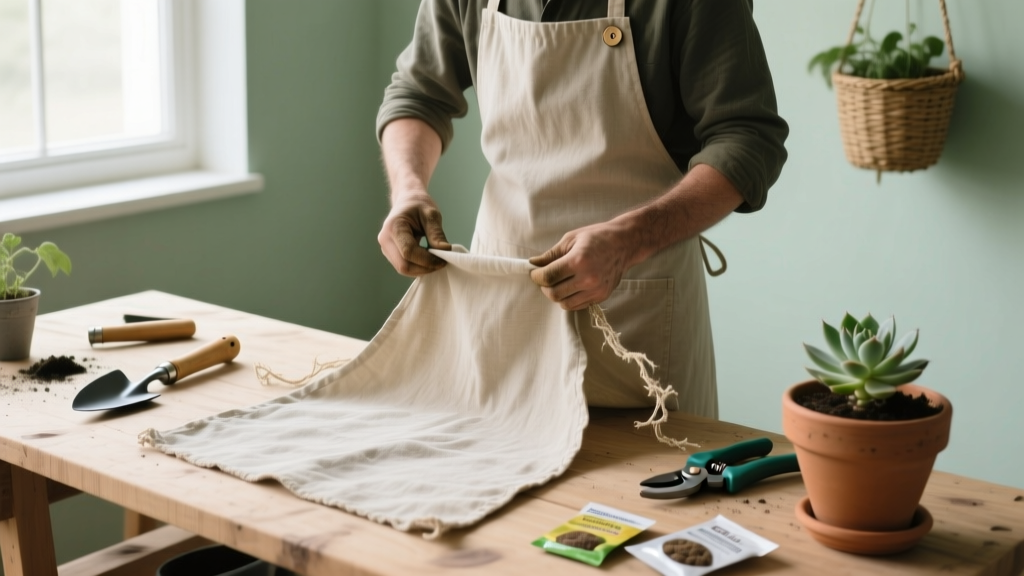
How to Build a Simple Garden Potting Apron
Most “gardening aprons” fail for one dumb reason: the pockets are sewn in the same flimsy cotton as the apron, so the first time you drop pruners or a full seed packet in there, the pocket sags, tears, or flips inside-out. That’s why a potting apron ends up hanging on a hook while you keep walking back and forth to the shed—tool in hand, soil on your sleeves, muttering at yourself.
A good potting apron isn’t about looking cute. It’s about shaving steps off your routine, keeping grit out of your waistband, and making sure the stuff you need is always within a 10-second reach. Below is a simple build you can do in an afternoon with basic supplies, plus the little tweaks that make it “I use this every day” good.
Start with the right materials (this is where most builds win or lose)
Tip: Choose fabric like you choose a shovel—match it to the job
For potting work, you want a fabric that shrugs off damp soil and doesn’t shred when you snag it on a bench corner. A 10–12 oz cotton duck canvas is the sweet spot: stiff enough to hold shape, still easy to sew on a home machine. If you pot a lot with wet mixes, consider waxed canvas or add a removable water-resistant panel.
Example: If you’re constantly working with pre-moistened coir, a thin quilting cotton apron will feel soaked in 5 minutes; a 12 oz canvas apron stays comfortable and doesn’t cling.
Tip: Use webbing for ties, not fabric straps
Fabric ties look tidy, but they stretch, twist, and eventually tear at the seam. A 1-inch (2.5 cm) cotton or poly webbing is cheap, strong, and distributes weight better when pockets are loaded. Cut two waist ties at 36 inches each and one neck strap at 24–30 inches (adjustable is even better).
Cost shortcut: Webbing is often $0.50–$1.00 per yard; you can salvage it from an old backpack or dog leash for basically free.
Tip: Reinforce pocket zones with a second layer (cheap insurance)
The pocket area takes the abuse: pruner tips, trowel edges, seed packet corners. Add a second layer of canvas behind the pockets (a “facing” panel) so you’re not relying on a single seam line. This also helps pockets keep their shape instead of collapsing when you bend.
Real-world win: A doubled pocket panel can easily add years—especially if you carry metal labels or a hori-hori.
Tip: Pick thread and needle like you mean it
Use polyester upholstery thread or a heavy-duty all-purpose thread; standard bargain thread can snap when you yank a pocket full of clips. Pair it with a size 16/100 or 18/110 needle for canvas. Set stitch length to around 3.0–3.5 mm so you don’t perforate the fabric like a tear strip.
Example: If you’ve ever seen stitches “pull out” in a straight line, that’s often too-short stitches on thick fabric.
Build the apron base (simple pattern, high payoff)
Tip: Use a “big rectangle” pattern that fits most bodies
You don’t need a fancy pattern. Cut your main apron body 26 inches wide by 32 inches tall for an average adult; this covers thighs when standing at a potting bench and still lets you kneel. If you’re tall, go 34 inches tall; if you’re petite, 28–30 inches tall usually feels better.
Scenario: If you pot on a high bench and hate soil bouncing onto your lap, add 2 inches of length and you’ll notice the difference immediately.
Tip: Hem the edges first so everything else is easier
Do a double-fold hem: fold 1/2 inch, then another 1/2 inch, press (or finger-press), and stitch. Hemming first prevents fraying while you wrestle with pockets later. It also makes the apron feel “finished” even if your sewing isn’t runway-perfect.
Timing: Hemming takes about 15–25 minutes and saves you from the slow unraveling that happens after a few wash cycles.
Tip: Make the neck strap adjustable (you’ll actually use it more)
An adjustable neck strap keeps the apron from riding up into your throat or sagging into your lap. The easiest method: sew one end of the neck webbing to the top of the apron, run the other end through a 1-inch tri-glide slider, then back through. If you don’t have a slider, use two D-rings and friction-lock the strap.
Example: If you share tools with a partner or teen helper, adjustable beats re-tying knots every time.
Pockets that don’t flop, tear, or trap soil
Tip: Build a “pocket panel” instead of sewing separate pockets
Cut one pocket panel 26 inches wide by 14 inches tall (same width as the apron). Hem the top edge of the pocket panel, then sew the panel onto the apron body on the sides and bottom. After it’s attached, stitch vertical lines to create compartments—this is stronger and faster than attaching three separate pockets.
Example: A panel with three stitched divisions gives you four pockets with only a few seam runs.
Tip: Make one pocket deep and one pocket shallow on purpose
Deep pockets (10–12 inches) hold gloves and seed packets without spilling when you bend. Shallow pockets (6–7 inches) keep small items visible—plant tags, pencil, dibber—so you’re not fishing around with dirty hands. Divide your panel so the shallow pockets sit at the top edge on one side, and deep pockets on the other.
Scenario: If you lose seed packets in a deep pocket, a shallow “seed slot” stops the crumpled-packet problem.
Tip: Add a reinforced tool sleeve for pruners (and keep blades pointed down)
Pruners are pocket destroyers. Sew a narrow sleeve (about 3 inches wide) on the right or left side depending on your dominant hand, and bar-tack the top corners. Position it so pruner tips point down and slightly outward to avoid poking your thigh.
Real-world safety note: Keeping sharp points down reduces accidental pokes when you squat—small change, big difference.
Tip: Stitch “X-box” reinforcements at stress points
Where straps and pockets take weight, sew an X inside a box (a common gear-making reinforcement). Do this where the waist webbing meets the apron and at the upper corners of pocket panels. It spreads the load so one thread line isn’t doing all the work.
Example: If you carry a 6 oz hand trowel plus clips, those stress points get tugged hundreds of times per season.
Tip: Leave a dirt-dump gap in one pocket seam
Here’s a sneaky hack: leave a 1-inch unstitched gap at the bottom corner of one pocket (and hem the gap edges). It creates a controlled “dirt outlet” so soil and perlite don’t build up like a pocket terrarium. You can shake the apron and the pocket clears itself.
Scenario: If you pot with perlite-heavy mixes, this saves you from the crunchy pocket problem.
Comfort upgrades that don’t cost much
Tip: Sew the waist ties slightly above your natural waist
If you attach the waist ties too low, the apron drags when pockets are loaded. Aim to place the waist webbing about 2 inches above the midpoint of the apron height so weight rides on your waist instead of your neck. Test by pinning and doing a squat and a reach before sewing.
Example: If you feel neck pull after 10 minutes, it’s often a waist placement issue, not the neck strap.
Tip: Add a quick-release buckle if you pot indoors
If you pot in a garage or mudroom, a side-release buckle on one waist tie lets you remove the apron without dragging dirty fabric across your shirt. A buckle costs around $2–$4 and takes 5 minutes to install. It’s a small quality-of-life upgrade that feels “shop apron” practical.
Scenario: Great for anyone who bounces between potting and answering the door—no awkward knot tugging.
Tip: Add a towel loop where your hand naturally reaches
Sew a 4-inch loop of webbing on your non-dominant side for a shop towel or rag. Put it 3–4 inches above the pocket top so a towel doesn’t drag through potting mix. This keeps your hands cleaner and your tools less slippery.
Real-world example: If you’re handling damp coir, a towel loop means you’re not wiping hands on your jeans (and tracking peat dust inside).
Potting-work features that make the apron earn its keep
Tip: Create a “label station” pocket for plant tags and a marker
Dedicate one narrow pocket to tags and one to a marker, and keep them on the same side every time. Labeling accuracy matters more than people admit—especially when seedlings look identical. University of Maryland Extension (2020) specifically emphasizes labeling and recordkeeping as a key practice in seed starting to avoid mix-ups and track varieties.
Example: A 2-inch-wide marker slot prevents the classic “marker buried under gloves” delay.
Tip: Add a mesh pocket for damp items (DIY produce bag trick)
If you tuck damp gloves into a sealed canvas pocket, they stay wet and funky. Sew a small mesh pocket using a cut-up produce onion bag or an old laundry bag; it dries faster and shakes clean. Make it about 6 x 6 inches and place it on the outer side so airflow hits it.
Cost: Free if you reuse mesh packaging; $3–$6 if you buy a small piece of mesh fabric.
Tip: Use a light-colored lining in one pocket so you can see small items
Dark pockets hide twist ties and tiny screws like they’re black holes. Add a scrap of light-colored cotton (even an old pillowcase) as a pocket lining or facing for your “small stuff” pocket. You’ll waste less time digging and dumping.
Example: If you’re always losing grafting clips or tiny dibbers, a pale lining is an instant upgrade.
Three real-world apron setups (steal one and adjust)
Scenario: The balcony gardener with a small potting tub
When space is tight, you’re constantly shifting tools to make room. Use two medium pockets (8 inches deep) for a hand trowel and scoop, plus a shallow pocket for seed packets so they don’t fold. Add a buckle so you can remove the apron before stepping back inside—no soil trail across your kitchen floor.
Numbers that matter: Keep the apron width at 24 inches (instead of 26) so it doesn’t catch on railings; keep pocket depth under 10 inches to avoid banging pots on your thigh.
Scenario: The seed-starting marathon (50+ cells at once)
If you’re filling trays, labeling, and misting, you need fast access to tags and a pen. Make the left side a “label station” (one 2-inch marker slot, one 3-inch tag slot), and the right side deep for a small mister and gloves. Ohio State University Extension (2013) highlights sanitation and clean handling in plant propagation; keeping a designated pocket for clean labels and marker reduces the chances you’ll set them down on a dirty bench and smear potting mix onto adhesive tags.
Example: If you’re doing tomatoes, peppers, and basil in one session, the apron prevents the “I’ll label later” mistake that turns into mystery seedlings.
Scenario: The perennial divider who keeps pruners and twine on hand
Division days are rough on gear: sharp tools, dirt, constant bending. Use the reinforced tool sleeve for pruners, add a narrow pocket for twine (or plant tape), and double-layer the entire pocket panel. Put the towel loop on the opposite side of pruners so you don’t snag fabric on blades when grabbing a rag.
Numbers that matter: Bar-tack the top of the pruner sleeve with 10–12 zigzag stitches, and use a 3.5 mm stitch length for main seams so canvas doesn’t perforate.
Smart shortcuts and DIY alternatives (for when you don’t want to sew much)
Tip: No-sew version using rivets or fabric glue (yes, it can work)
If sewing isn’t your thing, you can build a functional apron with iron-on hem tape for edges and rivets for straps and pocket corners. Use 6–8 medium rivets (around $6–$10 total) and a cheap rivet setter. Avoid relying only on glue for load-bearing pockets—glue is fine for hems, not for tools.
Example: A no-sew apron is great for a quick weekend build, but reinforce the pocket corners with rivets so pruners don’t rip them out.
Tip: Repurpose a canvas tote bag into an apron body
Old canvas totes already have heavy fabric and sometimes useful pockets. Cut one side panel open, flatten it, and use the existing tote pockets as your front pocket panel. Add a neck strap and waist ties from webbing or the tote handles.
Cost comparison: Free if you already have a tote; $12–$20 for new canvas yardage plus notions.
Tip: Use an old pair of jeans for pocket material (tough and soil-proof)
Denim from worn jeans is perfect for pocket panels and tool sleeves because it’s abrasion-resistant. Cut the thigh area for a large pocket panel, and use the back pocket as an instant “small item” pocket. Mix denim pockets with a canvas apron body for strength without buying extra fabric.
Example: If you always carry plant labels, that jeans back pocket is the right shape immediately.
Make it last longer (and keep it from becoming a crusty relic)
Tip: Pre-shrink fabric before you cut anything
Canvas and denim can shrink noticeably after washing. Run the fabric through a hot wash and dry before cutting so your finished apron doesn’t twist or shorten. This matters most if you’re adding webbing and hardware that won’t shrink with the fabric.
Numbers: Plan on 2–4% shrinkage for cotton canvas—on a 32-inch apron length, that can be close to an inch.
Tip: Wash cold, hang dry, and spot-clean the pocket interiors
Frequent hot washing breaks down fibers and makes pockets floppy. Instead, dump soil, brush off dried mix, and spot-clean with a damp cloth; wash cold when it’s truly grimy. Hang-drying keeps webbing and buckles in better shape.
Example: If you use a lot of compost, a quick hose-off outside followed by hang dry keeps odors down without beating up seams.
Tip: Treat canvas with wax for water resistance (optional, but satisfying)
If you want the “water beads off” effect, rub a fabric wax bar over the apron and heat it gently with a hair dryer to set. Focus on the pocket panel and lower front where wet mix splashes. This isn’t mandatory, but it’s handy if you pot with damp soil or work in drizzle.
Cost: A wax bar is typically $10–$15 and lasts multiple projects.
“Sanitation is one of the most important practices in propagation—clean tools and clean work surfaces help reduce disease problems.” — Ohio State University Extension, 2013
Quick comparison: simple build choices that change how the apron feels
| Build choice | Option A | Option B | Best for |
|---|---|---|---|
| Fabric | 10–12 oz canvas | Denim + canvas combo | Canvas for all-around; denim pockets if you carry sharp tools |
| Straps | Fabric ties | 1-inch webbing | Webbing if you load pockets with pruners, twine, tags |
| Pockets | Separate pockets | One pocket panel + stitched dividers | Panel method for strength and faster sewing |
| Closure | Knotted waist ties | Side-release buckle | Buckle for indoor/garage potting and quick on/off |
| Water resistance | None | Waxed treatment on pocket zone | Wax if you handle wet mixes daily |
If you build just one version, build it for your most annoying potting day. For some people that’s seed-starting season with labels everywhere; for others it’s repotting houseplants and hauling damp mix; for others it’s division and pruning with sharp tools. The best apron is the one that keeps you from walking back to the bench for “one more thing” twenty times.
And don’t be afraid to make it a little ugly at first. A potting apron is workwear—if you nail the pocket layout and reinforcements, you can always prettify it later with a bias tape edge or a nicer fabric. The real flex is finishing a potting session and realizing you never once had to wipe your hands on your shirt or hunt for your marker.
Sources: Ohio State University Extension (2013), propagation sanitation guidance; University of Maryland Extension (2020), seed starting practices emphasizing labeling/recordkeeping.