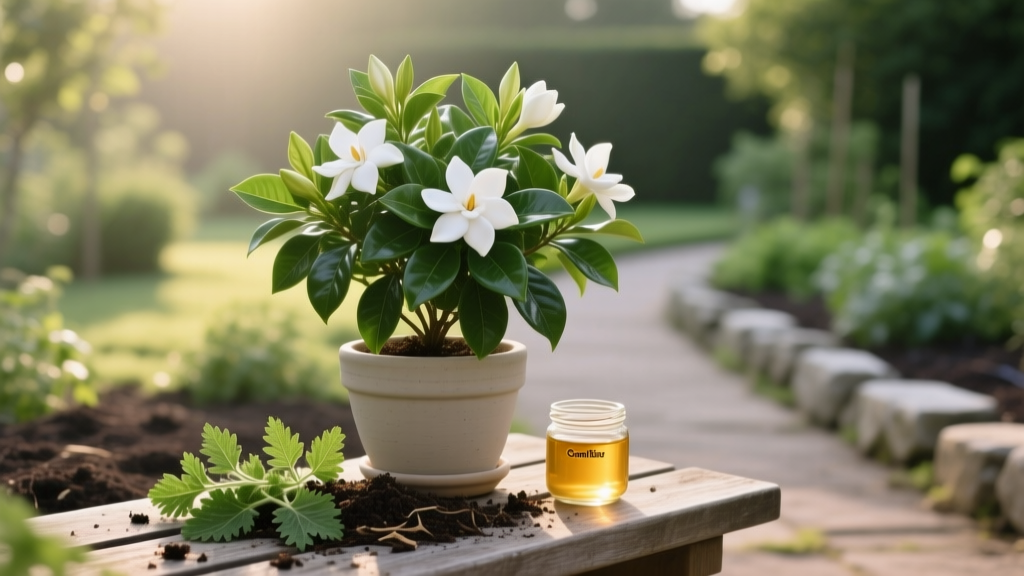
Comfrey Tea Fertilizer for Gardenias
The first time most gardeners reach for “something stronger” with gardenias is right after a perfect-looking plant drops half its buds overnight. You didn’t forget to water. You didn’t move it. The leaves still look green. And yet—buds turn brown, fall, and you’re left staring at a shrub that’s acting like it’s offended. In my experience, that’s often a feeding-and-soil chemistry problem hiding behind “normal care.”
Comfrey tea can help—sometimes a lot—but only when you use it with the right expectations. Gardenias aren’t heavy feeders in the way tomatoes are, but they are picky: they want consistent moisture, acidic soil (usually pH 5.0–6.0), and nutrients available in that pH range. Comfrey tea is best used as a supporting fertilizer: it adds potassium and trace minerals and brings a gentle, steady push that pairs nicely with acid-friendly feeding.
I’ll walk you through how I use comfrey tea for gardenias in real gardens (pots and in-ground), with exact mixing rates, timing, and troubleshooting for common “gardenia drama” like yellow leaves, bud drop, and weak blooming.
What comfrey tea actually does for gardenias (and what it won’t)
Comfrey (Symphytum officinale) accumulates minerals—especially potassium—in its leaves. When you steep comfrey leaves in water (aerobic tea) or ferment them (anaerobic “comfrey stink tea”), those nutrients become available in a form plants can take up quickly.
Here’s the grounded truth: comfrey tea is not a complete fertilizer. Potassium (K) tends to be the headline nutrient, while nitrogen (N) is moderate and phosphorus (P) is typically lower than people assume. That’s fine for gardenias if your goal is better bud development and bloom quality—as long as your plant isn’t already struggling with pH, iron availability, or inconsistent watering.
“Nutrient availability is strongly influenced by soil pH; iron and manganese deficiencies are common in high pH soils even when nutrients are present.” — North Carolina State University Extension (2023)
Gardenias are classic candidates for pH-related nutrient lockout. Comfrey tea can add nutrients, but it won’t fix alkaline soil by itself. Think of it as a tool you use after you’ve gotten the basics right: soil acidity, drainage, and steady moisture.
Real-world scenarios: when comfrey tea helps (and when it backfires)
Scenario 1: In-ground gardenia with good soil but light feeding
If your gardenia is planted in acidic soil (or amended acidic), gets morning sun, and is watered consistently—but blooms are smaller, fewer, or less fragrant—comfrey tea can be a nice seasonal boost. I’ve seen it improve bloom “substance” (thicker petals, stronger scent) when applied in spring and early summer.
Scenario 2: Container gardenia that dries out fast
In pots, comfrey tea is helpful only if you’re already on top of watering. A container that swings from dry to soaked will still drop buds, no matter how good your fertilizer is. If you’re using comfrey tea in pots, use weaker dilutions and apply it to already-moist soil to avoid root stress.
Scenario 3: Yellow leaves in alkaline soil (classic iron lockout)
If new leaves are yellow with green veins (interveinal chlorosis), comfrey tea usually won’t solve it. You need to address pH and iron availability first. A soil test and targeted correction (often sulfur for soil acidification, or chelated iron for a quick rescue) is the practical path.
For soil testing and pH management, land-grant university extension programs consistently recommend testing before making major amendments. For example, University of Georgia Extension emphasizes soil testing as the basis for lime/sulfur decisions (UGA Extension Publication, 2022).
Light: set the bloom engine before you feed it
Gardenias bloom best with strong light, but they scorch in harsh afternoon sun in many climates. Aim for:
- 4–6 hours of sun, ideally morning sun and afternoon shade in hot regions.
- Bright, indirect light for indoor gardenias (near a south or east window, with sheer curtain if needed).
If your plant is in deep shade, comfrey tea won’t “force” flowers. You’ll get lush leaves and sparse buds—especially if the tea is strong and nitrogen is a bit high.
Soil: the part most comfrey tea advice ignores
Gardenias want a moisture-retentive but well-drained, acidic soil. If the roots are waterlogged or the soil runs alkaline, feeding turns into frustration.
Target soil numbers
- Soil pH: 5.0–6.0 (aim for ~5.5 if you’re dialing it in)
- Mulch depth: 2–3 inches (pine bark fines, pine needles, or leaf mold are excellent)
- Container mix: a bark-based potting mix with good air space; avoid heavy garden soil in pots
If you’re not sure, get a basic soil test. Your eyes can’t reliably guess pH, and “acid-loving plant fertilizer” won’t overcome strongly alkaline native soil long-term.
Watering: the fastest way to stop bud drop
Most gardenia bud drop comes from moisture swings—dry spell, then a deep soak; or a hot windy week where the plant transpired faster than the roots could keep up. Before you worry about feeding, lock in watering.
Practical watering targets
- In-ground: Provide about 1 inch of water per week (rain + irrigation), more during heat waves.
- Containers: Water when the top 1 inch of mix is dry; in summer that may be every 2–3 days (sometimes daily in small pots).
- Water temperature: Avoid ice-cold water on hot days; lukewarm is gentler on roots (especially for potted plants).
When you apply comfrey tea, always apply it to already moist soil—water first, then feed. That reduces root burn risk and helps nutrients distribute evenly.
Making comfrey tea (two methods) and how to use it safely
I use two styles: an aerobic “steeped tea” that’s milder and less smelly, and an anaerobic fermented concentrate that’s potent and, frankly, nasty. Both work; choose based on your tolerance and your garden setup.
Method A: Aerobic steep (milder, less odor)
- Fill a bucket with 5 gallons of water.
- Add comfrey leaves—roughly 1–2 pounds of chopped leaves (a loosely packed bucketful is fine).
- Cover loosely and steep 7–14 days, stirring every day or two.
- Strain before use (or pour carefully from the top).
How to apply (gardenias): Dilute 1:1 (one part tea to one part water) for in-ground plants. For containers, dilute 1:3.
Method B: Anaerobic ferment (concentrate, strong odor)
- Pack a lidded container with chopped comfrey leaves.
- Add just enough water to cover (or use the “no-water” method and let leaves collapse into liquid).
- Seal and let ferment 3–5 weeks.
- Strain and store the concentrate.
How to apply (gardenias): This is stronger. Dilute 1:10 for in-ground gardenias, and 1:20 for containers.
Application frequency: Every 14–21 days during active growth (typically spring through mid-summer). Stop regular feeding about 6–8 weeks before your expected first frost so the plant can slow down naturally.
Comparison table: comfrey tea vs other feeding options for gardenias
| Feeding option | Typical dilution / rate | Best timing | Strengths for gardenias | Common risks |
|---|---|---|---|---|
| Comfrey tea (aerobic) | 1:1 in-ground; 1:3 containers | Every 14–21 days, spring–mid-summer | Gentle K and micronutrient support; helps bud and bloom quality | Overuse in pots can cause salt buildup; won’t fix high pH |
| Comfrey ferment (concentrate) | 1:10 in-ground; 1:20 containers | Every 3–4 weeks, spring–early summer | Stronger push with small volume; good for established shrubs | Easy to overdo; odor; can stress roots if applied to dry soil |
| Acid-forming granular fertilizer (azalea/camellia type) | Often 1–2 tbsp per gallon pot size (follow label) | Early spring, then late spring | More complete nutrition; supports pH-friendly uptake | Burn if overapplied; can push leafy growth if too high N |
| Chelated iron drench (rescue) | Label rate; commonly applied as a soil drench | When new leaves yellow with green veins | Fast correction of iron chlorosis symptoms | Temporary if pH remains high; can stain hard surfaces |
Feeding plan that works in actual gardens
If you want a plan you can follow without overthinking, here’s what I recommend for most home gardeners. Adjust based on your climate and whether you’re growing in containers.
In-ground gardenias (established plants)
- Early spring (as new growth starts): One application of an acid-friendly granular fertilizer at label rate, watered in.
- 2 weeks later: Comfrey tea (aerobic) diluted 1:1, apply 1–2 gallons around the root zone (not against the trunk).
- Repeat: Every 3 weeks through mid-summer.
- Mid-to-late summer: Stop comfrey tea if nights are cooling and growth is slowing; avoid pushing tender new growth late.
Container gardenias (more sensitive)
- Spring: Use a controlled-release, acid-forming fertilizer (label rate for pot size).
- Comfrey tea: Only as a supplement—dilute 1:3 (aerobic) or 1:20 (ferment), apply 1–2 quarts every 3–4 weeks.
- Leach salts: Once every 4–6 weeks, water the pot deeply so at least 20% runs out the drain holes (this reduces fertilizer salt buildup).
This “hybrid” approach works because gardenias benefit from a more complete baseline fertilizer, and comfrey tea fills in as a steady bloom-supporting supplement.
Common problems: symptoms, causes, and what to do
This is where most gardenia care articles get vague. Let’s keep it practical: identify the symptom, then make the smallest change that fixes it.
Buds turn brown and drop before opening
Most common causes: uneven moisture, hot dry wind, sudden temperature swings, or root stress from overfeeding.
- Check soil moisture: If the top 2 inches are dry and the plant wilts midday, increase watering frequency.
- Mulch: Maintain 2–3 inches of mulch to stabilize moisture and root temperature.
- Adjust comfrey tea: If you recently fed, skip the next application and flush with plain water (especially in pots).
- Heat management: Provide afternoon shade when temps exceed about 90°F for multiple days.
Yellow leaves with green veins (new growth)
Likely cause: iron chlorosis, often from high pH or cold/wet roots.
- Test pH: If pH is above 6.5, plan to lower it gradually (elemental sulfur is commonly used—follow soil test guidance).
- Quick fix: Apply chelated iron as a drench (label rate) for symptom relief.
- Hold comfrey tea: Don’t keep feeding if the plant can’t access nutrients; fix pH first.
Extension resources routinely flag pH as the driver of micronutrient uptake. NC State Extension notes the pH link to iron/manganese availability (NC State Extension, 2023).
Leaf tips brown or crispy edges
Likely causes: salt buildup (containers), underwatering, or too-strong fertilizer/tea.
- For pots: Leach the container with plain water (run at least 20% out the bottom).
- Reduce strength: Shift comfrey tea to 1:5 (aerobic) for two cycles, then resume normal if the plant responds well.
- Water rhythm: Don’t let the pot go bone dry between waterings.
Lots of leaves, few flowers
Likely causes: too much nitrogen, too little light, pruning at the wrong time, or the plant is too young/establishing.
- Light check: Move to brighter exposure (more morning sun).
- Feeding check: Stop high-N feeds; use comfrey tea at a weaker dilution and less often.
- Pruning timing: Prune right after flowering, not late summer or fall (you can remove next season’s buds).
Black sooty coating on leaves
Likely cause: sooty mold growing on honeydew from pests (whiteflies, scale, aphids).
- Inspect undersides: Look for scale bumps on stems and leaf midribs, or tiny whiteflies that flutter when disturbed.
- Control pests: Use horticultural oil or insecticidal soap, applied in the cool part of the day and repeated every 7–10 days for 2–3 rounds.
- Wash leaves: After pest control, gently rinse leaves to remove mold so the plant can photosynthesize.
Troubleshooting comfrey tea specifically (what goes wrong and how to fix it)
Problem: The tea smells so bad you avoid using it
- Switch to the aerobic steep method (7–14 days) instead of fermenting.
- Keep the bucket in shade and cover it with a breathable lid (old fabric or a loose lid) to reduce odor and mosquitoes.
- Apply right before watering or rain so it’s washed into the soil quickly.
Problem: Fungus gnats show up around container plants
- Don’t pour comfrey tea onto constantly wet potting mix.
- Let the top 1 inch dry between waterings.
- Use yellow sticky traps temporarily and consider a BTi drench if the infestation is heavy.
Problem: You see faster growth but poorer flowering
- Reduce frequency to every 4 weeks.
- Increase dilution (for aerobic tea, move from 1:1 to 1:3 in-ground for a cycle or two).
- Make sure the plant gets enough sun; feeding can’t compensate for low light.
Safety and handling notes (the stuff that matters in a home garden)
Comfrey is useful, but handle it with common sense.
- Wear gloves if you have sensitive skin; comfrey can be scratchy and some people react.
- Don’t splash ferment tea on patios—odor can linger.
- Keep it off leaves when possible; soil application is cleaner and reduces the chance of spotting.
- Store concentrate safely away from kids and pets, clearly labeled.
A simple seasonal rhythm (so you’re not guessing)
If you remember nothing else, remember this rhythm: stabilize water first, keep the soil acidic, then use comfrey tea as a gentle nudge—not a rescue potion.
Spring is when gardenias set up their flowering potential. That’s when I like comfrey tea most: diluted, applied on moist soil, every few weeks while the plant is actively growing. In the hottest part of summer, I back off and focus on moisture consistency and mulch. Late in the season, I stop feeding early enough that the plant can harden off before cold weather.
Do that, and you’ll see what comfrey tea is good at: supporting a gardenia that’s already basically happy, helping it hold buds, open flowers cleanly, and keep that deep green foliage without pushing it into soft, overfed growth.