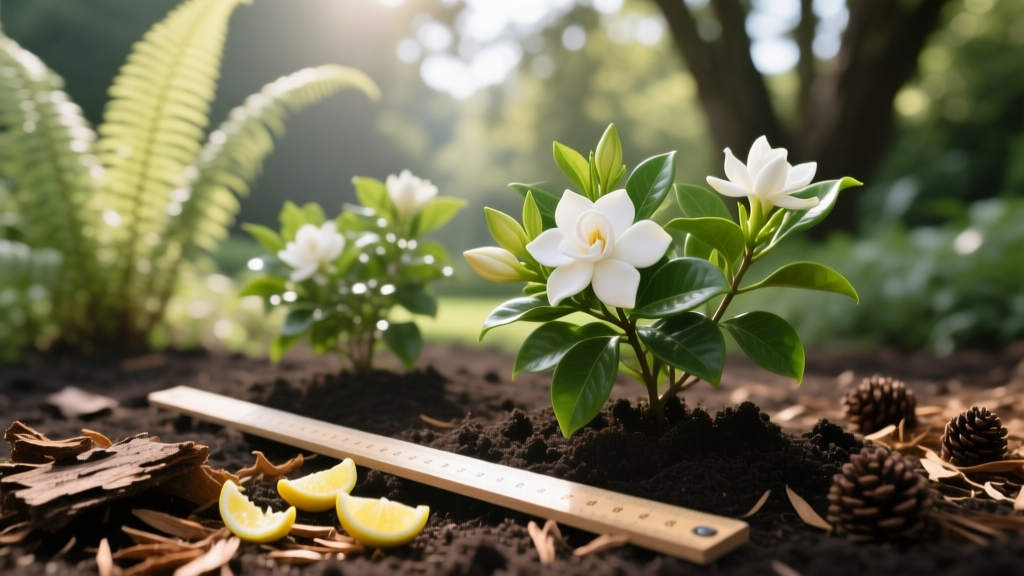
Lowering Soil pH for Gardenias Naturally
The first time most people realize gardenias are picky isn’t when they buy the plant—it’s about 6–10 weeks later, when the leaves start turning pale with bright green veins and the flower buds drop like they’re offended. You can water faithfully and still lose blooms, because the real problem often isn’t water at all. It’s pH. Gardenias want acidic soil, and if your soil (or irrigation water) runs alkaline, the plant can’t access iron and other micronutrients even when they’re present.
I’ve seen this play out in three classic situations: (1) a gardenia planted next to a concrete walkway, (2) a shrub watered for years with hard tap water, and (3) a “perfect” potting mix slowly pushed alkaline by repeated fertilizing and mineral buildup. The fix is absolutely doable at home—if you measure first, choose the right natural acidifying approach, and give it time.
Start with numbers: what pH gardenias actually need
Gardenias (Gardenia jasminoides) perform best when soil pH sits in the acidic range, typically pH 5.0–6.0. When soil rises above about pH 6.5, iron and manganese become less available, and that’s when you see classic yellowing and poor flowering.
To avoid guesswork, test before you “fix.” A lab soil test is the gold standard, but a quality home meter or color kit can still guide you.
- Target soil pH: 5.0–6.0
- Red flag zone: above 6.5 (especially with chlorosis)
- Ideal watering water pH: roughly 5.5–6.5 (more important if you grow in containers)
For background on why pH affects nutrient uptake, see Penn State Extension’s discussion of iron chlorosis and pH effects (Penn State Extension, 2023) and North Carolina State Extension’s gardenia culture notes emphasizing acidic soils (NCSU Extension, 2022).
Three real-world cases (and what fixes actually worked)
Case 1: The concrete walkway gardenia
A gardenia planted 18 inches from a new driveway is a common heartbreak. Concrete leaches lime, and runoff can push nearby soil alkaline. If you see chlorosis strongest on the driveway side, this is your clue.
What worked: Pull mulch back, top-dress with elemental sulfur (not lime-based “sweeteners”), apply an acid-forming fertilizer, and redirect runoff. In stubborn cases, I’ve moved the plant or created a raised, acidified bed barrier between plant and concrete.
Case 2: Hard-water irrigation over multiple seasons
If your tap water leaves white crust on pots or sprinklers, it’s likely high in calcium carbonate. Over time, that raises root-zone pH, especially in containers.
What worked: Switch to rainwater when possible, periodically flush containers, and use a gentle, repeatable acidifying practice (like diluted vinegar in irrigation water in measured doses) rather than one big correction.
Case 3: Container gardenia that was fine…until it wasn’t
Bagged mixes often start slightly acidic, but regular fertilizing and mineral accumulation can creep pH upward. Bud drop follows, then leaf yellowing.
What worked: Repotting into a fresh, bark-based acidic mix, plus a controlled sulfur top-dress. It’s often faster than trying to “fight” an exhausted potting mix.
Soil: natural ways to lower pH (and how fast they really work)
“Natural” doesn’t mean “weak.” It means using materials commonly accepted in organic gardening and applying them with measurement and patience. Some methods lower pH quickly (short-lived), others are slow and steady (long-lasting). The best results often come from combining a long-term base (elemental sulfur) with a gentle short-term support (acidic fertilizer, organic mulches).
Comparison: common natural acidifying methods
| Method | How it lowers pH | Typical speed | How long it lasts | Best use case | Notes / cautions |
|---|---|---|---|---|---|
| Elemental sulfur | Soil microbes convert S to sulfuric acid | Slow (4–12+ weeks) | Long (months to a year+) | In-ground beds, long-term correction | Works best when soil is warm (above ~55°F/13°C) and moist; don’t overapply |
| Acidic mulch (pine bark/needles) | Gradual acidifying as it decomposes; buffers moisture | Slow (months) | Moderate (reapply yearly) | Maintenance and root-zone stability | Mulch mainly helps at surface; still valuable for gardenias |
| Cottonseed meal | Organic matter + mild acid-forming nitrogen | Moderate (4–8 weeks) | Moderate | Feeding + gentle pH nudge | Can attract pets in some gardens; apply and water in |
| Vinegar in water | Direct acid in irrigation water | Fast (hours–days) | Short (temporary) | Container plants, alkaline water correction | Easy to overdo; measure carefully; doesn’t “fix” soil long-term |
| Iron sulfate | Acidifies and supplies iron | Moderate (1–4 weeks) | Moderate | Chlorosis support with slight pH shift | Can stain hardscapes; not a substitute for correcting pH causes |
Elemental sulfur is the workhorse for lasting pH change. It’s also the one people misuse most—usually by applying too much too fast. Soil texture matters: sandy soil changes quicker; clay and high-organic soils resist change.
“Elemental sulfur is effective, but it must be oxidized by soil bacteria, so results are not immediate and depend on temperature and moisture.” — University of Minnesota Extension soil pH guidance (University of Minnesota Extension, 2020)
Step-by-step: lowering pH in the ground with elemental sulfur
This is my go-to when an in-ground gardenia tests above pH 6.5 and you want a durable correction.
- Test pH in at least two spots: one near the root zone and one 12–18 inches away.
- Calculate area you’ll treat: usually a ring from the drip line inward, not the whole yard.
- Apply elemental sulfur at a conservative rate:
- Start with 1 tablespoon per square foot for modest correction, or up to 2 tablespoons per square foot for more alkaline soils.
- Do not pile it against the stem; keep 6 inches away from the trunk/crown.
- Scratch lightly into the top 1 inch of soil (don’t dig deep through roots).
- Water in with a slow soak.
- Re-test in 8–10 weeks during the growing season. Adjust gently if needed.
If your soil is cold (below about 55°F/13°C), microbial activity slows and sulfur works much more slowly. In that case, mulch and irrigation adjustments help carry you until warm weather returns.
Step-by-step: lowering pH in containers (where water pH matters most)
For potted gardenias, the potting mix volume is small and changes faster—good news, but it also means you can overcorrect quickly. Here’s a careful approach.
- Repot if the mix is old: If it’s been 2–3 years or you see crusty salts, repot into an acidic, bark-forward mix (azalea/camellia mix works well).
- Flush salts: Once a month in warm weather, run water through the pot until at least 20% flows out the drain holes.
- Acidify irrigation water (optional, measured): Mix 1 teaspoon of plain white vinegar per 1 gallon of water, then check the resulting water pH if you can. Use this no more than once every 2–4 weeks as needed, not daily.
Vinegar is a short-term tool. It helps counter alkaline irrigation water, but it won’t permanently change the chemistry of a mineral-heavy potting mix. If you’re constantly “chasing” pH with vinegar, repotting and switching water sources will give you more stable success.
Watering: the quiet driver of pH problems
Gardenias like evenly moist soil—not soggy, not bone-dry. But watering is also where many pH issues are introduced.
How to water without pushing pH up
- Water deeply when the top 1–2 inches of soil are dry. Shallow daily splashes encourage weak roots.
- Avoid softened water from home water softeners. It often contains sodium, which can damage soil structure and plant health over time.
- Use rainwater when possible, especially for containers.
- Keep water off blooms to reduce spotting and botrytis during humid spells.
If you’re dealing with hard water, you may notice pH creep even if you do everything else right. That’s when a combination of rainwater collection, periodic flushing, and mild acidification makes a visible difference.
Light and temperature: getting blooms while you fix the soil
While you’re correcting pH, don’t neglect the basics that drive flowering. Gardenias bloom best with bright light and gentle conditions.
- Outdoor light: Morning sun and afternoon shade is ideal in many climates. In cooler coastal zones, more sun is fine.
- Indoor light: Put them in the brightest window you have; weak light equals bud drop.
- Temperature for best performance: Aim for 65–75°F (18–24°C) during the day and avoid cold drafts below 55°F (13°C).
If your plant is pH-stressed, it’s already struggling to move nutrients. Excess heat, low light, or cold nights can push it over the edge into bud drop.
Feeding: acid-loving nutrition without burning roots
Feeding gardenias is less about “more fertilizer” and more about “the right form.” An acid-forming fertilizer designed for azaleas/camellias/gardenias supports growth while nudging pH in the right direction.
A practical feeding schedule
- When to start: When new growth begins in spring.
- Frequency: Every 4–6 weeks through mid-summer.
- When to stop: About 6–8 weeks before your expected first fall frost (to avoid tender growth).
Follow label rates; with gardenias, overfeeding can cause leaf burn and root stress, especially in containers. If you’re correcting chlorosis, pair pH correction with a targeted micronutrient response rather than doubling fertilizer.
When yellow leaves need iron (and when they don’t)
Iron chlorosis is common with high pH: new leaves turn pale yellow while veins stay greener. If your soil pH is high, adding iron alone is a bandage unless you also address pH.
- Fast cosmetic help: Chelated iron drench or foliar spray can green up new growth in 7–14 days.
- Long-term fix: Bring root-zone pH into the 5.0–6.0 range with sulfur and better watering practices.
Penn State Extension notes that iron deficiency symptoms are frequently tied to alkaline soils and that correcting soil pH is often necessary for lasting improvement (Penn State Extension, 2023).
Common problems (with symptom-based troubleshooting)
This is where experience saves time. Gardenias are very “readable” once you know what the signs point to.
Problem: Yellow leaves with green veins (especially on new growth)
- Most likely cause: Soil pH too high (often above 6.5), leading to iron unavailability.
- What to do this week:
- Test pH (soil and, if possible, irrigation water).
- Apply chelated iron according to label for quick support.
- Top-dress with elemental sulfur at 1 tablespoon per square foot; water in.
- Mulch with 2–3 inches of pine bark (keep mulch 2 inches back from stem).
- What to avoid: Adding lime, wood ash, or compost that’s heavy in alkaline amendments.
Problem: Buds form, then drop before opening
- Common causes: pH stress, inconsistent watering, low humidity indoors, sudden temperature swings.
- Fix:
- Keep soil evenly moist; don’t let it dry completely between waterings.
- Move containers away from heating/cooling vents; keep temps around 65–75°F.
- If indoors, raise humidity to around 40–60% with a pebble tray or humidifier (without keeping roots waterlogged).
- Confirm pH is within 5.0–6.0; correct if needed.
Problem: Brown leaf tips or edges
- Common causes: Salt buildup from fertilizer, hard water minerals, underwatering, or hot wind.
- Fix:
- Flush container soil until 20% drains out (repeat in 10 minutes if crusty buildup is visible).
- Switch to rainwater or filtered water for the next 2–3 waterings.
- Check that the pot drains freely; gardenias hate “wet feet,” but also hate drought.
Problem: Leaves turning yellow and dropping (older leaves first)
- Common causes: Overwatering/poor drainage, root stress, or natural leaf turnover after flowering.
- Fix: Check drainage first. If soil stays wet for more than 2–3 days after watering, improve drainage or repot. Don’t assume it’s pH until drainage is ruled out.
Pests and diseases that get worse when pH and watering are off
When gardenias are stressed, pests move in. Healthy plants still get pests, but stressed plants get overwhelmed.
Common gardenia pests
- Scale insects: Look for small bumps on stems and leaf undersides; sticky honeydew may appear.
- Whiteflies: Tiny white insects that flutter up when disturbed.
- Spider mites: Fine stippling and webbing, often during dry indoor conditions.
Practical control: Start with a strong water spray, then use horticultural oil or insecticidal soap, applied in the cool part of day. Repeat every 7–10 days for 2–3 rounds to catch new hatchlings.
Root rot (the “looks like nutrient deficiency” trap)
Root rot can mimic nutrient issues: yellow leaves, poor growth, bud drop. If the soil is sour-smelling, constantly wet, or the plant wilts even when wet, stop chasing pH and inspect roots. Healthy roots are firm and light-colored; rotting roots are brown/black and mushy.
Fix: Improve drainage immediately. In pots, repot into a fresh, airy acidic mix and trim dead roots. Then resume gentle acidification once the plant is stable.
How to keep soil acidic year after year (without constant tinkering)
The best gardenia growers aren’t constantly “correcting.” They build an environment that stays naturally acidic.
- Mulch like you mean it: Keep 2–3 inches of pine bark mulch over the root zone year-round, refreshed annually.
- Feed lightly and regularly: Use an acid-forming fertilizer on a 4–6 week rhythm in the growing season rather than heavy doses.
- Watch your water source: If hard water is your reality, consider rainwater collection for containers and sensitive beds.
- Keep alkaline materials away: Avoid wood ash, lime, and concrete rubble near gardenia beds.
One last experienced tip: don’t chase an exact pH number every week. If you’re at pH 6.2 and the plant is dark green and blooming, you’re doing fine. The goal is a healthy gardenia, not a perfect lab reading. Make one change at a time, give it 8–10 weeks to show you the result, and you’ll get those waxy, fragrant blooms back on schedule.
Sources: North Carolina State University Extension gardenia culture guidance (NCSU Extension, 2022); Penn State Extension information on iron chlorosis and soil pH relationships (Penn State Extension, 2023); University of Minnesota Extension soil pH and sulfur acidification notes (University of Minnesota Extension, 2020).