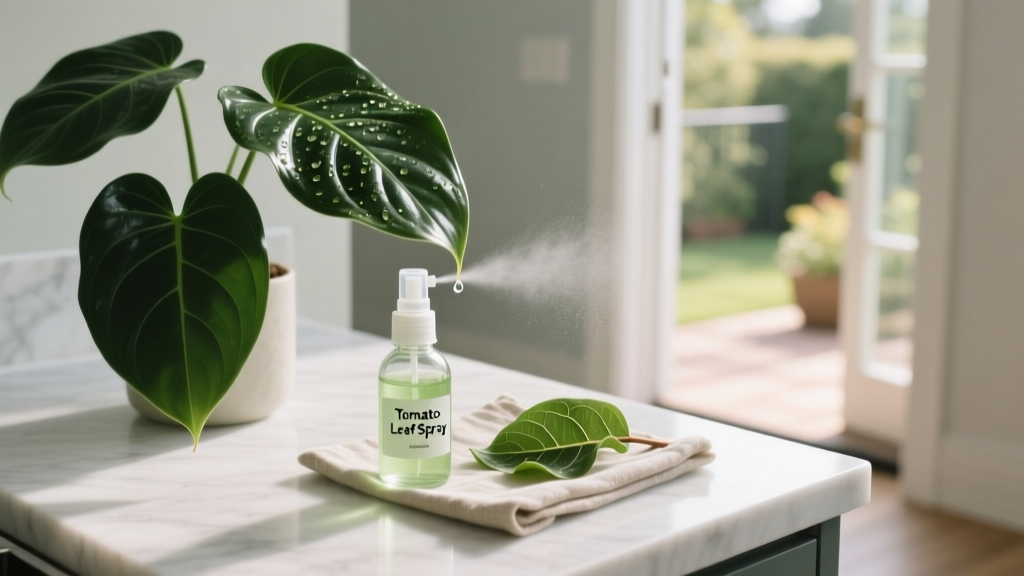
How to Make a Tomato Leaf Spray for Peace Lilies
You notice it on a Tuesday morning: your peace lily looks a little tired, and there’s that faint, sticky sheen on the leaves. You wipe a finger across the underside and—sure enough—tiny pale specks move, or you spot a few soft-bodied aphids clustered on a new stem. The plant isn’t dying, but it’s clearly not thriving. When you don’t want to reach for a harsh pesticide indoors (especially around pets, kids, or countertops), a garden-grown remedy can be tempting.
Tomato leaf spray is one of those old-school options gardeners talk about because tomato leaves contain glycoalkaloids (including tomatine) that can affect soft-bodied pests. Used carefully and sparingly, it can be a useful tool in an indoor gardener’s toolkit—especially when you pair it with correct light, watering, and a sane pest management routine.
This guide walks you through making a tomato leaf spray that’s as safe and effective as it can be for a peace lily, plus the cultural fixes that stop pest flare-ups from coming right back.
Before You Spray: A Reality Check on Tomato Leaf Spray
Tomato leaves are not “magic.” They’re mildly insecticidal to certain pests, but they’re also plant material with compounds that can irritate skin and potentially stress sensitive houseplants if overapplied. I treat it like hot sauce: a little can help, a lot can ruin dinner.
Also, tomato leaf spray isn’t a fungicide. If you’re dealing with fungal leaf spots, root rot, or moldy soil, this won’t solve the root cause.
“Botanical insecticides can be effective, but they should be used as part of an integrated approach and tested on a small portion of the plant first to avoid phytotoxicity.” — University of Minnesota Extension (2020)
For general indoor pest management principles (and why “more spray” often backfires), extension programs consistently recommend starting with identification, mechanical removal, and least-toxic products first. See University of California Agriculture and Natural Resources IPM guidance (UC ANR, 2023) and University of Minnesota Extension houseplant pest resources (2020).
What Tomato Leaf Spray Can (and Can’t) Do for Peace Lilies
Best targets
- Aphids (clusters on stems and new growth)
- Spider mites (fine stippling, webbing, dusty look—often worse in dry air)
- Whiteflies (tiny white “moths” that flutter up when disturbed)
Not the right tool for
- Fungus gnats (they breed in wet soil; fix moisture and use traps/BTI)
- Scale insects (need manual removal and/or horticultural oil)
- Root rot (watering/soil/roots need attention)
Recipe: How to Make Tomato Leaf Spray (Peace Lily-Safe Version)
I’m giving you a conservative formula. Peace lilies can be sensitive, and indoor conditions (low airflow, steady temps) mean residues linger longer than outdoors.
What you’ll need
- 2 packed cups (about 60–80 g) of fresh tomato leaves (unsprayed, disease-free)
- 1 quart (0.95 L) water for steeping
- Another 1 quart (0.95 L) water for diluting
- 1/4 teaspoon mild liquid soap (optional emulsifier; use pure castile or fragrance-free)
- Strainer/cheesecloth
- Clean spray bottle
Step-by-step instructions
- Harvest smart. Pick tomato leaves from healthy plants. Avoid leaves with spots, mildew, or pest infestations—you don’t want to bring extra problems indoors.
- Chop. Roughly chop the leaves to increase surface area.
- Cold steep 12–24 hours. Put leaves in a jar, add 1 quart water, cover, and steep at room temperature. (Avoid hot water; heat can pull out more compounds and increase burn risk.)
- Strain thoroughly. Pour through cheesecloth or a fine strainer. Any little leaf bits can clog your sprayer and leave extra residue on foliage.
- Dilute 1:1. Add 1 quart clean water to the strained liquid. This dilution is important for peace lilies.
- Add soap (optional). Mix in 1/4 teaspoon mild soap per 1 quart of finished spray. Too much soap is a common cause of leaf burn, so keep it minimal—or skip it if your peace lily is sensitive.
- Label and date. Store in the refrigerator and use within 3 days. Discard if it smells sour or funky.
Patch test (don’t skip this)
Spray one leaf (top and underside) and wait 24 hours. If you see dark, water-soaked patches, yellow halos, or crispy edges, don’t use it on the whole plant. Switch to plain water rinses, insecticidal soap labeled for houseplants, or mechanical removal.
How to Apply Tomato Leaf Spray Without Stressing a Peace Lily
Most indoor spray damage comes from timing and technique, not the recipe.
- Spray at the right time: Evening is best, or any time the plant is out of direct sun. Bright sun + wet leaves = spotting.
- Temperature range: Aim for 65–75°F (18–24°C) during and after application.
- Ventilation: Good airflow helps leaves dry within 2–4 hours. Stagnant air invites leaf spotting.
- Where to spray: Focus on leaf undersides and stem joints—where pests hide.
- Rinse after: For peace lilies, I often recommend a gentle rinse with lukewarm water after 6–8 hours the first time you use tomato leaf spray. It reduces residue and lowers burn risk.
Repeat treatment every 4–7 days for 2–3 rounds if pests persist. If you’re still seeing active pests after that, it’s time to switch tactics—don’t just keep spraying stronger.
Comparison: Tomato Leaf Spray vs. Other Practical Options (With Real Data)
Here’s how tomato leaf spray stacks up against other common, indoor-friendly approaches. These numbers are typical real-world ranges—your results depend on pest pressure and how thorough you are with coverage.
| Method | Typical Mix Rate | Best For | Repeat Interval | Burn Risk on Peace Lily |
|---|---|---|---|---|
| Tomato leaf spray (diluted) | 2 cups leaves : 1 qt steep, then dilute 1:1 | Aphids, mites, whiteflies (light/moderate) | Every 4–7 days, 2–3 rounds | Medium (patch test essential) |
| Insecticidal soap (labeled for houseplants) | Often 2–5 Tbsp per gallon (follow label) | Aphids, mites, whiteflies | Every 5–7 days as needed | Low–Medium (depends on label rate and light) |
| Neem oil (emulsified properly) | Commonly 1–2 tsp per quart (follow label) | Mites, whiteflies, some soft-bodied pests | Every 7 days | Medium–High (common spotting indoors) |
| Shower rinse + wipe-down | Plain lukewarm water | Early infestations, general cleaning | Every 3–4 days initially | Low (watch soil saturation) |
For indoor growers, the “shower rinse + wipe-down” method is underrated. UC ANR’s IPM approach emphasizes physical removal and targeted treatments instead of blanket spraying (UC ANR, 2023). That’s exactly how you keep peace lilies looking glossy instead of blotchy.
Watering: The Hidden Lever That Controls Pests
A peace lily that’s either bone-dry for long stretches or constantly soggy is more likely to get pests. Stress changes leaf chemistry and slows growth, and pests love slow, stressed plants.
A practical watering routine
- Water when the top 1 inch (2.5 cm) of soil feels dry.
- Use room-temperature water, roughly 65–75°F (18–24°C).
- Water until you get 10–20% runoff, then discard runoff so roots don’t sit in it.
- If your pot has no drainage hole, treat that as an emergency: repot into a draining pot. No spray compensates for drowning roots.
Scenario #1: “My peace lily droops daily, so I water daily”
Peace lilies droop when dry—but they also droop when roots are damaged from staying wet. If the soil feels damp and it’s still drooping, check roots. Healthy roots are light-colored and firm. Rotten roots are brown/black and mushy. Fix that first; pests often show up after the plant’s been weakened for weeks.
Soil: Get the Mix Right or You’ll Fight Gnats and Root Issues
Peace lilies like an even-moist, airy mix. Dense soil stays wet too long indoors.
Soil mix that behaves well indoors
- 2 parts quality peat/coir-based potting mix
- 1 part perlite or pumice
- 1/2 part fine orchid bark (optional but helpful for airflow)
Repot every 18–24 months or sooner if the mix has collapsed, smells sour, or stays wet for more than 7–9 days after watering in typical indoor conditions.
Scenario #2: “Fungus gnats showed up right after I started spraying”
The spray didn’t create gnats; consistently moist soil did. Gnats breed in the top layer. Do this:
- Let the top 2 inches (5 cm) dry between waterings for a couple cycles.
- Use yellow sticky traps to catch adults.
- Apply BTI (Mosquito Bits/Dunks) according to label directions to target larvae.
Light: The Peace Lily Sweet Spot (and Why It Matters for Spray Safety)
Peace lilies prefer bright, indirect light. Too dim and growth slows (pests gain ground). Too bright and leaf scorch becomes an issue, especially if you’re spraying anything.
- Place near an east or north window, or a few feet back from a bright south/west window.
- If using a grow light, start around 12–14 hours per day at a moderate intensity, then adjust based on leaf color and growth.
If you’re going to spray, move the plant out of strong light until leaves are dry. Wet leaves + bright light is a classic recipe for spotting.
Feeding: Keep It Light, Especially During Pest Problems
Overfertilized peace lilies often get brown tips and weak, sappy growth that pests enjoy. Underfed plants stall out and can’t outgrow minor pest damage.
A simple feeding schedule
- Use a balanced houseplant fertilizer at 1/4 strength every 4–6 weeks in spring and summer.
- Skip feeding in winter unless the plant is actively growing under strong light.
- Once every 3 months, flush the pot with plain water (run water through for a minute or two) to reduce salt buildup.
If you’re actively battling pests, pause fertilizer for 2–3 weeks. Let the plant stabilize first.
Common Problems: Symptoms, Causes, and Fixes (Troubleshooting You Can Use Today)
Problem: Leaf tips turning brown
- Likely causes: fertilizer salts, low humidity, inconsistent watering, fluoride/chlorine sensitivity.
- Fix: flush soil, trim brown tips, water consistently when top 1 inch dries, and consider filtered or rested water (let tap water sit 24 hours).
Problem: Yellow leaves (especially older ones)
- Likely causes: overwatering, low light, natural aging.
- Fix: confirm soil dries within 7–9 days; increase indirect light; remove fully yellow leaves at the base.
Problem: Black, mushy stems or sour soil smell
- Likely causes: root rot from saturated soil.
- Fix: unpot, trim rotten roots, repot into airy mix, and water sparingly until new growth resumes.
Problem: Leaf spotting after tomato leaf spray
- Likely causes: spray too strong, applied in bright light, poor airflow, too much soap.
- Fix: rinse leaves with lukewarm water, stop spraying, improve airflow, and next time dilute more (try 1 part strained tea to 2 parts water) and patch test again.
Three Real-World Case Fixes (What I’d Do in Your Shoes)
Case #1: Aphids on a peace lily that lives by the kitchen window
You see clusters on new stems. First, I’d take the plant to the sink:
- Rinse the plant thoroughly, focusing on undersides.
- Wipe leaves with a damp cloth to physically remove aphids.
- Spray tomato leaf spray lightly on undersides only.
- Keep it out of bright light until dry, then re-check in 4 days.
If aphids return, I’d switch to an insecticidal soap labeled for houseplants for more predictable results.
Case #2: Spider mites in winter (dry air, dusty leaves)
Spider mites love warm, dry rooms. Tomato leaf spray can help, but dryness is the bigger issue.
- Rinse the plant every 3–4 days for two weeks (mites hate water).
- Wipe leaves to remove dust (dust protects mites and reduces photosynthesis).
- Run a humidifier to keep relative humidity nearer 45–55% if you can.
- Use tomato leaf spray only after the first rinse, and repeat once a week.
Case #3: Whiteflies on a peace lily that summered outdoors
This is common: the plant comes inside and the whiteflies explode in the stable indoor climate.
- Quarantine the plant for 14 days away from other houseplants.
- Use yellow sticky traps near the foliage.
- Rinse and spray (undersides) every 5–7 days for 3 rounds.
- If you still see adults flying after round 3, stop experimenting and use a labeled product (soap or horticultural oil) with careful light management.
Safety Notes (Pets, Kids, and Your Own Skin)
Tomato foliage contains compounds that can be irritating if ingested. Keep the spray and treated plants away from pets that chew leaves. Wear gloves if you have sensitive skin, and wash hands after mixing and spraying. Don’t spray on surfaces where food is prepared.
When to Skip Tomato Leaf Spray Entirely
- Your peace lily is already stressed (recent repot, severe droop, root issues).
- You can’t provide airflow and leaves will stay wet most of the day.
- You’re seeing leaf damage from past sprays (soap, neem, or otherwise).
- The problem is not a soft-bodied pest (e.g., fungus gnats, scale, root rot).
Common Problems Come Back If You Don’t Fix the Plant’s “Living Conditions”
Most peace lily pest outbreaks I’ve seen happen in the same three situations: low light, inconsistent watering, and dusty leaves. Tomato leaf spray can knock pests back, but it won’t keep them away if the plant is struggling to grow.
If you take only one habit from this article, make it this: once a week, tip the pot and inspect the undersides of a few leaves near the center of the plant. Catching pests early turns a multi-week battle into a five-minute rinse job.
Sources: University of Minnesota Extension houseplant pest management guidance (2020); University of California Agriculture and Natural Resources Integrated Pest Management guidelines for houseplants and least-toxic controls (UC ANR, 2023).