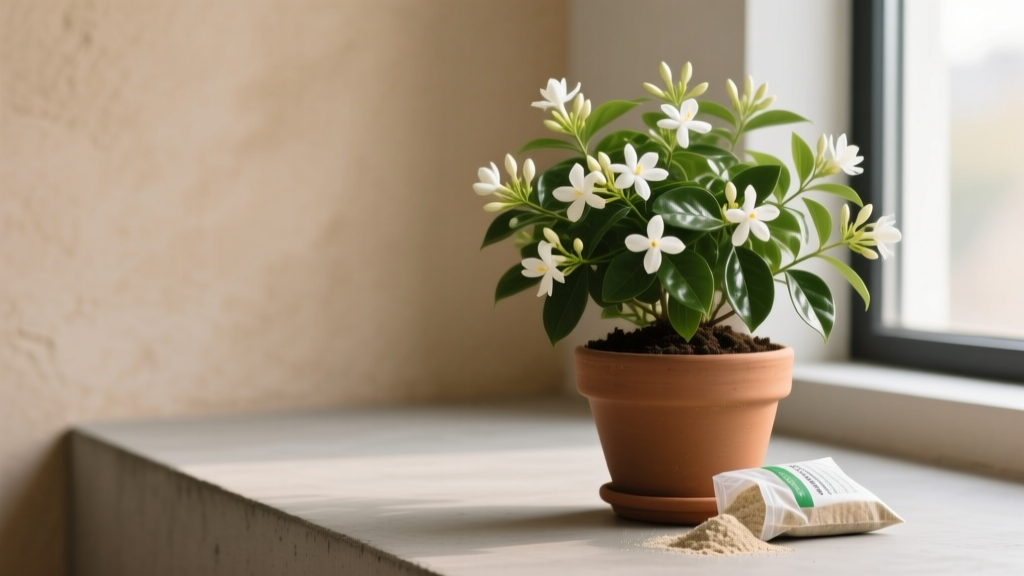
Raising Soil pH for Jasmine with Lime
You do everything “right”—sunny patio, decent potting mix, regular water—and your jasmine still looks cranky: yellowing leaves, weak growth, fewer flowers, and that perfume you bought it for is barely there. One of the most common hidden causes I see in home gardens is soil that’s too acidic. Jasmine isn’t as fussy as, say, blueberries, but when the pH drops too low, nutrient uptake gets weird (especially magnesium and calcium), and the plant starts showing it.
The fix is often simple: raise soil pH with lime. The trick is doing it at the right dose, at the right time, with the right kind of lime—without guessing. This is where gardeners either nail it or create new problems (like micronutrient lockout from over-liming). Let’s do it the master-gardener way: test first, calculate, apply accurately, then watch the plant’s response.
Start Here: What pH Does Jasmine Actually Want?
Most jasmine (including common patio jasmine like Jasminum polyanthum and J. sambac) performs best in slightly acidic to neutral soil. In practice, I aim for pH 6.0–7.0. Below about pH 5.5, you’re more likely to see nutrient issues and sluggish flowering.
If you only remember one rule: don’t lime blind. The correct lime amount depends on your current pH, your target pH, and your soil texture (sand vs loam vs clay). University extension guidance repeatedly emphasizes soil testing before liming because over-application is difficult to reverse (University of Massachusetts Amherst Soil & Plant Nutrient Testing Lab, 2022).
“Applying lime without a soil test is like taking medicine without a diagnosis.” — Penn State Extension soil fertility guidance (2023)
Real-world scenario #1: The “mystery yellowing” jasmine in a foundation bed
A homeowner had jasmine trained along a trellis beside a concrete foundation. It was watered and mulched, yet leaves were pale and growth was thin. A soil test came back pH 5.1. The garden bed had been repeatedly top-dressed with pine bark and fertilized with an acid-forming product. After a measured lime application and switching fertilizers, the plant greened up within 4–6 weeks and flowered more strongly the following cycle.
How to Test Soil pH (And Why It Matters)
You have three practical options. If you want accuracy for liming decisions, a lab test is the gold standard.
- Home digital pH meter: Fast, but accuracy varies. Good for trend monitoring, not precise lime calculations.
- Chemical color kit: Better than guessing; can be “close enough” for small container tweaks.
- Laboratory soil test: Best accuracy; often includes a lime recommendation based on buffer pH. This matters most in clay soils.
Lab testing programs typically recommend sampling the top 6 inches of soil (remove mulch first), mixing multiple subsamples, and letting the sample air-dry before mailing (Penn State Extension, 2023).
Timing: When to test
Test anytime the soil isn’t frozen, but I like early spring or early fall. That gives you time to adjust pH before peak growth or before overwintering.
Choosing Lime: Calcitic vs Dolomitic (Use the Right One)
Gardeners say “lime,” but you’re usually buying either calcitic lime (calcium carbonate) or dolomitic lime (calcium-magnesium carbonate). Both raise pH. Dolomitic also adds magnesium—often helpful when jasmine shows interveinal chlorosis (yellow between green veins) that doesn’t respond to iron.
| Product | Main Nutrients | Speed | Best Use Case | Typical Notes |
|---|---|---|---|---|
| Calcitic lime | Calcium (Ca) | Moderate (weeks to months) | When Mg is adequate, pH is low | Often preferred if your soil already has Mg |
| Dolomitic lime | Calcium (Ca) + Magnesium (Mg) | Moderate (weeks to months) | Low pH + suspected Mg deficiency | Useful in sandy soils where Mg leaches |
| Hydrated lime | Calcium (very reactive) | Fast (days to weeks) | Rarely needed in home gardens | Easy to overdo; caustic—handle carefully |
| Pelletized lime | Depends on source | Similar to ag lime once watered in | Easy spreading, small spaces | Convenient; can cost more per pound |
Most home gardeners should stick to calcitic or dolomitic. Hydrated lime acts quickly, but it’s much easier to overshoot your pH and stress roots. If you’re growing jasmine in a container, pelletized lime is convenient and less dusty.
How Much Lime to Raise pH for Jasmine (Actionable Numbers)
Exact lime needs depend on soil texture and current pH. Clay takes more lime than sand to shift pH the same amount because it has more buffering capacity.
Here’s a practical, field-tested starting point for raising pH by about 0.5 units in the top 6 inches of soil:
- Sandy soil: ~3–4 lb ground limestone per 100 sq ft
- Loam: ~5–6 lb per 100 sq ft
- Clay: ~7–8 lb per 100 sq ft
These ballpark rates align with common extension lime-rate ranges for garden soils, with the reminder that lab tests may recommend different amounts based on buffer pH and lime quality (University of Massachusetts Amherst, 2022; Penn State Extension, 2023).
Container jasmine: a safer, slower approach
For pots, I’m conservative. For a typical 10-gallon container, start with 1–2 tablespoons of finely ground or pelletized lime, watered in, then re-check pH after 3–4 weeks. If you need more, add another tablespoon. It’s slower, but it avoids a pH spike that can cause iron/manganese lockout.
Comparison analysis: Topdressing vs mixing in (with real performance differences)
Both methods work, but they behave differently in time and reliability. Here’s how they compare in a home garden setting.
| Method | How it’s applied | Typical pH response time | Accuracy | Best for |
|---|---|---|---|---|
| Mixing into soil | Incorporate into top 4–6 inches | 4–12 weeks noticeable shift | High | New beds, replanting, major corrections |
| Topdressing | Broadcast on surface, water in | 8–24 weeks for deeper effect | Medium | Established jasmine, minimal root disturbance |
If you’re planting a new jasmine, always mix lime into the root zone. If the vine is established and you don’t want to disturb roots, topdress in smaller doses over time.
Step-by-Step: Applying Lime Without Harming Jasmine
This is my reliable routine. It’s not fancy—just repeatable and safe.
- Test pH (home kit or lab). Write down your current pH and your target (usually 6.2–6.8).
- Choose lime type: calcitic for general use; dolomitic if magnesium may be low.
- Calculate area: measure the bed (length × width). Example: 10 ft × 5 ft = 50 sq ft.
- Weigh your lime: don’t eyeball. A kitchen scale works.
- Apply in split doses if you need a large change:
- Apply half now,
- Wait 8–10 weeks,
- Re-test, then apply the remainder only if needed.
- Water in: give the bed a deep soak so lime begins reacting in the soil moisture.
- Mulch back: keep mulch 2–3 inches deep, but don’t pile it against the stems.
For established beds, scratch the lime lightly into the top 1 inch of soil if you can do it without ripping roots. Otherwise, surface-apply and rely on rain/irrigation.
Real-world scenario #2: Jasmine in a pot that keeps “running acidic”
Container jasmine often drifts acidic because potting mixes break down and because many liquid fertilizers are acid-forming. If your pot pH tests around 5.3–5.6, you can raise it slowly with small lime doses. Also check your water source: if you’re using rainwater or very soft water, pH drift is more likely. After stabilizing the pH near 6.5, many gardeners notice stronger growth and better fragrance intensity.
Soil Setup for Jasmine: pH Is Only One Piece
Lime won’t fix poor drainage, and jasmine hates “wet feet.” Aim for soil that drains well but holds some moisture.
- In-ground: Work in 2–3 inches of compost to improve structure, especially in sandy or clay soils.
- Containers: Use a quality potting mix and make sure the pot has unobstructed drainage holes.
One caution: don’t combine heavy liming with large amounts of wood ash. Wood ash can raise pH quickly and unpredictably, and it’s easy to overshoot—especially in pots.
Watering: Supporting Roots While pH Adjusts
As lime reacts, you want consistent moisture—not soggy soil, not bone dry. Moisture helps lime dissolve and move into the root zone.
- Established in-ground jasmine: Deep water about once per week in dry spells, delivering roughly 1 inch of water (rain + irrigation combined).
- Containers in warm weather: Check daily; water when the top 1–2 inches are dry.
In hot weather (above about 85°F), containers can swing from wet to dry fast. That stress can mimic nutrient problems, so keep watering steady while you’re correcting pH.
Light and Temperature: Don’t Lime a Plant That’s Starving for Sun
Before blaming soil chemistry for poor flowering, look up. Jasmine typically blooms best with strong light.
- Outdoor jasmine: Aim for 6+ hours of sun for best bloom. Some types tolerate partial shade but flower less.
- Indoor overwintering: Brightest window you have; cool nights often help budding. Many jasmines prefer nights around 55–60°F to set blooms well.
If your jasmine is in deep shade, raising pH may green it up a bit, but it won’t fix flower shortage. Sun drives flowering; pH supports nutrition.
Feeding: Fertilizer Choices That Won’t Fight Your Lime
After liming, fertilize thoughtfully. Some fertilizers push soil more acidic over time. That’s not “bad,” but it can undo your pH correction faster than you expect.
A practical feeding plan
- Spring: When you see new growth, feed with a balanced fertilizer (something like 10-10-10 or similar) at half label rate, especially in pots.
- Early summer: Repeat if growth is strong and leaves are a healthy green.
- Late summer: Ease off high nitrogen so you don’t push soft growth going into cooler weather.
If your soil test shows low magnesium and you used calcitic lime, consider supplementing with magnesium via dolomitic lime next time, or (for a quicker spot-fix) a light application of Epsom salts—used cautiously and only when deficiency is likely. Overdoing magnesium can interfere with calcium uptake.
Troubleshooting: Symptoms, Causes, and Fixes (With pH in Mind)
Here’s where gardening gets real: the same symptom can have different causes. Use these as pattern-matching tools, then confirm with a pH test when possible.
Problem: Yellow leaves with green veins (interveinal chlorosis)
- Likely causes:
- Soil too acidic (pH < 5.5) limiting magnesium availability
- Soil too alkaline (pH > 7.5) limiting iron/manganese availability
- Overwatering causing root stress
- What to do:
- Test pH.
- If pH is low, apply dolomitic lime at a measured rate and re-check in 4–8 weeks.
- Confirm drainage; let the top couple inches dry between waterings in pots.
Problem: Lots of leafy growth, few flowers
- Likely causes: Too much nitrogen, too little sun, warm nights indoors, or pruning at the wrong time.
- What to do:
- Move to brighter light (aim for 6+ hours sun outdoors).
- Switch from high-N fertilizer to balanced feeding, and don’t feed more often than every 4–6 weeks during active growth.
- Check night temps; many jasmines bud better with nights around 55–60°F.
Problem: Leaf tip burn and stalled growth after liming
- Likely causes: Too much lime at once; pH overshoot; fertilizer salts; dry root zone.
- What to do:
- Stop liming immediately.
- Water deeply to flush salts (especially in containers); ensure full drainage.
- Re-test pH. If pH is above 7.2 and symptoms persist, you may need to repot (containers) or topdress with compost and wait (in-ground) rather than trying to “force” pH back down quickly.
Problem: Jasmine looks worse near concrete or masonry
This one surprises people. Concrete can leach alkalinity and raise pH locally. If your jasmine is struggling near a wall, don’t assume it needs lime—test first. You may already be at pH 7.5+. In that case, focus on organic matter, appropriate fertilizers, and possibly an acidifying amendment rather than lime.
Real-world scenario #3: Established jasmine in heavy clay with chronic low pH
Clay soils often test acidic in wetter climates, and they resist change. A gardener with a mature jasmine hedge had pH 5.2 in clay. They applied a full recommended lime dose once—and saw only a small improvement. The fix was patience and splitting applications: half in fall, half in spring, plus annual compost. Within about 6 months, pH stabilized closer to 6.3, and the vine’s vigor improved without shocking the soil biology.
Common Jasmine Problems Not Directly Caused by pH (But Often Confused With It)
Before you keep adding lime, make sure you’re not dealing with a different issue wearing a similar costume.
Pests: spider mites, aphids, scale
- Symptoms: stippled leaves (mites), sticky honeydew (aphids/scale), distorted new growth.
- Fix: Blast with water, then use insecticidal soap or horticultural oil as needed. Treat in the cool part of the day (below about 80°F) to reduce leaf burn risk.
Root problems from drainage
- Symptoms: yellow leaves + wilting even when soil is wet, sour smell in pots.
- Fix: Improve drainage, repot into fresh mix, and avoid saucers that hold water.
Best Timing for Liming Jasmine (And How Long It Takes)
Lime doesn’t work overnight. In most garden soils, you’ll see a measurable pH change in 4–12 weeks, with the full effect sometimes taking longer depending on particle size, moisture, and how well it’s incorporated.
- Best season for in-ground: Fall is excellent because winter moisture helps move lime into the soil, and you’re setting up spring growth.
- Spring applications: Fine too—just don’t apply and expect instant flowering fixes next week.
- Containers: Any time you can monitor closely; apply small amounts and re-test in 3–4 weeks.
Safety and Practical Tips From the Garden
- Wear gloves and eye protection, especially with dusty lime products.
- Don’t combine lime and ammonium fertilizers in the same application hole or band; keep them separated in time by at least a couple weeks.
- Re-test pH yearly if you’re actively managing it. Once stable, every 2–3 years is often enough for in-ground beds.
- Keep records: date, product, pounds applied, and pH readings. This turns “gardening” into “repeatable success.”
When jasmine finally hits its stride—steady green leaves, strong new growth, and those blooms that scent the whole walkway—you’ll realize pH management isn’t a fussy extra. It’s basic maintenance, like sharpening pruners or cleaning pots. Test, apply lime with intention, and give the plant a few weeks to respond. That’s how you turn a struggling jasmine into the fragrant workhorse it’s meant to be.
Sources: Penn State Extension soil testing and liming guidance (2023). University of Massachusetts Amherst Soil & Plant Nutrient Testing Laboratory recommendations on liming and pH management (2022).