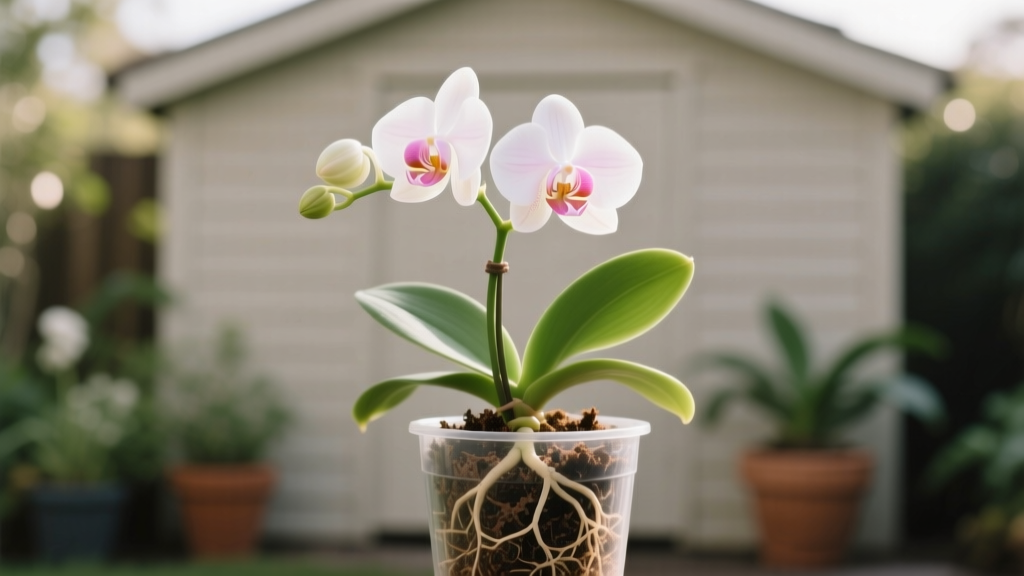
How to Repot Orchids Step by Step
You bring home a gorgeous grocery-store phalaenopsis, and it blooms for months. Then the flowers drop (normal), but a few weeks later the leaves look limp, the pot stays wet for days, and you notice roots that look like soggy pasta pressed against the clear plastic. Most orchid “mystery deaths” start right there: old, broken-down potting mix and suffocated roots. Repotting sounds intimidating, but it’s one of the most practical skills you can learn—and it’s usually the turning point between an orchid that merely survives and one that blooms again.
Here’s the good news: orchids are forgiving when you repot at the right time, use the right medium, and don’t treat them like houseplants in regular potting soil. I’ll walk you through a step-by-step repot with real measurements and the small details that matter.
When to Repot (and When to Leave It Alone)
Repotting is best done when the orchid is starting new root growth—typically just after flowering for most common home orchids (especially Phalaenopsis). If your orchid is in full bloom, it’s usually better to wait unless you have a true emergency (like rot).
Repot on purpose when you see these signs
- Medium breaking down: bark looks like coffee grounds, smells sour, stays wet longer than 7 days.
- Roots failing: mushy, hollow, or black roots; or very few firm roots left.
- Plant wobble: orchid rocks in the pot; crown sits high with exposed stem.
- Salt buildup: white crust on bark or pot.
- Overcrowding (common in sympodials like cattleyas): rhizome pressed hard against pot edge with no room for new growth.
Repot immediately (even if it’s blooming) if…
- You smell rot or see black, collapsing roots and a wet, stagnant center.
- The medium is packed sphagnum and the core is staying soggy.
- You see pests living in the medium (fungus gnat larvae, mealybugs in crevices).
Many orchid societies and extension resources recommend repotting most orchids every 1–2 years because bark decomposes and aeration drops over time (American Orchid Society culture sheets, 2023). That interval shortens if you water heavily, keep plants warm, or use finer mixes.
Tools and Materials (Keep It Simple, Keep It Clean)
You don’t need fancy gear, but you do need clean cuts and a medium that drains fast.
- New pot with drainage (clear plastic is excellent for phalaenopsis)
- Fresh orchid medium (bark-based, or bark + sphagnum mix)
- Sterile scissors or pruners (wipe with 70% isopropyl alcohol)
- Cinnamon powder (for cuts on roots only, used sparingly)
- Optional: bamboo skewer (for stability), plant label, twist tie
- Bucket/bowl for soaking bark
Pot size rule: for phalaenopsis, go only 1 inch (2.5 cm) wider than the current root mass, if at all. Orchids generally bloom better slightly snug than swimming in extra media.
Choose the Right Orchid Medium (Soil Is a Root Killer Here)
Orchid roots need air as much as they need moisture. Regular potting soil is designed to hold water and will suffocate epiphytic orchids.
Quick comparison: common orchid media
| Medium | Best for | Watering frequency (typical home) | Dry-down speed | Repot interval |
|---|---|---|---|---|
| Medium-grade fir bark (8–12 mm) | Phalaenopsis, cattleyas, many hybrids | Every 5–10 days | Moderate-fast | 12–24 months |
| Sphagnum moss (loose, not packed) | Very dry homes, small root systems, rehab | Every 7–14 days (depends heavily on packing) | Slow if packed | 6–12 months |
| Bark + perlite + charcoal blend | People who tend to overwater; humid homes | Every 4–8 days | Fast | 12–24 months |
| LECA (semi-hydro) | Growers who want consistent moisture + air | Reservoir topped up about every 7–10 days | Even/controlled | 18–36 months (flush often) |
Comparison analysis with actual data: If your home sits around 40–50% humidity and 68–75°F (20–24°C), a medium bark mix typically dries in 5–10 days in a 5–6 inch pot, while loosely packed sphagnum can stay moist for 10–14 days. That difference matters: bark is more forgiving if you tend to water “on a schedule,” while sphagnum rewards restraint and careful packing. Semi-hydro (LECA) is consistent but demands regular flushing to prevent salts.
To support the “air-first” approach, a common best practice is to soak bark for 30–60 minutes before use so it hydrates and doesn’t repel water at the first watering (American Orchid Society, 2023).
“The number one cause of orchid failure in the home is lack of oxygen at the roots—usually from decomposed medium or chronic overwatering.” — American Orchid Society culture guidance (2023)
Step-by-Step: Repotting a Phalaenopsis Orchid (The Most Common House Orchid)
This method works for most phalaenopsis. If you have a cattleya, oncidium, or dendrobium, the overall steps are similar, but the timing and pot placement can change a bit (I’ll cover those scenarios below).
1) Prep the new medium and pot
- Soak bark in room-temperature water for 30–60 minutes. Drain well.
- Choose a pot with plenty of drainage and airflow. Clear pots help you see root health and moisture.
- If reusing a pot, scrub and disinfect it (10% bleach solution for 10 minutes, then rinse thoroughly).
2) Slide the orchid out and assess the roots
- Water the orchid lightly the day before, or soak the pot for 5–10 minutes right before repotting. Hydrated roots flex; dry roots snap.
- Gently squeeze the pot sides to loosen roots, then slide the plant out.
- Remove old bark/moss carefully. Don’t yank—tease it away with your fingers.
What healthy roots look like: firm, plump, silver when dry and green when wet. Unhealthy roots: mushy, hollow, papery, dark and collapsing.
3) Trim only what needs trimming
- Sterilize your cutting tool with 70% alcohol.
- Cut dead roots back to firm tissue. If the root is hollow like a straw, it’s done.
- If you have a soft, rotting crown or stem tissue, repotting alone won’t fix it—move to the troubleshooting section below.
If you like using cinnamon as a mild desiccant, use it sparingly and only on cut root ends—not on the crown, not on new root tips, and not as a “dust everything” habit.
4) Set the plant at the right height
- Hold the orchid so the base (where roots emerge) sits just below the pot rim—usually 1/2 inch (1–1.5 cm) down.
- Keep the crown (the center where leaves emerge) above the medium. Burying the crown invites rot.
5) Fill with medium (snug, not packed)
- Add a small layer of medium in the bottom if needed.
- Work bark in around the roots using a gentle “tap and wiggle” motion. You want it stable, but airy.
- If the orchid wobbles, stake it. Movement breaks new root tips.
6) Aftercare: the first two weeks matter most
- Hold off heavy watering for 3–5 days if you removed many roots. Light misting or a small sip around the edge is fine.
- Keep temperatures steady: ideally 70–80°F (21–27°C) days, 62–68°F (17–20°C) nights for phalaenopsis.
- Give bright, indirect light—no hot sun on a stressed plant.
- Resume normal watering once you see roots firming up and the medium drying predictably.
Extension guidance commonly emphasizes sanitation and avoiding waterlogged conditions during recovery; root wounds need airflow to seal (University of Florida IFAS Extension orchid notes, 2022).
Watering After Repotting (How Not to Undo Your Work)
Repotting often changes how fast your orchid dries. Fresh bark drains faster than old, broken-down bark, so your old schedule may be wrong overnight.
A practical watering routine
- Check the root zone, not the surface. In clear pots, wait until most roots are silver and the pot feels light.
- Water thoroughly until water runs freely out the bottom for 10–20 seconds.
- Don’t leave the pot sitting in a saucer of water.
Three real-world watering scenarios
Scenario 1: Dry, heated home (winter; 30–35% humidity)
Bark dries fast. You may water every 4–6 days in a small pot. Add a humidity tray (pot on pebbles, not in water) or group plants together.
Scenario 2: Humid home or greenhouse (60–70% humidity)
Watering may drop to every 7–12 days. Air movement becomes the priority—use a small fan on low nearby.
Scenario 3: You’re a chronic overwaterer
Choose a chunkier bark blend with perlite and charcoal and a pot with extra side slots. You want “too dry is safer than too wet” while the orchid regrows roots.
Light: Keep It Bright, Not Blazing
Light drives root growth and future flowering, but repotting stress and hot sun is a rough combo.
- Phalaenopsis target: bright shade; east window is ideal, or a few feet back from a south/west window with a sheer curtain.
- If leaves feel hot to the touch, it’s too much sun.
- After repotting, avoid direct midday sun for at least 10–14 days.
If you use grow lights, start around 12–14 hours per day and keep the plant far enough away that the leaves stay cool and unbleached.
Feeding: Fertilizer Timing and Dosage That Won’t Burn Roots
Fresh medium plus recently trimmed roots is not the moment for heavy feeding. Start light, and be consistent.
A simple, safe feeding plan
- Wait 2–3 weeks after repotting before fertilizing if you did significant root trimming.
- Use a balanced orchid fertilizer at 1/4 strength (for example, if the label says 1 tsp/gal, use 1/4 tsp per gallon).
- Fertilize “weakly, weekly” during active growth, then flush with plain water every 4th watering to reduce salt buildup.
Salt buildup is a common issue in closed indoor environments. Regular flushing is especially important in semi-hydro or when using hard tap water (American Orchid Society, 2023).
Pot Choice and Stability (Because New Roots Hate Wiggle)
One of the least-discussed repotting failures is a plant that never re-roots because it keeps shifting. Orchid roots attach to surfaces; they don’t like being disturbed once they start.
- Clear plastic pot: best for monitoring moisture and roots; retains a bit more moisture than clay.
- Clay pot: dries faster; helpful in humid climates or for heavy-handed waterers.
- Slotted pot: excellent aeration, faster drying—great if you tend to overwater.
If the orchid is top-heavy, use a stake and tie it gently for 3–6 weeks until new roots anchor in.
Common Repotting Mistakes I See All the Time
- Upsizing too much: extra medium stays wet and rots roots. Stick to that ~1 inch increase max.
- Packing moss tightly: creates a wet core with no oxygen.
- Burying the crown: crown rot follows.
- Watering heavily immediately after major root trimming: wounds stay wet and infection starts.
- Using dull/dirty tools: spreads rot between plants.
Troubleshooting: Symptoms and Fixes (Specific, Practical)
Symptom: Limp leaves after repotting
Likely causes: root loss (not enough functioning roots), watering too soon (new rot), or too much heat/light stress.
- Keep light bright but gentle; avoid hot sun.
- Water only when the medium approaches dry; don’t “comfort-water.”
- Increase humidity to around 50–60% if possible (humidifier or grouping plants).
- Stabilize the plant so new roots can form without movement.
Symptom: Medium stays wet longer than 10 days
Likely causes: pot too large, mix too fine, moss packed, low airflow, cool temperatures.
- Move to a brighter spot (without heat) and add gentle airflow.
- If it’s badly waterlogged, repot again into chunkier bark and a smaller/slotted pot.
- Keep temperatures in the growing range—phals slow down below about 65°F (18°C).
Symptom: Black, mushy roots returning quickly
Likely causes: bacteria/fungal rot favored by stagnant moisture; repeated overwatering; crown staying wet.
- Cut back to firm roots with sterilized tools.
- Switch to chunkier medium and ensure strong drainage.
- Water in the morning so surfaces dry by night.
- Keep water out of the crown; if water collects, blot with a tissue.
Symptom: White crust on medium/pot (salt buildup)
Likely causes: fertilizer salts, hard water, insufficient flushing.
- Flush with plain water for 30–60 seconds every few waterings.
- Reduce fertilizer concentration to 1/4 strength.
- Consider using rainwater or RO water if your tap water is very hard.
Symptom: Leaves wrinkled but medium is wet
Likely causes: roots are damaged and can’t uptake water; the plant is effectively “thirsty” in a swamp.
- Stop watering on a schedule—water only when approaching dry.
- Check roots through the pot or gently unpot and inspect if decline continues.
- Stabilize and keep warm: aim for 70–80°F (21–27°C) to encourage root regrowth.
Special Cases: Adjust the Repot for These Real-World Situations
Case 1: The grocery-store orchid stuffed in tight sphagnum
This is extremely common. The top looks dry, but the center stays wet for weeks. If you’ve ever pulled the plant out and found a wet “moss plug” at the core, you know the smell.
- Repot sooner rather than later—even if it has buds, because rot spreads fast.
- Remove all compacted moss from the center. Be patient and gentle.
- Use a bark-based mix; if your home is dry, add a small ring of loose moss near the top, not packed into the core.
Case 2: A cattleya or oncidium that should not be centered
Sympodial orchids crawl. If you center them, the newest growth hits the pot edge quickly.
- Place the oldest pseudobulbs near the pot edge and leave room for new growth.
- Repot when you see new root tips beginning—timing matters more with these types.
- Keep them slightly drier than phalaenopsis; many prefer to dry between waterings.
Case 3: A rescued orchid with almost no roots
If you’ve trimmed and you’re left with a couple of short roots (or none), your goal is controlled moisture and stability, not “normal culture” yet.
- Use a small pot and a moisture-retentive but airy setup: bark with a little loose sphagnum, or a humidity dome approach with daily venting.
- Keep warm: around 75–82°F (24–28°C) encourages root initiation.
- Keep light moderate-bright; too low and it won’t regrow roots, too high and it dehydrates.
A Few Notes on Timing, Patience, and What “Success” Looks Like
After repotting, an orchid often looks unchanged for weeks. That’s not failure. The plant is rebuilding below the surface first. In a healthy phalaenopsis, you’ll often see fresh root tips within 2–6 weeks if temperatures and light are decent.
Your job is to keep the mix airy, water based on dryness (not the calendar), and keep the plant stable. If you do those three things, most orchids repay you with a new leaf, a stronger root system, and—when the season is right—a bloom spike that doesn’t stall halfway.
Repotting isn’t about “giving the orchid fresh dirt.” It’s about restoring oxygen to the root zone. Once you’ve done that a couple of times, you’ll stop dreading the process—and you’ll start recognizing that moment when an orchid is quietly asking for a reset.