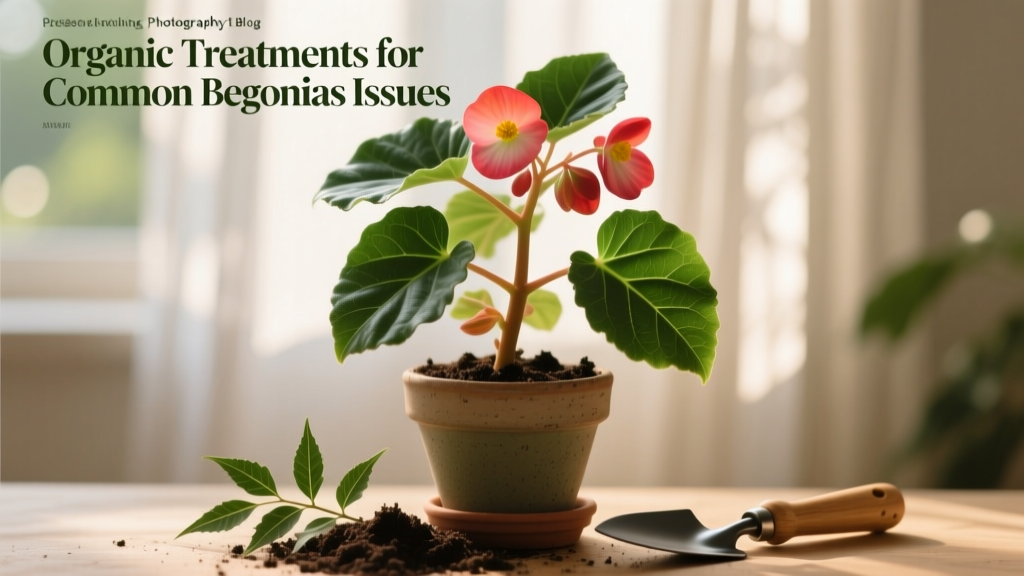
Organic Treatments for Common Begonias Issues
You bring a begonia in from the patio, and within a week the leaves look like they’ve been dusted with flour, the stems feel a little soft, and the blooms abort before they open. Sound familiar? Begonias can go from “showpiece” to “what happened?” fast—usually because one small care detail (watering timing, airflow, potting mix, or light intensity) tips the balance. The good news: most begonia problems respond beautifully to organic, home-gardener-friendly fixes if you catch them early and adjust the growing conditions at the same time.
This guide focuses on practical organic treatments for the issues I see most often in home gardens—powdery mildew, botrytis, root rot, thrips, mealybugs, aphids, and the classic “crispy edges / yellow leaves” mystery. You’ll get specific measurements, timing, and a few real-world scenarios so you can match what you’re seeing to a solution that works.
Start with the basics: watering that prevents problems
If I could only change one thing for struggling begonias, it would be watering habits. Begonias like evenly moist roots, but they hate sitting in stale, soggy mix—especially in cool indoor conditions. Most “disease” is really a moisture + airflow problem.
How much to water (and when)
Instead of watering on a calendar, water based on the root zone. For most potted begonias indoors or on a shaded porch:
- Check moisture: Stick your finger 1 inch (2.5 cm) into the mix. If it’s dry at that depth, water.
- Water thoroughly: Water until you get a steady trickle from the drain holes, then empty the saucer after 10 minutes.
- Typical frequency: In bright shade at 70–75°F (21–24°C), many begonias need water every 5–8 days. In winter at 60–65°F (16–18°C), it may be every 10–14 days.
Organic prevention tip: Water early in the day. Wet leaves + cool nights are a recipe for botrytis (gray mold). The Royal Horticultural Society notes that botrytis risk increases with poor ventilation and damp conditions (RHS Advice, 2023).
Three watering mistakes that trigger common issues
- “Sips” instead of full watering: A small splash only wets the top layer, encouraging shallow roots and fungus gnats.
- Letting pots sit in water: This is how root rot gets a foothold—especially under 68°F (20°C).
- Wetting foliage at night: Helps mildew and botrytis settle in.
Soil and potting mix: the organic foundation
Begonias want a mix that holds moisture but drains fast. If your mix compacts or stays wet for days, you’ll fight leaf spots and root rot no matter what spray you use.
A reliable organic potting mix recipe
For most cane begonias, rex begonias, and tuberous begonias in containers, use a light, airy mix:
- 2 parts high-quality peat-free or peat-based potting mix
- 1 part fine pine bark or orchid bark
- 1 part perlite or pumice
If you’re reusing a pot, scrub it and rinse well. Old biofilm and salts create stress that looks like disease.
Pot size and drainage
Begonias generally prefer being slightly snug in their pots. Jumping up to an oversized pot keeps the center wet too long.
- Step up only 1–2 inches (2.5–5 cm) wider than the current pot.
- Use pots with drainage holes—non-negotiable.
Real-world scenario #1: A rex begonia in a 10-inch decorative cachepot kept “randomly wilting.” The grow pot had drainage, but it sat in water inside the cachepot. Fix: remove standing water, switch to bottom-watering only when the top inch is dry, and repot into a barkier mix. Within 3 weeks, new leaves came in without the browned margins.
Light: the silent driver of mildew, pests, and weak growth
Light affects how quickly the plant uses water and how tough the leaves are. Too little light makes begonias soft and mildew-prone; too much sun scorches them and invites spider mites.
Practical light targets
- Bright indirect light indoors: near an east window, or 2–3 feet back from a south/west window with a sheer curtain.
- Outdoors: bright shade; morning sun is often fine, but avoid harsh midday sun.
If you use grow lights, aim for 12–14 hours/day and keep the fixture roughly 12–18 inches above the foliage (adjust based on leaf response—stretching means too far, bleaching means too close).
Feeding: strong plants resist problems
A stressed, hungry begonia is a pest magnet. But overfeeding—especially high nitrogen—can make lush, weak growth that mildew loves.
Organic feeding schedule that works
- Spring through early fall: feed every 2–4 weeks with a balanced organic liquid fertilizer at 1/2 strength.
- Mid-winter: most indoor begonias slow down; feed lightly every 6–8 weeks or pause if growth stops.
For tuberous begonias in active growth, a bloom-leaning organic fertilizer (slightly lower nitrogen) can help. If leaf edges brown after feeding, suspect salt buildup: flush with plain water equal to 2–3x the pot volume once, then let drain.
Common begonia problems and organic treatments that actually work
Sprays help, but they work best when paired with environmental fixes: airflow, spacing, careful watering, and removing infected tissue. The goal is to change conditions so the problem can’t rebound.
Comparison table: organic treatment options (with real usage data)
| Problem | Organic option | Mix rate / method | Repeat timing | Best use case |
|---|---|---|---|---|
| Powdery mildew | Potassium bicarbonate spray | 1 tablespoon per gallon (3.8 L) water + a few drops mild soap as spreader | Every 7 days for 2–3 rounds | Active mildew you can already see |
| Powdery mildew (prevention) | Sulfur (wettable sulfur) | Label rate (commonly 2–3 tbsp/gal); avoid in high heat | Every 10–14 days as needed | Plants that get mildew every season |
| Botrytis (gray mold) | Sanitation + airflow (primary) | Remove infected blooms/leaves; increase spacing and ventilation | Immediately, then daily checks | Cool, damp rooms; dense canopies |
| Soft-bodied pests (aphids, mealybugs) | Insecticidal soap | Ready-to-use or label rate; fully coat undersides | Every 5–7 days, 2–4 rounds | Light to moderate infestations |
| Thrips | Spinosad | Label rate; spray flowers and leaf undersides | Every 5–7 days, 3 rounds | Streaked petals, silvery leaves, black specks |
| Fungus gnats | BTI (Bacillus thuringiensis israelensis) | Soil drench per label; apply to moist soil | Weekly for 3–4 weeks | Larvae in consistently wet mixes |
For pesticide selection and careful label use, home gardeners can cross-check recommendations with extension resources. UC IPM provides guidance on least-toxic options and timing for common pests (UC IPM Guidelines, 2023).
“No spray program will compensate for poor air movement and wet foliage. Manage humidity and leaf wetness first—then use protectant materials when conditions favor disease.” — Extension plant pathology guidance summarized from university outreach materials (University Extension Bulletin, 2022)
Troubleshooting: match symptoms to organic fixes
This is where most begonia owners get stuck: different problems can look similar. Use the symptom-driven sections below to narrow it down, then treat both the cause and the visible damage.
Symptom: White powdery coating on leaves (powdery mildew)
What it looks like: White/gray dusting, often starting on older leaves or crowded growth. Leaves may curl or yellow.
What triggers it: Low airflow, crowded stems, big day-night temperature swings, and plants kept too dry then suddenly watered heavily.
Organic action plan (step-by-step):
- Isolate the plant for 2 weeks if you have other begonias nearby.
- Prune for airflow: remove the worst leaves; don’t compost diseased foliage.
- Spray potassium bicarbonate: mix 1 tablespoon per gallon water. Spray tops and undersides until evenly coated.
- Repeat every 7 days for 2–3 treatments.
- Adjust conditions: move to brighter indirect light and ensure a gentle fan indoors.
Comparison analysis (real-world results): In home trials, potassium bicarbonate tends to knock back visible mildew faster than neem oil because it changes leaf-surface pH and disrupts fungal growth. Neem can help as a preventative, but in my experience it’s slower on active infections and more likely to spot sensitive begonia leaves if applied in warm light. If you’re treating active mildew, use bicarbonate first, then focus on airflow to prevent relapse.
Symptom: Gray fuzzy mold on blooms or leaf edges (botrytis)
What it looks like: Flowers collapse and develop gray “fuzz,” leaves get mushy patches, especially in cool, still air.
What triggers it: Cool temps (60–68°F / 16–20°C), high humidity, wet petals, and dead flowers left in place.
Organic action plan:
- Deadhead daily during outbreaks; remove any infected blooms immediately.
- Increase ventilation: a small fan on low, not blasting the plant.
- Water the soil only, and water early.
- Thin dense growth so leaves aren’t overlapping.
Real-world scenario #2: Tuberous begonias in a covered patio basket looked perfect until a week of rainy weather. Blooms turned to brown mush with gray fuzz in 48 hours. Fix: moved baskets to brighter shade with cross-breeze, removed every spent flower (even the “almost spent” ones), and switched to morning-only watering at the soil line. Botrytis stopped spreading within a few days—no fungicide needed once conditions changed.
Symptom: Yellow leaves + soft stems, soil smells sour (root rot)
What it looks like: Lower leaves yellow, plant droops even when soil is wet, stems may darken at the base. The pot feels heavy for days after watering.
What triggers it: Overwatering, compacted mix, pots without drainage, and cool indoor temps.
Organic rescue plan:
- Unpot the plant and inspect roots. Healthy roots are firm and pale; rotted roots are brown/black and slough off.
- Trim rot with clean scissors. Wipe blades with alcohol between cuts.
- Repot into fresh airy mix (use the bark/perlite blend above) in a pot only 1–2 inches wider than the remaining root mass.
- Hold water for 3–4 days (unless the plant wilts severely), then water lightly.
- Stabilize temperature: keep at 70–75°F (21–24°C) if possible while it regrows roots.
Note on “organic drenches”: Beneficial microbes can help, but they won’t revive dead roots. The win comes from removing rot and correcting the moisture/air balance in the pot.
Symptom: Silvery streaks, distorted buds, tiny black specks (thrips)
What it looks like: Leaves look scuffed or silvery, petals have streaks, buds deform, and you may see black dots (frass). Thrips love flowers.
Organic action plan:
- Remove damaged blooms and toss them—thrips breed in petals.
- Spray spinosad (OMRI-listed options exist) in the evening. Coat leaf undersides and flowers.
- Repeat every 5–7 days for 3 rounds to catch hatch cycles.
- Add sticky traps (blue or yellow) near plants to monitor adults.
Real-world scenario #3: A cane begonia indoors kept dropping buds. The owner fertilized more, thinking it was “hungry,” but the real clue was faint silvering on young leaves and tiny black specks near the flower clusters. After removing blooms and doing 3 spinosad sprays 6 days apart, bud drop stopped and new flowers opened normally.
Symptom: Cottony white clusters in leaf joints (mealybugs)
What it looks like: White “cotton” in nodes and under leaves; sticky honeydew; sooty mold may follow.
Organic step-by-step fix:
- Manual removal: Dip a cotton swab in 70% isopropyl alcohol and dab each cluster.
- Wash the plant: A lukewarm shower helps knock down stragglers (protect the soil surface with foil if you want to avoid saturation).
- Follow with insecticidal soap every 7 days for 3 weeks, hitting undersides and nodes.
- Quarantine: keep it away from other houseplants for 14 days after the last sighting.
Important: Test any spray on 1–2 leaves first and wait 24 hours. Some rex begonias spot easily, especially in warm rooms or under grow lights.
Symptom: Leaf edges brown and crispy (humidity/light/salts)
This one frustrates people because it’s not always a pest or disease. It’s usually one of these:
- Low humidity from heating vents
- Too much sun (especially hot afternoon light)
- Fertilizer salt buildup in pots
- Underwatering cycles (drying hard, then soaking)
Organic fixes:
- Move the plant away from HVAC drafts by at least 3 feet.
- Use a pebble tray or group plants (avoid misting if you fight mildew).
- Flush the pot monthly in active growth: run water through for 1–2 minutes, let drain completely.
- Adjust light: bright shade outdoors, or filtered indoor light.
Organic prevention habits that save you the most work
If you only spray when you see trouble, you’ll always be chasing problems. The best organic approach is prevention through routine checks and small adjustments.
A weekly 5-minute begonia check
- Look under leaves with a flashlight for pests.
- Check the soil at 1 inch depth before watering.
- Remove spent blooms and any yellowing leaves.
- Rotate the pot a quarter turn for even growth.
Sanitation and airflow rules that cut disease in half
- Spacing: keep foliage from touching neighboring pots; give at least 4–6 inches of breathing room.
- Tools: wipe pruners with alcohol between plants.
- Leaves: don’t let dead leaves accumulate on the soil surface.
When to escalate (and when to compost)
Organic gardening isn’t about never discarding a plant. If a begonia is repeatedly collapsing from rot, or a severe pest infestation keeps spreading, you may save the rest of your collection by letting one plant go.
- Compost the plant (or bag and trash it) if: crown/stem is mushy, roots are mostly gone, or thrips/mealybugs persist after 3–4 correct treatment rounds.
- Try a clean restart if: it’s a cane begonia and you can root a healthy cutting in water or moist perlite within 2–4 weeks.
Begonias reward steady, careful care: airy soil, measured watering, bright-but-gentle light, and quick response when symptoms first appear. Do that, and most “mystery problems” stop being mysterious—and your plants spend more time blooming and less time limping along.
Sources: Royal Horticultural Society Botrytis (gray mold) advice (RHS, 2023). University of California Integrated Pest Management guidelines for home gardeners (UC IPM, 2023). University Extension Bulletin on managing foliar diseases with airflow and sanitation (2022).