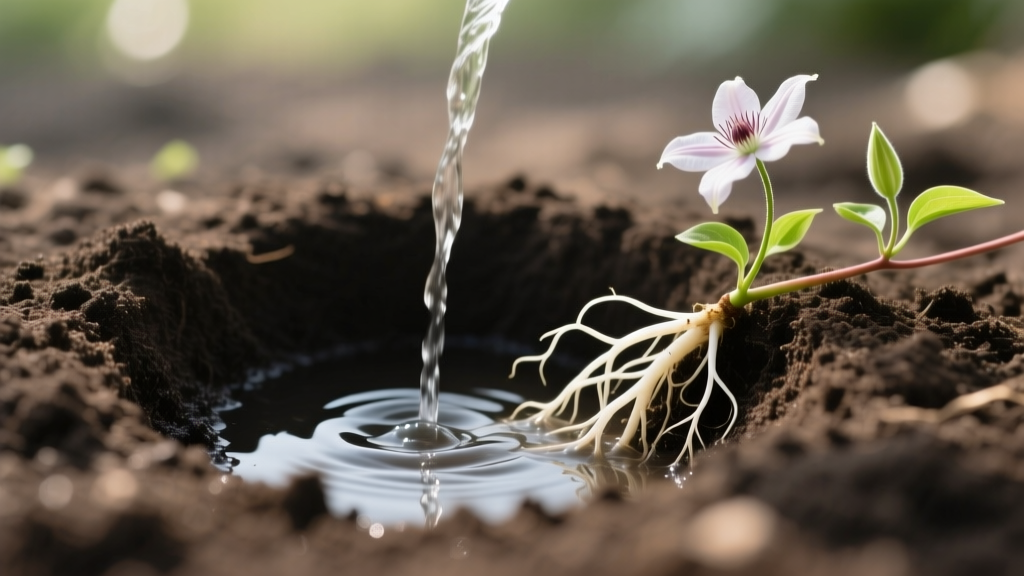
How to Test Drainage Before Planting Clematis
The fastest way to “kill clematis with kindness” isn’t overfeeding or pruning at the wrong time—it’s planting it into a spot that holds water. I’ve seen perfectly healthy clematis planted in spring, throw a few brave shoots, then stall by July. When you dig them up, the roots are brown and sour-smelling, sitting in a cold, wet pocket like a swamp in a teacup. Most gardeners blame the plant. The real culprit is usually drainage you didn’t test before planting.
Clematis roots want moisture, yes—but they also need air. If water lingers in the planting hole, the root zone loses oxygen. That’s when root rot organisms (and good old-fashioned suffocation) take over. The fix is simple: test drainage before you plant, then match your planting method to what you learn.
What “good drainage” actually means for clematis
For clematis, “good drainage” doesn’t mean bone-dry soil. It means water moves through at a steady pace, leaving the root zone damp but not waterlogged. In practical terms, after a thorough soak, the soil should be moist—not shiny-wet—within a few hours, and it should never stay flooded overnight.
Many Extension resources stress that clematis prefers moist, well-drained soil and struggles in waterlogged sites. For example, Clemson Cooperative Extension notes clematis grows best in fertile, well-drained soil (Clemson Cooperative Extension, 2023). Washington State University Extension similarly emphasizes good drainage as foundational for clematis success (WSU Extension, 2020).
Drainage tests you can do before planting (with real numbers)
You don’t need fancy equipment. You need a shovel, a bucket, and a watch. I like to run at least two tests if the spot is questionable—one quick surface check and one real “planting hole” percolation test.
Test 1: The planting-hole percolation test (most useful)
This is the test that tells you what your clematis roots will experience, not just what your lawn experiences.
- Dig a hole about 12 inches wide and 12 inches deep (close to the size of a typical clematis planting hole).
- Rough up the sides with your trowel or shovel. Smooth, glazed sides can slow drainage and give you a false “bad result.”
- Pre-soak: Fill the hole with water once and let it drain completely. (This matters most in dry soil, where the first fill just hydrates the surrounding ground.)
- Refill and time it: Fill again to the top. Start your timer.
- Measure drop rate: Check how long it takes for the water level to drop.
How to interpret the results (rule of thumb):
- Ideal: Water drains at roughly 1–2 inches per hour. A 12-inch-full hole should be mostly drained in 6–12 hours.
- Borderline: Less than 1 inch per hour (water still sitting after 12–24 hours). Clematis may survive only with site modifications.
- Poor: Water remains after 24 hours. Don’t plant clematis at grade here without serious changes.
If you want a second opinion: the USDA NRCS soil infiltration guidance for field conditions often treats low infiltration as a red flag for ponding and root-zone oxygen problems—different context, same principle (USDA NRCS, 2019).
Test 2: The “bucket soak” surface test (quick screening)
This one catches obvious issues like compacted clay pans and downspout-saturated spots.
- Set a bottomless bucket or a coffee can with both ends removed on the soil surface.
- Press it in 1 inch to seal the edge.
- Pour in 1 gallon of water and time how long it takes to disappear.
Interpretation: If 1 gallon sits longer than 60 minutes on average garden soil, expect trouble for clematis unless you improve the site. This is not as accurate as the planting-hole test, but it’s fast and revealing.
Test 3: The “storm memory” test (the one gardeners forget to use)
After a heavy rain (think 1 inch or more in a day), walk the yard the next morning.
- If the area is still squishy or you see puddles at 18–24 hours, that’s a drainage warning.
- If water flows off a slope and collects at a fence line or patio edge, that’s a hidden bathtub where clematis often fails.
“Poorly drained soils reduce oxygen in the root zone, which can lead to root decline and increased disease pressure.” — University of Minnesota Extension (2022)
Comparison: drainage test methods (accuracy vs. effort)
| Method | Time Needed | What It Tells You | Best For | Limitations |
|---|---|---|---|---|
| Planting-hole percolation test (12" x 12") | 30–60 min active, up to 24 hrs total | Root-zone drainage rate (in/hr) at planting depth | Choosing the right planting method for clematis | Slower; needs two fills for accuracy in dry soil |
| Bottomless bucket + 1 gallon | 10–90 min | Surface infiltration tendency | Screening compacted spots quickly | Less reliable in layered soils (good topsoil over clay) |
| Observe after 1" rain | 5–10 min | Real-world ponding and runoff patterns | Spotting downspout, slope, and hardscape issues | Weather-dependent; doesn’t quantify infiltration rate |
What to do if drainage is borderline or poor
This is where gardeners either get clever—or get stubborn. Clematis is forgiving in many ways, but it’s not a marsh plant. If your test shows slow drainage, pick the fix that matches the cause.
Fix option A: Plant high (mounded or raised planting zone)
If your hole drains in 12–24 hours, you can often succeed by planting high so the crown and most roots sit above the soggy layer.
- Build a mound 8–12 inches high and 18–24 inches wide using a blend of topsoil and compost.
- Plant the clematis so the root ball sits on native soil, with the crown set according to your variety’s recommendations (many gardeners plant clematis slightly deeper, but don’t bury it in a wet basin).
- Mulch with 2–3 inches of shredded bark, keeping mulch an inch away from the stem.
Fix option B: Improve the soil structure (not just “add compost”)
Compost helps, but it’s not magic if the real issue is compaction or a clay pan. Aim for structure and pores.
- Loosen a broad area, not just the hole: at least 24 inches wide and 12–18 inches deep.
- Mix in 2–4 inches of finished compost over that area (not pure compost in the hole).
- If soil is heavily compacted, use a digging fork to fracture it—think “lift and wiggle,” not pulverize.
Avoid adding gravel to the bottom of the hole. In many soils, that creates a perched water table effect: water drains from fine soil into coarse material reluctantly, so it just sits above the gravel where your roots are.
Fix option C: Redirect water (often the real solution)
If the spot is wet because of a roof downspout, sump outlet, or patio runoff, you can improve drainage all day and still lose the plant.
- Extend downspouts at least 6–10 feet away from the planting area.
- Create a shallow swale to route water around (not through) the clematis bed.
- In extreme cases, choose a different location and save yourself years of frustration.
Light needs (and how drainage affects light decisions)
Clematis typically flowers best with strong light: 6+ hours of sun is a good benchmark for many large-flowered types, while some (especially certain viticella and alpina types) tolerate more shade. But here’s the practical twist: shady sites dry slower. A spot that drains “okay” in sun can act soggier in shade because evaporation is reduced.
- If drainage is marginal, prioritize morning sun locations that dry out faster.
- If you’re planting near a north wall or dense evergreen hedge, be extra strict with drainage testing.
Watering after planting: enough moisture without drowning
Once drainage is proven, watering becomes straightforward. The goal is consistent moisture while roots establish, not daily splashing.
Week-by-week watering rhythm (first season)
- Weeks 1–2: Water deeply every 2–3 days if there’s no rain. Aim to moisten the root zone 8–12 inches deep.
- Weeks 3–8: Water about 1 inch per week total (rain + irrigation), split into 1–2 soakings depending on heat and soil.
- After 8 weeks: Deep water weekly in dry spells; more often when temperatures run 85–95°F and wind is drying the soil.
Practical tip: A slow hose trickle for 20–40 minutes at the base is usually better than a quick sprinkle. The sprinkle makes you feel productive; the slow soak actually grows roots.
Mulching to stabilize moisture (and protect “cool roots”)
Clematis likes its roots cool. Mulch also prevents the soil surface from crusting, which can reduce infiltration over time.
- Apply 2–3 inches of mulch.
- Keep a 1–2 inch gap around the stem to reduce rot risk.
- If you’re in a hot climate, a flat stone or a small companion plant can shade the root area—but don’t pack the crown with dense foliage that traps moisture.
Feeding: support growth without pushing weak, sappy stems
Overfeeding doesn’t fix drainage. If anything, heavy nitrogen in wet soil can encourage lush growth on a stressed root system—exactly the wrong pairing.
- At planting: mix compost into the broader bed, not a concentrated pocket.
- In spring: use a balanced fertilizer (something like 5-5-5 or 10-10-10) at label rates once new growth is 6–12 inches long.
- Mid-summer: if the plant is growing well, a light second feeding is fine; stop feeding about 6–8 weeks before first frost so growth can harden off.
If you prefer organic feeding: a top-dress of 1–2 inches compost in spring plus a handful of slow-release organic fertilizer is typically plenty.
Soil: what clematis roots like (and what they won’t tolerate)
Think “crumbly, moist, oxygen-rich.” If you squeeze a handful of soil, it should hold together briefly then crumble when tapped. If it forms a slick ribbon, you likely have high clay content—and drainage testing matters even more.
Target soil characteristics
- Texture: Loam or amended clay loam; avoid pure sand pockets that dry too fast.
- pH: Many clematis do well around 6.5–7.0 (slightly acidic to neutral), though they’re fairly adaptable if drainage is good.
- Organic matter: Enough to hold moisture, not so much it becomes spongy and stays wet.
Common drainage-related problems (symptoms and fixes)
Drainage issues don’t always look like standing water. Clematis often sends mixed signals: wilting, yellowing, and stalling can all trace back to roots that can’t breathe.
Problem: Leaves yellow, plant looks thirsty even when soil is wet
- Likely cause: Root stress from waterlogging; roots can’t take up water properly.
- What to do: Stop watering for several days, pull mulch back to let the surface dry, and check soil moisture at 6 inches deep. If it’s soggy, improve drainage or replant higher.
Problem: Sudden collapse of stems (especially in warm weather)
- Likely cause: Clematis wilt (fungal) can strike even in decent conditions, but poor drainage increases susceptibility.
- What to do: Cut affected stems down to healthy tissue. Disinfect pruners. Improve airflow and avoid overhead watering. If drainage tested borderline, consider moving or mounding the plant.
Problem: Blackened stem base or mushy crown
- Likely cause: Crown rot from consistently wet soil, often worsened by mulch piled against the stem.
- What to do: Pull mulch back 1–2 inches from stems, let the crown area dry, and reassess the site with a percolation test. If water remains after 24 hours, replant to a raised area or choose a new spot.
Problem: Slow growth, few flowers, despite sun
- Likely cause: Roots are stuck in a compacted or wet layer; plant invests in survival rather than flowering.
- What to do: In fall or early spring, gently lift and replant with broader soil loosening (24 inches wide) and compost incorporation. Confirm drainage again before replanting.
Three real-world scenarios (and how to handle each)
Scenario 1: Heavy clay backyard that drains in 18 hours
You do the 12-inch hole test and it drains, but slowly—water is still present at 18 hours. This is borderline. I’d plant clematis here only if you’re willing to plant high.
- Build an 8–12 inch mound, loosen a wide area, and keep mulch modest.
- Water less frequently but more deeply—let the top few inches dry slightly between soakings.
- Avoid planting right where a fence meets soil; those spots collect runoff and stay colder.
Scenario 2: A “perfect” bed next to a downspout
The soil looks rich and dark. The percolation test seems okay in dry weather. Then a thunderstorm hits and the area becomes a small lake. Clematis fails here all the time because the issue isn’t the soil—it’s the water source.
- Extend the downspout 6–10 feet away or route it into a rain garden designed for wet-tolerant plants.
- Retest drainage after you redirect water (don’t skip this).
- If you can’t redirect runoff, choose a different clematis location.
Scenario 3: A sloped front yard that dries fast but still rots roots
This surprises people: slopes can still have drainage problems if there’s a compacted layer under a thin topsoil cap. Water moves downhill through the top layer, then perches on the clay beneath—right where roots sit.
- Use the planting-hole test at the actual depth. Don’t rely on surface appearance.
- Loosen and amend a wide planting zone to break the “pan” effect.
- Consider terracing a small pocket or planting slightly above grade to prevent water from channeling into the crown.
Troubleshooting checklist before you plant
If you only remember one thing, remember this: don’t guess. Test.
- Have you run a planting-hole percolation test to 12 inches deep?
- Does the hole drain within 6–12 hours (ideal) or at least under 24 hours (workable with modifications)?
- Is the spot influenced by roof runoff, sump discharge, or hardscape flow?
- Can you plant on a mound 8–12 inches high if needed?
- Do you have a plan to water deeply but not frequently (about 1 inch/week once established)?
Common mistakes I see (and how to avoid them)
These show up in garden after garden, and they’re easy to fix once you know what to look for.
- Planting in a “nice hole”: A pretty, amended hole in bad native soil can act like a bathtub. Amend broadly, not just the hole.
- Adding gravel at the bottom: It often worsens water retention at the soil-gravel interface.
- Mulch piled against stems: Great for rot, not for clematis.
- Watering on a schedule, not by feel: Check moisture at 6 inches down before watering again.
Once you’ve done a real drainage test and made any needed fixes, clematis becomes a much more dependable garden partner. You’ll still have normal gardening tasks—training vines, pruning by group, keeping an eye out for wilt—but you won’t be fighting the invisible enemy of soggy roots. And when clematis is happy underground, it’s generous above ground: stronger stems, better flowering, and a plant that actually gets better each year instead of quietly declining.
Sources: Clemson Cooperative Extension (2023); Washington State University Extension (2020); University of Minnesota Extension (2022); USDA NRCS (2019).