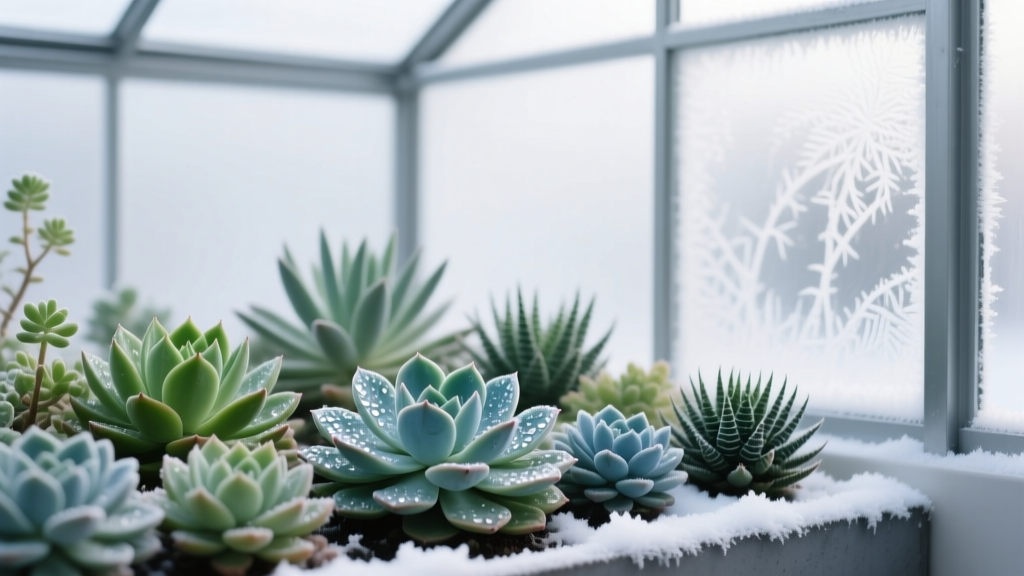
Protecting Succulents from Frost Damage
The first time you see it, it’s baffling: yesterday your echeveria looked like a tight little rose, and this morning it’s slumped into a translucent puddle. The pot next to it—same porch, same cold night—looks untouched. Frost damage on succulents can feel random, but it’s not. Once you understand what actually happens in the leaf during a freeze, you can prevent most losses with a few habit changes and some well-timed protection.
Here’s the surprising fact many home gardeners learn the hard way: succulents often don’t die from “cold” alone—they die when cold and water combine. Water inside cells expands as it freezes, rupturing the tissue. That’s why a dry jade plant might take a brief cold snap, while a freshly watered aloe turns to mush at 30–32°F (-1 to 0°C).
This guide focuses on practical, proven steps you can take before, during, and after frost, with specific temperatures, timing, and real-world setups that work in home gardens.
Know Your Frost: What Actually Damages Succulents
Frost injury depends on temperature, duration, wind, plant hydration, and microclimate. A calm 30°F (-1°C) night can be more damaging than a windy 28°F (-2°C) night if frost settles on leaves and stays until morning sun hits.
Most common succulents begin to show injury around these rough thresholds:
- 40°F (4°C): Tender tropical succulents (many aloes, kalanchoe, some euphorbia) may stress, especially if wet.
- 32°F (0°C): Frost forms; many container succulents are at real risk.
- 28°F (-2°C) for 2–4 hours: Damage likely for most non-hardy succulents; cell rupture begins in hydrated tissue.
- 25°F (-4°C) and below: Severe injury probable unless the plant is truly cold-hardy (certain sedums, sempervivums, some opuntias).
As Oregon State University Extension notes, frost damage varies widely by plant type and conditions; the same temperature can cause little harm one night and significant injury another night depending on wind, cloud cover, and moisture (Oregon State University Extension, 2021).
“When freeze injury occurs, water in plant cells forms ice crystals that rupture cell membranes. The damage may not be fully visible until tissue thaws.” — University of Minnesota Extension (2020)
Three Real-World Scenarios (and What Works)
Scenario 1: Porch Pots Hit by a Surprise 30°F Night
You’ve got succulents in decorative pots on a front porch. The forecast said 35°F, but the porch thermometer read 30°F at dawn. This happens because porches can radiate heat to the night sky and cool faster than you’d expect.
What works: Move pots tight to the house wall (radiant heat helps), cluster them together, and cover with frost cloth before nightfall. If you forget and see frost at sunrise, shade plants from direct morning sun for a day—rapid thawing can worsen cell damage.
Scenario 2: In-Ground Succulent Bed in a Low Spot
Cold air drains downhill like water. If your bed is at the bottom of a slope, it can be 3–7°F (2–4°C) colder than the rest of your yard on still nights.
What works: Add a dry mulch layer (like pine needles or straw) around crowns—not packed onto them—and use low hoops with frost cloth to trap ground warmth. Avoid heavy plastic directly on plants.
Scenario 3: A Greenhouse or Sunroom That “Feels Warm” but Freezes at Night
Small greenhouses can swing wildly: 75°F (24°C) in afternoon sun, then 28°F (-2°C) at 4 a.m. if unheated.
What works: Add thermal mass (a few 5-gallon water jugs), seal drafts, and use a thermostatically controlled heater set to 38–40°F (3–4°C) for tender plants. This modest setpoint prevents most frost injury without running up the bill.
Watering: The Frost-Proofing Habit Most People Miss
If I could change one thing in how people overwinter succulents, it would be this: water less and water earlier.
How watering affects freeze damage
Succulents store water in leaves and stems. When those tissues are fully hydrated and temperatures drop below freezing, the risk of cell rupture rises. Keeping plants a bit drier going into a cold spell makes them less likely to burst and rot.
Cold-season watering rules that work
- Stop watering 48–72 hours before a predicted frost (even a light watering).
- In winter, many indoor/outdoor succulents do fine with watering every 3–6 weeks, depending on light and temperature.
- When you do water, water in the morning so excess drains and surfaces dry before night.
- Do not mist for humidity—wet leaf surfaces and cold air are a bad combo.
Concrete watering example
For a 6-inch pot of echeveria kept outdoors in a mild winter climate, I often water about 1/4 to 1/3 cup (60–80 mL) only when the potting mix is fully dry and the forecast shows nights above 40°F (4°C) for the next few days. If nights are hovering near freezing, I hold off.
Soil and Pot Choices: Preventing Cold + Wet Roots
Frozen roots and soggy soil set succulents up for rot. Even if the top looks fine after a frost, cold wet media can quietly kill the plant over the next week.
Use a fast-draining mix (and don’t guess)
A practical home recipe that performs well in winter containers:
- 50% cactus/succulent potting mix
- 25% pumice or perlite
- 25% coarse sand or small gravel (not play sand)
If your mix stays wet for more than 4–5 days in cool weather, it’s too water-retentive for winter.
Pot material matters in freezes
Unglazed terracotta breathes and dries faster, which is helpful. But it can also crack in hard freezes, especially if the pot is saturated. Plastic won’t crack as easily and insulates roots slightly better, but it stays wetter longer.
When you know cold nights are coming, lift pots off cold concrete with pot feet or a scrap of wood. Concrete can act like a heat sink and keep roots colder longer.
Light and Placement: Microclimates Save Plants
Winter light is weaker, days are shorter, and succulents are often sitting in places that look bright but don’t actually deliver much usable light. Plants grown in low light stretch, soften, and become more frost-sensitive.
Outdoor placement tips
- Place pots on the south or west side of the house for extra warmth (Northern Hemisphere).
- Avoid open sky exposure on clear nights when frost is likely; an overhang can reduce radiational cooling.
- Keep plants out of wind tunnels—wind strips heat and can dry tissues unevenly.
Indoor light levels that prevent weak growth
If you bring succulents inside, a bright window may still be dim compared to outdoors. Consider a grow light set for 10–12 hours daily. Keep LEDs about 8–14 inches (20–35 cm) above rosettes (adjust depending on lamp strength), and watch for bleaching (too close) or stretching (too far).
Feeding: When Fertilizer Helps—and When It Backfires
Feeding at the wrong time can make frost damage worse. Fertilizer pushes tender new growth, and tender growth is the first to collapse in a cold snap.
Practical fertilizing schedule
- Stop fertilizing 6–8 weeks before your first expected frost.
- Resume feeding in spring when nights are reliably above 50°F (10°C) and you see new growth.
- Use a balanced fertilizer at 1/4 strength (for example, a 10-10-10 diluted to 25% of label rate) once every 4–6 weeks during active growth.
For many succulents, less is more. Strong feeding isn’t a shortcut to sturdiness; it often creates lush, frost-sensitive tissue.
Protection Methods Compared (With Real Numbers)
Not all frost protection is equal. Here’s a practical comparison based on typical backyard conditions, with the kind of temperature buffering you can realistically expect when applied correctly.
| Method | Best for | Typical temperature protection | Cost level | Key risk / mistake |
|---|---|---|---|---|
| Move pots indoors/garage overnight | Container succulents, tender species | Can avoid freezing entirely (keeps above ~45–60°F / 7–16°C in many garages) | Low | Forgetting them for weeks in low light (etiolation) |
| Frost cloth (row cover) over hoops | In-ground beds, grouped pots | Often ~2–6°F (1–3°C) warmer under cover | Low–Medium | Cloth touching leaves can transmit cold; use hoops |
| Blanket + tarp (temporary) with stakes | Emergency, short cold snaps | Similar to frost cloth if sealed well; can be ~3–8°F (2–4°C) warmer | Low | Plastic directly on plants traps condensation and freezes tissues |
| Mini greenhouse + thermal mass (water jugs) | Collections, repeated frosts | Often ~5–10°F (3–6°C) buffering on mild freezes | Medium | Overheating on sunny days; must vent |
| Thermostatic heater in greenhouse | High-value plants, very tender species | Setpoint control (e.g., maintain 38–40°F / 3–4°C) | Medium–High | Fire risk if unsafe heater; always use rated equipment |
One of the most repeatable methods for home gardeners is frost cloth on hoops plus dry soil. It’s simple, it’s quick, and it avoids the biggest mistake: trapping wet air against leaves.
Step-by-Step: Your Frost Night Routine
If you only do this sequence, you’ll prevent the majority of frost losses in a typical home collection.
- Check the low temperature and wind by mid-afternoon. If the forecast is 35°F (2°C) or lower, treat it seriously—microclimates run colder.
- Do not water within 48–72 hours of a freeze event.
- Group pots together (touching) on the warmest side of the house.
- Get pots off concrete using pot feet, wood slats, or even flattened cardboard for the night.
- Cover before sunset with frost cloth. If using a blanket, add a waterproof layer on top (not touching plants) to keep it dry.
- Vent in the morning once temperatures rise above 40°F (4°C) to prevent overheating and condensation.
Common Frost Problems (and How to Fix Them)
Frost damage doesn’t always show up immediately. You may see symptoms over the next 24–72 hours as tissues thaw and collapse.
Symptom: Leaves turn translucent, watery, or “glass-like”
- What it means: Freeze rupture in leaf cells. Tissue is dead and will rot.
- What to do now:
- Move the plant to bright shade (not hot sun) for 2–3 days.
- Do not water for at least 7–10 days.
- Remove mushy leaves with a clean, sharp blade; let wounds dry (callus) for 48 hours before any watering.
Symptom: Blackened tips or brown patches after frost
- What it means: Localized cold burn; tissue may be partially damaged.
- What to do:
- Wait 3–5 days before heavy pruning—damage lines become clearer as tissue dries.
- Trim to firm tissue only; sterilize tools with 70% isopropyl alcohol.
- Keep the plant dry and airy to prevent secondary rot.
Symptom: Plant looks okay after frost, then collapses a week later
- What it means: Root damage or crown rot from cold, wet media; secondary infection sets in.
- What to do:
- Unpot and inspect roots. Healthy roots are firm and pale; dead roots are dark and mushy.
- Cut away rot, dust cuts with sulfur (optional), and let dry 24–48 hours.
- Repot into fresh, dry, gritty mix. Wait 5–7 days before watering lightly.
Symptom: Scorched spots after a frosty morning followed by bright sun
- What it means: Sunscald on frost-stressed tissue; rapid thaw worsened damage.
- What to do next time: Provide morning shade after frost (a sheet or shade cloth until late morning).
Species Reality Check: Not All Succulents Play by the Same Rules
“Succulent” is a huge category. Some are mountain plants that shrug off snow; others are tropical and melt at the first frost.
Examples you can plan around
- Usually frost-tender: Echeveria, Aeonium, many Aloes, Kalanchoe, Adenium (desert rose). Plan protection when nights drop below 40°F (4°C).
- Often more cold-tolerant: Sempervivum (hens-and-chicks), many Sedum species, some Opuntia (prickly pear). Many handle freezes if the soil is sharp-draining.
If you’re not sure what you have, assume tender until proven otherwise. A single night at 28°F (-2°C) is an expensive way to “find out.”
Aftercare: What to Do in the Week After a Frost
The day after a frost, your job is to prevent rot and help the plant stabilize. Most gardeners make things worse by watering too soon or pruning too aggressively.
- Keep dry: Hold off watering for 7–14 days depending on severity and indoor/outdoor drying conditions.
- Increase airflow: A gentle fan indoors or spacing pots outdoors helps damaged tissue dry instead of rot.
- Delay major pruning: Wait until damaged tissue fully declares itself—usually 3–7 days.
- Take insurance cuttings: If stems are still firm above damaged tissue, take cuttings, let callus 3–5 days, then root in dry mix. This can save a favorite plant even if the base fails later.
Washington State University Extension emphasizes that frost injury symptoms can develop over time and that patience helps you distinguish dead tissue from what may recover (Washington State University Extension, 2022).
Troubleshooting Quick Wins (Common Mistakes I See Every Winter)
These are the repeat offenders—the small choices that turn a manageable cold night into a wipeout.
Mistake: Covering with plastic directly on plants
Symptom: Blackened, wet patches exactly where plastic touched.
Fix: Use frost cloth or suspend plastic above plants with stakes/hoops, and remove in the morning.
Mistake: Watering because “it’s dry in winter”
Symptom: Sudden mush after a light frost; soil stays wet for a week.
Fix: Water by soil dryness and forecast, not by calendar. In winter, many succulents prefer a lean, dry rhythm.
Mistake: Leaving succulents under eaves all winter with no sun
Symptom: Stretched growth, pale color, weak leaves that cold-burn easily.
Fix: Give maximum winter light you can, or supplement indoors with 10–12 hours of grow lighting.
When It’s Not Frost: Problems That Mimic Freeze Damage
Not every ugly leaf in winter is a freeze injury. Misdiagnosis leads to the wrong fix.
- Overwatering rot: Leaves yellow, then turn mushy starting at the base; soil smells sour. Fix by drying out, repotting, and improving drainage.
- Sunburn: Bleached tan/white patches on the side facing the sun, often after moving indoors to outdoors. Frost cloth didn’t do that—sun did. Acclimate plants over 7–14 days.
- Pest stress indoors: Mealybugs hide in rosettes; leaves deform and weaken. Treat with 70% isopropyl alcohol swabs and isolate plants.
If the damage appears overnight after a subfreezing event, it’s likely frost. If it creeps in gradually over weeks, think water, light, or pests first.
A Practical Winter Plan You Can Repeat Every Year
If you want a low-stress system, set a personal “frost trigger” and stick to it. Mine is simple: if the forecast low is 38°F (3°C) or colder, I prep tender succulents as if frost could happen.
- Early fall (6–8 weeks before first frost): Stop fertilizing. Check soil drainage and repot anything staying wet too long.
- Fall to winter: Keep plants on the dry side; water only on warm spells. Keep frost cloth and clips where you can grab them fast.
- During cold snaps: Group, lift off concrete, cover before sunset, vent mid-morning.
- Late winter to spring: Gradually increase watering once nights stay above 45–50°F (7–10°C) and growth resumes.
Frost protection isn’t about building a perfect fortress—it’s about stacking a handful of small advantages in your favor: drier soil, smarter placement, simple covers, and good timing. Do that, and those “mystery melt” mornings become rare, even when winter throws you the occasional nasty surprise.