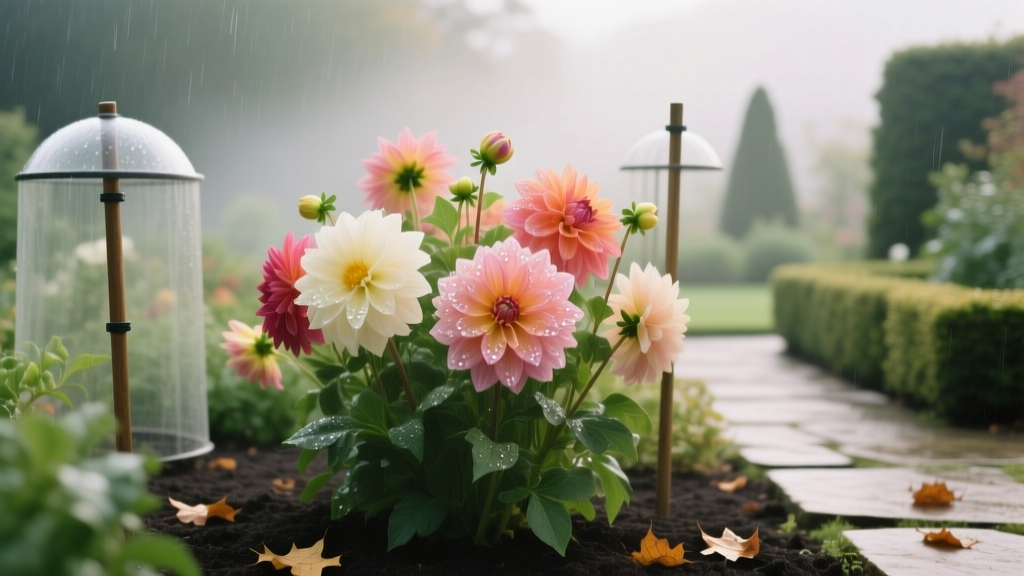
How to Protect Dahlias from Extreme Weather
Last July, a neighbor’s dahlia bed looked like a magazine spread on Friday—upright stems, dinner-plate blooms, deep green leaves. By Monday, after a 102°F heat spike followed by a windstorm, the same plants were flat, scorched at the edges, and dropping buds like they’d given up. Dahlias can rebound, but extreme weather exposes every weak link: shallow watering, flimsy staking, tired soil, and tubers planted without a backup plan.
The good news is you don’t need a greenhouse to keep dahlias thriving through heat, storms, heavy rain, and early cold snaps. You need a few practical systems: smarter watering, soil that drains but holds moisture, wind-proof support, and a “when-not-if” response plan for weather alerts.
Know Your Weather Triggers (and Your Dahlia’s Limits)
Dahlias love warm days, cool-ish nights, and steady moisture. Extremes push them into survival mode: leaves stop transpiring efficiently, stems snap, roots suffocate in waterlogged soil, or tubers chill and rot. As a rule of thumb, dahlias grow best when daytime highs are roughly 70–85°F, and they become stressed when temperatures run above about 90°F for multiple days—especially with hot nights.
Cold is the other hard boundary. Dahlias are frost-tender: foliage is typically damaged at or near 32°F, and tubers can be injured if soil temperatures stay cold and wet. Washington State University Extension notes dahlias are tender perennials grown as annuals in cold climates and are not frost hardy (WSU Extension publication, 2023).
“Heat stress is not just high temperature; it’s high temperature combined with high light and limited water availability—plants can’t cool themselves without consistent moisture.” — University of Minnesota Extension, heat stress guidance (2022)
Watering Strategies That Hold Up in Heat, Wind, and Downpours
If you only change one thing for extreme weather protection, change how you water. Dahlias are fast growers with big leaves; they’re thirsty, but they hate sitting in soggy soil. Your goal is deep, infrequent watering that keeps the root zone evenly moist without flooding it.
How much water do dahlias need?
A solid baseline for established dahlias is about 1–1.5 inches of water per week from rain and irrigation combined. During heat waves (above 90°F), many gardens need closer to 2 inches per week, split into multiple deep waterings, especially in sandy soils. The easiest way to avoid guessing is to use a rain gauge and check soil moisture by hand.
- Finger test: Push your finger 2–3 inches into the soil. If it’s dry at that depth, it’s time to water.
- Soaker/drip timing: Start with 45–90 minutes, then dig a small hole to confirm the water penetrated 6–8 inches deep.
- Container dahlias: In hot, windy weather, expect to water daily when temps are near 95–100°F.
Heat wave protocol (real-world scenario #1)
Scenario: Forecast shows 3 days over 95°F with warm nights. This is when dahlias crisp at the edges and drop buds.
- Water early: Deep water at sunrise the day before the heat hits and again on day 2. Avoid frequent shallow sprinkles.
- Mulch: Apply 2–3 inches of straw, shredded leaves, or fine bark, keeping mulch 2 inches away from the stem base to reduce rot risk.
- Temporary shade: Use 30–40% shade cloth from about 1–5 p.m. (the brutal hours). Even an old sheet on hoops helps—just keep it off the foliage.
- Skip heavy feeding: Don’t push soft growth during heat stress. Keep plants hydrated first.
Why this works: Dahlias cool themselves through transpiration. In extreme heat, they can’t keep up, especially if the root zone is dry. Deep watering plus mulch and partial shade reduces leaf temperature and water demand.
Storm and heavy rain protocol (real-world scenario #2)
Scenario: A thunderstorm line is coming with 1–3 inches of rain and gusts over 30 mph. The main risks are snapped stems, waterlogged roots, and splashed soil spreading disease.
- Before the storm: Tie stems to stakes using soft ties in a figure-8 loop (stem and stake each get their own loop). Add an extra tie just below the first flower junction.
- After the storm: Don’t “fix” everything immediately if the soil is saturated. Wait until the soil surface is no longer glossy-wet, then gently lift and re-tie plants.
- Remove damaged tissue: Cut snapped stems cleanly back to a node. Ragged breaks invite rot.
- Avoid overhead watering for 3–5 days: Let foliage dry and switch to drip or soaker hoses.
Wind protection and watering go together
Wind dries dahlias fast and can make even well-watered plants look wilted by late afternoon. If you’re in an open site, consider a windbreak (a fence with gaps, a hedge, or woven willow). A solid wall can create turbulence; a semi-porous barrier reduces wind speed more evenly.
Soil: The Hidden Insurance Policy Against Extreme Weather
In extreme weather, soil is either your buffer or your problem. The best dahlia soil drains quickly but holds moisture—think crumbly loam with plenty of organic matter.
Drainage targets and how to check
If water stands in the bed more than 4–6 hours after a heavy rain, dahlias are at higher risk for root issues and tuber rot. A quick DIY percolation test helps:
- Dig a hole 12 inches wide and 12 inches deep.
- Fill with water and let it drain once (this pre-saturates the soil).
- Refill and time the drop.
Rough rule: If the water level drops at least 1 inch per hour, drainage is usually adequate. If it’s much slower, build a raised bed (even 8–12 inches tall helps) or amend heavily with compost and consider planting on a slight mound.
Organic matter and structure
Work in 2–3 inches of finished compost before planting. Compost improves water-holding in sandy soil and improves structure in clay. If you have heavy clay, add compost over multiple seasons rather than dumping sand (sand + clay can turn into something like brick).
Mulch as weather armor
Mulch is not decoration—it’s insulation. In heat it keeps roots cooler and moisture steadier; in pounding rain it reduces soil splash (a common disease spreader). Aim for 2–3 inches of mulch once the soil has warmed and plants are 8–12 inches tall.
Light Management: Sun, Heat, and the “Too Much of a Good Thing” Problem
Dahlias bloom best with full sun—typically 6–8 hours daily. But in regions with intense summer sun, the hottest afternoon rays can cook petals and scorch leaves even when plants are well-watered.
When to add shade cloth
If you routinely see:
- Leaf edges browning despite moist soil
- Blooms fading or “melting” in the sun
- Plants wilting daily even after deep watering
…try 30–40% shade cloth during heat events. Place it on hoops or a simple frame so air can move. Keep airflow—stagnant shade invites mildew.
Feeding Dahlias Without Making Them Floppy (or Fragile in Storms)
Extreme weather punishes overly soft growth. If you push dahlias hard with high nitrogen, you often get tall, lush plants that snap in wind and delay blooming.
Practical feeding schedule
- At planting: Mix compost into the bed. If you use a granular fertilizer, choose something balanced or bloom-leaning (for example, around 5-10-10), following label rates.
- When plants are 12–18 inches tall: Side-dress with compost or apply a low-nitrogen feed.
- Midseason: Repeat every 3–4 weeks if growth is pale or flowering slows—unless heat stress is severe, then prioritize watering and recovery.
Penn State Extension notes that excessive nitrogen can encourage vegetative growth at the expense of flowering in many ornamentals, and it can contribute to weak, lush stems (Penn State Extension horticulture guidance, 2021). Keep nitrogen moderate, especially in windy sites.
Staking and Support: Your Best Defense Against Wind and Heavy Blooms
Most dahlia heartbreak after storms comes down to support installed too late. Stakes should go in early, before roots spread and before the plant is top-heavy.
Support options compared (with real tradeoffs)
| Support Method | Best For | Wind/Storm Performance | Typical Setup | Maintenance |
|---|---|---|---|---|
| Single stake + soft ties | Small to medium dahlias, tight spaces | Good if tied every 8–12 inches; can twist in gusts | 1 stake (5–6 ft) set 8–12 in deep | Re-tie every 1–2 weeks |
| Tomato cage (heavy-duty) | Bushy varieties, container plants | Fair; can topple if cage is light or not anchored | Cage anchored with 2 stakes | Low once installed |
| Corralling with posts + twine (Florida weave) | Rows or beds of dahlias | Excellent; supports multiple stems and spreads load | Posts every 4–6 ft, twine at 12, 24, 36 in | Add twine as plants grow |
| Grid netting (horticultural net) | Cut flower style planting, lots of plants | Excellent if tight and layered; weak if slack | Net squares 6–8 in, layered 2–3 levels | Moderate; needs adjusting |
Comparison analysis: single stake vs. corral system (data-based)
If you garden in wind, the corral system usually outperforms a single stake because it distributes force across the bed. Here’s a practical way to think about it:
- Single stake: Tie points every 8–12 inches of vertical growth. In a 30 mph gust, a tall dahlia behaves like a lever; one failure point can crease or snap the main stem.
- Corral (posts + twine): Twine lines at 12, 24, and 36 inches catch stems before they bend sharply, reducing the chance of a single catastrophic break. In beds with multiple plants, it also prevents the “domino effect.”
In plain terms: single stakes work, but they demand frequent re-tying. Corralling takes longer to set up, but you usually touch it less during the season and it handles storms better.
Common Extreme-Weather Problems (and What to Do Fast)
This is where experienced gardeners save plants: identifying the symptom correctly. Heat damage, drought wilt, overwatering, and disease can look similar at first glance.
Troubleshooting: wilting leaves at midday
Symptoms: Leaves droop by afternoon, perk up at night. Soil surface may look dry.
Likely causes: Heat + wind stress; shallow roots; mulch missing; irrigation not reaching deep enough.
Fix:
- Deep water early morning to reach 6–8 inches depth.
- Add 2–3 inches mulch.
- Provide temporary shade (30–40%) during the hottest 4–5 hours of the day.
Troubleshooting: wilting that does NOT recover overnight
Symptoms: Plant stays limp morning and night; lower leaves yellow; soil may be wet.
Likely causes: Root stress from waterlogging, root rot, or stem damage at the crown.
Fix:
- Stop watering until the top 2–3 inches dries.
- Improve drainage (open soil surface gently, remove mulch temporarily if it’s trapping moisture).
- Cut away any blackened, mushy stems. If the crown is rotting, you may need to lift the plant and salvage healthy tubers.
Troubleshooting: scorched leaf edges and bleached blooms
Symptoms: Brown, crispy leaf margins; petals fading quickly; buds shrivel.
Likely causes: Heat + intense sun; inconsistent watering (dry-wet swings); hot reflected heat from pavement or walls.
Fix:
- Water consistently to avoid “feast or famine.”
- Shade cloth during heat spikes.
- If planted near reflective heat, consider moving container dahlias or adding a taller companion plant to cast afternoon shade.
Troubleshooting: stems snapped after wind or heavy blooms
Symptoms: Main stem creased, split, or broken; plant flops.
Fix:
- Use clean pruners and cut back to a healthy node.
- Re-stake immediately; add ties every 8–12 inches.
- Pinch and disbud strategically next time: fewer, stronger flowering stems handle weather better than a crowded tangle.
Troubleshooting: black spots, gray fuzz, or powdery coating after rain
Symptoms: Spotting on leaves, gray mold on petals, or powdery mildew—often after humid weather and rain splash.
Fix:
- Remove infected leaves and spent blooms promptly (don’t compost if disease is active).
- Increase airflow: thin crowded stems; avoid overhead watering.
- Keep mulch in place to reduce soil splash, but don’t pile it against stems.
Three Weather Scenarios with Step-by-Step Response Plans
Scenario #3: Early fall cold snap (and you still have buds)
Scenario: Nights forecast to hit 35–38°F with a chance of light frost. Dahlias may survive a chilly night, but frost can wipe flowers overnight.
- Water earlier in the day: Moist soil holds heat better than dry soil.
- Cover before dusk: Use frost cloth, a sheet, or a lightweight blanket supported on stakes so it doesn’t crush plants. Secure to the ground to trap warmth.
- Remove covers in the morning: As soon as temps rise above 40°F, uncover to prevent overheating and condensation.
- After a frost: If foliage turns black, wait a day or two, then cut stems back to 4–6 inches if you plan to dig tubers soon.
If your ground freezes in winter, plan to dig tubers after the first killing frost and store them. Many growers wait about 7–14 days after frost to let tubers “cure” in the ground (as long as soil isn’t waterlogged).
Bonus scenario: Container dahlias during extreme heat
Pots heat up fast. A black nursery pot in full sun can cook roots even when the plant looks fine at breakfast.
- Use a container at least 12–16 inches wide for medium dahlias; larger for tall types.
- Move pots so they get morning sun and afternoon shade during heat waves.
- Double-pot (slip the nursery pot into a larger, lighter-colored pot) to reduce root-zone heat.
Seasonal Routine That Prevents Panic When Weather Turns
Extreme weather “wins” when we react late. A simple routine makes dahlias far more resilient.
Weekly checklist (10 minutes that saves plants)
- Check ties and add new ones as stems grow (aim every 8–12 inches).
- Check soil moisture at 2–3 inches depth, not just the surface.
- Deadhead and remove damaged foliage to reduce disease pressure.
- Look under leaves for pests (especially after heat): spider mites thrive in hot, dry conditions.
Pinching and disbudding for sturdier plants
If wind is a regular problem, shape your plant early for strength:
- When the plant reaches 12–16 inches, pinch the growing tip above a leaf set to encourage branching.
- For large blooms, remove side buds (“disbud”) so the stem isn’t trying to support multiple heavy flowers.
Pests and Stress: What Shows Up After Extreme Weather
Weather stress often invites pests. Heat and drought favor spider mites; lush post-rain growth attracts aphids and slugs.
Spider mites (hot, dry stretches)
- Symptoms: Fine stippling on leaves, dusty look, webbing in severe cases.
- Action: Blast leaf undersides with water in the morning, repeat every 2–3 days for a week. Keep plants evenly watered and avoid excess nitrogen.
Slugs and earwigs (wet spells)
- Symptoms: Ragged petal edges, holes in leaves, nighttime feeding.
- Action: Hand-pick at dusk, use iron phosphate bait as directed, and keep mulch pulled back slightly from crowns to reduce hiding spots.
When to Dig, When to Leave: Protecting Tubers from Weather Whiplash
If you live where winters freeze, tuber protection is part of extreme weather planning. After the first killing frost (foliage blackened), many gardeners cut stems back and dig tubers once the soil is workable and not saturated.
- Cut stems to 4–6 inches to use as a handle without snapping the crown.
- Dig wide—at least 12 inches from the stem—to avoid slicing tubers.
- Dry (cure) tubers out of direct sun with good airflow for 1–3 days.
- Store around 40–50°F in slightly moist packing material (too dry shrivels, too wet rots).
If you’re in a mild climate where dahlias overwinter in the ground, mulch is your tuber blanket. Use a thicker layer—often 4–6 inches—once the tops die back, but make sure winter drainage is good.
Dahlias don’t require perfection; they require consistency and timely intervention. When you water deeply before a heat wave, keep the soil covered, and support plants like you expect a storm (because you should), dahlias stop being fragile showpieces and start acting like the tough, generous bloomers they can be. The payoff is huge: plants that keep pushing flowers when your neighbors’ beds take a weather beating—and tubers that come through the season healthier than they went in.
Sources: Washington State University Extension publication on dahlias and frost tenderness (2023). University of Minnesota Extension guidance on plant heat stress (2022). Penn State Extension horticulture nutrient management guidance regarding nitrogen and vegetative growth (2021).