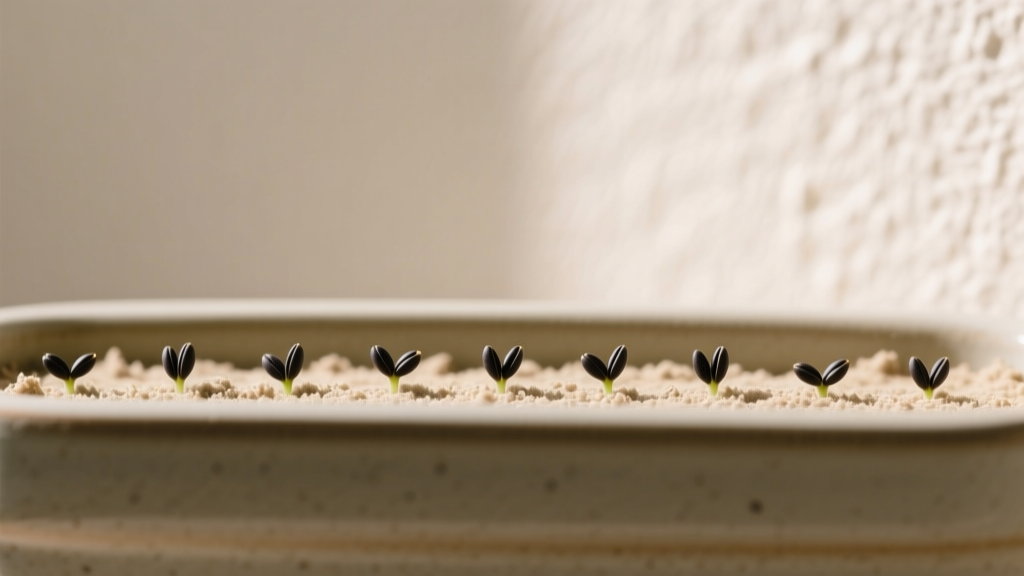
How to Sow Tiny Indoor Plants Seeds
The first time you sow truly tiny seeds indoors—begonia, petunia, snapdragon, lobelia, coleus, even some herbs—you’ll swear they vanished. You sprinkled what looked like dust across the tray, misted carefully…and a week later nothing. Or worse: a green fuzz of algae, a few stretched threads of seedlings, and a sour smell that says “redo.” Tiny seed sowing is one of those skills that seems fussy until you learn the handful of moves that make it repeatable.
I’m going to walk you through the exact process I use when I want high germination and sturdy seedlings in real homes (not greenhouse perfection). You’ll get specific depths, temperatures, timings, and a couple of method comparisons so you can pick what fits your setup.
Before you sow: tiny seeds play by different rules
Tiny seeds have two quirks that cause most failures:
- They’re easy to bury too deep. Many need light to germinate, so “just barely covered” is often still too much.
- They dry out fast. A seed sitting on the surface can go from moist to crispy in an hour if the air is dry.
Most of the success comes from controlling surface moisture and keeping the seed where you put it. According to the University of Maryland Extension (2020), many small-seeded ornamentals are sown on the surface and pressed into the medium rather than covered, because light can improve germination for certain species.
Three real-world scenarios I see all the time
Scenario 1: Apartment, winter heat, 30% humidity. Your heat runs constantly. The soil surface dries between mistings and the seed never stays uniformly moist long enough to sprout.
Scenario 2: Enthusiastic watering. You water “gently” from above and the seeds float into the corners. You get a clump of seedlings on one edge and bare soil everywhere else.
Scenario 3: Bright window, no grow light. Seeds sprout fine, but seedlings stretch toward the glass, fall over, and damp off at the soil line because they’re weak and crowded.
We’ll address all three with setup choices and a couple of simple habits.
Supplies and setup (keep it simple, but precise)
You don’t need fancy gear, but you do need consistency.
- Containers: Cell trays (72-cell or 128-cell) or shallow plug trays; or 2–3 inch (5–7.5 cm) pots for small batches.
- Humidity cover: Clear dome, plastic wrap, or a large zip bag.
- Seed-starting mix: Fine-textured, peat/coco-based mix with perlite/vermiculite; avoid chunky bark mixes.
- Sprayer: A fine mister, plus a bottom-watering tray if possible.
- Labeling: Waterproof marker and tags. Tiny seedlings look identical for weeks.
- Light: A small LED grow light is the difference between stocky plants and spaghetti.
Temperature target: For most tiny-seeded annuals and houseplants, aim for 70–75°F (21–24°C) for germination. Many species germinate slower below 65°F (18°C). Use a heat mat if your room runs cool.
Colorado State University Extension notes that many seeds germinate best in the 70–75°F range, and consistent moisture is critical during germination (Colorado State University Extension, 2023).
Soil: the right texture and moisture level
The biggest soil mistake with tiny seeds is using a mix that’s too coarse. Big particles create air pockets; tiny seeds drop down into crevices and end up at random depths.
What to use
- Seed-starting mix or a fine potting mix screened to remove bark chunks.
- If your mix is lumpy, run it through a 1/4 inch (6 mm) screen or simply pick out the big pieces.
Pre-moisten properly (this matters)
Dry mix is hard to wet evenly once it’s in a tray, and tiny seeds hate uneven moisture. Pre-moisten in a bowl:
- Add mix to a bucket or bowl.
- Stir in water until it feels like a wrung-out sponge: damp, not dripping.
- If you squeeze a handful, you should get 0–2 drops of water, not a stream.
Fill containers and tap them down lightly (don’t pack hard). You want good seed-to-soil contact without collapsing the air spaces.
Sowing methods for tiny seeds (with a comparison)
Tiny seeds are less about “planting” and more about “placing.” Here are three methods I trust, plus when to choose each.
| Method | Best for | Seed placement accuracy | Moisture control | Typical germination reliability (home setup) |
|---|---|---|---|---|
| Surface sow + press | Light-requiring seeds (begonia, petunia, snapdragon) | Medium | High with dome | High if surface stays moist |
| Sand mix sowing | Dust-fine seed you need to spread evenly | High | Medium | High (most even spacing) |
| Toothpick/wet tip placement | Pelleted seed or “only 10 seeds left” packets | Very high | High | Very high (but slower to do) |
Method A: Surface sow + press (my default)
- Sprinkle seeds over the prepared surface.
- Use a clean spoon bottom or a flat label to press the seed into contact with the mix.
- Do not cover unless the packet specifically says to cover. If covering is required, use a dusting of fine vermiculite no more than 1/16 inch (1–2 mm).
Comparison note: This method is fast, but it’s easy to over-sow. If you see “pepper on a plate” density, you’re probably too heavy-handed.
Method B: Mix seed with sand for even distribution
This is the trick for seeds that are so tiny they clump in your fingers.
- In a small cup, mix seed with 1–2 teaspoons of dry, fine sand.
- Shake gently over the tray like you’re salting food from up high.
- Press in; don’t bury.
Why it works: Sand acts like a carrier so you can see where you’ve sown and avoid dumping a pile in one spot.
Method C: Toothpick placement (especially for pelleted seeds)
- Dampen the tip of a toothpick.
- Touch a seed; it will stick.
- Place it on the surface where you want it.
- Press lightly for contact.
Pelleted seed (common with petunia and begonia) needs consistent surface moisture so the pellet dissolves. If your home is dry, this method plus a humidity dome is a strong combination.
Watering: the make-or-break details
When seeds are on the surface, you’re managing a thin film of moisture. Too dry and germination stalls. Too wet and you invite algae and damping-off.
Right after sowing
- Mist with a fine sprayer until the surface glistens.
- Cover with a humidity dome or plastic wrap.
- Check within 12–24 hours to confirm the surface is still evenly moist.
Bottom-watering vs top-misting (with actual trade-offs)
Top-misting keeps surface seeds hydrated, but can dislodge them. Bottom-watering keeps the mix evenly moist, but sometimes leaves the very top layer too dry for surface-sown seeds unless humidity is high.
My practical routine:
- Days 1–5 (or until germination starts): mist once daily and keep covered.
- Once sprouts appear: switch to bottom-water every 2–4 days (as needed), and reduce misting.
How to bottom-water: Add 1/4–1/2 inch (6–12 mm) of water to the tray, let it wick for 10–20 minutes, then pour off excess. Leaving trays sitting in water is how you grow fungus gnats and weak roots.
“Consistent moisture is essential during germination, but saturated media reduces oxygen and encourages disease. Aim for evenly moist—not wet.” — Colorado State University Extension seed-starting guidance (2023)
Light: tiny seedlings need stronger light than you think
Light is not just about brightness; it’s about distance and duration. A sunny window is almost always too weak and too one-sided for sturdy indoor seedlings.
Grow light settings that actually work
- Duration: 14–16 hours per day.
- Distance: Keep LEDs about 2–4 inches (5–10 cm) above the seedlings (follow your fixture’s guidance, but close is usually better).
- Adjust: Raise the light as seedlings grow to maintain distance.
If you must use a window, use the brightest south-facing one you have and rotate trays daily. But expect leggier growth and plan to pot up early and bury stems (where species allow).
Feeding: when and how to fertilize without frying seedlings
Seed-starting mix has little to no nutrition. Seeds carry seedlings for a short time, then you need to feed—gently.
When to start
Begin feeding when seedlings have 1–2 true leaves (not the first seed leaves/cotyledons). That’s often around 10–21 days after germination depending on species and temperature.
What to use
- A balanced liquid fertilizer like 10-10-10 or 20-20-20, diluted to 1/4 strength.
- Apply every 7–10 days.
Too much fertilizer early causes soft, fast growth that topples easily and attracts pests. Tiny seedlings should grow steadily, not explode.
Common problems (and how to fix them fast)
Tiny seed sowing is basically troubleshooting in slow motion. Here are the issues I see most, with specific symptoms and fixes.
Damping-off (seedlings collapse at the soil line)
Symptoms: Seedlings look fine, then suddenly fall over. Stem at soil line looks pinched, watery, or brown.
Likely causes: Stagnant air, overly wet media, overcrowding, low light.
Fix:
- Remove humidity cover as soon as most seeds sprout (don’t wait a week).
- Add gentle airflow with a small fan on low, aimed nearby (not blasting seedlings).
- Bottom-water; stop frequent misting once sprouted.
- Increase light intensity (bring lights closer).
- If overcrowded, thin immediately—yes, it hurts. It also works.
Algae or green slime on the surface
Symptoms: Green film on soil; fungus gnats start appearing; surface stays too wet.
Likely causes: Too much moisture + light hitting wet surface under a dome.
Fix:
- Vent the dome (prop it open) for a few hours daily.
- Let the surface dry slightly between waterings—moist, not shiny.
- Top-dress with a whisper-thin layer of fine vermiculite or coarse sand to reduce algae growth.
Seeds didn’t germinate (the “nothing happened” tray)
Symptoms: After 14 days, no sprouts.
Likely causes: Temperature too low, seed dried out even once, seed buried, old seed, wrong light requirement.
Fix checklist:
- Confirm temperature: keep the medium at 70–75°F (21–24°C).
- Check sowing depth: for tiny seeds, aim for surface sowing or 1–2 mm max cover.
- Maintain humidity: cover until germination, but vent daily.
- Look up the species’ germination needs (some require light; some require darkness).
- If seed is older than 2–3 years (varies by plant), sow thicker or replace.
For light-requiring seeds, burying them is a silent failure. You did everything else right and still got nothing because the seed never received the trigger it needed.
Leggy seedlings (thin, stretched, falling over)
Symptoms: Long stems, small leaves, seedlings lean and topple.
Likely causes: Light too weak or too far away; too warm; overcrowding.
Fix:
- Bring lights to 2–4 inches (5–10 cm) above plants.
- Run lights 14–16 hours daily.
- Reduce heat after germination: many seedlings do well around 65–70°F (18–21°C) once they’re up.
- Thin or transplant earlier.
Fungus gnats
Symptoms: Tiny black flies; larvae can chew roots in severe cases.
Likely causes: Constantly wet mix; organic debris; poor drainage.
Fix:
- Let the top 1/4 inch (6 mm) of mix dry slightly between waterings (seedlings, not ungerminated seed trays).
- Use yellow sticky traps to catch adults.
- Bottom-water and dump excess.
Step-by-step: my repeatable routine for tiny seed success
If you want a simple recipe you can follow tray after tray, this is it.
- Pre-moisten mix to wrung-sponge dampness.
- Fill containers and level the surface.
- Sow seeds using one of the three methods above; press for contact.
- Mist until surface glistens (not puddled).
- Cover with a dome/plastic to maintain humidity.
- Set temperature at 70–75°F (21–24°C) until germination.
- Provide light immediately for most tiny seeds: 14–16 hours daily.
- Check daily: surface moisture, any sprouts, and any fuzzy growth.
- At first germination, vent the dome daily; once most have sprouted, remove it.
- Switch to bottom-watering as seedlings establish.
- Feed at 1–2 true leaves with 1/4-strength fertilizer every 7–10 days.
Case notes from real homes (what I’d do differently)
Case 1: Dry winter air kept killing surface-sown seed
A gardener sowed lobelia on the surface in a warm living room. They misted morning and night, but humidity sat around 30–35%. Seeds swelled, then dried, then swelled again—classic stop-start that often ends in failure.
What fixed it: A dome plus one daily check. Instead of frequent misting, they kept the dome on, vented it for 15 minutes daily, and maintained 70–72°F with a heat mat. Germination jumped from “almost none” to “dense carpet.” Then we thinned aggressively.
Case 2: Seeds floated into the corners
This happens when you water from above with anything stronger than a fog mist. The tray ends up with a seed pile at one edge.
What fixed it: Bottom-watering for the first soak (before sowing), then a very fine mister only. For the next sowing, we used the sand-mix method so the seed spread evenly and stayed put.
Case 3: Beautiful germination, terrible seedlings
Great sprouting in a bright window, but seedlings stretched and toppled by week two.
What fixed it: A small LED shop light on a timer set to 16 hours, positioned 3 inches above the tray. We also reduced temperature after germination to about 68°F and started 1/4-strength feeding at true-leaf stage. The next batch grew compact enough to transplant cleanly.
Potting up: when tiny seedlings are ready to move
Don’t rush transplanting, but don’t wait until roots are a tangled mat either.
- Timing: Usually when seedlings have 2–3 true leaves and you can lift one without it tearing apart.
- Tools: A plant label, spoon handle, or dibber to tease seedlings out.
- Handle by leaves, not stems. A crushed stem rarely recovers.
After potting up, water in gently and keep light close. Expect a 2–4 day pause while roots re-establish—normal, not failure.
Quick reference: tiny seed rules I wish every packet printed
- If the seed is dust-like, assume surface sow unless proven otherwise.
- Press for contact; don’t bury.
- Maintain steady warmth: 70–75°F (21–24°C) for germination.
- Keep humidity high until sprouting, then reduce humidity and increase airflow.
- Strong light early prevents 80% of “weak seedling” problems.
Once you get the hang of it, sowing tiny seeds becomes one of the most satisfying indoor projects—because you can raise plants that are hard to find locally, and you can do it on your schedule. The big shift is treating the soil surface like a controlled environment: stable moisture, stable warmth, and bright, close light. Do that, and those “dust” seeds stop disappearing and start turning into trays of sturdy little plants you’ll actually be proud to pot up.
Sources: University of Maryland Extension seed-starting guidance (2020); Colorado State University Extension seed germination/starting recommendations (2023).