Early Winter Gardening Tips for Last Harvests
The window for “one more picking” is measured in nights, not months. When days hover in the 40–55°F range and the first hard freeze (around 28°F) is looming, your garden can still produce—but only if you act in the right order: harvest what’s ready, protect what can coast, and prep beds so winter doesn’t steal next spring’s momentum. Use the next 10–21 days to lock in last harvests and prevent the kind of winter damage that shows up as stunted growth and disease pressure next year.
Below is a priority-driven early winter checklist with concrete temperature triggers, timing cues, and regional scenarios. Adjust exact dates by your local average first frost date and your USDA hardiness zone.
Priority 1: Harvest first (then protect what you want to keep picking)
Early winter rewards fast decisions: harvest the crops that won’t improve in the ground, and protect the crops that can continue slowly. A single cold snap can turn marketable produce into compost.
Last-harvest timing triggers (use these numbers)
- 32°F: Light freeze—damages basil, peppers, beans, cucumbers, squash vines; can burn tender greens.
- 28°F for 2–4 hours: Hard freeze—ends most warm-season crops; can damage unprotected brassicas and roots near the soil surface.
- 24°F: Deep freeze—can crack carrots/beets near surface without mulch; kills many overwintering pests but also damages perennials without protection.
- Soil temp < 45°F: Root growth slows sharply; transplanting is risky unless protected.
- 10–14 days before your average first 28°F night: Your cue to pull tender crops and set up covers for hardy ones.
What to harvest now (next 7–10 days)
Warm-season remnants: Pick all tomatoes showing blush and ripen indoors. Pull peppers once night lows stay below 40°F (flavor stalls and skins soften). Harvest winter squash once rinds resist thumbnail pressure; cure at 80–85°F for 7–10 days if possible, then store at 50–55°F.
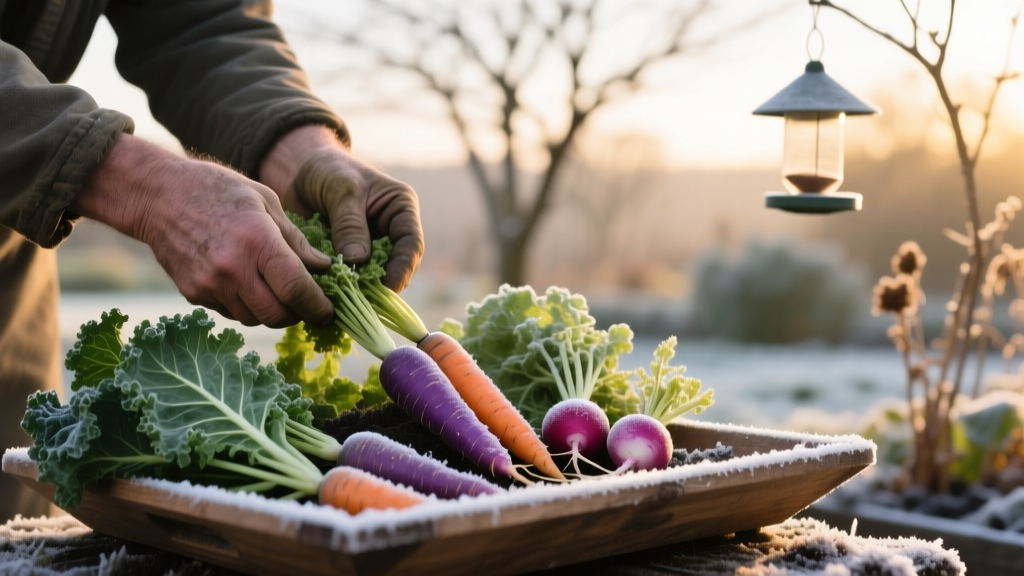
Root crops: Carrots, beets, turnips, and radishes can be held in-ground longer with mulch. If your forecast includes 24–25°F lows without snow cover, harvest exposed rows or mound mulch 4–6 inches deep the same day you see that forecast.
Brassicas and greens: Kale, collards, and Brussels sprouts often sweeten after a few frosts. Harvest outer leaves weekly. For heading crops (cabbage), harvest before heads split during freeze/thaw cycles.
Quick triage: what gets covered vs. pulled
Cover crops you can keep producing: spinach, arugula, mache, kale, scallions, leeks, carrots, beets. Pull and compost (or dispose) disease-prone warm-season plants: tomatoes with blight, squash with powdery mildew, cucurbits with downy mildew.
“Floating row covers can raise temperatures by 2–4°F for light covers and up to 6–8°F for heavier covers, helping extend harvests during cold nights.” — University of Minnesota Extension (revised 2020)
Priority 2: What to plant right now (only what can still establish)
Early winter planting is about realism: you’re not “starting” a season—you’re finishing one and setting the next. Plant only what can germinate or root before soil temperatures drop below useful levels.
Plant these in early winter (by zone and temperature)
Garlic (hardneck/softneck): In many regions, garlic is planted 2–4 weeks before the ground freezes. A practical trigger is when daytime highs are consistently 45–55°F and nighttime lows are in the 25–40°F band. Plant cloves 2–3 inches deep (3–4 inches in colder zones) and mulch 4–6 inches after the first hard frost. Garlic is a top “right now” task for USDA Zones 3–7; in Zones 8–10, plant later (often late fall into winter) when soils cool.
Shallots and multiplier onions: In milder winter regions (Zones 7–9), plant for overwintering where soil stays workable. In colder zones, wait for spring unless you have a protected bed.
Cover crops: If you’re still above 40°F soil temp and have 2–3 weeks before repeated freezes, sow winter rye (cereal rye) or a rye/vetch blend. If you’re already in frequent freezes, broadcast rye just before a snow or rain event (“dormant seeding”)—germination will wait for late winter thaws.
Perennials (only if you can water and mulch): In Zones 6–8, you can still plant some hardy trees/shrubs while soil is workable, but early winter is late in the game. Aim for at least 4 weeks before the soil freezes hard so roots can settle. Water deeply once a week if there’s no rain until freeze-up.
Skip planting these now (unless under protection)
Direct-sown carrots, beets, and most lettuce are unlikely to size up in early winter without a hoop house. Transplanting brassicas is also risky once soil temps drop below 45°F—plants sit still and are more prone to rot.
Priority 3: What to prune (and what not to prune yet)
Pruning at the wrong time can turn early winter into a dieback event. Your goal is to remove disease, reduce breakage risk, and leave spring-flowering wood intact.
Prune now: safety, sanitation, and breakage prevention
- Remove dead, diseased, and broken branches any time you see them—clean cuts, sharp tools, and sanitize between suspect plants.
- Raspberries: For summer-bearing types, cut spent canes at ground level after harvest. For fall-bearing (primocane) types, either mow all canes down in late winter for one big fall crop, or selectively thin for a mixed harvest system.
- Grapes: Major pruning is typically late winter, but remove tangled or damaged canes now to reduce wind breakage.
Do NOT prune these in early winter (common mistakes)
- Spring-flowering shrubs (lilac, forsythia, azalea, rhododendron, many hydrangeas): pruning now removes next spring’s buds.
- Stone fruits (peach, cherry, plum) in wet climates: early winter pruning can increase disease entry; wait for drier late winter conditions where recommended locally.
If you’re unsure, use the rule: prune plants that flower on new wood in late winter/early spring; avoid pruning those that flower on old wood until after they bloom.
Priority 4: What to protect (plants, soil, and infrastructure)
Protection is the difference between “last harvest” and “season’s over.” Focus on frost management, wind protection, and preventing heaving and rot.
Row covers, low tunnels, and cloches (set up before the freeze)
Install covers 2–3 days before the first forecasted 28°F night so you’re not wrestling fabric in wind and darkness. Anchor edges with soil, boards, or sandbags—gaps are where cold air pours in.
- Floating row cover (lightweight): Best for greens when lows dip to 30–32°F.
- Medium/heavy row cover or double layer: Use when lows hit 25–28°F.
- Low tunnel plastic over hoops (vent on sunny days): Can extend harvest deeper, but condensation management matters—open ends when daytime temps exceed 50°F to reduce fungal disease.
Mulch strategy for last harvests and overwintering
Mulch after the soil cools (you want to avoid inviting rodents while the ground is still warm). A reliable trigger is after 2–3 nights below 30°F or after your first hard frost. Apply:
- 4–6 inches of clean straw or shredded leaves over carrots, beets, parsnips, and leeks for in-ground storage.
- 2–3 inches around perennial crowns (asparagus, strawberries) once plants are dormant.
Strawberry note: In colder zones (USDA 3–6), mulch strawberries after several freezes when plants are dormant, but before prolonged sub-20°F nights without snow cover.
Protect containers and tender perennials
Containers freeze solid faster than ground soil. Group pots against a south-facing wall, wrap with burlap, or move to an unheated garage once temps regularly dip below 25–28°F. For borderline perennials in Zones 6–8, add windbreaks (temporary fencing, burlap screens) on the prevailing wind side.
Prevent winter pests and disease (specific early winter actions)
Early winter is prime time to cut next year’s disease cycle. Two things matter: removing inoculum and eliminating overwintering habitat.
- Tomato and potato debris: Remove and dispose if you had blight or leaf spot. Don’t leave vines on the soil surface.
- Powdery mildew on squash: Pull vines promptly; don’t till infected foliage shallowly where it can persist.
- Sanitation for perennial beds: Remove fallen fruit (“mummies”) under apples/pears and rake leaves if you had scab issues. Iowa State University Extension notes that sanitation helps reduce apple scab inoculum (ISU Extension, 2013).
- Slug habitat: Pull boards, dense weeds, and soggy mulch piles near winter greens—slugs remain active in cool, wet weather.
- Rodent prevention: Keep thick mulch pulled back 2–3 inches from tree trunks; install hardware cloth guards before snowfall. Rodents girdle young trees under snow cover.
Compost caution: Hot compost piles can take disease-free plant residues, but don’t add heavily diseased tomato/potato foliage unless your compost reliably reaches 131°F for multiple days and is turned to heat all material.
Priority 5: What to prepare (beds, tools, and next spring’s head start)
What you do now shows up as easier planting, fewer weeds, and better soil structure in April.
Bed prep: clean, cover, and feed the soil
After removing spent crops, do one of these within 7 days to protect soil from winter erosion and nutrient loss:
- Cover crop (best where you still have a few mild weeks).
- Leaf mulch 2–4 inches (shredded leaves are ideal; whole leaves mat and repel water).
- Compost top-dress 1–2 inches, then cover with leaves or straw to keep it from washing away.
The USDA NRCS emphasizes that cover crops reduce erosion and improve soil health when used to keep the ground covered (USDA NRCS, 2019). If you can’t establish a cover crop before freeze, mulch is your next best move.
Tool and irrigation winterization (do this before first 20°F night)
- Drain hoses, disconnect timers, and store where they won’t split.
- Shut off and drain irrigation lines; blow out lines where necessary.
- Clean pruners, sharpen blades, oil metal surfaces to prevent rust.
- Empty and store clay/ceramic pots so they don’t crack.
Plan next year’s rotation while it’s fresh
Write down where your tomatoes, peppers, potatoes, and eggplants grew. Nightshades should rotate out of that bed for 3–4 years if you battled soilborne disease. Do the same for brassicas if you saw clubroot or persistent insect pressure.
Early winter schedule table (by timing, not guesswork)
Use this as a working calendar. Adjust dates to your local frost history and your USDA zone.
| Time window | What to do | Targets & thresholds | Payoff |
|---|---|---|---|
| Week 1 (today–7 days) | Harvest tender crops; remove diseased vines; set up row covers | Act before a forecasted 32°F night; prioritize before 28°F | Maximum last harvest; less disease carryover |
| Week 2 (8–14 days) | Plant garlic; mulch root crops for in-ground storage; top-dress beds | Plant garlic when highs are 45–55°F; mulch after 2–3 nights below 30°F | Strong spring garlic; stored roots through winter |
| Week 3 (15–21 days) | Winterize irrigation; protect containers; install tree guards | Finish before repeated lows below 25°F and before first snowfall | Fewer split hoses/pots; less rodent girdling |
| Remainder of early winter | Vent tunnels on warm days; monitor slugs/rots; harvest under cover | Vent when daytime exceeds 50°F; scout weekly | Cleaner greens; fewer winter disease flare-ups |
Regional reality checks (3 common scenarios)
Early winter doesn’t behave the same everywhere. Use these scenarios to adjust your priorities.
Scenario 1: Cold-snap continental climate (Upper Midwest / Interior Northeast, Zones 3–5)
If you routinely swing from 55°F days to teens in a week, bet on protection over planting. Your best moves:
- Harvest tender crops immediately when the 10-day forecast shows a 28°F night.
- Mulch carrots and leeks heavily (6 inches) before the first snow crust makes it hard to apply evenly.
- Plant garlic on the earlier side; once soil freezes hard, you’re done.
- Use double row cover or row cover + low tunnel for spinach and kale; uncover/vent on sunny days to prevent condensation rot.
Pest note: vole activity ramps up under snow. Tree guards and mulch discipline (no mulch piled against trunks) matter more here than in milder zones.
Scenario 2: Maritime cool-wet winters (Pacific Northwest / coastal Northeast, Zones 7–8)
Your limiting factor is moisture, not just cold. Protection is about airflow as much as temperature:
- Prioritize drainage: keep beds crowned, clear clogged paths, and avoid compacting wet soil.
- Vent plastic tunnels aggressively—if daytime hits 50–55°F, humidity spikes and downy mildew/leaf spots accelerate.
- Slug prevention becomes a weekly task: remove hiding places, use iron phosphate baits as needed, and water in the morning (if watering is necessary at all).
Planting note: garlic usually does well here, but avoid planting into saturated soil—cloves rot. If beds are waterlogged, wait for a drier spell and plant in raised rows.
Scenario 3: Mild-winter South (Zones 8–10) with intermittent frosts
Your “early winter” can still be productive. The goal is to keep crops actively growing through light freezes:
- Planting opportunities continue longer: garlic, onions/shallots, and some greens can still be direct-sown when soil is workable.
- Have frost cloth ready for the surprise 30–32°F nights—covers can save peppers, citrus blooms, and winter greens.
- Watch for insect carryover: aphids and whiteflies can persist through mild winters. Remove heavily infested plant material and control weeds that host pests.
Disease note: milder winters don’t “reset” pathogens as effectively. Sanitation and rotation matter even more if you garden year-round.
Fast checklists (printable mindset)
48-hour checklist (when a freeze is forecast)
- Pick tomatoes, peppers, basil, beans, cucumbers, and any market-size squash.
- Cover greens and brassicas before sunset; seal edges.
- Water soil earlier in the day if it’s dry (moist soil holds heat better), but avoid soaking foliage.
- Move containers to shelter; wrap or insulate large pots you can’t move.
7-day early winter checklist
- Remove and dispose of diseased plant debris; clean stakes and cages.
- Mulch root crops intended for in-ground storage (4–6 inches).
- Plant garlic if soil is workable and freeze-up is not imminent.
- Top-dress empty beds with compost and cover with shredded leaves.
- Install tree guards and pull mulch back from trunks.
21-day checklist (before the season locks up)
- Drain hoses/irrigation; store timers and backflow devices.
- Sharpen pruners and loppers; oil metal surfaces.
- Label perennials and mark empty beds (snow hides everything).
- Record crop locations for rotation (nightshades, brassicas, cucurbits).
Expert notes: small moves that make a big difference
Use the right cover at the right time. A single layer of light row cover might buy you a few degrees, but if your forecast dips to 25–28°F, you need heavier fabric or a second layer. Put covers on before the temperature drops; you’re trapping daytime warmth.
Don’t smother crowns too early. Mulching strawberries or tender perennials while the soil is still warm can invite rodents and rot. Wait for dormancy signals: repeated near-freezing nights and slowed growth.
Keep harvesting under protection. With spinach, kale, and mache, harvesting regularly prevents older leaves from collapsing into a wet mat that invites disease. Take outer leaves, keep the center growing.
Scout for winter rot. Under tunnels, the enemy is often not freezing—it’s stagnant moisture. If you see fuzzy mold or slimy leaf bases, increase ventilation and harvest aggressively.
Think in thresholds, not dates. Two gardens in the same town can differ by a full USDA micro-zone if one is sheltered and south-facing while the other is exposed. Use your thermometer and your forecast: when nights hold under 40°F, warm-season crops are on borrowed time; when 28°F shows up, it’s triage time.
Early winter is short, but it’s not dead time. If you harvest with intent, cover with discipline, and clean up with next year in mind, you’ll keep greens coming while everyone else is staring at frozen beds—and you’ll start spring with fewer pests, fewer diseases, and soil that’s ready to work.
Sources: University of Minnesota Extension (2020) guidance on frost protection with row covers; Iowa State University Extension (2013) sanitation practices to reduce apple scab inoculum; USDA NRCS (2019) cover crop soil health and erosion reduction principles.