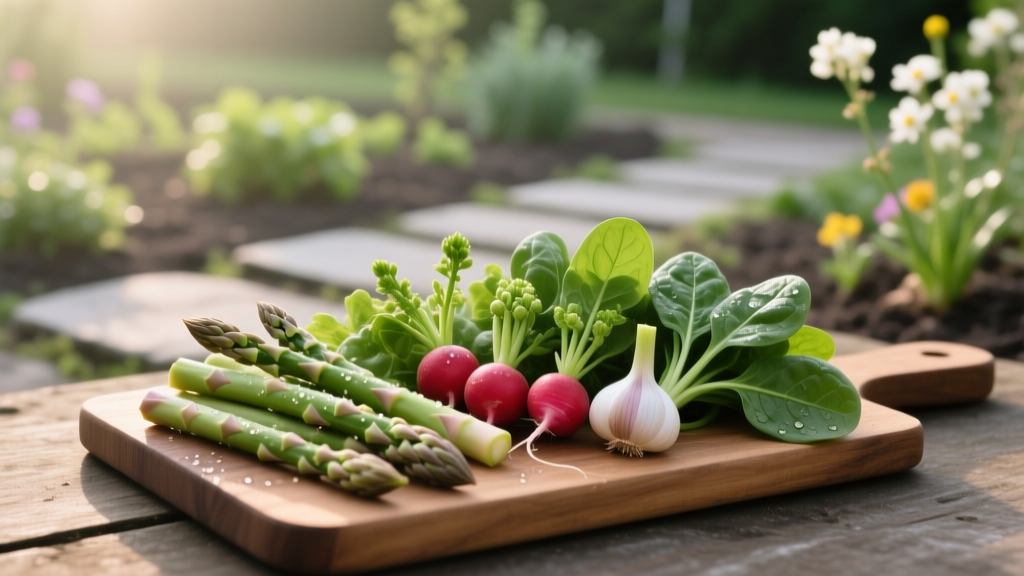
What to Harvest in Spring
Spring harvest doesn’t wait for “summer abundance”—it rewards gardeners who act quickly, watch temperatures, and pick at the right moment. Many of the best spring crops (greens, spears, shoots, and early roots) turn from tender to tough in a matter of days once daytime highs climb past 70°F or a warm spell triggers bolting. If you’re seeing soil temperatures hovering around 45–50°F and nights still flirting with frost, you’re in the prime window for cool-season harvests—and for setting up the next wave of crops while you’re at it.
Use this guide like a seasonal almanac: harvest first (before quality drops), then plant succession crops, then prune and protect, and finally prep the beds that will carry you into early summer.
Priority #1: Harvest now (before quality drops)
Spring harvesting is mostly about timing and texture. Pick early in the day when leaves are crisp, and don’t wait for “full size” on many crops—baby to mid-size often tastes better and keeps plants producing longer.
Leafy greens: cut-and-come-again is the spring advantage
What to harvest: spinach, lettuce, arugula, kale, mustard greens, Asian greens (bok choy, tatsoi), chard (in mild climates), and overwintered greens.
- Harvest trigger: daytime highs consistently above 65–70°F often push bolting in arugula and spinach.
- Best stage: baby leaves at 3–6 inches or full leaves before the central stem elongates.
- How to harvest: for looseleaf lettuce and greens, cut outer leaves 1 inch above the crown; for spinach, pinch individual leaves or cut the whole rosette once.
- Timeline tip: plan to harvest heavily 7–14 days before your average last frost date if a warm spell is forecast; row covers can extend quality but won’t stop bolting in sustained heat.
If you’ve overwintered spinach or kale (common in USDA Zones 6–8 with protection, and Zones 8–10 without much help), spring is when those plants are at their sweetest. Harvest aggressively now—older leaves get tougher fast once plants shift to flowering.
Asparagus: a short window, a big payoff
Asparagus season is brief and quality hinges on daily picking. Start when spears are 6–8 inches tall and tight-tipped.
- Harvest frequency: every 1–2 days once it starts.
- Stop harvesting: after 2 weeks for young plantings, 4–6 weeks for established beds (varies by vigor). Letting ferns grow restores carbohydrate reserves.
“Overharvesting weakens the crown and reduces future yields; allow the plants to build fern growth after the recommended harvest period.” — University of Minnesota Extension, 2020
Radishes, baby turnips, and early beets: pull before they turn woody
Root crops are the classic spring “one week perfect, next week pithy” harvest. The goal is tenderness, not size.
- Radishes: harvest at 1–1.5 inches diameter (many types) before they crack or get hot. In warm weeks, check every 2–3 days.
- Baby turnips: harvest at 2–3 inches for sweetness.
- Beets: harvest small roots at 1.5–2.5 inches for best texture; thin early and eat thinnings as greens.
Soil moisture swings cause splitting—keep beds evenly moist with mulch once soil is workable.
Alliums in spring: scallions, chives, green garlic
Spring is peak for “green” alliums—tender, fresh, and fast.
- Scallions/green onions: pull when pencil-thick; succession sow every 2–3 weeks for steady supply.
- Chives: cut down to 2 inches tall; harvest before buds open for the mildest flavor.
- Green garlic: if you planted garlic densely or have extras, pull young plants when stems are ¼–½ inch thick. This also relieves crowding for your main bulb crop.
Overwintered and early peas: pick young and often
In milder regions and protected beds, peas can start early. Harvest snow peas flat and sweet, snap peas plump but still glossy, and shell peas when pods are full.
- Harvest frequency: every 1–3 days in peak production—pods left too long slow flowering.
- Heat trigger: once highs approach 75°F, pea production often declines quickly.
Herbs that bounce back: cilantro, parsley, mint, dill
Harvest herbs now to delay flowering and encourage bushiness—especially cilantro, which bolts quickly as temperatures rise.
- Cilantro: cut outer stems weekly; if you see a central flower stalk forming, harvest hard and resow.
- Mint: harvest aggressively before it sprawls; contain roots if it’s in-ground.
Priority #2: Plant next (to keep harvests rolling)
Spring harvesting and spring planting should overlap. As soon as one cool-season bed begins to bolt, it’s time to seed the next round or transition to warm-season crops.
Timing rules you can actually use
- Work soil when it crumbles: if you squeeze a handful and it forms a sticky ball, wait. Compaction now will haunt you all season.
- Soil temperature targets: peas and spinach can germinate in soils around 40–45°F; many greens prefer 45–60°F. Beans usually wait for 60°F soils.
- Frost-date planning: use your local “average last frost” and count backward/forward. Cool-season sowings often start 4–6 weeks before last frost; tender transplants go out 1–2 weeks after last frost when nights stay above 50°F.
For reliable regional planting dates tied to frost risk, extension services emphasize local averages and microclimates; don’t assume the same schedule across a state.
Succession sowings for steady spring harvest
To avoid “everything ready at once,” sow in short intervals:
- Lettuce: sow every 10–14 days.
- Radishes: sow every 7–10 days in cool weather.
- Cilantro and dill: sow every 2–3 weeks to stay ahead of bolting.
- Carrots: sow every 2–3 weeks until heat intensifies; keep seedbed consistently moist for germination.
What to plant as beds open up after spring harvest
When spinach bolts or radishes come out, don’t leave bare soil. Swap in crops based on your climate and remaining season length:
- After greens: bush beans (when soil is 60°F+), cucumbers, summer squash, basil.
- After peas: heat-tolerant greens, carrots for fall, or transplant tomatoes/peppers if trellising is ready.
- After overwintered brassicas: transplant basil or sow buckwheat as a quick cover crop if you need a reset.
Research-based planting calendars from extension programs consistently recommend tying tender crop planting to both frost dates and soil temperature. For example, Penn State Extension emphasizes that soil temperature strongly affects seed germination and early growth (Penn State Extension, 2019).
Priority #3: Prune and pinch (so spring energy goes to the right places)
Spring pruning is about preventing disease, improving structure, and controlling fruiting loads. Do it too late and you remove flower buds or invite infection; do it too early and you risk cold damage.
Fruit trees: prune before bud break (most types)
For apples and pears, late winter to early spring pruning—generally before bud break—helps with structure and air flow.
- Timing cue: prune on a dry day when temperatures are above 25–30°F to reduce brittle wood breakage.
- Priority cuts: remove dead/diseased wood, crossing branches, and steep vertical shoots (watersprouts).
For stone fruits (peach, cherry, plum), many growers delay major pruning until closer to bloom or after bloom to reduce disease risk in wet climates—especially where bacterial canker pressure is high.
Berry bushes: act early, but keep regional weather in mind
- Blueberries: prune while dormant; remove low, twiggy growth and older canes to maintain vigor.
- Raspberries: remove dead canes and thin for airflow. Identify summer-bearing vs everbearing types before cutting.
Regional variation: In cold-winter regions (USDA Zones 3–5), wait until the harshest cold has passed—often late winter into early spring—so you can see winter-killed tips before pruning.
Pinch herbs and seedlings to prevent early bolting
Pinch basil and other branching herbs once they have 2–3 sets of true leaves. For cilantro, frequent harvest is more effective than pinching once the flower stalk starts.
Priority #4: Protect (spring pests, late frosts, and disease outbreaks)
Spring protection is less about panic spraying and more about preventing the predictable: late freezes, slug damage, cutworms, flea beetles, damping-off, and fungal leaf spots that thrive in cool, wet weather.
Frost protection: know your thresholds
Use these practical benchmarks:
- 32°F: freezing point—many seedlings and blossoms are at risk.
- 28°F for 2+ hours: a hard freeze that can damage blossoms and tender transplants.
- Cover timing: cover plants in late afternoon before temperatures drop; uncover mid-morning once temps rise above 40°F to prevent overheating.
Floating row cover (lightweight fabric) can add a few degrees of protection; plastic can work but must be vented to avoid cooking plants in morning sun.
Slug and snail defense: start before you see holes everywhere
Slugs explode in cool, damp spring weather—especially in the Pacific Northwest and shaded gardens.
- Hand-pick at dusk for 7–10 days to knock populations back early.
- Use iron phosphate bait around the perimeter of beds if pressure is consistent.
- Reduce hiding spots: lift boards, excess mulch piles, and dense groundcover near lettuce beds.
Cutworms: protect transplants at planting time
If seedlings get severed at the soil line overnight, suspect cutworms.
- Install collars (cardboard, paper cups, or plastic rings) sunk 1 inch into soil around each transplant.
- Clear weeds and plant debris 2 weeks before planting to reduce habitat.
Flea beetles on brassicas: use barriers early
Flea beetles can riddle arugula and young brassicas fast, especially during warm spring spells. The most reliable spring tactic is exclusion.
- Cover seedlings immediately with row cover; seal edges with soil or boards.
- Keep plants growing steadily with water and nitrogen—stressed seedlings suffer more damage.
Many extension programs recommend row covers as a primary tool for early-season brassica pests. Cornell Cooperative Extension materials emphasize physical exclusion for insect management in vegetables (Cornell Cooperative Extension, 2021).
Disease prevention: spring sanitation and airflow beat most sprays
- Damping-off (seedlings): use fresh potting mix, avoid overwatering, and provide airflow. Bottom-water if possible.
- Powdery mildew setup: remove overwintered infected leaves around cucurbits and perennials; don’t crowd plantings.
- Apple scab risk (wet springs): rake and remove old leaves under trees; improve airflow with pruning.
Priority #5: Prepare (so you’re not scrambling later)
Preparation is what makes spring harvesting feel easy instead of frantic. A few hours now prevents weeks of weeding and watering headaches later.
Bed reset checklist (do this right after harvesting a bed)
- Pull crop residues and compost healthy material; discard diseased leaves.
- Lightly loosen soil (avoid deep tilling if structure is good).
- Add 1–2 inches of compost where you’re planting heavy feeders.
- Water the bed once, then plant or cover with mulch/cover crop to prevent crusting.
- Label new sowings with date—succession planting only works if you track it.
Mulch strategy for spring
Mulch too early on cold soil and you delay warming; mulch too late and weeds win. A practical middle ground:
- Wait until soil is consistently above 50°F in the top few inches before thick mulching for warm-season beds.
- Use a thin mulch layer around cool-season crops to stabilize moisture without chilling soil.
Support systems: trellises and hoops before plants need them
Install pea trellises and row-cover hoops as soon as you sow. Waiting until seedlings are up often leads to broken stems and sloppy coverage.
Monthly harvest-and-task schedule (adjust by region)
This schedule assumes a typical temperate climate with last frost sometime between late March and late May. Shift earlier by 2–6 weeks for warmer zones (USDA Zones 8–10) and later for colder zones (USDA Zones 3–5).
| Month | Likely spring harvests | High-priority tasks (same week) |
|---|---|---|
| March | Overwintered spinach/kale, chives, scallions (mild areas), early radishes (protected beds) | Cover on freezing nights (near 32°F); sow peas and greens when soil is workable; prune dormant fruit trees on dry days |
| April | Lettuce, arugula, spinach, radishes, baby turnips, green garlic; asparagus begins in many regions | Succession sow every 10–14 days; start slug/cutworm prevention; thin beets/carrots; install pea trellis |
| May | Peak greens; asparagus peak; peas start; first strawberries in some regions | Watch for bolting above 70°F; transition beds to beans/cukes when soil hits ~60°F; vent covers when temps exceed 75°F |
Regional scenarios: how spring harvest changes where you live
Spring isn’t one season nationwide. Use these scenarios to adjust your harvest timing and next steps.
Scenario 1: Cold climates (USDA Zones 3–5) with late frosts
If your average last frost is in May (or even early June in colder pockets), spring harvest overlaps with repeated freeze threats.
- Harvest focus: overwintered greens (if protected), early spinach/lettuce under cover, chives, and later asparagus.
- Protection routine: keep row cover handy until you’re 2 weeks past your average last frost date—surprise 28°F nights happen.
- Planting strategy: start seedlings indoors to avoid losing time; direct sow peas and spinach as soon as soil is workable.
In these regions, harvesting small and often is key because plants may stall in cold snaps and then surge during warm spells, becoming oversized quickly.
Scenario 2: Maritime/wet springs (Pacific Northwest, coastal Northeast)
Cool, damp conditions extend the harvest window for greens—but increase slug pressure and fungal issues.
- Harvest focus: long-lasting lettuce, brassica greens, scallions, herbs.
- Disease prevention: prioritize spacing and airflow; water early in the day so foliage dries.
- Pest reality: start slug control before seedlings are chewed—once plants are riddled, recovery is slow.
Plan harvests around rain: pick greens when leaves are dry to reduce storage rot, even if that means waiting until late morning.
Scenario 3: Warm-spring regions (USDA Zones 8–10) where heat arrives early
In warm climates, the spring harvest window can slam shut quickly as temperatures climb.
- Harvest focus: rapid harvest of spinach, cilantro, arugula, and lettuce before bolting; earlier strawberries and herbs.
- Heat trigger: once highs routinely exceed 80°F, many cool-season crops turn bitter or bolt.
- Planting pivot: shift fast to warm-season crops; use shade cloth (30–40%) to extend lettuce harvest by a week or two.
Succession sowing still works, but your intervals shorten; sow lettuce weekly in micro-shade, or switch to heat-tolerant greens (Malabar spinach, amaranth) as cool-season beds finish.
Spring harvest timeline: a practical 4-week sprint
If you want a simple, time-boxed plan, use this four-week timeline and repeat it as the season shifts.
Week 1: Audit and pick hard
- Harvest all greens at peak size (3–6 inches for baby leaves).
- Pull radishes and baby turnips before they get pithy.
- Start asparagus picking every 1–2 days if spears are up.
- Remove bolting plants and compost only if healthy.
Week 2: Reseed and reset beds
- Sow lettuce and radishes (10–14 day and 7–10 day rhythms).
- Add 1–2 inches compost to beds switching to heavy feeders.
- Install trellises and hoops now, not later.
Week 3: Protect and thin
- Thin carrots/beets to prevent stunting (eat thinnings).
- Put out cutworm collars on new transplants.
- Deploy row cover on brassicas for flea beetles.
Week 4: Transition to early summer
- When soil reaches ~60°F, plant beans and set out tender starts after frost risk passes.
- Mulch warm-season beds once soil is consistently above 50°F.
- Keep harvesting peas and greens frequently to delay shutdown.
Quick spring harvest checklist (printable logic)
Use this checklist on a Saturday morning walk-through:
- Pick greens before midday heat; refrigerate promptly.
- Check radishes and turnips—pull anything at size.
- Cut chives and parsley; harvest cilantro before flower stalks lengthen.
- Inspect brassicas for flea beetle shot-holes; cover if needed.
- Look for slug trails and fresh chewing—start control immediately.
- Scan weather: if a night below 32°F is forecast, stage row cover by afternoon.
- Clear and replant any bed that’s more than 30% bolting.
Spring harvest is a moving target: pick often, reset beds quickly, and let temperature—not the calendar—tell you what’s next. If you keep one rule in mind, make it this: when a crop is at peak eating quality, harvest it today and plant the next succession the same week.
Sources: University of Minnesota Extension (2020) asparagus harvesting guidance; Penn State Extension (2019) soil temperature and planting considerations; Cornell Cooperative Extension (2021) vegetable pest management emphasis on physical exclusion/row covers.