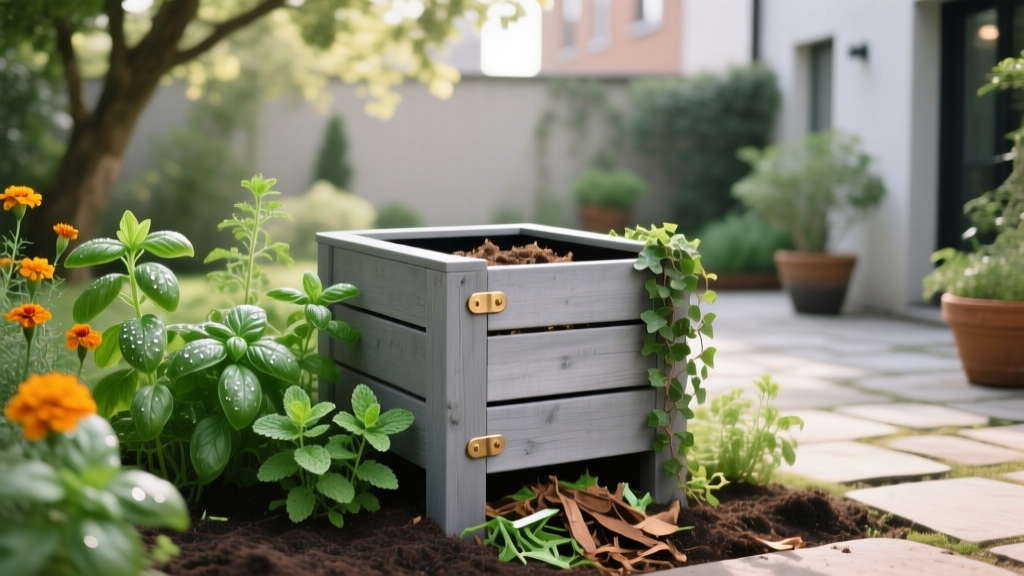
Summer Garden: Composting Garden Waste Efficiently
Summer doesn’t wait. By the time daytime highs settle above 80°F and you’re mowing weekly, the garden starts producing two things fast: food and waste. Spent lettuce, bolted herbs, grass clippings, prunings, and a steady trickle of weeds can either become a smelly pile that attracts flies—or a steady stream of finished compost you can use by fall planting time. The opportunity right now is speed: warm temperatures can turn “trash” into soil-building compost in 4–8 weeks if you manage moisture, particle size, and airflow.
This is a practical, right-now summer plan for composting garden waste efficiently—organized by what to do first, what to do next, and what to prepare before heat, storms, and pests complicate the process.
Priority 1 (This week): Set up a summer-ready compost system that won’t stink
Pick the right composting method for your summer waste stream
Summer waste is nitrogen-heavy (greens): grass clippings, soft weeds, kitchen scraps, pulled annuals. That’s great for fast composting, but it can go anaerobic quickly in heat. Choose a method that matches your time and space:
| Method | Best for summer | Typical timeframe in warm weather | Labor level | Key risk |
|---|---|---|---|---|
| Hot compost pile (3' x 3' x 3' minimum) | Fastest compost; lots of garden waste | 4–8 weeks (managed) | High (turning) | Drying out; overheating; odors if too wet |
| Tumbler | Small yards; pest-prone areas | 6–10 weeks | Medium | Can go slimy if overfilled with greens |
| Trench composting in beds | Heat waves; low time; no turning | 8–16 weeks underground | Low | Attracting pests if too shallow |
| Leaf-mold / cold compost (minimal turning) | When you’re busy harvesting | 6–12 months | Low | Slow; weeds if you add seed heads |
If you want compost for fall planting (often 6–10 weeks before first frost), hot composting or a tumbler is the summer workhorse.
Build the pile to hit the “hot zone” safely
A functioning hot pile is about volume, balance, and moisture. Extension guidance consistently points to a balanced mix of “browns” (carbon) and “greens” (nitrogen). North Carolina State Extension notes that effective composting starts with a carbon-to-nitrogen balance and adequate moisture/aeration (NCSU Extension, 2020). Purdue Extension similarly emphasizes managing oxygen and moisture to prevent odors (Purdue Extension, 2021).
Use this simple summer ratio that works even if you don’t measure C:N:
- 2–3 parts browns (dry leaves, shredded cardboard, straw, pine needles, wood chips)
- 1 part greens (fresh grass clippings, green weeds, kitchen scraps, coffee grounds)
Aim for pile size: at least 3 ft x 3 ft x 3 ft. Smaller piles shed heat too fast; larger piles can overheat or compact if not turned.
“Composting is fastest when the pile is kept as moist as a wrung-out sponge and turned to maintain oxygen.” — Summary of standard extension recommendations for aerobic composting (see NCSU Extension, 2020; Purdue Extension, 2021)
Temperature targets you can actually use
Use a compost thermometer if you can. Your summer goals:
- Heat-up: within 48–72 hours of building/refreshing, you want the core above 110°F.
- Hot composting range: 130–160°F (fast decomposition; better weed seed reduction).
- Turn threshold: when the core exceeds 160°F, turn to prevent killing beneficial microbes and to re-oxygenate.
- Weed seed/pest note: sustained high temps help, but don’t assume a casual pile sterilizes everything—manage inputs.
If the pile never gets above 110–120°F in July, it’s usually too dry, too small, or too carbon-heavy.
Checklist: compost setup you can finish in one afternoon
- Site compost on bare soil (not concrete) for drainage and microbial contact.
- Keep it within hose reach; summer piles dry out fast at 85–95°F highs.
- Stage browns nearby in a lidded bin or covered tote (shredded leaves, torn cardboard).
- Add a base layer of coarse browns (twigs/straw) 4–6 inches for airflow.
- Build alternating layers; water each layer lightly.
- Cover the top with a “brown cap” (2–4 inches) to reduce flies and odors.
- Optional: a tarp or breathable cover to prevent soaking during thunderstorms.
Priority 2 (Next 7–14 days): What to plant (and add) to keep the compost stream balanced
Plant “compost support” crops and materials
In summer, the bottleneck is usually browns. Your lawn provides greens; your kitchen provides greens. Plan now so you’re not stuck with a wet, smelly pile in August.
- Sow a small patch of sorghum-sudangrass (zones 6–9) as a high-biomass “brown/structure” source later; cut before it gets woody.
- Grow straw mulch or stockpile it for both garden beds and compost layering.
- Start a cardboard stash: tear into palm-sized pieces and store dry. It’s an instant summer “brown.”
Timing windows to align compost with fall planting
Use your first frost date as the anchor. Many gardens do fall planting 6–10 weeks before first frost (for brassicas, fall greens, garlic prep, bed top-dressing). Count backward:
- If your first frost is around October 15 (common in parts of USDA zone 6), start a hot pile by August 1–15 for compost by mid/late September.
- If your first frost is around November 15 (many zone 8 areas), a September 1 start can still yield compost in time for October bed prep.
- If you’re in coastal zone 9–10 with frost rare, use compost timing to target fall rain season rather than frost—build piles in late summer before humidity spikes and storms intensify.
Right now, in early-to-mid summer, a managed hot pile can be ready by late summer—perfect for renovating tired beds.
Priority 3 (All summer): What to prune (and how to compost prunings without slowing the pile)
Prune for plant health—and feed the pile the right way
Summer pruning generates a lot of compostable material, but woody stems can stall a hot pile if added whole. The rule: shred, chip, or cut to 1–2 inch pieces whenever possible.
- Tomato suckers and lower leaves: compost only if disease-free; otherwise discard (see disease section below).
- Herb cutbacks (basil, mint): great greens—mix with browns immediately to prevent matting.
- Soft perennial trimmings: mix in thin layers; avoid thick slabs of one material.
- Small twigs: add sparingly unless chipped; they’re excellent for structure but slow to break down.
Weed handling: summer rules that prevent next year’s mess
Summer weeds are often at the seed-set stage. Decide fast:
- Do compost: young weeds without flowers/seed heads; chopped and mixed hot into the pile.
- Do not compost (at home, unless you consistently hit 130–160°F): weeds with mature seeds; aggressive rhizome weeds (Bermudagrass, bindweed). Bag or solarize.
- Best practice: if you must compost questionable weeds, keep the pile hot and turn it; don’t use unfinished compost in vegetable beds.
Quick tactic: keep a “weed quarantine bucket.” If it’s seedy, it goes into a black contractor bag in the sun for 2–4 weeks to cook, then into municipal green waste (if accepted) or disposed of.
Priority 4 (Daily/weekly): What to protect—your compost pile from pests, stink, and disease carryover
Odor prevention in heat waves (the 3-fix checklist)
If your pile smells like ammonia or rotten eggs, it’s almost always too wet, too green, or too compacted—common when daytime highs are above 90°F and you’re adding fresh clippings.
- Add browns immediately: for every bag of grass clippings, add an equal or larger volume of dry leaves/cardboard.
- Turn within 24–48 hours of a big grass addition to prevent anaerobic mats.
- Fix moisture: aim for “wrung-out sponge.” If it drips when squeezed, mix in dry browns and leave uncovered for a day.
Rodents, raccoons, and flies: summer pest-proofing
Warm nights and abundant food make compost attractive. Keep it boring to pests:
- Bury kitchen scraps 8–12 inches into the center of the pile (not near the edges).
- Cap every fresh addition with 2–4 inches of browns.
- Avoid meat, dairy, oily foods, and pet waste in backyard compost.
- Use hardware cloth (1/4 inch mesh) under bins in rodent-heavy areas.
- Consider a tumbler if you’re in an urban/suburban zone with persistent raccoon pressure.
Plant disease and pest carryover: what not to compost in summer
Summer is peak season for foliar diseases. Some pathogens can persist in residues, especially if your pile doesn’t reliably heat. Use a stricter rule during outbreaks:
- Do not compost tomato or potato vines with suspected blight; discard.
- Do not compost powdery mildew-laden cucurbit leaves unless you maintain a consistently hot pile and allow full curing before use.
- Do not compost insect-infested plant material (heavy aphids/whiteflies) if you’re using a cold pile; hot piles are safer, but still cap well.
In vegetable beds, preventing disease now also reduces what you have to throw away later. Keep foliage dry by watering early (before 10 a.m. when possible), mulch to reduce splash, and prune for airflow. Those steps cut disease pressure and keep more biomass “clean” for composting.
What to prepare: a summer composting timeline you can follow
Use this schedule as a working rhythm. Adjust one month earlier in hot-summer climates (zone 9–10) and one month later in cool-summer climates (zone 3–4).
| Month | Primary compost inputs | Best actions | Turn/water frequency | What you’ll get |
|---|---|---|---|---|
| June | Weeds, first big grass flush, spring crop pull-outs | Build or rebuild hot pile; stockpile browns | Turn every 5–7 days; check moisture 2x/week | Active heat; volume reduction starts |
| July | Clippings, kitchen scraps, tomato prunings (clean only) | Prevent drying; cap additions; monitor temps | Turn every 4–7 days; water at turning if dry | First batch may finish late July/August |
| August | Spent plants, storm debris, more weeds | Start a “fall compost” batch; screen finished compost | Turn weekly; keep covered in heavy rain regions | Compost ready for early fall bed prep |
| September | Garden clean-up, early leaf drop (some regions) | Cure compost; start a leaf/woodier pile for winter | Turn every 10–14 days (cooling) | Stable compost for top-dressing and planting holes |
Fast compost checklist (printable-style)
- Keep particle size small: chop to 1–2 inches.
- Maintain mix: 2–3 parts browns to 1 part greens.
- Moisture: wrung-out sponge; water at each rebuild/turn.
- Air: turn when temps exceed 160°F or drop below 120°F for several days.
- Cap additions: always finish with browns.
Regional scenarios: adjust your summer composting strategy where you live
Scenario 1: Hot-humid summers (Southeast, Gulf Coast; USDA zones 7–9)
When nights stay above 75°F and humidity is high, piles can go anaerobic fast—especially after heavy rain. Your priorities are drainage and structure.
- Build on a slight mound or use a bin with slatted sides for airflow.
- Use more coarse browns (pine straw, shredded branches) to prevent compaction.
- Cover before storms: a tarp angled to shed water prevents the “swamp pile.”
- Turn more often in July/August—every 4–6 days if you’re pushing speed.
Pest note: fire ants may nest in dry edges. Keep the whole pile evenly moist and turn thoroughly to disrupt colonies.
Scenario 2: Hot-dry summers (Interior West; USDA zones 5–8 at elevation-dependent)
In arid heat, compost piles fail from drying out. If daytime highs hit 95–105°F, the outer layers can become a dust shell that blocks decomposition.
- Place the pile in afternoon shade (east side of a shed or under a shade cloth).
- Pre-soak browns: dunk cardboard or water straw before mixing to prevent moisture theft.
- Use a cover to slow evaporation; breathable covers (burlap) work well.
- Turn less aggressively during heat waves if the pile is struggling to stay moist; turn, then water deeply.
Water-smart tactic: save final rinse water from veggie washing (no soap) and pour it into the pile.
Scenario 3: Cool-summer or short-season gardens (Upper Midwest, New England, mountain zones 3–5)
If your nights dip into the 50–60°F range even in summer, hot composting is still possible, but you need volume and insulation.
- Build bigger (closer to 4 ft cube) to hold heat.
- Insulate with straw bales around the bin or use a black plastic outer cover (leave vents for oxygen).
- Time it: start your main hot pile around late June to early July when soil and air temps peak; you’ll get the best heat curve.
- Don’t rely on compost to kill weeds unless you monitor temps—cool edges stay viable.
Fall timing matters more here: if first frost is near September 20, you’ll want compost batches started by mid-July for any chance of finishing before fall bed work.
Summer compost troubleshooting (quick fixes that work)
Problem: Pile is hot in the center but dry and inactive on the outside.
Fix: Turn the pile, pulling outer material into the center; water as you turn until evenly damp.
Problem: Pile is wet, slimy, and smells bad after a week of rain.
Fix: Mix in dry browns (shredded cardboard, dry leaves), rebuild into a looser pile, and cover to shed rain.
Problem: Pile won’t heat above 110°F.
Fix: Increase size, add greens (fresh clippings) in thin layers, and ensure moisture is correct. Chopping material smaller often makes the biggest difference within 72 hours.
Problem: Flies and gnats swarm when you open the pile.
Fix: Stop adding exposed food scraps; always bury them and cap with browns. Consider freezing scraps and adding them only on turning day so they go straight into the hot core.
Use compost before it’s “perfect”: summer ways to put it to work safely
Not all compost has to be fully finished to be useful—especially in summer when beds need protection from heat and erosion. The key is where you use it.
- Finished compost (dark, crumbly, earthy smell): top-dress vegetables 1/2–1 inch; mix into planting holes; add to potting blends (screen first).
- Half-finished compost (recognizable bits, still warming): use as mulch around established perennials and shrubs, keeping it 2–3 inches away from stems.
- Compost “screenings”: return chunky leftovers to the next hot batch as an inoculant and structure.
Practical timing: if you need compost for a fall planting push, stop feeding that batch and let it cure for 2–3 weeks before applying to seed beds. Curing stabilizes nutrients and reduces the risk of tying up nitrogen.
Right-now action plan (7 minutes to choose, 1 hour to start)
If you have a pile already
- Take a temperature reading today. If it’s above 160°F, turn it.
- If it’s below 120°F, squeeze a handful: if dry, water; if soggy, add browns and turn.
- Add a 2–4 inch brown cap to stop flies this week.
If you don’t have a pile yet
- Pick a spot within hose reach and out of harsh afternoon sun.
- Start with a 4–6 inch coarse brown base.
- Build to at least a 3 ft cube using the 2–3:1 browns-to-greens rule.
- Water each layer lightly; cover the top with browns.
- Put a calendar reminder to turn it in 5–7 days.
Summer composting rewards consistency, not perfection. Keep the pile fed, aerated, and evenly moist while temperatures are naturally high, and you’ll turn the season’s constant garden waste into a steady supply of compost—ready when fall planting and soil repair season arrives.
Sources: North Carolina State University Extension composting guidance emphasizing balance, moisture, and aeration (NCSU Extension, 2020). Purdue University Extension compost management recommendations for oxygen/moisture control and odor prevention (Purdue Extension, 2021).