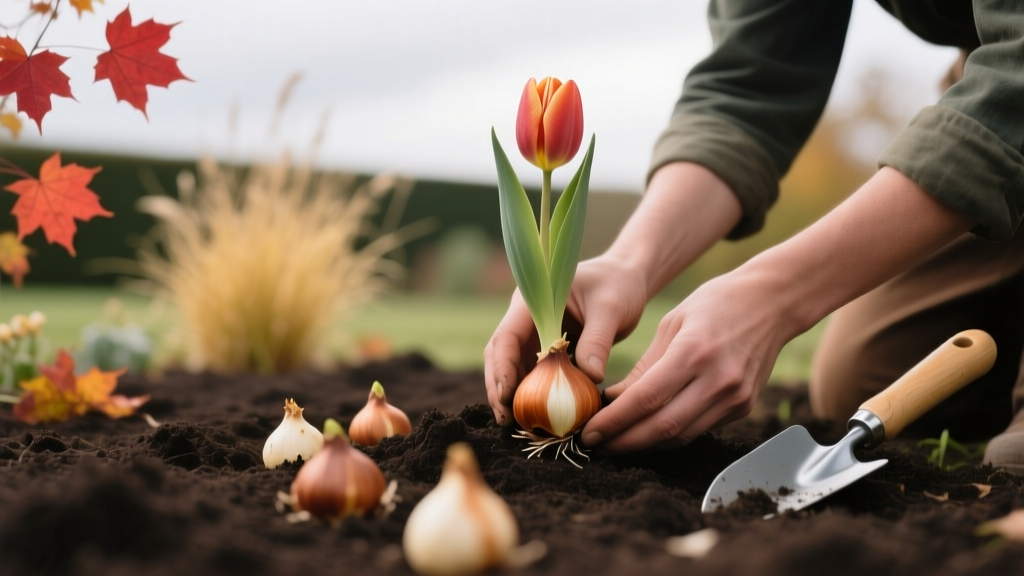
Planting Fall Bulbs for Spring Blooms
The window for spring-blooming bulbs is shorter than most gardeners think. Once soil temperatures drop too far, bulbs root slowly; once the ground freezes, you’re done until spring. The upside: planted on time, bulbs use fall moisture and cool soil to build roots, then explode into bloom when you’re still waiting on perennials to wake up. If you act in the next 2–8 weeks (depending on USDA zone), you can lock in months of color—tulips, daffodils, crocus, allium, hyacinth—without any spring scrambling.
Use this guide like a seasonal to-do list: what to plant first, what to prune (and what not to), what to protect, and what to prepare. The specifics below assume you know your approximate first fall frost date and USDA hardiness zone; if you don’t, look them up before you buy bulbs.
Priority 1: What to Plant (and When to Put It in the Ground)
Fall bulbs are planted when nights cool down but before the soil locks up. A reliable trigger is soil temperature at 4 inches deep: aim for 55°F–45°F (13°C–7°C). That range typically arrives 2–6 weeks before the ground freezes in colder zones and later in mild climates.
“Spring-flowering bulbs should be planted in the fall when soil temperatures cool to about 55°F or lower so bulbs can establish roots before winter.” (University of Minnesota Extension, 2020)
For timing, anchor to these concrete benchmarks and adjust for your region:
- Zone 3–4: plant roughly Sept 10–Oct 5 (often 2–3 weeks before first hard freeze).
- Zone 5: plant roughly Sept 25–Oct 20.
- Zone 6: plant roughly Oct 5–Nov 5.
- Zone 7: plant roughly Oct 20–Nov 25.
- Zone 8–9: plant roughly Nov 15–Dec 31; some bulbs need pre-chilling (details below).
Also keep planting depth and soil temps in mind: in many gardens, the surface cools faster than the root zone. If daytime highs are still near 70°F and soil is above 60°F, wait a bit; warm soils can increase rot and delay rooting.
Choose Bulbs That Perform (and Don’t Become a Spring Disappointment)
Start with dependable performers and match them to deer pressure, drainage, and sunlight.
- Most reliable and long-lived: daffodils (Narcissus), species tulips, Siberian squill (Scilla), grape hyacinth (Muscari), snowdrops (Galanthus), crocus, allium.
- High impact but sometimes short-lived: large hybrid tulips (especially in warm zones or wet soil); treat as annuals unless you have ideal conditions.
- Deer/rodent resistant: daffodils, allium, snowdrops (generally avoided due to alkaloids).
- Best for naturalizing in lawn edges or under trees: crocus, scilla, species tulips, daffodils, snowdrops (where mowing can be delayed until foliage yellows).
Timing and Depth Rules You Can Apply Immediately
Use bulb size to determine depth. A practical standard is plant at 2–3 times the bulb’s height. In real numbers:
- Tulips & daffodils: 6–8 inches deep (measured from soil surface to bulb base).
- Hyacinths: 6 inches deep.
- Allium (ornamental): 6–8 inches deep (large types deeper).
- Crocus, scilla, muscari: 3–4 inches deep.
Space most large bulbs 4–6 inches apart; small bulbs 2–3 inches apart for a fuller look. Plant in clusters (odd numbers like 7, 9, 13) rather than straight lines for a natural drift.
Planting Checklist (Do This in Order)
- Check drainage: if water sits for 4+ hours after rain, pick another spot or build a raised berm.
- Set aside the best bulbs: firm, heavy, no soft spots, no mold.
- Dig the whole bed or a wide trench (faster than individual holes for big drifts).
- Loosen soil at the bottom; blend in compost if soil is compacted (avoid high-nitrogen fertilizer in the hole).
- Plant with point up; if unsure (some alliums), lay on side—bulbs will orient themselves.
- Backfill and water once to settle soil.
- Mulch after soil cools (not while it’s still warm).
Fertilizer: Keep It Simple and Season-Appropriate
Bulbs store much of what they need, but they respond to balanced fertility in poor soils. If your soil test suggests low phosphorus or potassium, apply a low-nitrogen fertilizer or bulb blend at label rates and incorporate it into the top 6 inches. Avoid heavy nitrogen in fall; it can push weak, disease-prone growth.
Research-backed note: fall rooting and spring performance depend on cool soil and adequate moisture more than strong fertilizing. Kansas State University Extension emphasizes that bulb success is primarily about proper planting time, depth, and well-drained soil (K-State Research and Extension, 2022).
Monthly Schedule Table (Adjust by Zone)
| Month | Priority Tasks | Target Conditions | Zones Most Active |
|---|---|---|---|
| September | Order/buy bulbs; prep beds; begin planting in cold zones | Soil trending toward 55°F; nights in the 40s–50s°F | 3–5 |
| October | Peak planting; water-in; label drifts; start rodent protection | Soil 55°F → 45°F; before hard freezes | 4–7 |
| November | Late planting; mulch after ground cools; protect from heaving | Soil near 45°F; before ground freezes solid | 6–8 |
| December | Plant in mild climates; pre-chill tulips/hyacinths for warm zones | Cool, workable soil; chilling 10–14 weeks at 35–45°F | 8–9 |
Priority 2: What to Prune (and What to Leave Alone)
Fall cleanup can help reduce disease, but over-pruning can remove the structure that protects crowns and bulbs from freeze-thaw. Focus your effort where it matters most.
Cut Back Only What’s Diseased or Flopping
Do cut down (and dispose of) foliage with clear disease symptoms: peony mildew, iris leaf spot, black spot–ridden rose leaves. Removing infected debris reduces overwintering spores. If you had botrytis or leaf blights in summer, don’t compost that material unless your compost reliably heats.
Leave standing (or lightly tidy) plants with hollow stems or seedheads that feed birds and trap snow: coneflower, sedum, ornamental grasses. Snow cover is a real insulator in zones 3–5, and your bulbs benefit from steadier soil temperatures.
Don’t Cut Back Perennials Just to “Make Room” for Bulbs
If you’re planting bulbs into perennial beds, tuck bulbs between crowns rather than scalping the whole planting. You can lift and divide overly large clumps (daylilies, hostas) in early fall, then plant bulbs into the open pockets. Aim to finish divisions and bulb planting at least 4 weeks before the ground typically freezes so roots settle.
Label and Map Now (You Will Forget by Spring)
After planting, place small weatherproof labels at the back of beds or make a quick sketch map. This prevents accidental digging during spring annual planting and helps you evaluate bloom timing to improve next year’s combinations.
Priority 3: What to Protect (Bulbs, Beds, and Your Spring Display)
Most spring bulb failures trace back to three fall/winter issues: excess moisture, critter damage, and temperature swings that cause heaving. Address all three while you’re already out there planting.
Protect From Squirrels, Voles, and Chipmunks
If your neighborhood squirrels treat tulips like a buffet, assume they will find freshly disturbed soil within 24–72 hours.
- Physical barrier (most reliable): lay 1/2-inch hardware cloth over the bed (or make cages) and pin it down with landscape staples. Remove in spring when shoots are several inches tall.
- Plant resistant bulbs around favorites: ring tulips with daffodils or alliums as a deterrent band.
- Hide the scent: top-dress with chopped leaves or mulch immediately after watering in. Avoid leaving bulb papery skins on the soil surface.
Voles are different: they tunnel and chew. If you have vole runways, reduce thick groundcover near beds and keep mulch to 2–3 inches maximum around bulb plantings in vole-prone areas.
Protect From Rot: Drainage and Water Management
Bulbs need moisture to root, but they hate sitting in water. If you have heavy clay:
- Plant on a slight mound or raised bed to shed winter water.
- Amend broadly (entire bed) rather than only the planting hole to avoid a “bathtub” effect.
- Avoid adding sand alone to clay; it can worsen structure unless used in large, engineered ratios. Compost is the safer improvement for most home beds.
If fall is dry, water deeply after planting, then water again in 7–10 days if you haven’t had soaking rain. Once regular rains arrive and temperatures drop, stop irrigating unless conditions are unusually dry.
Protect From Freeze-Thaw and Heaving
In zones 3–6, the most damaging winter pattern is warm spells followed by sharp freezes. That expansion and contraction can push shallow-planted bulbs upward.
- Plant at correct depth (err slightly deeper in sandy soils).
- After the ground cools (not early fall warmth), apply 2–4 inches of mulch (shredded leaves, straw, pine fines).
- If you see bulbs exposed in late winter, gently press them back and re-mulch on the next thaw day.
Seasonal Pest and Disease Prevention (Do This Before Snow or Heavy Rains)
Fall is when you can reduce next spring’s bulb diseases without spraying.
- Buy healthy stock: basal rot and blue mold often arrive with compromised bulbs. Reject any bulb that’s soft, leaking, or smells off.
- Sanitation: clean your bulb auger and tools if you’ve had rot issues; don’t move suspect soil to new beds.
- Spacing: avoid crowding in poorly ventilated spots; dense plantings in wet soil raise fungal risk.
- Deer management: in high-pressure areas, plan for repellents in early spring before buds are noticed. Daffodils and allium reduce reliance on sprays.
Priority 4: What to Prepare (So Spring Looks Intentional, Not Accidental)
Bulbs are the first wave. The best spring gardens are staged: early bulbs, then mid-season bulbs, then perennials and shrubs. Use fall to set that choreography.
Build a Bloom Sequence (Early → Mid → Late)
Plant at least three bloom windows so you aren’t left with one glorious week and then nothing.
- Early: snowdrops, crocus, winter aconite, early scilla.
- Mid: daffodils (mix early and mid), hyacinths, muscari, early tulips.
- Late: late tulips, ornamental allium, late daffodils.
Pair bulbs with perennials that hide fading foliage: lady’s mantle, hardy geraniums, hostas, catmint, daylilies. This matters because bulb foliage should remain until it yellows naturally—often 6–8 weeks after bloom—to recharge for next year.
Prepare Warm-Climate Bulb Strategies (Zones 8–10)
If you garden where winters are mild, some bulbs need extra help. Many tulips and hyacinths require a chilling period to bloom well. Plan now instead of hoping for cold that may not come.
- Pre-chill: store tulips/hyacinths 10–14 weeks at 35–45°F in a breathable bag in the refrigerator.
- Keep away from fruit: apples and other ripening fruit release ethylene gas that can damage flower formation.
- Consider better-adapted bulbs: narcissus varieties suited to the South, species tulips, allium, and many minor bulbs often perform more consistently.
Prepare Cold-Climate Insurance (Zones 3–5)
If your fall goes from warm to frozen fast, you may have only a narrow planting window. Two tactics keep you on schedule:
- Pre-dig beds: prepare soil while it’s workable, then plant quickly when temperatures hit the target range.
- Prioritize by hardiness: get tulips and daffodils in first; smaller bulbs are quicker to plant later.
If you miss the ideal window but the ground isn’t frozen, plant anyway. Bulbs planted late often bloom later and smaller the first year, then normalize.
Prepare Wet-Fall and Heavy-Clay Workarounds (Any Zone)
If your fall is persistently rainy and soil stays saturated, shift from “in-ground everywhere” to “strategic placements.”
- Plant bulbs in the best-drained areas (near foundations can be dry; the bottom of slopes can be soggy).
- Use raised beds or berms for tulips and hyacinths, which resent wet feet.
- Lean into daffodils and minor bulbs that tolerate more variability.
Regional Scenarios You’re Likely Living Right Now
Use these as reality checks. The best plan is the one that matches your actual fall weather patterns, not the calendar.
Scenario 1: Upper Midwest / Northern Plains (Zones 3–4) — Fast Freeze, Early Snow
In years when the first hard freeze hits by mid-October, treat September as your main bulb month. If your average first frost is around Sept 15–Oct 1, begin planting as soon as soil cools near 55°F. Mulch after the first couple light frosts, not earlier, so you don’t keep the soil warm and delay dormancy.
In these zones, bulbs benefit from consistent snow cover. Don’t strip beds bare; leave some plant structure to catch snow, and avoid late-fall nitrogen feeding that can trigger soft growth before winter.
Scenario 2: Mid-Atlantic / Lower Midwest (Zones 6–7) — Warm Falls, Late Planting Window
If you’re still seeing daytime highs near 70°F into October, don’t rush the bulb planting just because stores are stocked. Wait until soil temperatures drop into the 55–45°F band (often late October into November). Early planting into warm, damp soil can increase rot and encourage premature growth.
This region also swings wet. If your site stays damp in winter, plant tulips in the highest-draining beds and use more daffodils, allium, and minor bulbs elsewhere.
Scenario 3: Pacific Northwest / Maritime (Zones 7–9) — Mild Temps, Long Wet Season
You often get a long planting runway (October through December), but winter wet is the limiting factor. Prioritize drainage over everything: raised beds, gritty compost, and avoiding low spots. In these climates, daffodils and many minor bulbs are exceptionally dependable; tulips may be best treated as annuals unless you have sharp drainage and summer dryness.
Scenario 4: Southeast / Gulf Coast (Zones 8–10) — Not Enough Chill for Many Tulips
Choose bulbs that don’t demand long winter cold, or plan to pre-chill. Many gardeners here plant pre-chilled tulips around late December through January for best results, depending on local winter patterns. Narcissus varieties adapted to the South and early minor bulbs often give a more consistent payoff with less fuss.
Quick Timelines You Can Follow This Week
If Your First Frost Is Within 2–3 Weeks
- Buy bulbs immediately; focus on daffodils, allium, crocus, and species tulips.
- Prep beds in one session; plant within 7 days.
- Water-in, label, and plan mulch for after the next cold snap.
If Your First Frost Is 4–6 Weeks Away
- Prep soil now; wait to plant until soil cools closer to 55°F.
- Stage bulbs by bloom time and height; plant tallest toward the back/center of beds.
- Acquire hardware cloth if squirrels are active.
If Your Garden Is Already Seeing Hard Freezes at Night
- Plant anytime the soil is workable (not frozen solid).
- Plant slightly deeper within recommended ranges; mulch after planting.
- Expect later bloom the first spring if planting is very late.
Common Mistakes That Cost You Blooms (Fixable This Season)
Mistake: Planting too shallow. Fix: Replant to 6–8 inches for tulips/daffodils, especially in sandy soil and cold zones.
Mistake: Over-mulching early. Fix: Wait until nights are consistently cold and the soil is cooling; then apply 2–4 inches.
Mistake: Planting into soggy soil. Fix: Move to a better-drained spot, raise the bed, or switch to more tolerant bulbs.
Mistake: Forgetting spring foliage management. Fix: Plan companion perennials now so dying bulb leaves are hidden while they recharge.
Notes From Research and Extension (Worth Following)
Two points repeatedly show up in extension guidance:
- Planting at the right soil temperature matters more than the calendar. Cooler soils help rooting and reduce disease pressure (University of Minnesota Extension, 2020).
- Well-drained soil is non-negotiable for many bulbs; most failures are rot-related in heavy, wet conditions (Kansas State University Research and Extension, 2022).
Put that into practice: if you can only improve one thing this fall, improve drainage (site choice, raised planting, broad compost incorporation), then plant when soil is in the 55–45°F range.
One Last Walk-Through Before You Put Tools Away
After planting day, do a quick final check while you can still adjust.
- Did you water-in once to settle soil and eliminate air pockets?
- Are tulip beds protected from digging (hardware cloth or heavy mulch)?
- Is mulch staged and ready to apply when temperatures drop (not necessarily the same day you plant)?
- Did you label or map the drifts?
- Did you avoid burying bulbs in persistently wet areas?
Once those boxes are checked, you’ve done the most time-sensitive work of the year for spring color. The rest of fall can be cleanup, composting leaves, and watching soil temperatures—knowing that beneath the surface, your bulbs are quietly rooting into place for the first warm stretch of spring.