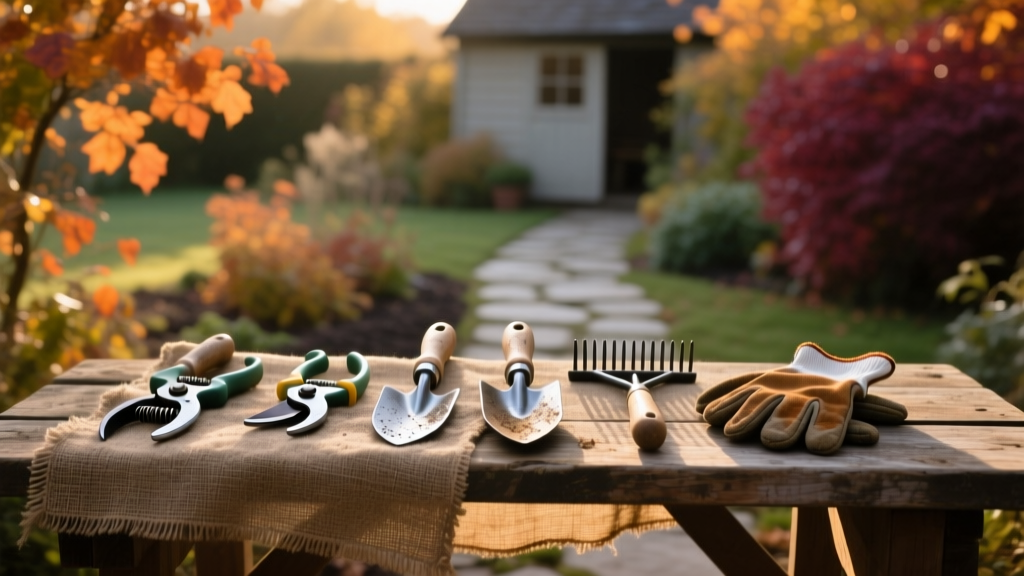
Fall Garden: Storing Garden Tools for Winter
The first hard frost is closer than it looks. Once nights start dipping below 40°F, metal tools sweat with condensation, wooden handles swell and shrink, and a single week of neglect can turn sharp edges dull and orange with rust. The opportunity: a focused weekend now can add years to your tools, prevent springtime breakdowns, and keep pests and diseases from overwintering in soil-packed crevices.
Use this as a “do-it-now” fall checklist—prioritized for the last productive stretch of the season, with specific timing cues tied to your first frost date and USDA hardiness zone. Aim to finish tool storage prep 2–3 weeks before your average first frost, or earlier if you’re already seeing regular nights under 35°F.
Priority 1 (This Week): Clean, disinfect, and dry tools before soil freezes
If you do nothing else, do this. Mud and plant sap hold moisture against metal and can harbor pathogens. A clean tool is easier to sharpen, safer to handle, and less likely to carry disease into next year.
Timing triggers (use these numbers)
- 2–3 weeks before your average first frost date: schedule the main cleaning day.
- When daytime highs drop below 55°F consistently: sap and residue harden—cleaning takes longer.
- Before your first hard freeze (28°F for several hours): finish washing and drying so water doesn’t freeze in joints and cracks.
- If you’re in Zones 3–5: target completion by Oct 1–15 in many areas.
- If you’re in Zones 8–10: target completion by Nov 15–Dec 15, especially before winter rains set in.
Step-by-step: the fast, effective cleaning routine
1) Knock off soil immediately. Use a stiff brush or putty knife. For shovels and spades, scrape both sides and the socket where the handle meets the metal.
2) Wash with soap and water. A bucket with warm water and dish soap is enough for most tools. Avoid soaking wooden handles for long periods—wipe them instead.
3) Remove sap and resin. Rubbing alcohol works well on pruners and loppers; wipe clean and dry. For sticky residues, a citrus-based cleaner can help—then rinse and dry thoroughly.
4) Disinfect tools that touched diseased plants. Extension guidance commonly recommends disinfecting between plants when disease is present. A practical fall approach: disinfect after the season’s last use on suspect plants, and again after cleaning. Use either 70% isopropyl alcohol (wipe or dip) or a diluted bleach solution (then rinse and dry to prevent corrosion). The University of Minnesota Extension notes that alcohol solutions can disinfect cutting tools effectively and are less corrosive than bleach when used properly (University of Minnesota Extension, 2020).
“Sanitation is one of the most effective disease management tools we have—cleaning and disinfecting tools helps reduce pathogen spread from plant to plant and season to season.” (University of Minnesota Extension, 2020)
5) Dry completely. Towel-dry, then air-dry with hinges open. Moisture trapped at pivot points is a rust factory once temperatures swing.
Checklist: cleaning supplies to stage now
- Stiff brush, putty knife, rags
- Bucket, dish soap
- 70% isopropyl alcohol and/or disinfectant solution
- Fine steel wool or wire brush for light rust
- Gloves and eye protection
Priority 2 (Next 7–10 Days): Sharpen and tune—before you put tools away
Sharp tools are safer and cleaner-cutting. Dull blades crush stems and bark, creating larger wounds that invite disease. Do your sharpening in fall so spring starts with tools ready to work.
What to sharpen (and how to know it’s time)
- Hand pruners/loppers: If they leave ragged stems or require two squeezes, sharpen.
- Shovels/spades/hoes: If the edge reflects light (rounded edge), sharpen.
- Hedges shears: If they snag or fold leaves rather than slice, sharpen.
Quick tuning sequence
1) Tighten hardware. Check nuts/bolts on pruners, loppers, and hoes. Wobbly joints chew up blades.
2) Sharpen with the correct tool. Use a flat file for shovels and hoes; use a sharpening stone or diamond file for pruners. Maintain the factory bevel—don’t create a new angle.
3) Lubricate moving parts. Apply a light oil to pivots and springs. Work the tool open/closed to distribute it, then wipe excess.
4) Protect metal surfaces. A thin coat of oil on blades and shovel heads slows rust in humid sheds and garages.
For sharpening and maintenance basics, many extension services emphasize that clean, sharp tools reduce injury to plants and improve efficiency (University of California Agriculture and Natural Resources, 2019).
Priority 3 (Before consistent freezes): Prevent pests and diseases from overwintering in your tool area
Fall isn’t just about rust—your tool corner can become a winter shelter for pests and disease. Soil clods, leaf piles, and damp cardboard near tools invite slugs, sowbugs, rodents, and fungal spores.
What to remove or change right now
- Dump soil from buckets, pots, and wheelbarrows. Soil holds moisture and can contain eggs/larvae.
- Clear leaf piles around the shed. Leaves trap moisture and provide cover for rodents.
- Store seed, bulbs, and fertilizers in sealed bins. Mice chew bags quickly in late fall.
- Disinfect tool handles if you handled bacterial ooze/cankers. Pathogens can persist on surfaces under the right conditions.
Season-specific disease prevention tied to tools
Fire blight (apples/pears): If you pruned out strikes during the growing season, disinfect pruners after finishing. Don’t store pruners with sap residue.
Tomato/pepper diseases: When you pull plants after frost, clean pruners, stakes, cages, and trowels. Many foliar pathogens persist on plant debris and dirty surfaces through winter, then reappear when conditions warm.
Powdery mildew on cucurbits: Clean trellis clips and pruning snips; spores can linger in protected crevices.
Priority 4 (Before winter storms): Store tools so they stay dry, straight, and accessible
Storage is less about “where they fit” and more about controlling moisture, preventing warping, and keeping sharp edges from contacting floors or each other. If your region gets snow or winter rain, storage quality matters as much as cleaning.
Temperature and humidity targets (practical thresholds)
- If your storage space regularly swings from 25°F nights to 50°F days, expect condensation—oil metal surfaces.
- If relative humidity stays high (common in coastal Zones 8–9), prioritize airflow and sealed totes for small tools.
- If you heat a garage intermittently, moisture can spike—hang tools, don’t leave them on concrete.
Best-bet storage setup (small space friendly)
- Hang long-handled tools (shovels, rakes, hoes) on wall hooks so heads don’t sit on concrete.
- Store pruners and hand tools in a dry tote with a desiccant pack, or in a toolbox with a light oil wipe-down.
- Keep blades covered (sheaths, cardboard guards, or dedicated slots) to protect edges and fingers.
- Separate dirty jobs from clean storage. Create a “wash station” bin near the door so muddy tools don’t go straight onto hooks.
What to do with wood handles
Wood handles last longest when clean and conditioned. Wipe handles dry, sand splinters lightly, then apply a thin coat of boiled linseed oil or another wood conditioner and wipe off excess. Do this on a dry day when temperatures are above 50°F so oil penetrates and cures better.
What to plant (while you’re cleaning up): quick fall wins that pair with tool storage
Tool storage season overlaps with prime planting windows. If you’re already out there cleaning beds and packing up tools, knock out these high-return tasks before ground freezes.
Plant garlic and spring bulbs
Garlic: Plant 2–4 weeks before the ground freezes. In many cold-winter areas (Zones 3–6), that’s often late September through October. Cloves root best when soil temps are roughly 50°F or cooler but not frozen.
Spring-flowering bulbs: Aim for soil temps under 60°F and plant before hard freeze (28°F). Keep a hand trowel and bulb planter cleaned and oiled after planting—bulb diseases can hitchhike in soil.
Sow cover crops where beds are empty
If you can still work the soil, sow a cover crop (like cereal rye or crimson clover in suitable regions) to reduce erosion and suppress winter weeds. Clean rakes and seed spreaders afterward—seed hulls and damp plant residue attract rodents.
What to prune (and what to leave alone): avoid winter damage and disease spread
Fall pruning is not one-size-fits-all. Some cuts are smart now; others invite winter kill or stimulate late growth that gets zapped by frost.
Prune now: only the “must-do” list
- Remove dead, damaged, or diseased wood any time you see it—especially on shrubs and fruit trees.
- Cut back perennials with foliar disease (like peonies with botrytis history) and remove debris from the site.
- Trim raspberry canes according to type (summer-bearing vs everbearing) and local recommendations; disinfect tools if canes show disease.
Hold off until late winter/early spring
- Most structural pruning of fruit trees is typically done in dormancy (often late winter), when cuts are easier to see and plants respond predictably.
- Fall pruning of tender shrubs in colder zones can encourage soft growth that’s vulnerable at 20–25°F swings.
Use your fall tool routine to prepare pruners for dormant-season work: clean, sharpen, and store them where you can find them mid-winter on a mild day.
What to protect: tools, irrigation, and containers before freeze damage
Protecting tools for winter goes hand-in-hand with protecting the systems tools rely on—hoses, sprayers, and watering gear. Freeze damage often shows up as cracked fittings and split tanks.
Protect water-related gear before 32°F
- Drain hoses, coil, and store off the ground.
- Empty and dry sprayers (pump sprayers, backpack sprayers). A freeze at 31°F can crack rigid plastic tanks.
- Shut off and drain irrigation lines if applicable; store removable filters indoors.
Protect containers and raised-bed hardware
- Stack pots after washing and drying. Wet pot stacks freeze together and can crack when pried apart.
- Store stakes, cages, trellis netting dry and labeled. Roll netting to prevent tangles and mildew.
What to prepare: a fall-to-winter tool storage timeline you can follow
Match this timeline to your first frost date. If your first frost is typically Oct 10, start in mid-September. If it’s Nov 15, start in late October.
| Timing | Garden & Tool Tasks | Weather Cue |
|---|---|---|
| 4–5 weeks before first frost | Sort tools; set aside broken handles, dull blades; buy oil, file, replacement nuts/bolts | Nights consistently below 50°F |
| 3 weeks before first frost | Deep clean and disinfect tools used on diseased plants; wash pots and trays | Morning dew lasts past 10 a.m. |
| 2 weeks before first frost | Sharpen blades; oil metal; condition wood handles | Highs trending under 60°F |
| 1 week before first frost | Drain hoses/sprayers; hang tools; set rodent-proof storage for seed/fertilizer | Forecast shows lows near 35°F |
| After first hard freeze (around 28°F) | Final walkthrough: check for moisture, wipe condensation, re-oil if needed; store batteries indoors | Hard freeze warning or ice in birdbath |
Regional scenarios: adjust the plan to your fall reality
Tool storage rules don’t change, but timing and moisture risks do. Use these scenarios to adapt fast.
Scenario 1: Upper Midwest / New England (USDA Zones 3–5) — fast freezes, early snow
If your first frost commonly hits between Sept 20 and Oct 15, prioritize early. Get tools cleaned and dried before the first wet snow sticks to everything. Store shovels, roof rakes, and ice chippers up front—you’ll want them accessible. Oil is non-negotiable in unheated sheds with big temperature swings.
Watch for: condensation in garages during warm spells. A brief thaw to 45–50°F after a cold snap can “rain” moisture onto metal tools.
Scenario 2: Pacific Northwest / Coastal zones (Zones 7–9) — mild temps, persistent humidity
Your enemy is moisture, not deep cold. Even if you won’t freeze hard until late November (or later), rust can develop quickly in humid air. Focus on airflow, wall storage, and frequent wipe-downs. Keep hand tools in a sealed tote with desiccant packs. Consider a small dehumidifier if you store expensive pruners or saws.
Watch for: mildew on leather gloves and tool belts—wash and dry them fully before storage.
Scenario 3: Southeast / Gulf Coast (Zones 8–10) — warm fall, late frost, pest pressure
Tool storage still matters, but your “winter” may feel like an extended shoulder season. If your first frost is Dec 1–Jan 15 in some areas, you’ll keep using tools longer. Create a “daily clean” habit: quick brush-off and alcohol wipe for pruners after each use. Fire ants, roaches, and rodents may shelter in cluttered sheds—keep floors clear and store amendments in sealed containers.
Watch for: fungal growth in shaded storage spots after heavy rains; avoid storing tools in contact with damp wood or cardboard.
Tool-by-tool storage: what “winter-ready” looks like
Different tools fail in different ways. Use this quick standard so you know you’ve done enough.
Pruners, loppers, and shears
- Cleaned of sap; disinfected if used on disease
- Sharpened to a clean bevel; hardware snug
- Pivots lightly oiled; stored closed (or with blade guard)
Shovels, spades, hoes, and rakes
- Soil removed from blade/neck/socket
- Edge filed (for digging tools)
- Thin oil coat on metal; hung off the floor
Saws (hand saws, pruning saws)
- Cleaned and fully dried (especially the handle and blade junction)
- Lightly oiled; blade protected
- Stored where teeth won’t contact other tools
Power tools (battery pruners, hedge trimmers, blowers)
- Clean vents and guards; remove plant fibers
- Store batteries indoors around 40–70°F if possible
- Check manufacturer guidance for long-term battery storage charge level
Fall pest and disease prevention: storage habits that reduce spring problems
Think of your tool shed as part of your garden’s sanitation program. The goal is to remove shelter and food sources so pests don’t set up winter headquarters.
Rodent prevention
- Sweep up spilled seed and fertilizer immediately.
- Store seed, bulbs, and animal-based fertilizers in metal cans or heavy-duty sealed bins.
- Keep handles and gloves off the floor—mice nest in soft materials.
Slug and sowbug prevention
- Don’t store tools over damp leaf litter or boards.
- Keep the area under wall-hung tools clear and dry.
Pathogen carryover prevention
- Label a bucket for “dirty tools” during final cleanup days.
- Disinfect cutting tools after removing diseased plant material.
- Wash and dry stakes, cages, and ties before stacking.
Fast weekend plan: get it done in two focused blocks
If you’re short on time, do it in two sessions timed around weather. Choose a dry day above 50°F for washing and oiling.
Block 1 (2–3 hours): Clean + disinfect
- Gather all tools to one spot
- Scrape soil, wash, rinse
- Disinfect cutting tools used on diseased plants
- Dry thoroughly with hinges open
Block 2 (2–3 hours): Sharpen + oil + store
- Sharpen pruners, loppers, hoes, shovels
- Tighten bolts and pivots
- Oil metal; condition wood handles
- Hang tools; place hand tools in dry tote
- Drain hoses/sprayers before 32°F
Once tools are stored, walk your garden one last time with purpose: pull and discard diseased plant debris, empty standing water, and tidy the shed perimeter. Your spring self will feel the payoff the first time you reach for pruners that cut cleanly on the first squeeze—no rust, no sticking, no last-minute scramble on a warm March day.
Sources: University of Minnesota Extension (2020) tool disinfection guidance; University of California Agriculture and Natural Resources (2019) tool care and maintenance principles.