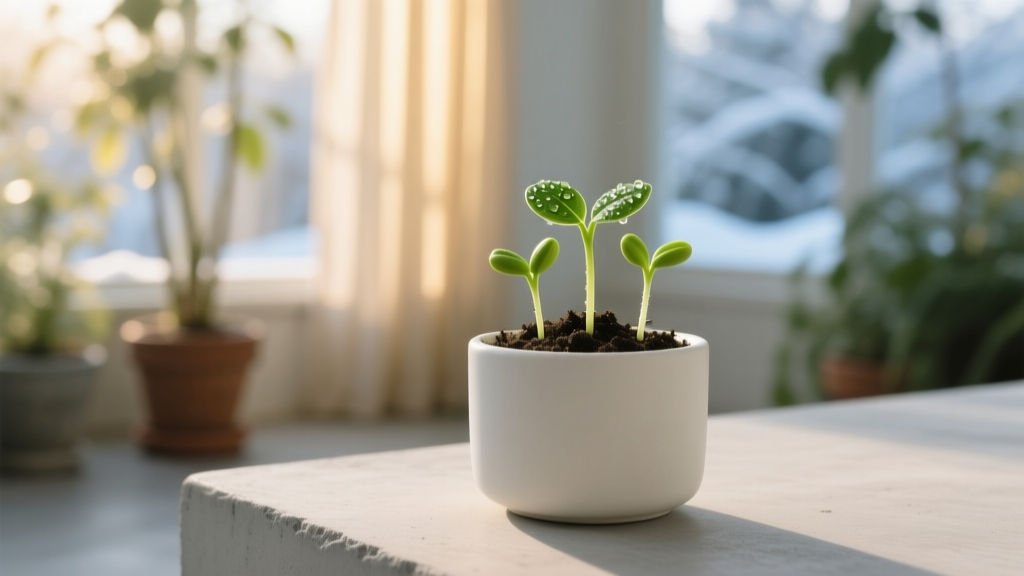
Starting Seeds for Indoor Winter Growing
Right now is the window when indoor winter growing either becomes a steady supply of salads and herbs—or a tray of leggy seedlings and fungus gnats. The difference is timing and setup. If your nights are consistently below 50°F, or your first fall frost has already hit, indoor seed starting stops being a “someday project” and becomes the most reliable way to keep plants moving through winter. The next 7–14 days are especially important: set your lights, dial in temperature, sanitize, and sow in waves so you’re harvesting through the darkest weeks.
This seasonal plan is written like an almanac: priority tasks first, with dates, temperature thresholds, and regional reality checks. Use it alongside your local average frost dates and your USDA hardiness zone.
Priority 1: What to plant now (seeds that actually thrive indoors in winter)
Indoor winter growing works best with crops that mature quickly, tolerate lower light, and don’t require pollination. Aim for “cut-and-come-again” harvests and compact plants. If you’re growing under lights, you can sow any week; if you’re growing on a bright windowsill, sowing is most successful from late January through early March (in the Northern Hemisphere) as days lengthen.
Fast, dependable winter sowing list (best ROI indoors)
- Leafy greens: lettuce (leaf types), spinach, arugula, mizuna, tatsoi, mustard greens
- Herbs: basil (under strong light), cilantro (cooler rooms), parsley (slow but steady), chives, dill
- Microgreens: radish, broccoli, kale, pea shoots, sunflower (high light helps)
- Alliums: scallions/green onions from seed for “evergreen” harvest
- Compact roots (advanced): baby beets or radishes in deep containers under strong light
Timing targets (concrete numbers you can use): microgreens are usually ready in 7–14 days; baby salad greens in 21–35 days; spinach in 35–50 days depending on temperature and light. Keep most leafy greens growing at 60–70°F for steady growth; spinach can tolerate cooler rooms down to about 50–55°F but grows slower.
Seed-starting calendar by “weeks before your last frost date”
If you’re also starting transplants for spring outdoors, use your average last frost date as the anchor. Many gardeners start warm-season crops indoors 6–10 weeks before the last frost; cool-season crops often start 4–8 weeks before. Example: if your last frost is around April 15, start tomatoes 6–8 weeks earlier (mid-February to early March), and start lettuce 4–6 weeks earlier (early to mid-March) if you plan to transplant outside.
| Crop | Indoor winter goal | Sow-to-harvest indoors | Best temp range | Light target |
|---|---|---|---|---|
| Microgreens (radish/broccoli) | Quick weekly harvests | 7–14 days | 60–75°F | 12–16 hrs/day |
| Leaf lettuce | Cut-and-come-again salads | 21–35 days | 60–70°F | 14–16 hrs/day |
| Spinach | Cold-tolerant greens | 35–50 days | 50–65°F | 12–14 hrs/day |
| Cilantro | Cool-season herb | 28–45 days | 55–70°F | 12–14 hrs/day |
| Basil | Indoor herb (needs warmth) | 30–45 days | 70–80°F | 16 hrs/day |
Wave sowing (how to avoid feast-or-famine)
Instead of sowing one big tray, sow small batches on a schedule:
- Microgreens: sow every 7 days
- Lettuce/arugula: sow every 10–14 days
- Spinach: sow every 14–21 days (germination can be slower in warm rooms)
- Herbs: sow monthly; succession sow basil every 3–4 weeks under bright light
Priority 2: What to prepare (lights, heat, soil, and a repeatable setup)
Indoor winter seed starting succeeds when you control three variables: light intensity, temperature, and moisture. Winter air is dry indoors, and daylight is short. That’s why windowsill seedlings often stretch—especially before February 1 in northern latitudes.
Lighting: set it once, then follow the numbers
Place LED grow lights 2–4 inches above seedlings and raise as they grow. Run lights for 14–16 hours/day for greens and herbs. If you notice elongated stems and pale leaves, the light is too weak or too far away.
“Providing adequate light is the most common limiting factor for indoor seed starting; insufficient intensity leads to elongated, weak seedlings.” (Extension guidance summarized from university horticulture programs)
For practical reliability, use a timer. Keep the dark period consistent (plants need it), and avoid placing seed trays directly above heating vents that cause rapid drying.
Temperature: match the crop to the room (and use a heat mat strategically)
- Germination warmth: many seeds sprout best around 70–75°F (use a heat mat if your room runs cooler).
- After germination: drop temps to 60–70°F for greens to reduce stretching.
- Spinach tip: spinach germination can stall in warm rooms; aim closer to 60–65°F.
Use a simple thermometer at tray level. “Room temperature” at human height can be several degrees different near a window or on a basement shelf.
Growing media and containers: prevent damping-off before it starts
Use a sterile seed-starting mix (not garden soil). Clean trays and domes with hot soapy water, then sanitize. Damping-off is most common when seedlings stay too wet with limited airflow. Extension services consistently recommend sanitation and moisture control to reduce this disease complex; for example, the University of Minnesota Extension notes that damping-off is favored by cool, wet conditions and contaminated media (University of Minnesota Extension, 2019).
Container choices:
- Cell trays: best for transplanting; less root disturbance if you bottom-water.
- Shallow trays: better for microgreens.
- Soil blocks: excellent airflow at the root edge, but require consistent watering.
Immediate setup checklist (do this before you sow)
- Install lights and timer (set to 14–16 hours)
- Place a thermometer at tray height; confirm temps stay within 60–75°F depending on crop
- Sanitize trays, domes, and tools
- Pre-moisten seed mix (even moisture, not muddy)
- Label everything with crop + sow date (you will forget)
- Set up a bottom-watering tray and clear a spot with good airflow
Priority 3: What to protect (seedlings, houseplants, and your indoor air)
Winter indoor growing has a few predictable hazards: fungal disease, pests that thrive indoors, and temperature swings from windows and heaters. Protection is mostly prevention—small corrections early save entire trays.
Damping-off and fungal issues: prevention protocol
Damping-off can wipe out a flat overnight. Prevent it with these actions:
- Airflow: run a small fan on low nearby (not blasting seedlings) to keep stems sturdy and surfaces drier.
- Watering: water in the morning; keep media moist but never saturated.
- Remove humidity domes: once most seeds sprout (often within 2–5 days for lettuce), vent domes or remove them.
- Spacing: thin crowded seedlings promptly.
For indoor edible seedlings, sanitation and environment control are preferable to chemical interventions. If you reuse trays year to year, make cleaning non-negotiable.
Seasonal pests: fungus gnats, aphids, and spider mites
Indoor winter conditions can favor pests—especially when plants are stressed by low light or inconsistent watering.
- Fungus gnats: larvae thrive in constantly wet media. Let the surface dry slightly between waterings, use yellow sticky cards, and consider a thin top-dressing (coarse sand) if gnats persist.
- Aphids: inspect new plants brought indoors. A quick shower and isolation for 7–10 days prevents infestations spreading to seedlings.
- Spider mites: more common in very dry, warm rooms. Keep plants healthy, avoid overheating near vents, and check leaf undersides weekly.
Colorado State University Extension emphasizes that fungus gnat problems are closely tied to overwatering and moisture management in potting media (Colorado State University Extension, 2020).
Cold-window protection (the silent seedling killer)
Even indoors, a sunny window can drop to near-freezing at night. If leaves touch cold glass and your indoor overnight low near the sill dips below 45°F, growth slows and damage can occur. Pull trays back from glass after sunset or use an insulating barrier.
Priority 4: What to prune (houseplants and overwintered herbs to support indoor sowing)
Seed starting season is also the moment to reset your indoor plant bench. Pruning isn’t busywork here—it reduces pest pressure and redirects energy into usable growth.
Prune and refresh overwintered herbs
- Basil: often struggles in low light; if it’s leggy, replace with fresh sowings rather than nursing weak plants.
- Rosemary/thyme: pinch lightly; don’t hard prune in low light. Ensure excellent drainage.
- Mint: cut back hard and restart from clean cuttings if pests show up.
Houseplant triage to reduce pest reservoirs
If your seed-starting shelf shares space with houseplants, prune and clean houseplants first. Remove dead leaves, wipe dust from foliage, and isolate any plant with sticky residue, webbing, or distorted new growth. Seedlings are pest magnets because their tissues are tender.
Regional reality checks (3+ scenarios that change what “now” means)
Indoor winter growing is universal, but the timing and intensity change with your latitude, daylight, and heating patterns. Use these scenarios to adjust fast.
Scenario 1: Northern gardeners (USDA Zones 3–5, long winter, very short days)
If you’re in Zones 3–5, winter daylight is often too weak for robust seedlings without supplemental lighting—especially from November through January. Prioritize LEDs and focus on greens and microgreens. For spring transplants, plan to start onions and leeks indoors about 10–12 weeks before last frost, and tomatoes about 6–8 weeks before last frost. Keep seedlings away from icy windows; night temps near glass can plunge below 40°F even in a heated home.
Scenario 2: Mild-winter gardeners (USDA Zones 7–9, bright winters, cool-season outdoor options)
In Zones 7–9, you can often grow cool-season crops outdoors through winter, but indoor sowing still helps you stay ahead—especially for succession plantings. If daytime highs are in the 50–65°F range, you may be direct-sowing outside while also starting indoor trays to fill gaps after cold snaps. Use indoor starts to replace beds after a hard freeze event around 28°F to 32°F damages tender greens.
Scenario 3: Apartment growers (limited space, dry heat, one bright window)
If you have one south-facing window and radiator heat, your two constraints are light and dry air. Focus on microgreens, baby greens, and herbs that tolerate indoor conditions. Add a compact grow light rather than relying on winter sun. Use deeper trays or self-watering setups to buffer dryness, but don’t keep media constantly soaked (that’s how fungus gnats move in).
Scenario 4: Basement or garage grow area (cool temps, stable environment)
A cool basement is excellent for greens if you provide strong light. If your grow area sits at 55–60°F, lettuce and spinach will be sturdy and less prone to stretching. Use a heat mat only for germination if needed, then turn it off once seedlings emerge.
Month-by-month indoor winter seed starting schedule (adjust to your frost date)
Use this as a practical rhythm. For spring transplant timing, count backward from your local last frost date; for indoor harvests, keep the wave sowing cadence steady.
| Month | What to sow indoors | Key tasks to do this month | Watch-outs |
|---|---|---|---|
| November | Microgreens, arugula, leaf lettuce, cilantro | Set up lights (14–16 hrs), sanitize trays, start weekly microgreen sowing | Low window light; damping-off if domes stay on too long |
| December | Microgreens, spinach (cool spot), scallions | Stagger sowings every 10–14 days; check for fungus gnats | Overwatering in cool rooms; cold-window damage |
| January | Lettuce, kale (baby leaf), parsley (start now; slow), early onions in cold zones | Refresh bulbs/LED positioning; begin planning spring starts 8–12 weeks out | Leggy growth if lights too far; aphids from houseplants |
| February | Tomatoes/peppers (zones 6–8 timing varies), more greens, basil under warm lights | Pot up seedlings on schedule; start gentle airflow with fan | Overcrowding; nutrient stress once true leaves appear |
| March | Brassicas, lettuce for transplanting, herbs for pots | Harden off cool-season transplants when days are above 45–50°F | Sunscald during hardening off; late frosts |
Timelines that work: from sowing day to harvest (and to transplant)
Seed starting feels easier when you follow a repeatable timeline instead of guessing.
First 48 hours
- Pre-moisten mix, sow at recommended depth (many greens prefer shallow sowing)
- Cover lightly, mist, and use a dome only until germination starts
- Confirm your germination zone holds steady at 70–75°F for most crops
Days 3–7
- Remove or vent domes as soon as seedlings emerge
- Move lights to 2–4 inches above seedlings
- Begin gentle airflow to strengthen stems
Week 2
- Thin seedlings (snip extras at soil line to avoid root disturbance)
- Start bottom-watering as needed; avoid saturated media
- Scout twice weekly for gnats and aphids
Weeks 3–5
- Begin harvesting baby greens (don’t take more than one-third at a time for regrowth)
- If growing for transplant: pot up crowded seedlings before they stall
- Keep temps stable; avoid swings from 80°F daytime to 55°F nighttime if possible
Practical winter pest and disease prevention (do these, not guesses)
Most indoor winter issues come from too much moisture, too little light, and bringing pests inside.
- Quarantine new plants for 7–10 days before placing near seedlings.
- Water from the bottom when possible to keep the surface drier.
- Keep leaves dry; water early in the day so surfaces dry before night.
- Don’t reuse dirty media for seed starting; start clean each winter.
- Provide airflow—a small fan reduces fungal pressure and strengthens stems.
For evidence-based guidance: university extension programs consistently point to sanitation, sterile media, and careful watering as primary controls for damping-off (University of Minnesota Extension, 2019), and tie fungus gnat outbreaks to wet potting media and overwatering (Colorado State University Extension, 2020).
Quick “do it this weekend” checklist
- Set up a shelf or table away from heating vents
- Hang/position LED lights; set timer to 14–16 hours/day
- Sanitize trays and tools
- Sow: one tray microgreens + one tray salad greens
- Label with dates; schedule the next sowing in 7–14 days
- Place sticky cards to detect gnats early
- Check nighttime temps near windows; keep seedlings above 50°F (or move them back from glass)
Keep your winter indoor garden simple, repeatable, and staggered. If you sow small batches on schedule, maintain 60–70°F after germination for greens, and give consistent light for 14–16 hours, you’ll be cutting fresh leaves while outdoor beds rest—and you’ll be positioned to start spring transplants exactly on time when your “weeks before last frost” countdown begins.