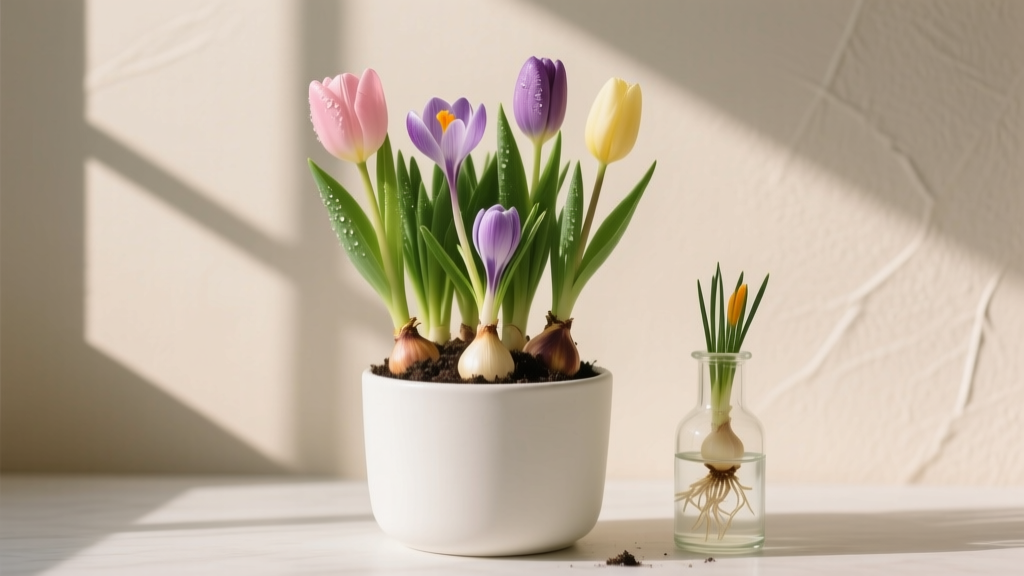
Winter Garden: Forcing Bulbs for Indoor Color
The fastest way to change how winter feels indoors is to start bulbs now—before the post-holiday lull sets in and while you still have enough weeks to hit peak bloom when days are shortest. If you begin forcing in early winter, you can time flowers for midwinter birthdays, late-winter cabin fever, and even early spring holidays. The window is tight: most bulbs need a defined cold period (or careful workaround), then 2–4 weeks of indoor growth to flower. Miss the chill window, and you’ll still get leaves—but not the color you’re after.
This guide is organized by priority so you can act today: what to plant (and chill), what to prune (and clean up), what to protect (from pests and rot), and what to prepare (containers, light, and timing). It’s written for gardeners in real conditions—apartments, basements, garages, and mixed USDA hardiness zones.
Priority 1: What to plant right now (and how to time it)
Pick bulbs based on how quickly you want flowers
If you want blooms fast (2–6 weeks), choose bulbs that don’t require a long chill. If you want classic tulips and daffodils, plan for 12–16 weeks of cold, plus finishing time indoors.
- Fastest color (often 2–6 weeks): paperwhites (Narcissus tazetta), amaryllis (Hippeastrum), some pre-chilled hyacinths.
- Mid-speed (6–10+ weeks): crocus, grape hyacinth (Muscari), miniature iris (Iris reticulata) with chilling.
- Longest (14–20 weeks total): tulips, large daffodils, many hyacinths if you start from unchilled bulbs.
Concrete timing targets to work backwards from:
- 12–16 weeks of chilling for tulips/daffodils/hyacinths is the standard recommendation for reliable bloom.
- 35–48°F (2–9°C) is the typical chilling temperature range; too warm can reduce flowering, too cold can freeze pots.
- Below 50°F (10°C) is when you should stop storing bulbs on a warm counter and get them into chill conditions.
- 2–4 weeks of “finish time” indoors (cool bright room) is common after chilling, depending on bulb type and temperature.
- Keep pots above 28°F (-2°C) if chilling in an unheated garage/shed so the potting mix doesn’t freeze solid.
“For most bulbs used for forcing, a cold treatment of 12 to 16 weeks at 35 to 48°F is required to promote proper root development and flowering.” — Extension guidance on forcing spring bulbs indoors (Iowa State University Extension and Outreach, 2019)
Use this quick comparison to choose your forcing method
| Bulb | Needs chilling? | Chill duration | Expected bloom after potting | Best forcing setup |
|---|---|---|---|---|
| Paperwhite narcissus | No | 0 weeks | 3–6 weeks | Gravel + water or potting mix |
| Amaryllis | No (for initial forcing) | 0 weeks | 6–10 weeks | Potting mix; bright light |
| Hyacinth | Yes (unless pre-chilled) | 12–14 weeks | 2–3 weeks after chill | Pots or forcing vases (pre-chilled) |
| Tulip | Yes | 14–16 weeks | 2–4 weeks after chill | Deep pots; cool finishing room |
| Daffodil | Yes | 12–16 weeks | 2–4 weeks after chill | Pots; avoid heat spikes |
| Crocus/Muscari | Yes | 10–12 weeks | 2–3 weeks after chill | Shallow pans/bowls |
Planting checklist (do this today)
- Choose firm bulbs with no soft spots, mold, or cuts.
- Use containers with drainage holes for soil forcing (a must for rot prevention).
- Fill with pre-moistened potting mix (not garden soil). Aim for “wrung-out sponge” moisture.
- Set bulbs shoulder-to-shoulder for a fuller display; they can be close but not crushed.
- Plant depth: generally bulbs should be covered so the tip is just at or slightly above the surface for forcing (varies by bulb; deeper pots are more stable for tulips/daffodils).
- Water once to settle mix; then keep barely moist during chilling.
- Label every pot with bulb type and date chilling started.
Chilling options that work in real homes
Refrigerator method (most consistent): Put potted bulbs in a fridge set between 35–45°F. Keep them away from ripening fruit (especially apples), which release ethylene gas that can damage flower development. This ethylene caution is repeated across extension recommendations for bulb forcing (e.g., University of Minnesota Extension, 2021).
Unheated garage/shed method (common in cold zones): Works well if temperatures stay mostly 35–48°F. Protect pots from hard freezes by placing them in a cardboard box, cooler, or large tote with ventilation, and pack around them with dry leaves. If your space regularly drops below 28°F, pots may freeze solid, damaging roots.
Outdoor trench method (mild-winter zones): In USDA zones 7–9 where winter soil temps can be too warm for reliable chilling, bury pots in a shaded spot on the north side of the house and mulch heavily. Use a soil thermometer; if the pot zone isn’t staying under 48°F for long stretches, shift to refrigerator chilling for best bloom.
Monthly schedule: start dates for blooms when you want them
Use this schedule as a planning tool; adjust by 1–2 weeks depending on your indoor temperatures. Finishing bulbs in a cooler room (55–65°F) gives sturdier stems than forcing them in a warm room.
| When you want flowers | Start chilling tulips/daffodils/hyacinths | Bring to cool bright room | Start paperwhites | Start amaryllis |
|---|---|---|---|---|
| Late January | Early October | Early January | Mid-December | Mid-November |
| Mid-February | Late October | Late January | Early January | Early December |
| Early March | Mid-November | Mid-February | Late January | Late December |
| Late March | Late November | Early March | Mid-February | Mid-January |
Pot-in-soil forcing: the most forgiving method for beginners
Soil buffering helps prevent temperature swings and water stress. After chilling is complete, move pots to a cool, dim spot for 3–5 days (a mudroom or cool basement window), then into brighter light. Turn pots every few days for straight growth.
Timing tip: Once shoots are 1–2 inches tall and you see roots at drainage holes, they’re ready to transition. If you bring them out too early, stems can stretch and flop; too late, and buds may blast (dry out) if your indoor air is very warm.
Water-forcing (paperwhites and some hyacinths): clean, fast, and risky if too warm
Paperwhites are the winter sprint. Nestle bulbs in pebbles or glass beads with the basal plate just above the waterline; keep water touching roots, not drowning the bulb. Keep them cool (60–65°F) for sturdier stems; warm rooms encourage floppy growth.
Staking trick: Use decorative twigs or a simple ring stake early—once paperwhites lean, it’s harder to straighten them without snapping.
Priority 2: What to prune (and what to clean up) while bulbs chill
Indoor bulb pruning: small cuts, better flowers
Pruning isn’t the main winter job, but a few targeted moves prevent disease and improve display.
- Remove yellowing leaves from forced bulbs only when they detach easily; tugging early can injure the basal plate.
- Deadhead spent flowers (snip the flower stalk) to keep pots tidy. For most forced spring bulbs, you’re growing them for bloom, not for long-term rebloom indoors.
- For amaryllis: after blooms fade, cut the flower stalk 1–2 inches above the bulb neck. Keep leaves growing in bright light to recharge the bulb if you plan to rebloom next year.
Outdoor winter pruning you can do without waking plants up
While your indoor bulbs work, use a mild winter day to reduce pest pressure outside.
- Remove mummified fruit from apple/pear trees to reduce overwintering fungal inoculum.
- Cut out dead, damaged, or crossing branches on dormant deciduous trees when temperatures are above 20°F (-6°C) to reduce brittle breakage.
- Don’t prune spring-blooming shrubs (lilac, forsythia, azalea) now if you want flowers—buds are already set.
Sanitation rule: Disinfect pruners between suspect cuts (70% isopropyl alcohol works) to prevent spreading canker and blights.
Priority 3: What to protect (pests, disease, and winter pitfalls)
Prevent bulb rot: your #1 winter forcing failure
Rot is almost always a moisture + temperature issue. Chilling slows evaporation; containers without drainage or constantly wet mix are the usual culprit.
- Use pots with drainage holes for soil forcing.
- Water lightly during chilling—mix should be just barely damp.
- Keep chilling temps in the 35–48°F band when possible.
- If you see white/gray fuzz (mold) on soil surface, scrape it off and improve airflow; don’t drench the pot.
Watch for fungus gnats and shore flies indoors
Winter forcing often happens in kitchens, basements, or near houseplants—prime fungus gnat territory. They don’t usually kill bulbs, but they signal overly wet media and can spread nuisance levels fast.
- Let the top 1/2 inch of mix dry slightly between waterings after pots come out of chill.
- Use yellow sticky cards to monitor adults.
- Bottom-water once shoots are up to keep the surface drier.
Stop ethylene damage before it starts (especially in refrigerators)
If you chill bulbs in a fridge, keep them away from apples, pears, avocados, and other ripening fruit. Ethylene exposure is associated with poor flower formation and bud abortion in sensitive bulb crops; extension guidance commonly warns gardeners not to store bulbs with fruit (University of Minnesota Extension, 2021).
Prevent floppy stems with temperature discipline
Indoor heat is the silent saboteur. Warm rooms produce fast, weak growth.
- During finishing, aim for 55–65°F in bright light for stout stems.
- Move pots away from heat vents and radiators.
- If stems stretch, shift to a cooler spot and increase light immediately.
Outdoor protection that supports indoor forcing goals
Forced bulbs often scratch the itch for spring—then a warm spell tempts you outside. Protect what’s already in your winter garden so spring isn’t set back.
- Mulch check: In USDA zones 3–6, keep 2–4 inches of mulch over tender perennials after the ground freezes to prevent heaving during thaw/freeze cycles.
- Rodent patrol: If voles are active under snow, keep mulch pulled back from tree trunks and use guards on young fruit trees.
- Deer/rabbit protection: Wrap vulnerable shrubs (arborvitae, yews) or use fencing before deep snow increases browse height.
Priority 4: What to prepare (tools, light, and staged batches)
Set up a forcing “assembly line” for steady winter color
If you pot everything at once, you’ll get a burst of bloom and then nothing. Stagger plantings every 2 weeks for continuous indoor color.
Two-week batching timeline (simple and effective)
- Week 0: Pot the first batch; start chilling immediately.
- Week 2: Pot a second batch; label and chill.
- Week 4: Pot a third batch; check moisture on earlier batches.
- Weeks 12–16: Begin bringing earliest chilled pots to a cool bright room to finish.
- Weeks 14–20: Expect bloom waves depending on species and indoor temperatures.
Lighting: bright windows work—if you manage direction and duration
A south or west window is usually enough for bulb forcing in winter, but rotate pots every few days for straight stems. If you only have a dim window (common in apartments or forested lots), add a small grow light 6–12 inches above foliage for 12–14 hours per day to prevent stretching.
Container choices that reduce hassle
- Deep pots (6–8 inches): better for tulips/daffodils, less tipping.
- Bulb pans (shallow): great for crocus and muscari displays.
- Cachepots (no drainage): only as an outer decorative cover; keep the inner pot draining freely.
Regional scenarios: what to do based on your winter reality
Scenario 1: USDA Zone 3–5 (long, cold winter; unheated spaces available)
If you have a garage, breezeway, or cold cellar, you’re in a strong position. Your main risk is freezing pots solid.
- Chill pots in an unheated space that stays mostly 32–45°F, but insulate pots if temperatures dip below 28°F.
- Check pots every 2 weeks; water lightly if mix is bone-dry.
- Plan your “finish” location now: a cool spare room is ideal. Forcing in a 70°F living room often causes lanky stems.
Outdoor note: In these zones, your average last spring frost may fall between mid-April and late May depending on microclimate. Don’t let a warm week convince you winter is done; protect early-blooming outdoor bulbs from sudden cold snaps with a light frost cloth if buds emerge early.
Scenario 2: USDA Zone 6–7 (variable winter; freeze/thaw swings)
Chilling in a garage can work, but temperature swings can push pots above the optimal chilling range.
- Use a fridge if your garage regularly warms above 50°F during sunny spells.
- If using a garage, place pots on the floor (more stable temps) and inside a vented tote to buffer fluctuation.
- Expect faster finishing indoors; monitor daily once buds show color.
Outdoor note: Freeze/thaw cycles encourage soil heaving. Check newly planted perennials and press them back gently if crowns lift.
Scenario 3: USDA Zone 8–10 (mild winter; chilling is the challenge)
If you’re in a warm-winter region, reliable chilling often requires a refrigerator. Outdoor “winter” may not deliver enough hours under 48°F for tulips and many daffodils to flower well indoors.
- Choose pre-chilled bulbs from reputable suppliers, or chill your own at 35–45°F for the full recommended duration.
- Focus on bulbs that perform with less chill (paperwhites) or those bred for low chill, if available.
- Keep chilled bulbs away from fruit; dedicate a crisper drawer or sealed paper bags with airflow holes.
Outdoor note: Many gardeners in zones 9–10 treat tulips as annuals even outdoors; forcing them indoors can still be worthwhile, but expect you may not be able to “save” bulbs for replanting.
Right-now troubleshooting: diagnose problems before buds fail
Lots of leaves, no flowers
- Most common cause: insufficient chilling time (pulled too early).
- Also possible: chilling too warm (consistently above 48–50°F), ethylene exposure in fridge, or bulbs that were stressed/undersized.
Buds form, then dry up (“bud blast”)
- Sudden shift from cold to hot/dry air; keep finishing temps 55–65°F.
- Underwatering during bud development; water when the top inch of mix is dry, then drain.
- Bulbs too close to a heat vent or sunny window with hot glass; move them back slightly.
Stems flop over
- Too warm + too low light; cool them down and increase light.
- Paperwhites are naturally prone to flopping; stake early and keep cool.
Extension-backed notes to keep your forcing on track
Bulb forcing recommendations are remarkably consistent across university extension programs. Two points come up repeatedly: adequate chilling at the right temperature band, and avoiding ethylene exposure during chilling.
- Iowa State University Extension and Outreach emphasizes cold treatment for most spring bulbs—often 12 to 16 weeks at 35 to 48°F—to promote root development and flowering (ISU Extension, 2019).
- University of Minnesota Extension warns not to store bulbs with ripening fruit due to ethylene gas effects during chilling and storage (UMN Extension, 2021).
Quick “this weekend” action plan
If you only have one winter weekend to get set up, do these in order.
Day 1 (1–2 hours)
- Buy bulbs (or pull from storage) and inspect for firmness.
- Pot up 2–3 containers: one “fast” (paperwhites), one “classic” (tulips/daffodils), one “small bulbs” (crocus/muscari).
- Label with date and target bloom week.
- Put chilling-required pots into fridge/garage at 35–45°F.
Day 2 (30 minutes)
- Set a calendar reminder every 14 days to check moisture and pot the next batch.
- Choose a finishing spot indoors that stays 55–65°F with bright light.
- Place sticky cards nearby if fungus gnats are a known issue in your home.
After bloom: what to do with forced bulbs
Paperwhites forced in water are usually discarded after bloom. For tulips, daffodils, hyacinths, crocus, and muscari forced in soil, you can try to save bulbs, but expect mixed results—forcing uses stored energy hard.
- After flowering, deadhead blooms but keep leaves growing in bright light for 4–6 weeks while watering lightly.
- When leaves yellow naturally, stop watering and let pots dry.
- Store bulbs cool and dry, then plant outdoors in fall. In USDA zones 3–7, they may rebound over 1–2 years; in warmer zones, rebloom is less reliable without sufficient winter chill.
Start one pot today, then another in two weeks. By the time winter is dragging, you’ll have buds rising right on schedule—proof that the season still moves forward, even when the garden outside is asleep.