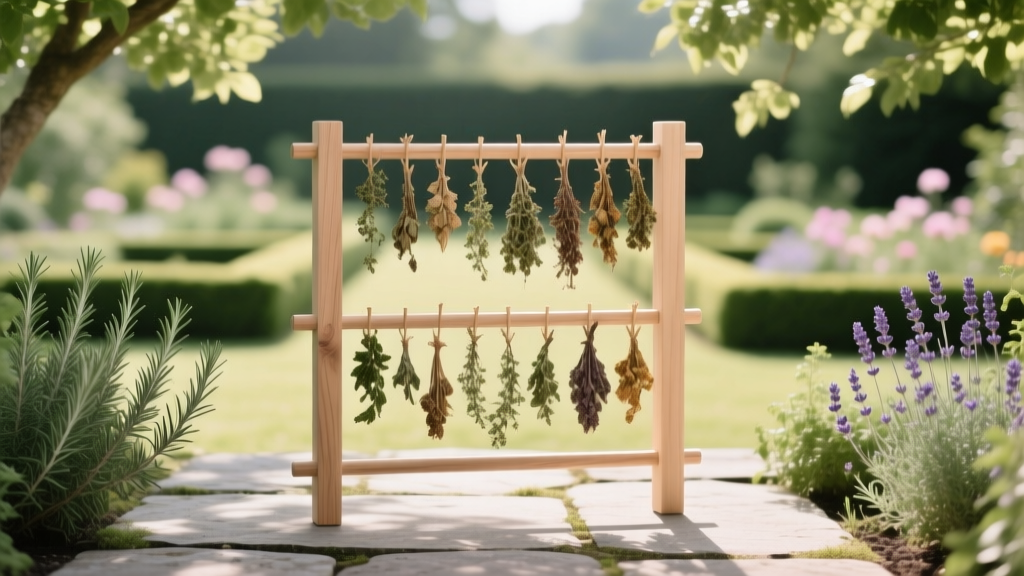
Summer Garden: Building a Simple Drying Rack for Herbs
Summer doesn’t wait. Once daytime highs settle above 80°F and your basil, mint, oregano, and thyme start throwing flower buds, you’ve got a narrow window to capture peak flavor. Leaves are at their best right before bloom; after flowering, many herbs shift energy into seed and the foliage can turn sharper, woodier, or less aromatic. If you harvest now—and dry correctly—you’ll stock a pantry that tastes like July long after the garden slows down.
This is the seasonal sweet spot to do two things at once: keep herbs productive by pruning/harvesting, and set up a simple drying rack so your harvest doesn’t pile up on the counter. The goal is practical: a rack you can build in an hour, hang in a shaded, airy spot, and load weekly through August.
Priority 1: Harvest now (and keep plants producing)
Timing targets for best flavor
Use these concrete cues so you’re not guessing:
- Harvest time of day: mid-morning after dew dries—typically 9–11 a.m.—before the hottest afternoon sun drives off volatile oils.
- Harvest threshold: when stems have 6–8 inches of tender growth or when you see the first flower buds forming.
- Drying conditions goal: keep drying area around 60–80°F with steady airflow; avoid kitchens that spike above 85°F during cooking.
- Dry-time expectation: most leafy herbs dry in 7–14 days on a rack; thicker stems (sage, rosemary) often take 14–21 days.
- Late-summer cutoff: aim to finish major harvests 2–4 weeks before your first average fall frost date so perennial herbs can recover before cold weather (important in USDA Zones 3–6).
How much to cut (so you don’t stunt the plant)
Follow a strict pruning/harvesting rule for summer regrowth:
- Annual herbs (basil, dill, cilantro in cool pockets): you can take up to 1/3 of the plant at a time weekly if it’s well-watered and fed.
- Perennial woody herbs (rosemary, sage, thyme, lavender): take no more than 1/4 of total growth at once; avoid cutting into old, leafless wood.
- Mint family (mint, lemon balm): harvest aggressively, but keep it contained—pots or barriers—to prevent takeover.
Extension guidance consistently emphasizes harvesting before flowering for best quality. The University of Minnesota Extension notes that herbs are generally at peak flavor just before bloom and should be dried quickly to retain oils (University of Minnesota Extension, 2020).
Quick harvest checklist (do this today)
- Use clean pruners or scissors (wipe blades with isopropyl alcohol between plants).
- Strip off damaged leaves; don’t dry blemished foliage (mold risk).
- Rinse only if needed; if you wash, spin or pat very dry before racking.
- Bundle stems loosely—air must move through the bunch.
- Label bundles immediately (basil and oregano look alike once dry).
Priority 2: Build a simple drying rack you’ll actually use
A workable herb rack has three requirements: airflow, shade, and protection from dust/pests. You do not need fancy dehydrators to get excellent results—especially in summer when ambient warmth helps—so long as you keep herbs out of direct sun and away from humidity spikes.
Option A (fastest): Hanging dowel rack for bundles
This is the simplest rack for most gardeners: a frame with 2–4 dowels or a clothesline-style rod system for hanging herb bundles.
- Materials: 2 scrap boards (1x2 or 1x3), 2–4 wooden dowels (3/8"–1/2"), screws, drill, S-hooks or clothespins, twine/rubber bands.
- Size: about 24–36 inches wide fits most closets, covered porches, or basements.
- Build steps:
- Cut two side rails to equal length (24–36").
- Drill aligned holes for dowels, spacing them 6–8 inches apart.
- Insert dowels; screw through the side rails into dowel ends for strength.
- Add two eye hooks at the top corners and hang from a hook or shelf bracket.
- Hang bundles with S-hooks, clothespins, or loops of twine.
Where it works best: a shaded porch, a dry garage with the door cracked, a spare room with a fan on low. Avoid kitchens and laundry rooms where humidity jumps.
Option B (best for loose leaves): Window-screen stack rack
If you prefer drying individual leaves (great for basil, mint, lemon balm), a screen rack dries more evenly and avoids compressed bundles.
- Materials: 1x2 lumber for frames, fiberglass window screen, staple gun, screws, spacers (small blocks), optional cheesecloth cover.
- Build steps:
- Make 2–4 identical frames (e.g., 18" x 24").
- Staple screen tightly across each frame.
- Screw small spacer blocks on corners so frames can stack with 2–3 inches of air gap.
- Place leaves in a single layer; cover lightly with cheesecloth if insects are an issue.
Drying rack placement rules (non-negotiable)
- No direct sun: sunlight bleaches herbs and drives off oils.
- Steady airflow: a box fan on low, pointed near (not directly at) the rack, shortens drying time.
- Relative humidity matters: if indoor humidity stays above 60%, expect slower drying and higher mold risk; use a dehumidifier if needed.
- Keep herbs away from fumes: paint, solvents, vehicle exhaust—herbs absorb odors.
“Drying is a race against enzymes and microbes: warm temperatures plus good air movement preserve quality, while high humidity slows drying and increases mold risk.”
—Paraphrased from extension-based postharvest handling principles for herbs (e.g., University of Florida IFAS Extension, 2018)
For additional safety guidance, the National Center for Home Food Preservation emphasizes drying foods in conditions that prevent moisture retention and spoilage; herbs should be crisp-dry before storage (NCHFP, 2014).
Priority 3: What to plant right now (and what to stop planting)
In mid-summer, herb planting decisions hinge on heat, day length, and your frost timeline. Your drying rack makes the most sense when you’re planting succession herbs that you can harvest repeatedly.
Plant these in summer for late-season drying
- Basil: Start new plants every 3–4 weeks through mid-summer for continuous tender growth. In USDA Zones 3–6, stop starting basil about 8–10 weeks before first frost.
- Dill: Direct-sow every 2–3 weeks for fresh seed heads and leafy fronds; it bolts fast in heat, so choose a spot with morning sun and afternoon shade in hot regions.
- Chives: Plant divisions or starts for a perennial supply; harvest lightly while establishing.
- Oregano/thyme: Transplant starts early in summer so they can root well; harvest modestly the first year.
Pause or shift strategy on these (heat-sensitive)
- Cilantro: Above 75–80°F, it bolts quickly. In hot climates, grow it in partial shade or wait for late summer when nights cool; otherwise plan to dry coriander seed rather than leaves.
- Parsley: It tolerates heat better than cilantro but can stall above 85°F. Keep evenly watered and consider shade cloth in hot zones.
Monthly mini-schedule (use with your rack)
| Month | Garden move | Herb focus | Drying rack workload |
|---|---|---|---|
| June | Pinch and shape plants; start succession basil | Basil, oregano, thyme | Build rack; first big harvest (7–14 day dry) |
| July | Harvest weekly; manage pests; water deeply | Basil, mint, sage, dill | Rack runs continuously; rotate bundles every 2–3 days |
| August | Stop heavy pruning of woody perennials late month in cold zones | Rosemary, thyme, seed heads (dill/coriander) | Longer dry times if humidity rises; add fan/dehumidifier |
| September | Harvest ahead of first frost; pot up tender herbs | Final basil harvest; rosemary cuttings | Clear rack; store herbs; deep-clean rack for next year |
Priority 4: What to prune (for more harvest and better drying)
Pruning in summer is less about appearance and more about keeping plants in vegetative mode—more leaf, less flower. That means more material for the rack, and better quality.
Basil: pinch like you mean it
Each time a basil stem reaches 6–8 inches tall, pinch just above a node so it branches into two. If flower buds appear, remove them immediately and harvest a larger portion of the plant. Feed lightly after a big cut: a compost top-dress or half-strength liquid fertilizer can push regrowth.
Woody herbs: prune early, not late
In USDA Zones 3–6, stop heavy pruning of rosemary/sage/thyme about 4 weeks before your average first frost date so new growth can harden. In Zones 8–10, you have a longer runway, but still avoid stripping plants during extreme heat waves.
Dill and coriander: choose leaves or seed
Once heat triggers bolting, decide your goal. If you want leaf, harvest hard and sow again. If you want seed for pickling or spice, stake flowering stems and let seed heads mature; cut when seeds turn tan and dry them in paper bags for 1–2 weeks.
What to protect: heat, storms, and summer pests that ruin drying quality
Herbs destined for drying must be clean and intact. Summer damage—chewed leaves, mildew, aphid honeydew—doesn’t “dry out and disappear.” It becomes off-flavor, dust, or mold risk in storage.
Heat and sunscald protection
- Watering: deep watering early in the day supports oil production and reduces stress. Aim for consistent moisture rather than daily splashes.
- Mulch: 2–3 inches of straw or shredded leaves moderates soil temperature and reduces splash that spreads disease.
- Shade cloth: In regions with repeated 95°F+ afternoons (common in parts of the South/Southwest), a 30–40% shade cloth can keep basil and parsley producing instead of stalling.
Storm and wind protection (your rack depends on it)
Summer thunderstorms can shred herbs and knock soil onto leaves. Before predicted storms, harvest the tallest, most tender stems and get them onto the rack. After storms, wait until foliage is fully dry before handling to reduce disease spread.
Pest and disease watchlist (and what to do this week)
- Aphids (basil, mint): blast off with water early in the day; follow with insecticidal soap if needed, keeping sprays off harvest-ready foliage. Prevent by avoiding excess nitrogen that drives lush, aphid-prone growth.
- Spider mites (hot, dry weather): stippling on leaves and fine webbing. Raise humidity around plants with morning rinses and improve plant vigor; isolate heavily infested plants.
- Japanese beetles (basil in some regions): hand-pick in the morning into soapy water. Avoid broad-spectrum insecticides that harm pollinators visiting herb flowers.
- Powdery mildew (mint family, late summer): improve airflow, thin dense clumps, water at soil level, and harvest affected stems aggressively. Do not dry mildew-marked leaves—compost them.
- Downy mildew on basil: yellowing between veins and gray/purple fuzz on leaf undersides in humid spells. Space plants, water at the base, and harvest promptly; discard infected leaves (don’t dry).
Drying only works when the input quality is high. If leaves are sticky with honeydew, speckled with mites, or show fungal spotting, you’re better off composting and harvesting fresh regrowth.
What to prepare: a drying workflow you can repeat weekly
The biggest mistake with herb drying isn’t the rack—it’s harvesting more than you can process in a day. Summer success comes from a repeatable rhythm.
Weekly timeline (repeat through the season)
- Day 1 (Harvest day): cut, sort, label; load rack the same day.
- Day 3: rotate bundles or flip leaves on screens; check for any soft spots.
- Day 7: test dryness: leaves should crumble, stems should snap (not bend).
- Day 7–14: strip leaves, store, and reload rack with the next batch.
Storage rules (so your work doesn’t go stale)
- Store in airtight jars away from light and heat (pantry cabinet, not above the stove).
- Label with herb name and date; plan to use within 6–12 months for best flavor.
- Keep leaves as whole as possible; crush only when cooking to preserve aroma.
End-of-batch checklist
- Herbs are crisp-dry (no leathery feel).
- No condensation inside jars after 24 hours (if you see fogging, re-dry).
- Rack is brushed off; any spilled plant material removed (reduces pantry moth issues).
Regional scenarios: adjust your rack and timing to your summer reality
Summer gardening isn’t one season—it’s several different ones depending on heat, humidity, and your frost calendar. Here are three real-world patterns and how to handle them.
Scenario 1: Hot-humid summers (Southeast, Mid-Atlantic; many USDA Zones 7–9)
If nighttime temps stay above 70°F and humidity is persistent, bundle-drying in a closed space can mold. Use a screen rack or very small bundles and add airflow.
- Run a fan on low continuously in the drying area.
- Consider a dehumidifier if indoor humidity sits above 60%.
- Harvest more frequently (smaller batches every 4–5 days) so nothing sits too dense.
Scenario 2: Hot-dry summers (Southwest, interior West; USDA Zones 7–10 with low humidity)
Dry air is a gift—but direct sun and heat are the risk. Herbs can dry too fast in harsh conditions, sacrificing flavor, or get sun-bleached.
- Dry in full shade with strong airflow; avoid outdoor drying in direct light.
- Bundle-drying works well; check as early as Day 5–7.
- Protect garden plants with afternoon shade once highs exceed 95°F for multiple days.
Scenario 3: Short-season northern gardens (Upper Midwest, Northeast; USDA Zones 3–5)
Your summer is intense but brief. The drying rack pays off because you can harvest heavily in July/August, then clear beds for fall crops.
- Plan your “big dry” about 6–8 weeks before first frost—often mid-August in colder microclimates.
- Stop heavy pruning on woody perennials about 4 weeks before first frost so they harden off.
- Be ready to harvest all basil when nights dip below 50°F; quality drops fast.
What to do this weekend: a tight action plan
If you want a pantry full of herbs by late summer, this is the practical sequence.
Saturday (60–90 minutes)
- Build the rack (dowel rack for bundles or screen stack for loose leaves).
- Pick a drying location: shaded, low humidity, good airflow.
- Gather supplies: twine/rubber bands, labels, clean jars.
Sunday (30–60 minutes)
- Harvest: basil first (it overgrows fastest), then mint/lemon balm, then oregano/thyme.
- Sort and load: remove damaged leaves, label bundles, spread leaves single-layer on screens.
- Set airflow: fan on low nearby; keep the area out of direct sun.
Midweek (10 minutes)
- Rotate bundles or stir leaves.
- Scout plants: aphids, mites, mildew; remove problem growth so the next batch is clean.
By the time your garden hits its late-summer stride—when basil wants to flower, mint wants to sprawl, and oregano thickens into a mound—you’ll already have a drying system that matches the pace of the season. Harvest in smaller, regular cuts, dry in shade with airflow, and store crisp-dry leaves in the dark. That’s how you turn a brief window of peak growth into months of flavor without losing a weekend to dehydrators, trays on every counter, or “I’ll deal with it later” piles that end up composted.
Sources: University of Minnesota Extension (2020) guidance on harvesting/drying herbs for best quality; National Center for Home Food Preservation (2014) recommendations on drying foods safely; University of Florida IFAS Extension (2018) principles for drying and moisture control to prevent spoilage.