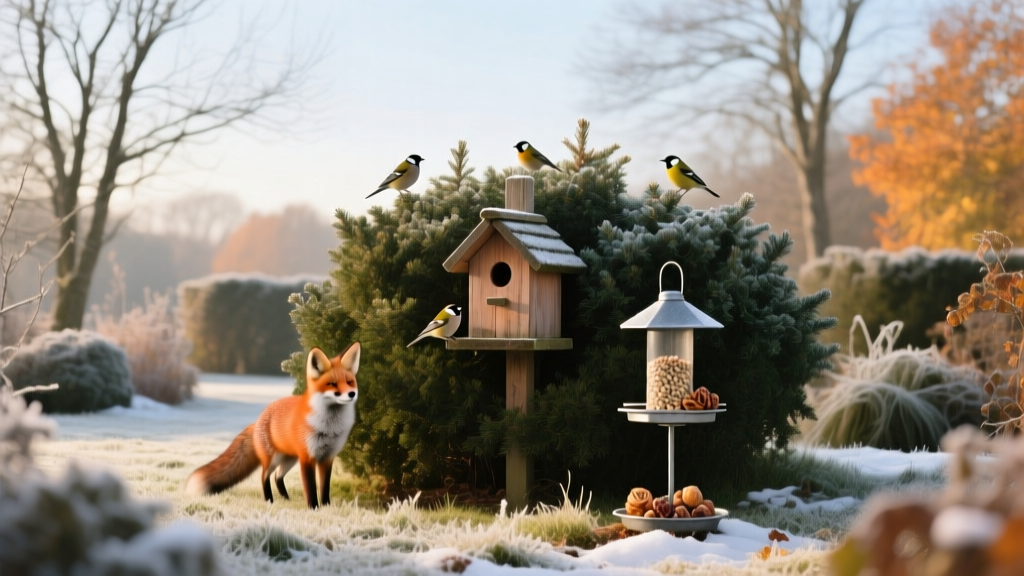
Providing Winter Wildlife Shelter in Your Garden
The window to set up lifesaving shelter for wildlife is short: once nights regularly dip below 32°F, animals shift from “finding resources” to “surviving the next cold snap.” If you wait until your first hard freeze (often 28°F or lower), you’ll still help—but you’ll miss the chance to guide birds, beneficial insects, amphibians, and small mammals toward safer spots before storms, ice, and predators tighten the margins. This week, focus on shelter first, then food and water, then cleanup and prevention.
Use this as a field-ready checklist: build cover in layers (ground, shrub, canopy), keep some “mess,” and protect the places that stay dry. The goal isn’t to make your garden wild; it’s to make it habitable through freeze-thaw cycles, wind events, and midwinter thaws that trick animals into moving at the wrong time.
Priority 1: What to protect right now (shelter comes before feeding)
Create windproof, waterproof cover in three layers
Think like wildlife: they need dry, still air, and escape routes. Build shelter in layers so animals can move without crossing open ground.
- Ground layer: Leave leaf litter under shrubs; add a small brush pile; keep a corner with seed heads and stems standing.
- Shrub layer: Dense evergreen shrubs or twiggy deciduous shrubs block wind and hide birds from hawks.
- Canopy layer: Trees with cavities, ivy-free trunks, and intact bark provide roosts and overwintering sites for insects.
Timing: Do this 2–4 weeks before your average first hard freeze if possible, or immediately if nighttime lows are already under 35°F. Animals begin shifting roosting patterns as cold intensifies, and early shelter placement helps them “train” to use it.
Build a brush pile that stays dry
A brush pile is a winter apartment complex for wrens, sparrows, rabbits, and beneficial predators like ground beetles. The key is structure: a dry core with a loose outer shell.
- Lay down two or three larger logs or thick branches as a base (keeps it off wet soil).
- Crisscross medium limbs to form a dome with air pockets.
- Top with smaller twigs and a light layer of leaves to shed rain/snow.
- Place it 10–20 feet from dense shrubs so animals can dash between cover.
Safety note: Keep brush piles away from structures (at least 30 feet is a good rule) to avoid inviting rodents near buildings, and keep them away from dry grasses if wildfire is a concern.
Delay “perfect” cleanup—leave stems and leaves where they help
Many native bees and beneficial insects overwinter in hollow stems, plant litter, or the top layer of soil. Over-cleaning removes shelter and forces them into riskier spots.
“Many native bees nest in the ground and in plant stems; leaving some bare soil and standing stems can provide important nesting and overwintering habitat.” (Xerces Society guidance summarized; consistent with extension recommendations)
Extension guidance increasingly supports targeted cleanup rather than blanket removal. University of Minnesota Extension notes that many beneficial insects overwinter in plant debris and recommends leaving some stems and leaf litter until spring, then cleaning gradually as temperatures warm (University of Minnesota Extension, 2020).
Protect roosting and cavity habitat (without creating pest problems)
Birds and small mammals rely on cavities and dense foliage. You can add housing, but place and maintain it correctly to avoid disease and predators.
- Bird roost boxes: Install in late fall or early winter; face the entrance away from prevailing winds. Place 6–12 feet high for many small birds.
- Bat houses: In colder zones, focus on proper placement now for spring occupancy; many bats migrate or use caves/mines in winter. (Bat houses are not a guaranteed winter shelter in Zones 5 and colder.)
- Leave snag alternatives: If you can’t keep a dead tree, leave a 6–10 foot tall trunk section (where safe) to provide cavities and perches.
Disease prevention: Clean birdhouses and roost boxes at least once per year. Cornell Lab of Ornithology advises cleaning nest boxes to reduce parasites and pathogens (Cornell Lab of Ornithology, 2019). For winter roost boxes, clean before installation and avoid placing multiple boxes too close together to reduce crowding and disease spread.
Priority 2: What to prepare (infrastructure that keeps working in freezes)
Keep water available when it matters most
Water is often more limiting than food in winter, especially during extended freezes. A shallow, clean water source can be a major survival boost.
- Use a heated birdbath if you have power access. Keep it in a spot with nearby cover but a clear line of sight (reduces ambush risk for birds).
- No heater? Refresh water mid-day when temperatures peak. Even a few hours of liquid water helps.
- Prevent ice hazards: Don’t add antifreeze or chemicals. Use a birdbath de-icer designed for wildlife.
Temperature thresholds: Plan for daily ice when daytime highs stay below 32°F for 3+ consecutive days. In those stretches, a heater becomes the most reliable option.
Stage emergency cover for sudden cold snaps
Winter storms can arrive before you finish projects. Keep materials ready so you can add shelter fast:
- A bale of straw (not hay) for insulating a compost edge or creating a temporary “wild corner.”
- A bundle of evergreen boughs to tuck into shrub bases as windbreaks.
- A spare tarp to cover part of a brush pile during freezing rain (leave openings; don’t seal it).
Set up “safe corridors” through the garden
Animals avoid crossing open lawn in winter. Create a corridor by aligning cover features:
- Brush pile → dense shrub → tall grasses → evergreen tree.
- Keep the corridor within 6–10 feet of cover at all points (so birds can hop shelter to shelter).
Priority 3: What to plant (late-season additions that become shelter)
Plant woody shelter where it will block wind, not light
If your ground isn’t frozen and you can dig, you can still plant in many regions. Focus on woody plants that create winter structure: evergreens, dense shrubs, and berrying natives.
- Evergreen shrubs: Inkberry holly, dwarf conifers, or region-appropriate natives for dense cover.
- Deciduous thickets: Serviceberry, viburnum, dogwood—twiggy structure plus fruit for late winter.
- Native grasses/sedges: Leave standing; they form windbreaks and roost sites for small birds.
Timing and numbers: Aim to plant shrubs at least 4–6 weeks before the ground freezes so roots can begin establishing. In many areas, that’s between late September and mid-November; in milder climates, it can extend into December. Water deeply until the soil temperature drops below about 40°F, when root growth slows significantly.
Use spring-blooming bulbs strategically (not just for flowers)
Bulbs don’t provide winter shelter directly, but they support early-season insects, which supports birds returning or overwintering. Planting now sets up a stronger food chain later.
- Plant bulbs before the ground freezes; many gardeners target 6 weeks before freeze-up.
- Choose a mix of early bloom times to cover late winter and early spring.
Regional timing scenarios for planting
Scenario A: USDA Zones 3–5 (Upper Midwest/Northern New England)
Once nighttime lows regularly hit 25–30°F, your planting window narrows. Prioritize installing evergreens and shrubs early fall, and shift to shelter-building (brush piles, leaf refuges) by late fall.
Scenario B: USDA Zones 6–7 (Mid-Atlantic/Lower Midwest)
You can often plant shrubs into November if soil is workable. Your best return right now is adding dense shrubs and leaving more leaf litter intact—then set up a heated water source when you see a forecast of 3–5 nights below 28°F.
Scenario C: USDA Zones 8–10 (South/Coastal West)
Winter shelter still matters—especially during short cold snaps that catch wildlife off guard. Planting season may be prime now. Focus on evergreen structure, hedgerows, and avoiding overly “clean” winter gardens. Shelter is also heat protection during sudden cold events.
Priority 4: What to prune (and what not to touch until spring)
Do safety pruning now; delay habitat pruning
Pruning can remove overwintering habitat and expose wildlife to predators. In winter shelter terms, prune only what’s necessary for safety and plant health.
- Prune now: Dead, damaged, or dangerous limbs—especially anything that could fall in snow/ice.
- Delay until late winter/early spring: Major thinning of shrubs used by birds for roosting.
- Do not “neaten” perennials: Leave stems standing until spring warmth is consistent.
Timing: If you must prune, choose a dry day when temperatures are above 20°F to reduce brittle breakage and make cleaner cuts. Avoid pruning right before a deep freeze (e.g., a drop from 45°F to 10°F in 24 hours), which can stress some ornamentals.
Skip fall pruning for spring-flowering shrubs
Spring bloomers (like lilac, forsythia, some hydrangeas) often set buds on old wood. Pruning now can remove flowers and reduce cover. If you need to size-control, wait until just after bloom.
Monthly shelter schedule (adjust to your frost date)
Use this as a flexible timeline. If your first frost date is early (Zones 3–5), shift these tasks earlier by 2–4 weeks. If you’re coastal/mild (Zones 8–10), you may shift later and focus more on storm protection than deep-freeze shelter.
| Month / Window | Top Shelter Tasks | Trigger Numbers to Watch |
|---|---|---|
| Late September–October | Plant shrubs/evergreens; leave seed heads; start a brush pile base; reduce garden “tidying.” | Plan for first frost near 36°F; aim for 4–6 weeks before ground freeze for woody planting. |
| November | Finish brush piles; add leaf refuges under shrubs; install roost boxes; set up water plan. | Night lows often 28–32°F; first hard freeze risk increases. |
| December–January | Maintain open water; keep paths to shelter undisturbed; avoid midwinter pruning; check shelters after storms. | Act fast when forecasts show 3+ days with highs below 32°F. |
| February–early March | Continue water; begin gradual cleanup only when warm spells stabilize; prep nesting boxes for spring. | Start staged cleanup when daytime highs reliably reach 45–50°F (region-dependent). |
Quick checklists (do these in order)
48-hour shelter sprint (before a cold front)
- Build or reinforce one brush pile with a dry core.
- Stop removing leaves from under shrubs; move leaves from lawn into beds.
- Check evergreen shrubs for gaps; tuck in conifer boughs at the base to reduce wind tunnels.
- Install or clean a roost box; place it out of prevailing wind.
- Set up a water source and test it through one overnight freeze.
Weekly winter maintenance (15 minutes)
- Refresh water; scrub algae/biofilm on mild days.
- After storms, re-open entrances to brush piles (don’t pack snow into them).
- Scan for rodent tunneling near foundations; relocate shelter features farther out if needed.
- Remove fallen fruit right next to structures to reduce rodent pressure.
Pest and disease prevention that still supports wildlife
Bird feeder hygiene and outbreak awareness
If you feed birds, winter shelter and feeding go hand in hand—but crowding increases disease risk. Keep feeding areas sanitary.
- Rake hulls and droppings under feeders weekly (or move feeders periodically).
- Clean feeders with a 10% bleach solution (1 part bleach to 9 parts water), rinse, and dry thoroughly before refilling.
- If you see sick birds (fluffed, lethargic, swollen eyes), take feeders down for 1–2 weeks and clean everything.
Many extension services emphasize feeder cleanliness to reduce disease transmission among wintering birds (e.g., University of Minnesota Extension, 2020; Cornell Lab of Ornithology, 2019).
Rodent realism: keep shelter away from trouble spots
Brush piles and thick mulch can shelter rodents. You can support wildlife without inviting them into your home.
- Keep brush piles and tall grass 30+ feet from buildings if possible.
- Maintain a 12–18 inch vegetation-free buffer right around foundations.
- Use hardware cloth guards on young trees to prevent vole/rabbit girdling—install before snow cover is consistent.
Overwintering disease management in the garden beds
Not all “leave the mess” advice applies equally. Some plant diseases overwinter on infected debris, so be selective.
- Remove and trash (don’t compost): leaves/stems with clear disease signs (powdery mildew-heavy squash vines, tomato blight debris, rose black spot defoliation).
- Leave in place: healthy perennial stems, native grass clumps, and leaf litter under shrubs (especially away from vegetable beds).
- Rotate shelter zones: Keep your wildlife “messy corner” out of annual vegetable beds to reduce carryover disease pressure.
Three real-world winter shelter setups you can copy
1) Small suburban yard (high predator pressure, limited space)
Prioritize dense cover near the house-facing side of shrubs and create a “zigzag corridor.” Use a compact brush pile behind a shed but keep it 30 feet from the house if possible. Install a roost box on a fence post near shrubs (not isolated in open lawn). Keep the birdbath within 8–12 feet of cover so birds can drink and retreat quickly.
2) Rural or edge-of-woods garden (plenty of wildlife, harsher exposure)
Wind is your main problem. Build a longer hedgerow effect: stagger evergreens and dense shrubs on the prevailing-wind side. Add multiple brush piles spaced 50–100 feet apart so small animals don’t have to cross open snow fields. Leave a wider unmowed strip through winter to function as a movement corridor.
3) Wet, low-lying garden (freeze-thaw and saturated soils)
Focus on dry refuges. Raise brush piles on logs; avoid piling leaves directly in soggy depressions. Add a small mound or berm with native grasses and shrubs to create higher, drier ground. Amphibians and overwintering insects benefit from protected crevices that don’t flood during winter rains.
Timeline: what to do this week, next month, and at thaw
This week (before the next storm cycle)
- Build one dry-core brush pile.
- Stop bagging leaves; relocate them to beds under shrubs.
- Install trunk guards on young trees (especially in Zones 3–6 where snow cover can hide vole activity).
- Test your winter water plan through one freezing night (32°F or below).
Within 2–3 weeks
- Install/clean roost boxes; check placement out of prevailing wind.
- Create a connected shelter corridor across the yard.
- Selectively remove diseased debris from vegetable beds; leave healthy habitat in ornamental/native zones.
At the first consistent thaw
- Do a gradual cleanup as temperatures stabilize—avoid stripping everything at once.
- Clean nest boxes and refresh bedding if you use roost boxes designed for it.
- Reassess: note which areas stayed dry and protected; expand those next fall.
Winter wildlife shelter is built from dozens of small decisions: where you leave leaves, where you allow stems to stand, how you route cover through the yard, and how consistently you provide clean water during freezes. Get the structure in place now, and the rest of the season becomes maintenance—quick checks after storms, selective sanitation, and letting your garden do what it does best: buffer the extremes when the weather is least forgiving.