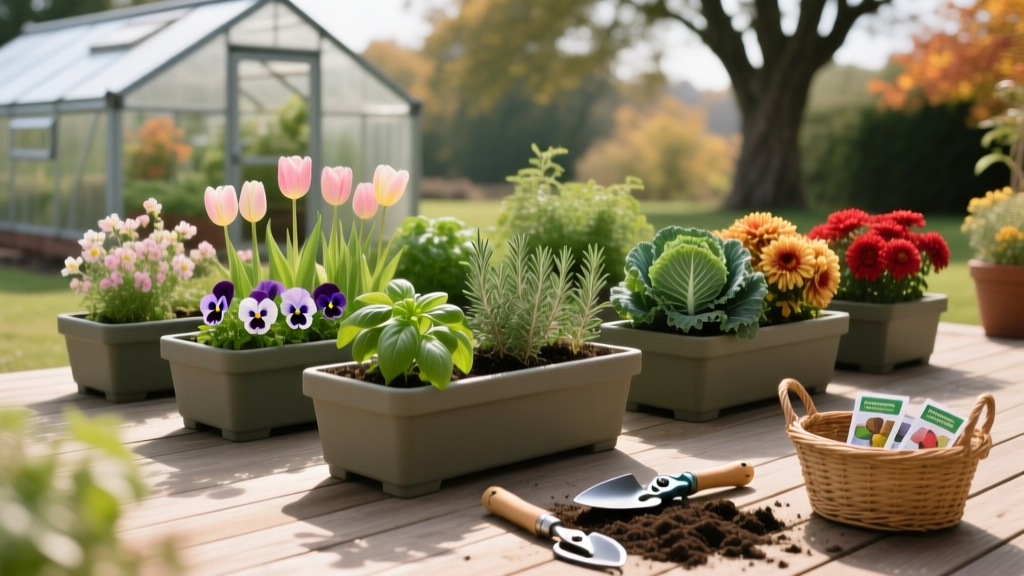
How to Transition Container Gardens Between Seasons
The calendar might say “next season,” but your containers feel the change first: nighttime temps swing, potting mix dries differently, and plants either surge or stall. The upside is you can pivot faster than any in-ground bed—if you act on time. Use this guide as a right-now playbook to swap, refresh, prune, and protect your container garden as seasons shift, with concrete thresholds (temperatures, frost dates, and week-by-week timing) you can actually use.
Quick timing anchors to keep handy: (1) Start warm-season containers only after nights stay above 50°F. (2) Many tender plants take damage around 32°F (frost), and some (like basil) sulk below 50–55°F. (3) Cool-season greens often thrive when daytime highs are 45–70°F. (4) In many U.S. locations, the average last spring frost ranges from March 15–May 30 depending on region and elevation. (5) Plan fall change-outs 6–8 weeks before your average first fall frost.
Think of seasonal transitions as four priorities: plant what fits the next 6–10 weeks, prune what’s holding plants back, protect what you want to keep, and prepare containers and mix so the next round starts clean.
Priority 1: What to Plant (and When) for the Next Season Window
Use temperature triggers instead of the calendar
Containers heat and cool faster than garden soil. That means your “planting date” is less about the month and more about night temperatures and forecast stability. A simple rule:
- Cool-season containers: Start when nights are reliably 35–45°F and days are mostly 45–70°F.
- Warm-season containers: Move outside or plant only when nights are consistently 50°F+ (tomatoes and basil are noticeably happier at 55°F+).
- Hardening-off window: Give seedlings 7–10 days of gradual outdoor exposure before full sun/wind.
“Container media dries out and warms up more quickly than soil in the ground, so monitoring moisture and temperature is essential during seasonal transitions.” — University of Minnesota Extension (2020)
Cool-to-warm transition (late winter into spring)
Best move: Keep cool-season edibles running while you prep warm-season replacements. If you’re 4–6 weeks before your last frost date, you can seed or transplant:
- Leafy greens: lettuce, arugula, spinach (partial shade helps as days warm)
- Brassicas: kale, bok choy (watch aphids as temps rise)
- Herbs: parsley, cilantro (cilantro bolts fast once nights stay above ~55°F)
Warm-season “next up” (after last frost + temperature stability): tomatoes, peppers, basil, zinnias, petunias, sweet potato vine. If nights are still dipping under 50°F, keep these in a bright spot indoors or in a protected porch and harden off gradually.
Warm-to-cool transition (late summer into fall)
This is where container gardeners win: you can reset fast and keep harvesting when raised beds slow down. Count back 6–8 weeks before first frost and start your fall containers:
- Fast greens: lettuce mixes, arugula, mustard greens (often 25–45 days to harvest)
- Roots in deeper pots: radishes, baby turnips, short carrots (choose a container at least 10–12 inches deep)
- Cold-tough ornamentals: pansies/violas and ornamental kale for long color in zones 7–10, and often well into fall for zones 4–6
If your days are still hot (highs > 85°F), place new cool-season plantings where they get morning sun and afternoon shade. In heat, tiny seedlings in black pots can cook.
Season-to-season “bridge plants” that earn their keep
When you’re tired of full tear-outs, use plants that handle the shoulder seasons:
- Chives, thyme, oregano (perennial in many zones; ideal for “always-on” herb pots)
- Swiss chard (tolerates cool nights and keeps going into heat better than spinach)
- Geraniums (Pelargonium) in mild-winter zones (often overwinterable indoors elsewhere)
Priority 2: What to Prune (and What Not to Touch Yet)
Seasonal pruning rules that prevent setbacks
Pruning during transitions is less about shaping and more about avoiding disease and timing regrowth with the next season. A few direct rules:
- Don’t hard-prune tender perennials right before a cold snap; fresh growth is more cold-sensitive.
- Do remove spent annuals as soon as they decline—declining tissue is a pest magnet.
- Pinch to delay bolting on herbs like basil and to keep flowers blooming (deadhead weekly).
Late-summer triage: keep the plant, lose the problem
If your warm-season container is still productive but looks rough (leggy petunias, tired basil, tomatoes with yellowing lower leaves), prune with purpose:
- Petunias/calibrachoa: shear back by 25–40%, then fertilize lightly and water consistently for a flush in 10–14 days.
- Tomatoes in large containers: remove lower leaves touching the mix surface (improves airflow, reduces splash-borne disease).
- Herbs: harvest aggressively, but leave enough leaf area for regrowth (aim to keep at least 50–60% of foliage intact).
Spring cleanup: prune for airflow, not aesthetics
In spring, container plants often emerge unevenly. Focus on removing:
- Winter-killed tips on rosemary or lavender (wait until you see new growth, then cut back to green tissue)
- Crossing stems that trap humidity
- Any stems with cankers, black spots, or mushy tissue
Priority 3: What to Protect (Frost, Heat, Wind, and Pests)
Frost protection: a 3-step, same-day protocol
When a forecast shows nighttime lows at 35°F or below, plan to act—especially for small pots. Use this order of operations:
- Move containers to a warmer microclimate: against the house, under an eave, inside a garage with light, or onto a covered porch.
- Group pots together to reduce exposed surface area and slow heat loss.
- Cover before dusk: frost cloth, old sheet, or row cover. Avoid plastic touching leaves (it can freeze contact points). Remove coverings mid-morning when temps rise above 40°F.
Pay attention to container material. Terra cotta and thin ceramic crack more readily with freeze/thaw cycles. If you live in USDA zones 3–6, treat glazed ceramics as seasonal unless they’re rated frost-proof.
Heat protection: containers can overheat even when air temps feel fine
In late spring and summer transitions, root stress is the invisible yield killer. When daytime highs exceed 90°F for multiple days, roots in dark pots can exceed the air temperature by a lot.
- Shade the pot, not necessarily the plant: wrap pots with burlap, place inside a larger decorative pot, or use a light-colored container.
- Water earlier: aim for morning watering; avoid nightly watering that keeps foliage damp (disease risk).
- Mulch the surface: 1 inch of fine bark or straw reduces evaporation and splash.
Pest and disease prevention during seasonal change-outs
Transitions are peak pest time because stressed plants and leftover debris attract insects and pathogens. Two research-based points are worth acting on:
- Sanitation matters. Many plant disease problems persist in old plant debris and contaminated media. Penn State Extension emphasizes removing infected material and cleaning containers to reduce carryover (Penn State Extension, 2021).
- Overwatering is a root-disease accelerant, especially in cooler weather. University of Maryland Extension notes that “overwatering” is a major cause of container plant failure and contributes to root rot issues (University of Maryland Extension, 2019).
Season-specific watch list:
- Spring: aphids on tender new growth; botrytis (gray mold) in cool, damp spells; fungus gnats if you start seedlings indoors.
- Summer: spider mites (hot, dry); whiteflies on ornamentals; powdery mildew in crowded, humid patios.
- Fall: slugs/snails under dense pansies and greens; lingering mildew on cucurbits; fungus gnats moving indoors with houseplants.
Actionable prevention: remove dead leaves weekly, avoid splashing soil onto foliage, space plants for airflow, and quarantine any plant that arrives from a nursery for 7 days to watch for pests before it joins your main container cluster.
Priority 4: What to Prepare (So the Next Planting Starts Clean and Strong)
Decide: refresh, re-pot, or replace the potting mix
Reusing potting mix can work, but only if you manage salt buildup, compaction, and disease risk. Use this simple decision tree:
- Replace the mix if: the previous plant had clear disease, roots were rotted, you had severe fungus gnat issues, or the mix smells sour.
- Refresh the mix if: plants were healthy and mix still drains well. Remove 1/3 to 1/2 of the old mix and blend in fresh potting mix plus compost (if you use compost, keep it modest—containers need drainage).
- Re-pot (upsize container) if: roots circle densely, water runs straight through, or growth stalled despite feeding.
Clean containers the fast way (and why it matters)
Seasonal transitions are the moment to reset disease pressure. A practical routine:
- Dump old mix (or save only if plants were healthy).
- Scrub inside surfaces to remove mineral crust and biofilm.
- Disinfect, then rinse and dry. Many extension services recommend sanitizing pots to reduce disease carryover; follow label directions for any disinfectant you choose and ensure good ventilation.
Drainage check: before refilling, confirm every container has an open hole. If you use saucers, empty standing water within 30 minutes after watering to discourage root problems and mosquitoes.
Fertilizer reset: reduce waste and prevent tender growth at the wrong time
Feeding should match the season window:
- Heading into summer growth: incorporate a controlled-release fertilizer at potting time; supplement with liquid feed every 10–14 days for heavy feeders (tomatoes, petunias) if growth demands it.
- Heading into fall: back off high-nitrogen feeding; aim for steady, moderate growth. Overfeeding in low light leads to soft tissue that attracts aphids and diseases.
- Overwintering indoors: reduce fertilizer to near-zero for dormant or semi-dormant plants until days lengthen (often late winter).
Seasonal Transition Timeline (Use This as a Working Schedule)
| Timing | Priority tasks | Temperature / frost triggers | Best container moves |
|---|---|---|---|
| 8–10 weeks before last spring frost | Start seedlings indoors; clean pots; refresh mix | Plan for nights still <40°F | Stage empty pots; prep labels; test drainage |
| 4–6 weeks before last spring frost | Plant cool-season greens outdoors in containers | Cool crops tolerate light frost; protect at 32°F | Use light pots; move to sunniest wall |
| 1–2 weeks after last spring frost | Transition to warm-season annuals/edibles | Wait for nights 50°F+ | Harden off 7–10 days; add trellises early |
| 6–8 weeks before first fall frost | Sow/transplant fall greens; remove declining summer plants | Start fall crops when highs dip below 85°F if possible | Shift to morning sun/afternoon shade |
| 1–2 weeks before first fall frost | Frost-protect; harvest; decide what to overwinter | Cover at 35°F; protect tender at 32°F | Group pots; move under cover; reduce watering |
Three Regional Scenarios: What to Do Right Now Where You Live
Scenario 1: Short-season, cold winters (USDA zones 3–5)
Your constraint: late frosts, early fall frosts, and containers that freeze solid. Your advantage is quick resets.
- Spring: run cool-season greens in April/early May while you wait for stable nights above 50°F. Use frost cloth when lows threaten 32°F.
- Summer: choose compact, fast varieties (patio tomatoes, bush beans). Wind can shred plants—stake early and use heavier pots.
- Fall: start fall greens 8 weeks before first frost (often late July to August in colder zones). Keep covers ready; your season can end abruptly.
- Winter: don’t leave damp terra cotta outside. Store empty pots dry. Overwinter herbs indoors with strong light; inspect for mites before bringing plants inside.
Right-now move: if your forecast shows a late cold snap with lows below 35°F, pull all warm-season pots to shelter even if it’s after the last frost date. Containers cool faster than the air forecast suggests.
Scenario 2: Four-season, mid-latitude gardens (USDA zones 6–7)
Your constraint: shoulder seasons can swing wildly—80°F one week, 38°F the next. Your goal is flexibility.
- Stagger plantings: keep one “swing pot” available so you can swap in a cool-season bowl (pansies + greens) when a heat-loving display stalls.
- Use microclimates: south-facing patios buy you a couple degrees at night. That can be the difference between damage and survival when temps dip near 32°F.
- Late summer into fall: start fall containers in partial shade while heat lingers; move them into more sun once highs drop under 75°F.
Right-now move: if you’re 6–8 weeks from first frost, start at least one fall edible container today—greens are far more reliable when established before nights drop into the 40s.
Scenario 3: Mild winter / long growing season (USDA zones 8–10)
Your constraint: heat and pest pressure can be relentless; “winter” is often your best growing season for greens.
- Fall is your spring: begin cool-season containers when nighttime lows drop into the 60s and daytime highs settle below 85°F.
- Summer survival: protect roots from overheating (double-potting, shade cloth, light containers). Watering consistency matters more than fertilizer.
- Winter: frosts may be rare but not impossible. Know your local frost date range and keep covers ready for nights forecast at 35°F.
Right-now move: if you’re approaching the end of extreme heat, clean and reset containers for cool-season herbs and greens. This is when your best-looking, best-tasting containers happen.
Action Checklists You Can Use This Week
The “48-hour season switch” checklist (fastest reliable reset)
- Pull declining plants; bag diseased material (don’t compost if you suspect infection).
- Scrub and sanitize containers; rinse well and dry.
- Check drainage holes; elevate pots slightly if they sit flat on concrete.
- Refresh potting mix (replace 1/3–1/2 with fresh mix).
- Plant for the next 6–10 weeks (cool-season or warm-season based on night temps).
- Water deeply once; then adjust frequency to the new season (cooler weather = less often).
The “frost alert” checklist (when lows approach 35°F)
- Move tender containers to shelter before dusk.
- Group pots and cover with frost cloth (avoid plastic contact).
- Water earlier in the day if soil is dry (slightly moist media holds heat better than bone-dry).
- Uncover mid-morning when temps rise above 40°F.
The “pest prevention at transition” checklist
- Quarantine new plants for 7 days to watch for aphids/whiteflies/mites.
- Remove dead leaves weekly; keep pot surfaces free of debris.
- Avoid overwatering as nights cool (root rot and fungus gnats spike).
- Improve airflow: don’t pack containers tighter as the season gets wetter/cooler.
Expert Notes on Common Transition Mistakes (and Quick Fixes)
Mistake: Planting warm-season flowers the moment the nursery displays them.
Fix: Use the 50°F night rule. If nights are still dipping to 45–48°F, hold tender annuals back, or be ready to move/cover them repeatedly.
Mistake: Reusing potting mix without checking drainage.
Fix: Run a “pour test.” If water sits on top for more than 30 seconds, the mix is compacted—replace it or cut it with fresh potting mix to restore structure.
Mistake: Bringing plants indoors with pests in fall.
Fix: Inspect undersides of leaves, rinse foliage, and isolate. Spider mites and whiteflies explode indoors where predators aren’t present.
Mistake: Feeding heavily right before light levels drop in fall.
Fix: Ease off high nitrogen. Encourage sturdy growth, not lush, soft growth that attracts aphids and mildew.
A simple decision: keep, swap, or overwinter
When you’re staring at a mixed container mid-transition, decide plant by plant:
- Keep if it’s healthy and season-appropriate for the next 6 weeks (or can be protected).
- Swap if it’s declining or mismatched to temperature trends (heat-lovers in fall, cool crops in rising summer heat).
- Overwinter if it’s valuable (rosemary standards, geraniums, favorite peppers) and you can provide light and pest management indoors.
Container gardening rewards gardeners who respond to thresholds, not wishful thinking. Watch the nightly lows, count back from your frost dates, and treat every changeover as a sanitation and setup opportunity—not just a replant. If you do that, your containers won’t “end” each season; they’ll hand off smoothly to the next one with less stress, fewer pests, and better growth from week one.
Sources: University of Minnesota Extension (2020), container care and watering guidance; Penn State Extension (2021), sanitation and disease prevention in ornamental plantings; University of Maryland Extension (2019), container watering and root health recommendations.