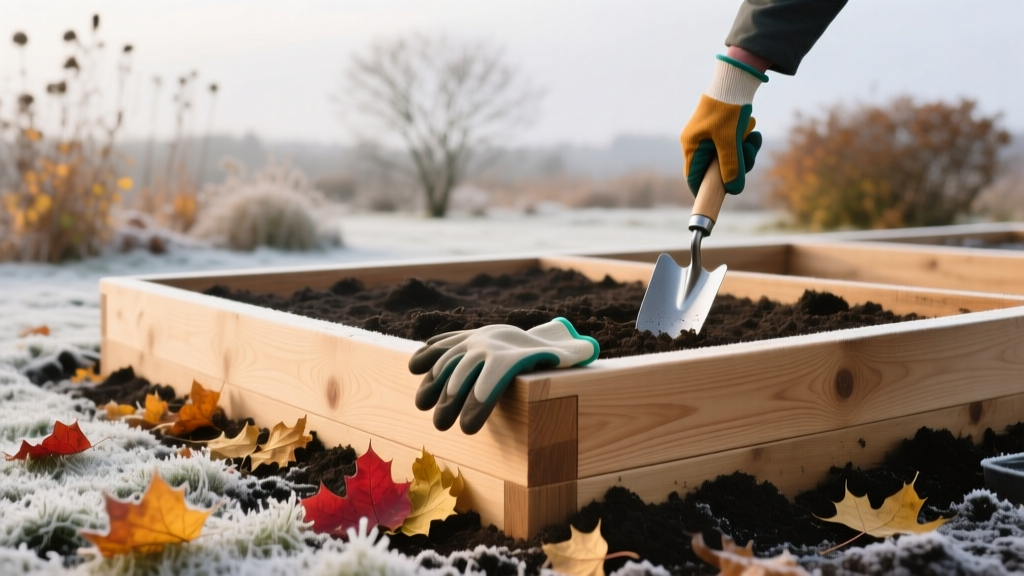
Fall Garden: Building New Raised Beds Before Ground Freezes
The clock starts the moment your nights begin hovering near freezing. Once soil drops toward 40°F, digging gets slower, microbial activity stalls, and a hard freeze can lock you out of bed-building for months. The opportunity: fall is often the easiest time to build raised beds, improve soil, and set up next spring—with fewer weeds, fewer insects, and cooler working weather. If your average first frost is within the next 2–8 weeks, prioritize the raised-bed build now, then backfill with planting, pruning, and protection tasks in the remaining windows.
This seasonal plan is organized by what matters most right now: build and fill beds before the ground freezes, plant what still has time, prune only what’s safe, protect tender crops, and prepare the site so spring starts on easy mode.
Priority #1: Prepare and build raised beds before the freeze line hits
Raised beds can be built almost any time the ground isn’t frozen solid—but in many regions the work becomes frustrating once daytime highs fall below 45–50°F and the top few inches start crusting. Aim to have frames installed and filled at least 2 weeks before your typical first hard freeze (28°F) so soil can settle and you can add mulch or cover crops without rushing.
Timing targets (use these numbers, then adjust to your local frost date)
- 6–8 weeks before first frost (32°F): finalize bed placement, materials, and irrigation plan.
- 4–6 weeks before first hard freeze (28°F): build frames, remove sod, level, and fill.
- 2–4 weeks before hard freeze: plant garlic or cover crops; mulch pathways.
- When soil temps fall to ~40°F: stop expecting fast decomposition; switch to mulching and surface protection.
- After multiple nights below 32°F: assume frozen ground is imminent—finish anchoring, hardware, and hoops.
Step-by-step build that works in real fall conditions
1) Pick the bed site with winter sun and spring drainage in mind. Fall shadows are longer; check afternoon shade from fences and evergreens. Keep beds out of low spots where snowmelt puddles. If you can, orient long beds north–south for balanced spring light.
2) Mark, level, and square the footprint. For a classic 4' x 8' bed, diagonal measurements should match if it’s square. In fall, small leveling errors matter because rain and freeze-thaw will exaggerate them.
3) Decide: remove sod or smother? If ground is still workable, strip sod now (fastest spring start). If you’re already close to freeze, smother with overlapping cardboard and top with 4–6" of compost/topsoil blend.
4) Build frames with durability in mind. Use rot-resistant lumber (cedar, hemlock) or composite. A practical height is 10–12" for most vegetables; go 17–24" if you want deeper root run and easier access. In windy areas, stake corners with 2x2s driven into the ground before it freezes.
5) Add a rodent barrier where it matters. In vole-prone areas, staple 1/4" hardware cloth to the bottom before filling. This is easiest now—much harder once the bed is full.
6) Fill with a settling-friendly mix. Fall rain will compact fluffy mixes. A reliable approach is roughly: 50–60% topsoil, 30–40% compost, and up to 10% aeration material (aged leaf mold, pine fines, or coarse sand depending on what you have). Avoid filling a new bed with only compost; it can settle sharply and may create nutrient imbalances.
7) Water deeply, then top off. After filling, water until evenly moist to settle voids. Expect the bed to sink 1–3" over winter; keep a spare bag of compost or topsoil to top-dress in early spring.
“Fall soil prep pays dividends because you’re giving amendments time to integrate, and spring workloads drop dramatically.” — University Extension guidance commonly emphasizes fall as a prime window for soil improvement and structure building.
Fast checklist: raised bed build (do this in one weekend if needed)
- Confirm first frost date and count back 4–6 weeks
- Choose location (sun + drainage) and mark beds/paths
- Order lumber, screws, corner stakes, and hardware cloth (if needed)
- Level base; remove sod or lay cardboard
- Assemble frames; anchor corners
- Install drip lines or leave a conduit route
- Fill, water to settle, top off
- Mulch paths (wood chips/leaves) before mud season
Priority #2: What to plant now (in and around new beds)
Fall planting is about two categories: overwintering crops (garlic, shallots, some onions) and short-window cool-season greens where frost is close but not immediate. If your first frost is already within 2–3 weeks, focus on garlic and protection rather than new successions of salad crops—unless you have row cover or a cold frame.
Planting windows by frost and soil temperature
Garlic: Plant when soil cools but before it freezes—often 2–6 weeks before the ground freezes. Many growers target soil temps around 50°F down to 40°F. Cloves should root but not put up too much top growth before deep winter.
Spinach, arugula, radishes: If you still have 25–45 days before consistent hard freezes, sow now and plan to cover at 32°F. In Zones 7–9, these can be direct-sown well into late fall.
Cover crops (raised bed friendly): If you want living roots over winter, sow winter rye, oats (winterkills in colder zones), or crimson clover depending on your region. Seed 4–6 weeks before consistent freezes for best establishment.
3 regional scenarios: what “plant now” means in practice
Scenario A: Upper Midwest / Northern New England (USDA Zones 3–5). If your first frost commonly lands between Sept 15 and Oct 10, your fall planting list is short. Prioritize garlic and mulch. Greens are possible only with protection (low tunnel or cold frame). Aim to finish bed construction by the time nights start dipping below 32°F regularly.
Scenario B: Mid-Atlantic / Lower Midwest (Zones 6–7). With first frosts often around Oct 10–Nov 10, you can still seed spinach, arugula, radishes, and transplant hardy lettuces—especially if you use row cover. Garlic planting typically hits a sweet spot in mid-to-late fall when soil cools toward 50°F.
Scenario C: Pacific Northwest coast / Maritime climates (Zones 8–9). You may not freeze hard early, but rainfall is the limiter. Build beds and paths now so winter doesn’t turn your garden into mud. Focus on drainage, mulch, and slug prevention; fall and winter greens can be outstanding if you keep foliage dry and airflow decent.
Planting checklist for new raised beds
- Plant garlic cloves 2–3" deep; mulch 3–6" after first frosts
- Sow a quick green (arugula/radish) only if you have 25+ days and cover available
- Seed a cover crop if you won’t plant garlic in that bed
- Label beds now; frozen soil makes “I’ll remember” a spring myth
Priority #3: What to prune (and what to leave alone)
Fall pruning is where gardeners lose next year’s flowers or invite disease. The rule: prune for safety and sanitation now, save structural pruning for dormancy or late winter, and avoid stimulating tender growth right before cold hits.
Prune now (smart fall cuts)
- Remove diseased foliage (especially anything with spots, blight, or mildew) from vegetables and flowers; don’t compost if disease pressure was high.
- Cut back perennials that flop and harbor pests (daylilies, peonies after frost) once foliage browns.
- Remove dead, damaged, or dangerous limbs on trees/shrubs any time—especially before snow/ice loads.
Do NOT prune now (common fall mistakes)
- Spring-flowering shrubs (lilac, forsythia, many hydrangeas): pruning now removes next year’s buds.
- Roses (major pruning): save for late winter/early spring; in fall, only remove diseased leaves and dead canes.
- Fruit trees (heavy pruning): generally better during dormancy; fall cuts can increase winter injury risk.
For disease management, sanitation matters more than shaping. The University of Minnesota Extension notes that many plant diseases overwinter in infected debris; removing diseased leaves and fruit reduces next year’s inoculum (University of Minnesota Extension, 2019).
Priority #4: What to protect before the first hard freeze
Protection is about buying time and preventing damage from 28°F hard freezes, wind desiccation, and freeze-thaw cycles. Start setting supports before the weather turns—installing hoops in frozen ground is a chore.
Cover strategies that work (and when to deploy them)
Row cover (floating fabric): Put it on when forecasts call for 32°F or lower. It can add several degrees of protection, especially when sealed at the edges. Keep a few spring clamps handy for windy nights.
Low tunnels with plastic: Use plastic only when you can vent it. On sunny fall days, tunnels can overheat even when it’s cold outside. Vent whenever temperatures inside exceed 75°F for cool-season greens.
Mulch for garlic and perennials: Apply after the ground begins to chill and you’ve had a few frosts. A common timing is after 2–3 nights in the 20s°F so rodents are less likely to nest early. Use clean straw, shredded leaves, or pine needles.
New bed soil protection: If you built beds but aren’t planting, cover bare soil with leaves, straw, or a tarp to stop erosion and nutrient leaching.
Pest and disease prevention in fall (don’t carry problems into spring)
Slugs and snails: In wet fall climates, slugs ramp up just as you plant cool-season greens. Keep bed edges weed-free, avoid thick mulch right against seedlings, water in the morning, and use iron phosphate bait if needed. Boards laid overnight can serve as traps—scrape and remove in the morning.
Voles: Deep mulch against bed sides can invite voles. Keep a 2–3" mulch gap at the bed edge, and consider hardware cloth under beds in vole-heavy areas.
Fungal diseases: Powdery mildew and late-season leaf spots explode with cool nights and damp leaves. Remove infected foliage, increase spacing/airflow, and avoid overhead watering late in the day. Cornell Cooperative Extension emphasizes sanitation and rotation as core disease-prevention tools (Cornell Cooperative Extension, 2020).
Soil-borne issues: Don’t put diseased tomato/potato vines into compost if you suspect blight. Bag and discard or hot-compost only if you can sustain high temperatures.
Priority #5: What to prepare for winter so spring is faster (and cleaner)
Fall is when small upgrades save major time later: bed labels, path mulch, water management, and tool care. The goal is to arrive at spring with beds that are stable, weed-light, and ready to plant.
Install paths and edges before mud season
If you do one “future-you” favor, do this: mulch paths now. A 2–4" layer of wood chips or shredded leaves prevents compaction and keeps you from tracking mud into beds. In rainy regions, consider stepping stones or a thicker chip layer.
Soil testing and fall amendments (what matters, what doesn’t)
Fall is an excellent time to pull a soil test so results are ready well before seed-starting season. If your test calls for lime, fall application gives it time to react. Penn State Extension notes lime reacts slowly and benefits from early application; fall timing is often recommended for pH adjustment (Penn State Extension, 2021).
Skip heavy nitrogen now; it’s more likely to leach. Focus on compost, leaves (as mulch or leaf mold), and minerals your soil test recommends.
Set up irrigation now—or at least plan for it
Drip irrigation is easier to lay in a new bed before plants and mulch are in the way. If freezing weather is close, at least run a conduit path or mark where the mainline will go. Before sustained freezes, drain hoses and timers to prevent cracks.
Tool and material prep checklist (30 minutes that prevents spring frustration)
- Clean shovels, pruners, and hoes; oil metal surfaces
- Sharpen pruners now (you’ll use them on spring cleanup)
- Store screws, clamps, row cover, and hoops in one labeled bin
- Order compost/topsoil for early spring top-off (if deliveries are limited in your area)
Fall timeline: a practical monthly schedule for raised beds and garden tasks
Use this as a starting point, then shift earlier or later based on your USDA zone and local first frost date. The key trigger is your first 28°F forecast—when that’s within 2 weeks, shift from building to protection.
| Time window | Raised bed priorities | Garden tasks to pair with it |
|---|---|---|
| Late September | Finalize layout; order materials; mark irrigation routes | Start clearing summer crops; remove diseased plants; note pest hotspots |
| Early October | Build frames; level sites; install hardware cloth; start filling | Sow quick greens if you have 30–45 days; begin row cover setup |
| Mid October | Finish filling; water to settle; top off; mulch paths | Plant garlic in Zones 4–7 (often best here); sanitize beds and stakes |
| Late October | Cover bare beds; add leaves/compost; secure hoops | Protect tender plants ahead of 32°F; harvest before 28°F |
| November (or pre-freeze weeks) | Mulch garlic after several frosts; check bed stability | Drain irrigation; store hoses; finish leaf cleanup to reduce disease carryover |
Quick decision guide: choose the right fall strategy for your zone and weather
If you’re in USDA Zones 3–5 and your 28°F nights arrive early: treat raised-bed construction as the main project. Fill beds, water them in, and cover with mulch or a tarp. Plant garlic if you can, but don’t gamble on greens without protection.
If you’re in Zones 6–7 with a longer shoulder season: you can do both—build beds and still seed or transplant cool-season crops. Keep row cover ready; the first 32°F night often arrives before you expect.
If you’re in Zones 8–10 (or a mild coastal climate): raised beds are still worth building now, but drainage and slug control are often more urgent than frost protection. Planting windows extend longer; focus on airflow, sanitation, and preventing winter soil saturation.
Two-week sprint plan (for gardeners who are behind)
If your forecast shows hard freezes within 14 days, use this compressed plan. The goal is to get beds built and stabilized—even if you leave final soil finesse for spring.
Days 1–3
- Buy/collect lumber, screws, stakes, and soil components
- Mark bed locations and path widths (at least 18–24" paths)
- Clear surface weeds and remove diseased crop debris
Days 4–7
- Assemble frames; level and anchor
- Install hardware cloth (if needed)
- Fill beds; water to settle
Days 8–14
- Top off soil after settling
- Plant garlic (if soil is workable) or seed cover crop
- Mulch paths; cover any bare soil
- Stage row cover/hoops for surprise frost events
Fall rewards the gardeners who act while the soil is still cooperative. Get the frames in, get the soil protected, and you’ll feel the payoff the first mild spring weekend—when your beds are already built, labeled, and ready to plant instead of waiting for thawed ground and delayed deliveries.
Sources: University of Minnesota Extension (2019) on sanitation and disease carryover; Cornell Cooperative Extension (2020) on garden disease prevention through sanitation and rotation; Penn State Extension (2021) on liming timing and slow pH adjustment.