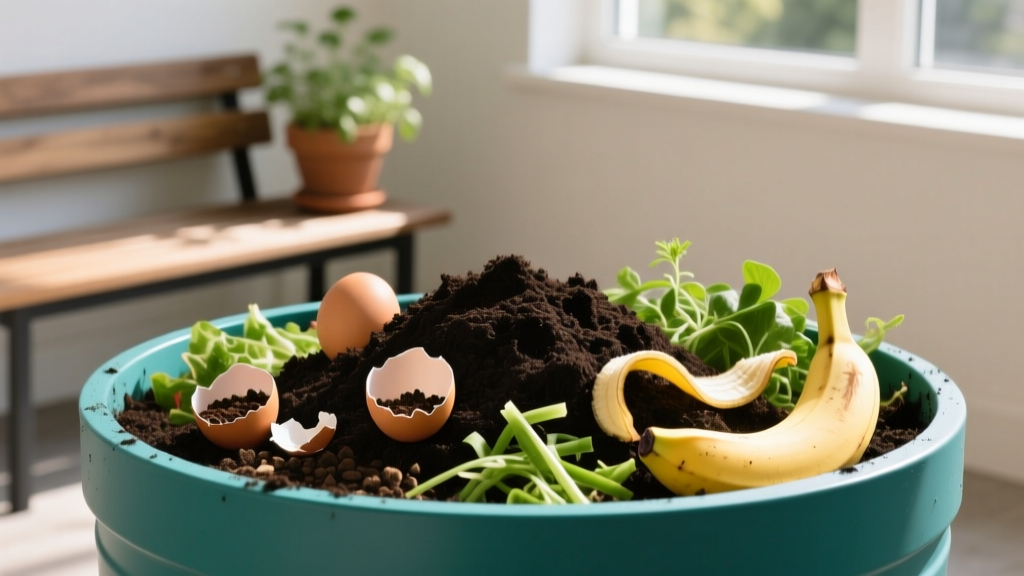
Spring Composting Tips to Speed Up Decomposition
Spring is the make-or-break window for compost: temperatures are rising, microbes are waking up, and you’re about to generate a flood of “greens” from lawn mowing, garden thinning, and kitchen scraps. If you tune your pile now—before it turns into a cold, sour heap—you can have finished compost ready for late spring planting and early summer mulching. The goal over the next 4–8 weeks is simple: keep the pile warm, evenly moist, and well-aerated so decomposition accelerates instead of stalling.
This seasonal checklist is organized by priority—what to plant, prune, protect, and prepare—so you can act right now, regardless of whether you’re gardening in USDA Zone 4 with late frosts or Zone 9 where spring is already edging toward summer.
Priority 1: What to Prepare (because compost speed is decided by structure, moisture, and heat)
Week 1 (or this weekend): Rebuild the pile for airflow and heat
If your compost sat all winter, assume it’s compacted. Compaction shuts down oxygen and slows decomposition. The fastest spring reset is a full “turn and rebuild.”
- Break up mats of wet leaves or grass (these create anaerobic pockets).
- Re-layer with a target blend near 3 parts browns : 1 part greens (by volume).
- Add structure: mix in a bucket or two of coarse material (twiggy stems, chopped stalks) to create air channels.
- Moisten as you rebuild: aim for “wrung-out sponge” moisture—damp but not dripping.
Temperature target: If you want speed, you’re aiming for a hot pile in the 130–160°F range. The USDA Natural Resources Conservation Service notes that composting organisms work best in warm conditions and that proper moisture and aeration are key to efficient composting (USDA NRCS, 2011).
“Composting is most rapid when the composting materials are maintained at 90 to 140°F.” — University of Illinois Extension, Composting guidance (2019)
Use a compost thermometer if you have one. If not, use the hand test: if the pile feels noticeably warm in the center and steams when turned on a cool morning, you’re on track.
Chop materials smaller—spring is the season to shred
Particle size is the silent accelerator. In spring, when you’re generating prunings and dry stalks, take 10 minutes to reduce size:
- Run dry stalks (sunflower, corn, perennials) through a chipper or chop with loppers into 2–4 inch pieces.
- Shred leaves (even “last fall’s leaves” still work): mow over them or use a leaf shredder.
- Chop kitchen scraps; avoid dumping a whole bucket in one spot.
Smaller particles increase surface area for microbes, raising temperature faster—especially helpful when nights still drop into the 35–45°F range.
Dial in moisture now—spring winds can dry piles fast
In many regions, spring alternates between soaking rains and drying winds. Compost that swings between waterlogged and bone-dry won’t heat consistently.
- If soggy: add browns (shredded leaves, straw, shredded cardboard), turn to vent, and cover during heavy rain.
- If dry: water in layers as you turn (don’t just spray the top). A rough benchmark is 1–2 gallons per wheelbarrow of dry browns added, adjusted by feel.
Covering matters: A simple tarp or lid keeps spring rain from saturating the pile and leaching nutrients. Leave a gap for airflow.
Use “starter” inputs correctly (and skip the myths)
You don’t need commercial activators if you manage carbon, nitrogen, moisture, and air. But spring is a good time to inoculate a slow pile:
- Add 1–2 shovels of finished compost or healthy garden soil during rebuilding.
- If you have a hot pile already, mix a portion into a new bay to seed microbes.
Avoid adding garden soil in thick layers (it can compact). Mix it lightly through the pile.
Fast-turn compost method for spring (18–30 days when conditions cooperate)
If you want compost ready for late spring planting, run a hot, actively managed pile:
- Build a pile at least 3 ft x 3 ft x 3 ft to hold heat.
- Keep mix near 3:1 browns:greens by volume.
- Monitor temperature; when it peaks then begins to drop, turn the pile.
- Turn every 3–7 days during the first 2–3 weeks.
Under warm spring conditions, frequent turning can keep oxygen high and decomposition fast. If your pile never warms above 100°F, it’s usually too dry, too small, too carbon-heavy, or compacted.
Priority 2: What to Protect (pest, odor, and disease prevention in spring)
Stop spring odors before they start: prevent anaerobic zones
Odor is your early warning sign. In spring, piles often go anaerobic after the first big grass clipping dump or a week of rain. Fix it immediately:
- Turn the pile to introduce oxygen.
- Add browns (shredded leaves/cardboard) to absorb moisture and balance nitrogen.
- Break up clumps of grass; never add grass thicker than 1–2 inches per layer.
University of California Agriculture and Natural Resources emphasizes that compost problems like odors are typically due to too much moisture and not enough oxygen (UC ANR, 2016).
Keep spring pests out: rodents, flies, and raccoons
As temperatures rise above 50°F, pest activity increases. Tighten your system now.
- Bury food scraps at least 8–12 inches deep in the pile’s center.
- Skip meat, dairy, oily foods (they attract pests and slow composting).
- Use a lid or enclosed bin in urban/suburban yards, especially in Zones 6–9 where pests stay active longer.
- Freeze scraps until you have enough to mix in thoroughly; this prevents “one big wet spot” that draws flies.
Reduce plant disease carryover (especially after wet springs)
Spring cleanup creates a temptation to compost everything. Be selective if you want compost you can safely spread around vegetables.
- Do compost: healthy leaves, non-diseased plant residues, chopped stems, annual weeds before seed set.
- Avoid composting at home (unless you maintain a verified hot pile 130–160°F): plants with powdery mildew-laden leaves, tomato/pepper foliage with blight, and weeds loaded with mature seeds.
If you do run a hot pile, keep it in the 131°F+ range for several days and turn so all material reaches the hot center. That’s the principle behind pathogen reduction standards used in managed composting systems.
Priority 3: What to Prune (and how prunings can supercharge your compost)
Time pruning to your frost window—and feed the pile correctly
Spring pruning generates the perfect “structure browns” that help compost breathe. Timing depends on your region and frost date.
- Zones 3–5 (late frost): major pruning often falls 2–4 weeks before last frost. Many areas see last frost around May 5–25.
- Zones 6–7 (mid frost): prune in the window from mid-March to mid-April; last frosts commonly fall April 5–20.
- Zones 8–9 (early frost or none): pruning may be February–March; compost may already be heating strongly by March.
Composting prunings: Chip woody prunings or cut them small. Add in thin layers, mixed with greens. Woody chunks slow decomposition but improve airflow—use them intentionally.
Weed now, compost wisely: spring weeds can speed or sabotage decomposition
Early spring weeds are usually nitrogen-rich “greens.” They’re valuable compost fuel if handled correctly.
- Compost weeds before they flower or set seed.
- Shake off excess soil (too much soil compacts a pile).
- Mix weeds with shredded leaves or cardboard to prevent slimy mats.
If you already missed the timing and weeds have seeds, bag them for municipal hot composting if available.
Priority 4: What to Plant (using compost at the right time, and planting to feed your compost system)
When compost is ready for spring beds
Compost is “finished enough” for most garden use when it’s dark, crumbly, and smells earthy—not sour or ammonia-like. In many yards, a hot pile started in early spring can be usable in 4–8 weeks, while a cooler pile may take 3–6 months.
Use timing cues:
- Apply a thin top-dress to beds 2 weeks before planting if compost is still slightly active.
- For seed-starting mixes, use only well-finished compost; active compost can inhibit germination.
- If your soil is still cold (below 50°F), compost helps, but don’t over-apply; cold, wet soils can stay waterlogged.
Plant “compost support” crops: fast spring cover crops and biomass builders
If you’re short on browns or greens, plant with compost in mind. Spring is ideal for quick biomass that feeds next season’s compost.
- Cool-season cover crops (early spring): oats, field peas (where appropriate) for quick growth before summer heat.
- Edible “thinning greens”: sow lettuce, spinach, and radish thickly; thinnings become compost greens.
- Comfrey (perennial, where appropriate): produces heavy green biomass later in spring/summer for compost activation (site it carefully).
Use your local frost date to schedule: sow cool-season crops about 4–6 weeks before last frost, or when soil is workable and daytime highs consistently reach 50–60°F.
Monthly spring composting schedule (fast compost focus)
| Time Window | What to Do | Targets to Hit | Common Spring Mistake |
|---|---|---|---|
| Early spring (Weeks 1–2) | Turn/rebuild overwintered pile; shred leaves; start new hot pile | Pile size ≥ 3x3x3 ft; moisture like wrung sponge | Adding a huge layer of wet grass that turns slimy |
| Mid spring (Weeks 3–5) | Turn every 3–7 days; add alternating thin layers of greens/browns | Core temp 130–160°F; no ammonia smell | Letting the pile dry out in wind; only watering the top |
| Late spring (Weeks 6–8) | Let compost “cure” 2–3 weeks; screen if desired; apply to beds | Temp near ambient; earthy smell; no recognizable scraps | Using still-hot compost directly under seedlings |
Three real-world spring scenarios (and what to do differently)
Scenario 1: Cold northern spring (USDA Zones 3–5) with freeze-thaw nights
If nights are still dropping below 32°F and daytime highs hover near 45–55°F, your pile loses heat fast. Your best levers are pile size and insulation.
- Build bigger than you think: aim for 4 ft x 4 ft x 4 ft if materials allow.
- Insulate sides with straw bales or bags of leaves.
- Delay frequent turning until the pile has clearly heated; turning too soon can dump heat.
- Use more “hot” greens early (coffee grounds, fresh grass in thin layers) balanced with shredded browns.
Timing marker: Start your hot pile about 6–8 weeks before last frost if you want finished compost for early summer. In many Zone 4 areas with last frost around May 15, that means late March.
Scenario 2: Wet spring in the Pacific Northwest or similar maritime climates
When rain is persistent and the pile stays cool, compost often turns anaerobic. Here, the priority is keeping oxygen in and excess water out.
- Keep the pile covered with a breathable tarp or lid.
- Increase coarse browns (twigs, shredded prunings) to improve airflow.
- Turn on a dry day, then re-cover.
- Consider a bin with a roof or place the pile where it avoids roof runoff.
Temperature marker: If your pile can’t hold above 110°F, it’s usually too wet or too small for the conditions. Keep rebuilding with dry browns until it holds warmth.
Scenario 3: Warm early spring in the Southeast/Southwest (USDA Zones 8–10)
In warm zones, decomposition can sprint—then stall when piles dry out. Ants and flies also ramp up quickly as temps rise above 70°F.
- Water more often, but in layers; check moisture every 2–3 days during dry spells.
- Use a lid to reduce evaporation and pests, but don’t seal it airtight.
- Bury kitchen scraps deep and mix thoroughly to prevent flies.
- Turn more frequently (every 3–5 days) if the pile is hot and you’re aiming for speed.
Timing marker: If your last frost is around March 1–15 (common in parts of Zones 8–9), start your hottest compost push in February so compost is ready for April feeding and mulching.
Spring compost acceleration checklist (printable-style)
Right now (next 48 hours)
- Turn the pile completely; rebuild with mixed materials
- Add shredded browns to prevent matting (leaves/cardboard)
- Check moisture; adjust to wrung-sponge dampness
- Cover the pile to control spring rain swings
This week
- Start collecting browns: shred paper/cardboard, save dry leaves
- Chop prunings to 2–4 inch pieces (or chip)
- Begin temperature tracking (goal 130–160°F for hot compost)
Next 2–4 weeks
- Turn every 3–7 days once the pile heats and begins to cool
- Layer grass clippings thinly (1–2 inches) with browns
- Keep pests out by burying food scraps 8–12 inches deep
Common spring materials: what speeds things up vs. what slows you down
Fast “greens” (use in thin layers, always mixed)
Fresh grass clippings, coffee grounds, young weeds, vegetable scraps, spent annuals. These heat the pile quickly but can turn slimy if added in thick mats.
Reliable “browns” (spring gold for balancing wet greens)
Shredded leaves, straw (seed-free), shredded cardboard, paper egg cartons, chopped dried stalks. The more shredded, the faster they break down.
Slow or tricky inputs (use intentionally)
- Woody sticks: great for airflow, slow to break down unless chipped.
- Pine needles: fine in moderation; mix well to avoid dry pockets.
- Large amounts of ash: can raise pH; use sparingly and mix thoroughly.
Quick troubleshooting: when the pile won’t heat in spring
If the pile is cold and wet: add shredded browns, turn, and cover. Wet compost is often oxygen-starved.
If the pile is cold and dry: water while turning, focusing on dry layers inside. Dry compost can’t decompose quickly because microbes need water to function.
If it smells like ammonia: too much nitrogen (greens). Add browns immediately and turn.
If it heats once then stops: it ran out of easily available nitrogen or oxygen. Turn and add a balanced mix (greens plus shredded browns).
If it attracts pests: bury scraps deeper, reduce food scraps, and switch to an enclosed bin. Keep a “brown cap” layer (2–3 inches of leaves/shredded cardboard) on top after each addition.
Use compost at the right moment in spring beds (and avoid spring disease pressure)
Spring disease pressure often rises with cool nights and wet leaves. Compost helps plants, but it’s not a cure-all—apply it in ways that reduce disease risk.
- Top-dress around perennials and shrubs, keeping compost a few inches away from stems to reduce rot.
- In vegetable beds, spread 1/2–1 inch of finished compost and lightly incorporate only if soil isn’t overly wet.
- Mulch after soil warms (often when soil is consistently above 50–55°F) to avoid keeping it too cold and damp.
If you’re dealing with slug-heavy springs (common in wetter regions), keep compost and mulches pulled back from tender seedlings, water in the morning, and avoid leaving dense, wet debris at the soil surface.
References (Extension and research)
USDA Natural Resources Conservation Service (NRCS). 2011. Composting technical guidance emphasizing moisture and aeration for effective decomposition.
University of Illinois Extension. 2019. Composting guidance noting rapid composting temperature ranges and management factors.
University of California Agriculture and Natural Resources (UC ANR). 2016. Compost management guidance addressing odor control through oxygen and moisture balance.
As spring progresses, keep your compost system tied to your weekly garden rhythm: every mowing day becomes a chance to add thin layers of greens, every pruning session becomes a chance to add shredded structure, and every rainy stretch becomes a reminder to cover and aerate. Stay consistent for the next 4–8 weeks, and you’ll be turning spring’s messiest outputs into the compost you’ll be glad to have when summer heat arrives.