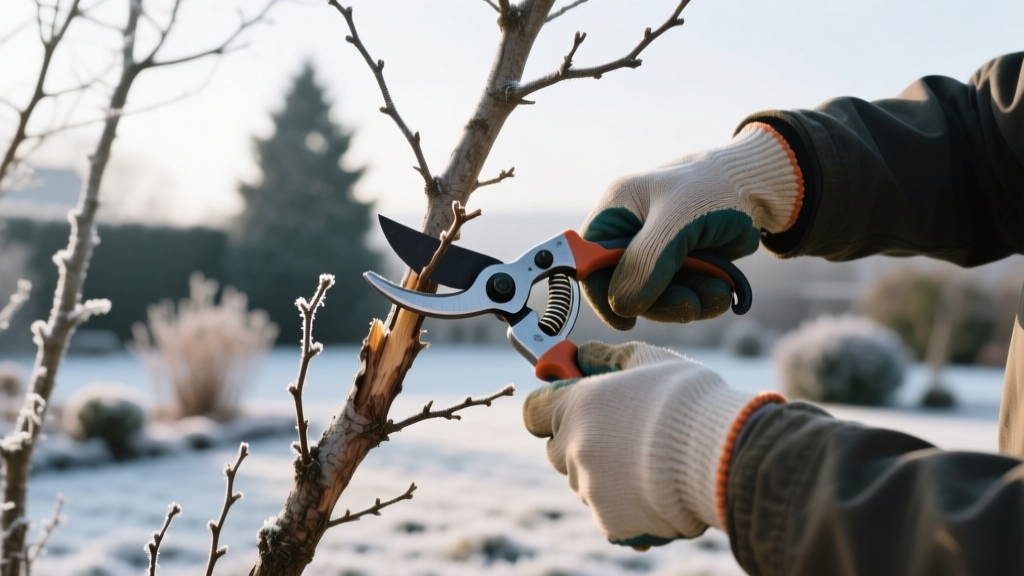
What to Prune in Winter While Dormant
Winter’s quiet weeks are the fastest way to “get ahead” without racing the calendar. When plants are dormant, you can see structure clearly, remove problems before spring sap flow, and reduce pest pressure before populations wake up. The tradeoff: prune the wrong plant at the wrong time and you can cut off this year’s flowers or invite dieback during a cold snap. Use this guide as a timely checklist for what to do right now—prioritized, date- and temperature-driven, and tailored to common regional realities.
Rule of thumb: schedule most dormant pruning during your coldest stretch after plants are fully dormant but before buds swell. In many areas that’s late January through early March. If you’re unsure, watch the buds: firm, tight buds = safe window; swollen buds = you’re late.
Priority 1 (Do First): What to Protect
Protecting plants from winter damage is the foundation. Pruning is useful, but winter injury and rodent damage can erase those gains overnight—especially when temperatures whip-saw.
Temperature triggers to act on
- Before the first hard freeze (often below 28°F for several hours): water evergreens well if the soil isn’t frozen.
- When forecasts predict ≤ 20°F after a warm spell: delay pruning of borderline-hardy plants and focus on protection (wrapping, windbreaks).
- If soil is frozen more than 1–2 inches deep, avoid driving stakes close to woody roots; use existing supports.
Protection checklist (this week)
- Refresh mulch to 2–4 inches over root zones, keeping mulch 3–6 inches away from trunks to prevent rot and vole cover.
- Install trunk guards on young fruit trees (apple, pear, cherry) against rabbits and voles; guards should extend 18–24 inches above the expected snow line.
- Shake heavy snow from broadleaf evergreens and arborvitae to prevent splaying; use soft ties for multi-stem evergreens.
- Check anti-desiccant sprays on evergreens in windy sites; reapply only when labels allow and temperatures are above freezing.
Pest and disease prevention you can only do in dormancy
Winter sanitation is pest control. Remove overwintering “homes” now and you’ll reduce spring outbreaks without spraying on bloom.
- Pick up mummified fruit under and in trees to reduce brown rot and apple scab carryover.
- Remove egg masses (spotted lanternfly can lay eggs on outdoor items; scrape into alcohol or sealed bag if found).
- Prune out cankers on apples/pears and burn or trash infected wood (don’t compost).
- Disinfect tools between suspect cuts (70% isopropyl alcohol works quickly; allow contact time).
“Dormant pruning and sanitation reduce the amount of disease inoculum and insect pests that carry over into the next season.” — University of California Agriculture and Natural Resources (UC ANR) Integrated Pest Management guidance on dormant season practices (2019)
Priority 2: What to Prune (Dormant Targets)
The best winter pruning targets share one trait: they flower on new wood or they’re grown for structure and fruiting spurs. The biggest exceptions are spring-flowering shrubs that bloom on old wood—those are typically pruned after flowering.
Timing window: choose the right weeks
- Weeks 2–6 after your coldest period begins: ideal for most fruit trees and deciduous shade trees (often late January–February).
- 4–6 weeks before average last frost: finish most dormant pruning to avoid stimulating tender growth too early. Example last frost dates: March 15 (warm coastal), April 15 (mid-latitude), May 15 (cold interior/high elevation).
- Avoid pruning when temperatures are below 20°F; brittle wood can tear and wounds may not cut cleanly.
Prune these in winter (safe, high payoff)
Fruit trees (apple, pear, plum, cherry—where hardy): Dormant pruning shapes structure, improves light penetration, and reduces disease by increasing airflow. Focus on removing dead/diseased wood, crossing branches, and overly vigorous upright shoots (water sprouts).
- Apples & pears: thin crowded spurs lightly; keep a strong central leader (most modern systems) unless trained otherwise.
- Peaches/nectarines (where grown): often pruned in late winter closer to bud swell to assess winter kill; many growers target February–early March.
- Grapes: prune during dormancy (often January–March) before sap flow (“bleeding”) gets heavy; select canes for your training system and remove the rest.
Roses (zone-dependent): In USDA zones 7–9, many roses can be pruned in late winter as buds begin to swell. In zones 4–6, prioritize winter protection and wait until you can see live wood reliably—often when forsythia blooms (a practical phenology cue).
New-wood bloomers (prune now): These bloom on current season growth, so winter pruning won’t sacrifice flowers.
- Panicle hydrangea (Hydrangea paniculata)
- Smooth hydrangea (Hydrangea arborescens)
- Beautyberry (Callicarpa)
- Summer-blooming spirea (many types)
- Crape myrtle (zones 7–10): prune lightly for structure; avoid topping (“crape murder”).
Deciduous shade trees (structural work): Winter is ideal for many species because branch structure is visible, and pathogens/insects are less active. Remove deadwood, improve branch spacing, and eliminate rubbing/crossing limbs.
Perennials and ornamental grasses: You can cut back now if you want tidiness and fewer overwintering pests, but consider leaving some standing stems for birds and beneficial insects until late winter. Cut grasses back to 4–8 inches before new growth begins.
Don’t prune these now (common winter mistakes)
- Spring-flowering shrubs that bloom on old wood: lilac, forsythia, azalea, rhododendron, mockorange, many viburnums. Prune right after flowering or you’ll remove buds formed last year.
- Oaks and elms in oak wilt / Dutch elm disease regions: avoid pruning during high-risk transmission periods; defer to local guidance. In many regions, winter is lower risk, but confirm local restrictions.
- Birch and maple: winter pruning can lead to noticeable sap flow late winter. It’s usually not fatal, but if aesthetics matter, prune in mid-summer or very early dormancy.
How much to prune: practical limits
- For most established woody plants, remove no more than 25–30% of the canopy in one season.
- For neglected shrubs, use renewal pruning over 2–3 winters: remove the oldest stems at the base each year.
- Always remove dead, diseased, and broken wood immediately—season doesn’t matter.
Research-backed note: Many extension services recommend dormant pruning for apples/pears to improve canopy light distribution and reduce disease pressure. For example, Penn State Extension notes that pruning opens the canopy for better spray coverage and airflow, key to disease management (Penn State Extension, 2023).
Priority 3: What to Prepare (Before You Cut)
Preparation is what turns winter pruning from “random cutting” into a predictable spring payoff. Spend 30 minutes planning and you’ll avoid removing fruiting wood or causing weak structure.
Tool prep checklist (do this today)
- Sharpen hand pruners and loppers; a clean cut heals better than a crushed one.
- Clean blades and handles; disinfect when moving between plants with disease symptoms.
- Stock a small kit: alcohol wipes, rag, gloves, pole pruner, pruning saw.
- Set a debris plan: tarp for hauling branches; separate diseased wood for disposal.
Look before you cut: a 5-minute plant assessment
- Identify the plant and whether it blooms on old or new wood.
- Stand back: decide the final size and shape you want at maturity.
- Find and tag: deadwood, crossing limbs, narrow crotches, and inward growth.
- Locate the strongest framework branches (these stay).
- Plan your sequence: remove big problems first, then refine.
Regional reality checks (3 real-world scenarios)
Scenario 1: Cold winters, deep snow (USDA zones 3–5; Upper Midwest, interior Northeast, mountain valleys)
Prioritize protection and timing. Do your structural pruning during a stable cold period in February, but avoid cutting right before a plunge to -10°F or colder. Wait to assess dieback on borderline-hardy shrubs until late winter; you’ll see which tips are truly dead when buds swell. Use tall trunk guards because snow raises the “browsing line” for rabbits.
Scenario 2: Mild winters, early springs (USDA zones 7–9; Mid-Atlantic coastal, Southeast, parts of the West Coast)
You may have a longer pruning window, but buds can swell early—sometimes by late January. Plan to prune fruit trees by mid-February and watch for premature growth after warm spells. Fire blight management begins with good structure and sanitation now, especially on pears and susceptible apples.
Scenario 3: Mediterranean/West Coast with winter rain (USDA zones 8–10; coastal California, similar climates)
Avoid pruning during extended wet periods to limit disease spread and poor wound drying. Prune on dry days and improve airflow aggressively in dense ornamentals. Slug and snail habitat increases with debris—clean up prunings promptly. UC ANR emphasizes dormant season cleanup and pruning as part of integrated disease prevention (UC ANR IPM, 2019).
Priority 4: What to Plant (Limited—but Strategic)
Winter isn’t dead time for planting everywhere. The key is soil temperature and workability. If soil is frozen or waterlogged, wait. If you can dig and the ground drains, winter planting can work for certain crops and bare-root stock.
Planting opportunities by condition
- When soil is workable and above ~40°F: plant bare-root fruit trees and shrubs in milder regions (often zones 7–9) for strong root establishment before heat.
- 4–6 weeks before last frost: start onions, leeks, and cool-season seedlings indoors in colder zones; check your local last frost (commonly April 15 to May 15).
- Anytime ground isn’t frozen (zones 6–9): plant garlic in late fall/early winter in some areas, but if you missed it, plant as soon as you can work soil; yields may be smaller.
What to order now (so you’re not stuck in spring)
- Certified disease-resistant fruit tree varieties appropriate to your USDA zone.
- Replacement canes for berries (raspberries/blackberries) and trellis supplies.
- Dormant oil (if recommended for your crops) and labeled fungicides—only if you actually need them and plan to follow local guidance.
Dormant Pruning Targets: Quick Comparison Table
| Plant | Prune in Winter? | Best Timing Window | Primary Goal | Big Caution |
|---|---|---|---|---|
| Apple/Pear | Yes | Late Jan–Feb; finish ~4–6 weeks before last frost | Structure, light, airflow, fruiting wood balance | Don’t remove too much spur wood at once |
| Peach/Nectarine | Yes (often later) | Feb–early Mar after worst cold passes | Stimulate new fruiting shoots | Prune too early and you may misjudge winter kill |
| Grapes | Yes | Jan–Mar before heavy sap flow | Control vigor; set fruiting canes/spurs | Overcropping if you leave too many buds |
| Hydrangea paniculata/arborescens | Yes | Late winter before new growth | Bigger blooms; tidy structure | Don’t confuse with bigleaf hydrangea (old wood) |
| Lilac/Forsythia | No | After spring bloom | Maintain size; renew old stems | Winter pruning removes flower buds |
| Roses | Sometimes | Zones 7–9: late winter; Zones 4–6: wait for bud swell | Remove dead wood; shape; improve bloom | Pruning too early can increase winter dieback |
A Practical Timeline You Can Follow (January–March)
Adjust by your USDA zone and your local average last frost date. Use these as “anchors,” then refine by weather.
| Week / Month | What to do | Weather / Plant cues |
|---|---|---|
| Mid–Late January | Tool prep; sanitation cleanup; remove obvious deadwood | Choose days above 25–30°F for clean cuts |
| February (early) | Prune apples/pears; start grape pruning; renew summer-blooming shrubs | Plants fully dormant; buds tight; avoid forecasted drops below 20°F |
| February (late) | Finish structural tree pruning; cut back ornamental grasses before growth | Days lengthening; inspect buds weekly |
| Early March | Peach pruning (many regions); roses where buds show; final canopy thinning | Buds swelling; aim to finish 4–6 weeks before last frost when possible |
| Late March (warm zones) | Stop heavy dormant pruning; shift to cleanup and training | Active growth beginning; sap flow increasing |
Step-by-Step: Dormant Pruning Moves That Matter
Most winter pruning success comes from making fewer, better cuts. Use this sequence so you don’t remove what you later need.
1) Remove the “3 D’s” first
- Dead: brittle, gray, no green cambium under a light scratch.
- Diseased: cankers, sunken lesions, oozing, blackened tips.
- Damaged: torn limbs, storm cracks, split crotches.
2) Fix structure: crossing, rubbing, and narrow crotches
Choose the better-placed branch and remove the competitor. Favor wide-angled branches (stronger attachments) and keep scaffold limbs spaced vertically and radially where possible.
3) Thin for airflow (especially fruit trees)
Aim for dappled light through the canopy. In apples and pears, good airflow reduces the duration of leaf wetness—one of the drivers of fungal disease. Penn State Extension emphasizes that pruning improves light and spray penetration, supporting disease management in home orchards (Penn State Extension, 2023).
4) Head back only when you must
Heading cuts stimulate vigorous regrowth. Use them to shape young trees or reduce length on overly long whips, but rely on thinning cuts for mature plants to avoid a “broom” of watersprouts.
Dormant Sprays, Wound Care, and Sanitation (Do It Right)
Winter is when many gardeners reach for dormant oil or copper sprays. These can be effective tools, but only when timed and labeled for the plant and pest.
Key winter spray timing numbers
- Apply dormant oils when temperatures are expected to stay above 40°F for 24 hours (common label guidance), and never on frozen plants.
- Do not spray if a freeze is expected within 24–48 hours.
- Target scale insects and mite eggs on fruit trees and ornamentals where they’re chronic problems.
Wound dressings: generally not recommended for routine pruning cuts; clean cuts that preserve the branch collar typically seal best. If you’re pruning oaks in areas with oak wilt concerns, follow local extension guidance closely for timing and any recommended paint use.
Fast Checklists: What to Prune This Weekend
If you have an orchard or backyard fruit trees
- Prune apples/pears for structure and airflow (late Jan–Feb in many regions)
- Remove mummified fruit and fallen leaves under trees
- Cut out cankers at least several inches below visible damage
- Install/inspect trunk guards (18–24 inches above snow line)
If your landscape is mostly shrubs and perennials
- Prune panicle/smooth hydrangeas and summer-blooming spireas
- Leave spring bloomers alone (lilac, forsythia, azalea)
- Cut down diseased perennial stems; dispose, don’t compost if infected
- Cut ornamental grasses to 4–8 inches before new shoots appear
If you’re dealing with winter wind and evergreen burn
- Water evergreens during thaws if soil is workable
- Add burlap windbreaks on exposed sites
- Delay aesthetic pruning until you can see live buds in late winter
Notes by USDA Zone (Quick Adjustments)
Zones 3–5: Aim to do major dormant pruning in February on milder days above 25°F. Wait on roses and borderline shrubs until bud swell reveals dieback. Finish before your rapid spring warm-up—often 4–6 weeks before the typical last frost of May 1–May 20 depending on elevation.
Zones 6–7: The sweet spot is often late January through late February. You can usually finish fruit tree pruning by early March. Watch for early bud swell during warm spells—especially on peaches and ornamental cherries.
Zones 8–10: Dormancy may be short. Start earlier (often December–January for some tasks) and prioritize pruning on dry weather windows. In warm-winter areas, pests like scale may be more active; sanitation and monitoring matter more than “waiting for winter to kill everything.”
Winter pruning is one of the few garden tasks where decisiveness pays. Pick a dry day above 25–30°F, start with the 3 D’s, and move methodically through structure and airflow. If you only do two things before spring: prune what’s truly dormant and worth pruning (fruit trees, new-wood bloomers, grapes), and leave old-wood spring bloomers alone until after they flower. Your spring garden will look like you planned it—because you did.
Sources: University of California Agriculture and Natural Resources (UC ANR) Integrated Pest Management, dormant season sanitation/pruning guidance (2019). Penn State Extension, home orchard pruning and canopy management guidance (2023).