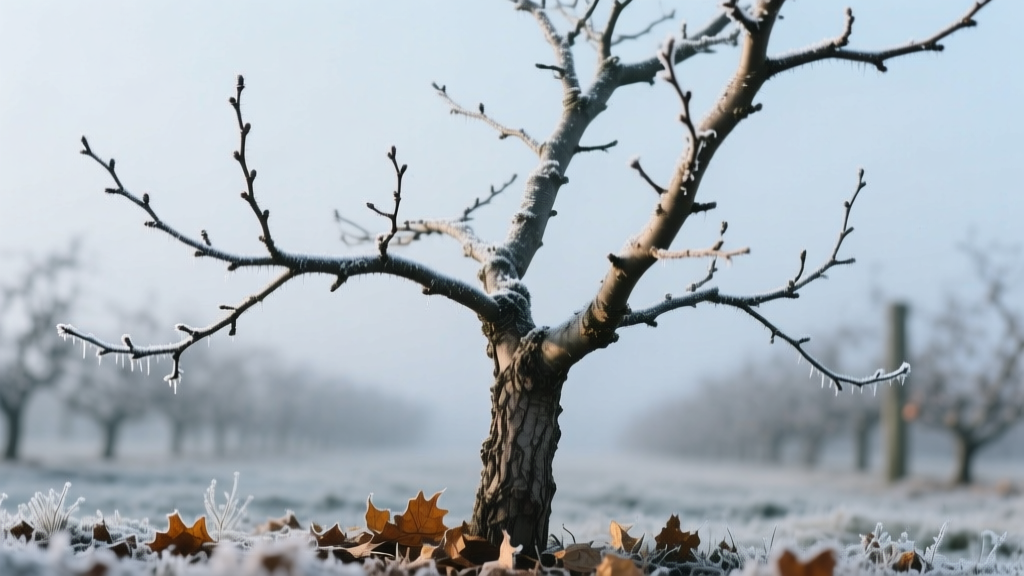
Winter Fruit Tree Care: Dormant Spraying
Winter is your narrow window to knock back overwintering pests and disease before they wake up and multiply. If you wait until you see curling leaves, sticky honeydew, or scabby fruit, you’re already behind. Dormant spraying—done at the right time, at the right temperature, with the right product—can dramatically reduce problems like scale, aphids, mites, peach leaf curl, and certain scab diseases with fewer interventions later.
This is a “do it now” job: on a calm, dry day when temperatures are safely above freezing and buds haven’t pushed too far. The payoff is a cleaner start to spring growth and less pressure to spray during bloom (when pollinators are active).
Priority 1: Spray timing and targets (what to do first)
Dormant spraying is not one spray on one date. It’s a short season with specific triggers. Plan around your local average last frost date, the forecast, and your trees’ bud stage.
Key timing numbers to use this week
- Temperature threshold: Spray when air temps are 40–70°F for best coverage and drying; avoid spraying if temps will drop below 32°F within the next 24 hours.
- Wind: Keep wind under 10 mph to prevent drift and uneven coverage.
- Rain-free window: Aim for at least 12 hours dry time after application (check your label; some oils need longer).
- Bud stage: Most “dormant” oils are best from true dormant through delayed dormant (as buds swell but before green tissue is exposed). For some diseases, timing is tied to bud swell rather than a calendar date.
- Regional calendar anchors: In many areas, dormant sprays land between late January and early March, with a second window in March as buds swell—adjust to your zone and microclimate.
“Dormant oils work by smothering overwintering insects and eggs, so thorough coverage of bark and twigs is critical.” — Extension guidance commonly echoed across university IPM programs (see UC IPM, 2023; WSU Extension, 2020)
What dormant sprays control best
Think of dormant sprays as a reset button for problems that overwinter on bark, buds, and twig crevices.
- Overwintering insect pests: scale (San Jose scale, oystershell scale), aphid eggs, pear psylla (region-dependent), some mite eggs.
- Fungal/bacterial disease pressure: peach leaf curl (peach/nectarine), some scab and leaf spot inoculum on stone fruit; suppression of certain cankers depending on product and timing.
Important: Dormant spraying is not a cure-all. It will not fix nutrient deficiencies, poor pruning, water stress, or existing trunk borers inside wood. Pair it with sanitation, pruning, and good tree vigor management.
Priority 2: What to prune before you spray (and what to leave alone)
Prune first, spray second. Pruning opens the canopy so your dormant spray can hit bark and buds instead of being blocked by a tangle of crossing limbs.
Pruning sequence (fast, practical order)
- Remove dead, diseased, broken wood (cut back to healthy tissue).
- Take out crossing branches that rub and create wounds.
- Lower height if needed (especially on peaches and plums) so you can spray thoroughly.
- Open the center for light and air (common for peaches/nectarines), or maintain a central leader (common for apples/pears).
Pruning cautions by fruit type
- Peach/nectarine (often zones 6–9): Heavier annual pruning is typical, but avoid pruning during very wet stretches to reduce canker risk. If you’re in a winter-rain climate, time pruning to a dry period.
- Cherry (sweet cherry in zones ~5–8): Many growers prefer to prune in drier weather (often late winter into summer) to reduce bacterial canker risk; if you do winter pruning, keep cuts minimal and avoid rainy days.
- Apple/pear (zones ~4–8): Winter pruning is standard; focus on structure and removing water sprouts. Save major limb removal for late winter when you can see bud swell and avoid extreme cold snaps.
After pruning, rake out and remove mummified fruit and diseased leaves under the canopy. This sanitation step is not glamorous, but it directly reduces the inoculum your trees face in spring.
Priority 3: Dormant spray options (what to spray, on what trees)
The right dormant spray depends on what you battled last year. Don’t spray “just because.” Spray to interrupt a known life cycle. Always read and follow the product label for rates, protective equipment, and crop suitability.
Horticultural oil (the core dormant spray for many home orchards)
Best for: scale, aphid eggs, some mite eggs. Oils must coat the pest to work.
- Apply at dormant or delayed dormant when buds are swelling but before green tissue is exposed (unless the label allows later).
- Do not apply if temps may drop below 32°F soon after spraying, or when trees are drought-stressed.
- Coverage matters: Spray trunk, scaffold limbs, and small twigs until just shy of runoff.
Copper-based sprays (a mainstay for peach leaf curl and some disease suppression)
Best for: peach leaf curl on peach/nectarine; also used for certain bacterial/fungal issues depending on crop and timing.
- Timing is everything: Copper for peach leaf curl is typically applied after leaf drop in fall and/or late winter before bud break. If you missed fall, late winter before buds open is your next best shot.
- Avoid injury: Copper can cause phytotoxicity if applied at the wrong time or rate; always match the product to the crop and season per label.
University guidance consistently emphasizes dormant-season timing for peach leaf curl control. For example, UC IPM notes dormant applications are used to prevent infection (UC IPM, 2023). Washington State University Extension also describes dormant oil use for overwintering insects and stresses coverage and timing (WSU Extension, 2020).
Sulfur or lime sulfur (specialty dormant tools)
Some growers use sulfur products for certain disease programs during dormancy, but they can be more caustic and are not appropriate for every situation. Do not mix sulfur with oil unless your label explicitly allows it, and observe any required interval (often at least 14 days between oil and sulfur applications, depending on product guidance).
Priority 4: What to protect (cold, sunscald, rodents, and spray safety)
Dormant spraying works best when the tree is otherwise protected from winter injury. Stress makes trees more vulnerable to cankers and dieback—and complicates spring recovery.
Sunscald and southwest injury
On young trees (especially in USDA zones 4–6 with bright winter sun), trunks can warm during the day and refreeze at night, causing bark damage. If you’ve seen splitting or discolored bark on the south/southwest side, act now:
- Use a trunk guard or white tree wrap/paint (follow local recommendations) on young, thin-barked trees.
- Keep mulch a few inches away from the trunk to prevent moisture and rodent issues.
Rodent and deer protection
- Voles/rabbits: Install hardware cloth guards (¼-inch mesh) around trunks, buried 2–3 inches into soil and extending 18–24 inches above snowline.
- Deer: Buds are a winter snack. If browsing is common, use fencing or repellents now—once buds swell, you can lose the season’s fruiting wood quickly.
Spray drift and beneficial protection
Even in winter, protect nearby evergreens, ponds, and non-target plants. Choose a still day, keep pressure moderate, and use a coarse spray to reduce drift. Avoid spraying when blooms are open anywhere nearby; dormant season is ideal precisely because pollinator exposure is minimal.
Priority 5: What to prepare (tools, records, and a tight spray plan)
Most dormant spray failures trace back to poor preparation: clogged nozzles, weak sprayers, wrong dilution, or spraying after buds have advanced too far.
Pre-spray checklist (15 minutes that saves your season)
- Calibrate your sprayer: know how much solution you apply per minute.
- Check nozzle pattern; replace worn tips for even coverage.
- Clean the tank and filter (old residues can react with new products).
- Mix only what you’ll use that day; agitate as needed.
- Wear label-required PPE (commonly gloves, eye protection, long sleeves).
- Record date, temperature, product, rate, and target pest/disease.
Coverage test you can do today
Before using any pesticide, fill the sprayer with water and practice on one tree. Your goal is full limb coverage without excessive runoff. If you can’t reach the top scaffolds safely from the ground, reduce tree height at pruning time or use proper equipment—don’t “half-spray” and expect results.
Monthly dormant-spray schedule (adjust by zone and bud stage)
Use this as a working template, not a rigid calendar. In USDA zones 8–10, everything shifts earlier; in zones 3–5, it shifts later and may compress into a shorter window.
| Month | What you’re watching | Best actions | Weather targets (numbers) |
|---|---|---|---|
| December | Leaf drop complete; early dormancy | Sanitation; prune dead/broken; trunk guards | Work on days above 35–40°F; avoid icy cuts |
| January | Deep dormancy; overwintering pests on bark | Prune structure (apples/pears); plan spray materials | Spray only if a warm spell holds above 40°F and no freeze below 32°F for 24 hrs |
| February | Delayed dormancy begins in milder regions | Dormant oil for scale/eggs; copper for peach leaf curl before bud break | Wind under 10 mph; dry window 12 hrs |
| March | Bud swell to green tip (varies widely by zone) | Finish delayed-dormant sprays before green tissue; finalize pruning; remove mummies | Stop dormant oil when buds show green (unless label allows); avoid frost nights near 28–32°F |
What to plant right now (limited, but strategic)
Winter isn’t peak planting time everywhere, but it can be ideal in specific regions and situations.
Bareroot fruit trees (best window in many areas)
If your ground isn’t frozen and your nursery stock is available, bareroot planting is often best from late winter to early spring—typically 4–6 weeks before your average last frost date. In USDA zones 7–9, that can mean planting in January or February; in zones 4–6, often March to early April.
- Plant while trees are dormant to reduce transplant stress.
- Water in deeply at planting, then monitor—winter winds can dry soil even when it’s cold.
- Hold off on heavy fertilizing at planting; focus on good soil contact and moisture management.
Scionwood collection (for grafting plans)
If you graft, collect scionwood during dormancy on a dry day, label it clearly, and store it properly (cool, slightly moist, sealed). This is also the season to order rootstocks before spring shipping rush.
Regional scenarios (adjustments that matter)
Dormant spraying is highly regional because winter weather defines both pest survival and safe spray windows. Here are three real-world scenarios and how to adapt.
Scenario 1: Pacific Northwest / winter-rain climates (zones 7–9 coastal and valleys)
Your challenge is finding a dry window and reducing canker pressure. Pruning during extended wet periods can invite bacterial/fungal cankers—especially on cherries and some plums.
- Prune during a 2–3 day dry stretch; prioritize removing diseased wood first.
- For peach/nectarine leaf curl, don’t miss the dormant copper timing—rainy springs drive infection.
- Spray when bark can dry fully; avoid late afternoon sprays if overnight temps fall near 32°F.
Scenario 2: Upper Midwest / Northeast cold winters (zones 3–5)
Your challenge is temperature and accessibility. Deep cold limits spray days; snow cover makes trunks vulnerable to rodents.
- Wait for a thaw with daytime temps around 40–50°F, and confirm no hard freeze follows within 24 hours.
- Install trunk guards that extend above expected snow depth (often 18–24 inches minimum).
- Delay major pruning if extreme cold is ongoing; brittle wood can tear and make rough wounds.
Scenario 3: Southeast / mild-winter regions (zones 7–9)
Your challenge is early budbreak and high pest carryover. Warm spells can push buds early, shortening the dormant spray window.
- Start monitoring buds in late January; be ready to spray promptly during delayed dormancy.
- Scale insects and aphids can rebound quickly—dormant oil timing is especially valuable.
- Keep an eye on fire blight history in pears/apples; dormant sprays won’t “solve” fire blight, but good pruning and sanitation now reduces carryover and improves airflow.
Pest and disease prevention: match the spray to last year’s problems
Use last season’s symptoms to choose this season’s winter actions. Here’s a practical mapping.
If you saw scale on branches or fruit
- Now: Prune out heavily infested twigs if practical.
- Then: Apply dormant oil with meticulous coverage on trunk and scaffold limbs.
- Scout later: Place a reminder to check for crawlers after bloom; dormant oil reduces numbers but may not eliminate infestations.
If peaches/nectarines had thickened, red, distorted leaves (peach leaf curl)
- Now (before budbreak): Apply a labeled copper product during dormancy/delayed dormancy.
- Sanitation: Clean up leaf litter and remove badly affected shoots during pruning.
- Reality check: Once symptoms show in spring, sprays are preventive—not curative. Timing is the whole game (UC IPM, 2023).
If apples had scabby, cracked fruit or olive leaf spots (apple scab)
- Now: Rake and remove fallen leaves where feasible, or shred/mulch them finely to speed decomposition.
- Dormant sprays: Dormant programs vary by region; focus on sanitation and plan spring fungicide timing if scab is chronic.
If you saw sticky honeydew, sooty mold, or curling new growth (aphids/psyllids)
- Now: Dormant oil helps by targeting eggs and overwintering stages.
- Next: Plan early-season scouting at budbreak and pre-bloom; small infestations are easier to control with low-impact methods.
Citations: University of California Agriculture and Natural Resources Integrated Pest Management (UC IPM) provides dormant timing guidance for multiple fruit tree pests and peach leaf curl prevention (UC IPM, 2023). Washington State University Extension outlines dormant oil principles, emphasizing timing, coverage, and temperature considerations (WSU Extension, 2020).
Timelines you can follow (pick the one that matches your bud stage)
Use these short timelines to decide what to do this week, not “sometime in winter.”
Timeline A: Trees fully dormant (no bud swell yet)
- This week: Prune dead/diseased wood; remove mummies; clean tools.
- Next warm window (40–70°F): Dormant oil for scale/eggs if you had problems last year.
- Within 7–14 days: Recheck for missed branches; touch up only if label allows and weather cooperates.
Timeline B: Delayed dormant (buds swelling)
- Within 3–7 days: Finish structural pruning so sprays can reach bark and buds.
- First calm day above 40°F: Apply dormant oil for insects; apply copper where appropriate for leaf curl (before budbreak).
- Immediately after spraying: Clean sprayer; record date, temp, and bud stage for next year’s planning.
Timeline C: Buds showing green tissue
- Stop and reassess: Many dormant oils and some copper uses are no longer appropriate once green tissue is exposed (check label).
- Shift focus: Scout weekly; prepare spring sprays only if needed and timed to pests/diseases in your area.
- Do now: Finish sanitation, mulch management, and trunk protection.
Quick reference checklist (printable and practical)
Do today (no sprayer needed)
- Walk each tree and note last year’s issues: scale bumps, scab, curl, cankers.
- Remove mummified fruit and obvious diseased wood.
- Check trunk guards; reset mulch away from trunks.
- Verify your average last frost date and mark a point 6 weeks before it on your calendar.
Do on the next suitable spray day
- Confirm forecast: no freeze below 32°F within 24 hours, wind under 10 mph, at least 12 hours dry.
- Spray dormant oil (if targeting scale/eggs) with full bark coverage.
- Apply copper (if targeting peach leaf curl) while still pre-budbreak or per label timing.
- Record everything: product, rate, water volume, temperature, bud stage.
Do 2 weeks later
- Inspect coverage results: did you miss the upper canopy or interior scaffolds?
- Look for scale you can still see; plan spring monitoring for crawler emergence.
- Sharpen pruners, clean loppers, and disinfect tools if disease was present.
If you handle pruning, sanitation, trunk protection, and a properly timed dormant spray window now, spring care becomes simpler: fewer emergency sprays, fewer distorted leaves, and fewer pests exploding as soon as temperatures rise. Winter work is quiet work—but it’s where next season’s fruit quality is decided.