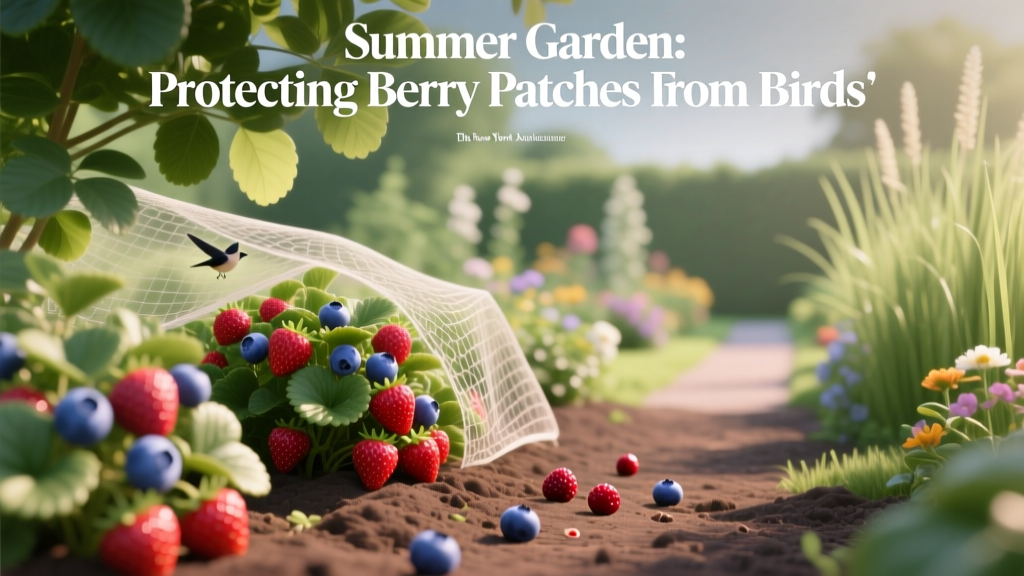
Summer Garden: Protecting Berry Patches from Birds
The berries are blushing, and the birds already know it. Once fruit starts coloring, you can lose a meaningful share of your harvest in a single week—especially strawberries, blueberries, and raspberries. The window for action is tight: protection needs to be in place before peak ripening, not after you notice the first pecks. This seasonal plan prioritizes what to do right now, in the order that saves the most fruit with the least fuss.
Use this guide as a working checklist. Start with the fastest, highest-impact protective steps, then move to pruning and planting, and finally prep for late-summer maintenance and next year’s bird pressure.
Priority #1: What to protect (do this first—before fruit fully colors)
Bird pressure spikes the moment berries shift from green to pink/blue/red. In many gardens, that’s 2–3 weeks before your main harvest. If you wait until the first fully ripe berries appear, you’re already behind.
Set your timing triggers (use these numbers)
Use these concrete cues to decide when to put protection up:
- 14–21 days before expected peak harvest: install netting or exclusion systems for strawberries and blueberries.
- When nights stay above 50°F and fruit begins to color: birds increase daily visits (common in many regions from late May through July).
- At 65–85°F daytime highs: ripening accelerates; check patches every 24–48 hours.
- At least 7–10 days before your first ripe berry: put decoys/deterrents out early so they’re in place before feeding patterns establish.
- Know your average first fall frost date to plan late-summer pruning and next planting: e.g., Sept 15 (cold interiors), Oct 15 (many temperate regions), Nov 15 (mild coastal). Count backward for fall tasks.
Bird exclusion: netting is the only consistently reliable method
Most scare tactics work briefly, then birds adapt. If you want predictable results, prioritize physical exclusion. Extension guidance consistently recommends netting or caging as the most effective control for birds in small fruit plantings (e.g., Cornell Cooperative Extension, 2020; University of Minnesota Extension, 2019).
Research finding: “Exclusion (netting) is the most effective method for preventing bird damage to fruit crops.” (Cornell Cooperative Extension, 2020)
Choose the right protection system for your berry type
Match the protection to the crop architecture. The goal is to keep netting off the fruit, seal entry points, and maintain easy access for picking.
| Berry crop | Best bird protection | Why it works | Common failure point |
|---|---|---|---|
| Strawberries | Low hoops + netting pinned to ground | Seals edges; keeps netting off berries | Loose edges birds slip under |
| Blueberries | Walk-in frame/cage with netting over top and sides | Allows picking; prevents birds from reaching fruit through mesh | Net draped directly on bushes (birds peck through) |
| Raspberries/blackberries | Row-tunnel netting or side netting on trellis | Protects ripening clusters on canes | Gaps at ends of rows |
| Grapes | Cluster bags or full netting on arbor | Targets fruit zone; reduces snagging | Net tangles in tendrils; delayed installation |
Netting specs that prevent headaches (and bird loss)
Netting works best when it’s treated like a structure, not a blanket.
- Mesh size: Use roughly 1/2 inch mesh for most garden applications—small enough to exclude birds while still manageable.
- Keep netting off fruit: If birds can sit on the net and peck berries through it, you’ll still lose fruit. Use hoops, a PVC frame, EMT conduit, or a simple wood cage.
- Seal the bottom edge: Pin with landscape staples every 12–18 inches, or bury edges 2–3 inches in soil where practical.
- Install access points: Clip one side with clothespins or binder clips so you can open/close quickly. Fast access means you’ll actually re-close it after picking.
- Check daily for entanglement risk: Taut netting reduces accidental wildlife catches. Avoid loose drapes.
Fast, effective setup: 60-minute strawberry tunnel
If strawberries are coloring now, do this today:
- Install hoops every 3–4 feet (wire, fiberglass, or PVC).
- Drape netting so it doesn’t sag onto fruit.
- Staple/pin the long edges tight to the soil.
- Close the ends with clips, stones, or pinned folds.
- Leave one “door” end you can open daily for harvest.
Blueberries: build a simple walk-in cage (best return for the effort)
Blueberries are a top target for robins, catbirds, cedar waxwings, and starlings. A net draped over a bush is rarely enough because birds perch and feed through it. A frame (even a simple one) changes everything.
- Minimum clearance: Keep netting 6–12 inches away from the outermost fruiting twigs.
- Door: Create a vertical slit and overlap netting, clipping it shut after each entry.
- Anchor: Stake corners; summer thunderstorms can lift netting like a sail.
Deterrents: use them as backups, not your main plan
If you can’t net immediately, deterrents may reduce losses for a short stretch—especially if you rotate them every 2–3 days. Birds habituate quickly.
- Reflective tape and old CDs: best for brief windows; move often.
- Predator silhouettes (owls/hawks): limited effect once birds realize they don’t move.
- Motion sprinklers: useful where you can run a hose; most effective near dawn feeding times.
- Sound devices: can create neighbor conflicts and often lose effectiveness.
3 real-world bird-pressure scenarios (and what to do)
Scenario 1: Suburban yard with feeders nearby (high bird traffic). If you or neighbors feed birds, expect heavy sampling. Pause feeders during peak berry ripening (often 2–4 weeks) and net decisively. Place water away from berries to reduce “hang time” in the patch.
Scenario 2: Rural edge near woods (catbirds and waxwings). These birds can strip a bush quickly when a flock arrives. Prioritize cages for blueberries and net tunnels for brambles before the first berries turn. If waxwings appear, assume you have 48–72 hours to get full exclusion up.
Scenario 3: Community garden plots (limited structures allowed). Use low-profile hoops over strawberries and side-netting on trellised raspberries. Where frames aren’t permitted, cluster bagging (organza-style bags) can protect select bunches on grapes and a handful of premium blueberry clusters.
Priority #2: What to prune (to reduce hiding spots, improve picking, and prevent disease)
Pruning in summer is about airflow, light, and sanitation. It also makes netting work better by reducing fruit that presses against mesh and by making harvesting faster (less time with the net open).
Raspberries and blackberries: remove spent floricanes (right after harvest)
For summer-bearing types, fruit is produced on second-year canes (floricanes). Once they finish, remove them promptly.
- Timing: Cut spent canes at ground level within 7 days of finishing harvest.
- Why now: Reduces disease pressure and opens the row for primocanes (next year’s fruiting canes).
- Sanitation: Remove and dispose of prunings; don’t pile them in the patch.
Blueberries: limit summer pruning to small, targeted cuts
Heavy pruning is usually done in late winter, but summer is fine for removing broken, diseased, or low branches that drag fruit into the soil (and into slug territory).
- Snip out dead or damaged wood anytime.
- Remove low branches that make net sealing difficult.
- Avoid aggressive thinning during peak heat (above 90°F) to reduce plant stress.
Strawberries: decide based on type (June-bearing vs day-neutral)
June-bearing: After harvest, renovation timing matters. In many regions, renovate within 1–2 weeks after harvest to stimulate new growth and set buds for next year. (Check your local extension schedule for renovation steps; timing varies by region.)
Day-neutral/everbearing: Skip renovation. Instead, keep removing dead leaves and overripe fruit weekly to reduce sap beetles and gray mold pressure.
Priority #3: What to plant (only if it supports summer success)
Summer isn’t the main planting season for many berries, but there are strategic moves that pay off—especially if you’re using irrigation and aiming for better future bird management.
Plant support species that pull predators in, not birds
You can’t “plant your way out” of bird pressure, but you can shape habitat. Avoid adding plants that are peak bird food right next to berries (serviceberry, mulberry) unless you want a sacrificial crop strategy.
- Good summer additions: yarrow, alyssum, dill (let some flower), and native perennials that support beneficial insects.
- Placement rule: Keep new bird-attracting fruiting shrubs 30–50 feet away from your berry patch if possible.
Regional timing: when summer planting is realistic
Cool-summer zones (USDA 3–5): Container berries can be planted in early summer if you can keep roots evenly moist. Avoid planting during heat spikes; aim for a stretch of highs under 80°F.
Hot-summer zones (USDA 7–10): Hold off on planting most berries until late summer/early fall when nights moderate (often when lows drop closer to 65–70°F). Heat-stressed transplants are more pest-prone and require constant watering.
Coastal/marine climates (USDA 8–10 with cool nights): You may be able to plant through summer if fog and mild nights keep stress down. Still, plan on shade protection the first 10–14 days and consistent moisture.
Priority #4: What to prepare (late-summer maintenance, next year’s bird plan)
Once netting is up and harvest is rolling, the next wins come from tightening your routine and reducing pest/disease pressure that compounds in warm weather.
Weekly summer timeline (repeat through peak harvest)
- Every 1–2 days: Harvest ripe fruit (overripe berries attract birds, wasps, and sap beetles).
- Twice weekly: Walk the net perimeter and re-seal gaps; check clips and staples.
- Weekly: Remove dropped fruit and culls; mow or trim alleyways to reduce hiding spots for rodents.
- Weekly: Scout for spotted wing drosophila (SWD) in brambles and blueberries once fruit is coloring and temps are consistently above 60°F.
- After storms: Re-tension netting and repair tears immediately.
Monthly schedule: what to do when (adjust by your local ripening window)
| Month | Primary bird risk | Your highest-payoff actions | Notes by region |
|---|---|---|---|
| May | Early strawberries; early blueberries in warm zones | Install hoops/netting at first color; seal edges | USDA 8–10 may be harvesting already; USDA 3–5 often prepping |
| June | Peak strawberries; early raspberries; blueberries | Upgrade to cages for blueberries; harvest every 1–2 days | Waxwing flocks can arrive suddenly—don’t delay netting |
| July | Blueberries, raspberries, blackberries | Maintain net tension; prune spent floricanes promptly | In hot regions, SWD and ants surge—tighten sanitation |
| August | Late brambles; grapes; fall-bearing raspberries | Row-end sealing; cluster bagging for grapes; prep fall planting | Count back from your first fall frost date to time late projects |
Pest and disease prevention that pairs with bird protection
Bird damage isn’t just missing fruit. Pecked berries leak juice, which ramps up rot and insect pressure. Managing disease and insects keeps your remaining fruit harvestable.
Gray mold (Botrytis) on strawberries and brambles: This thrives with humidity and poor airflow. Keep rows weeded, pick frequently, and remove moldy fruit immediately. If you irrigate, water early so foliage dries before evening.
Spotted wing drosophila (SWD): SWD attacks soft, ripening fruit and becomes a major factor in midsummer. University of Minnesota Extension notes that SWD pressure increases as fruit ripens and warm weather persists (University of Minnesota Extension, 2019). Use tight harvest intervals (daily for raspberries), rapid chilling of picked fruit, and sanitation (no “compost pile of berries” near the patch).
Wasps, yellowjackets, and ants: They move in on cracked or overripe fruit—often after birds start pecking. Netting reduces bird pecks, and fast picking reduces sugar sources. If you have persistent ant issues in strawberries, avoid leaving damaged berries on the plant.
Powdery mildew on grapes and some berries: Summer humidity and warm days can trigger outbreaks. Keep canopies open, avoid excess nitrogen, and remove heavily infected leaves. Good airflow also helps netting dry faster after rains.
Right-now checklist: protect the harvest this week
- Install netting or cages before the majority of berries color (aim for 14–21 days ahead of peak harvest).
- Seal all edges: staple/pin every 12–18 inches; close row ends.
- Keep netting 6–12 inches off fruiting branches on blueberries.
- Harvest on a 24–48 hour cycle during peak ripening.
- Remove culls and dropped fruit twice weekly.
- Scout for SWD once temps are consistently above 60°F and fruit is coloring.
Regional variations: adjust your strategy by climate and birds
Northern short-season gardens (USDA 3–5): Your harvest window is concentrated. Put exclusion up early and keep it up—birds will focus intensely when local fruit options are limited. Plan berry tasks around heat spikes; if a week of highs above 85°F hits during ripening, expect faster color change and tighter picking intervals.
Humid East and Midwest (USDA 5–7): Expect higher disease pressure alongside bird pressure. Netting improves harvest, but sanitation and airflow keep fruit usable. After heavy rains, check berries daily—pecked fruit plus humidity can turn into rot within 48 hours.
Arid West and high elevation (USDA 4–8 pockets): Birds often key in on irrigated gardens as reliable food and water sources. Consider placing a water station away from berries to reduce lingering in the patch. Sun intensity can also heat netting over tender growth; ensure netting doesn’t rest directly on leaves and provide a bit of canopy clearance.
Plan improvements for next year while it’s fresh in your mind
Mid-harvest is when you discover what’s annoying: where you trip, where the net sags, and where birds sneak in. Make small upgrades now so next summer is easier.
- Add permanent anchor points: T-posts or corner stakes you can reuse.
- Build a reusable door: A simple overlapped flap with clips saves time and reduces “left open” mistakes.
- Standardize net panels: If you cut netting, label sections (end, side, top) so setup is faster next season.
- Map ripening order: Note which varieties ripen first; install protection on those rows 7–10 days earlier next year.
When protection is installed early and maintained tightly, berry gardening shifts from constant frustration to steady picking. Put exclusion in place ahead of peak color, harvest on a short rhythm, and keep the patch clean and airy. Birds will keep testing your setup all summer—but if the net is sealed and off the fruit, you’ll be the one carrying bowls of berries back to the kitchen.
Citations: Cornell Cooperative Extension (2020) guidance on bird management in fruit plantings; University of Minnesota Extension (2019) SWD and small fruit pest management notes.