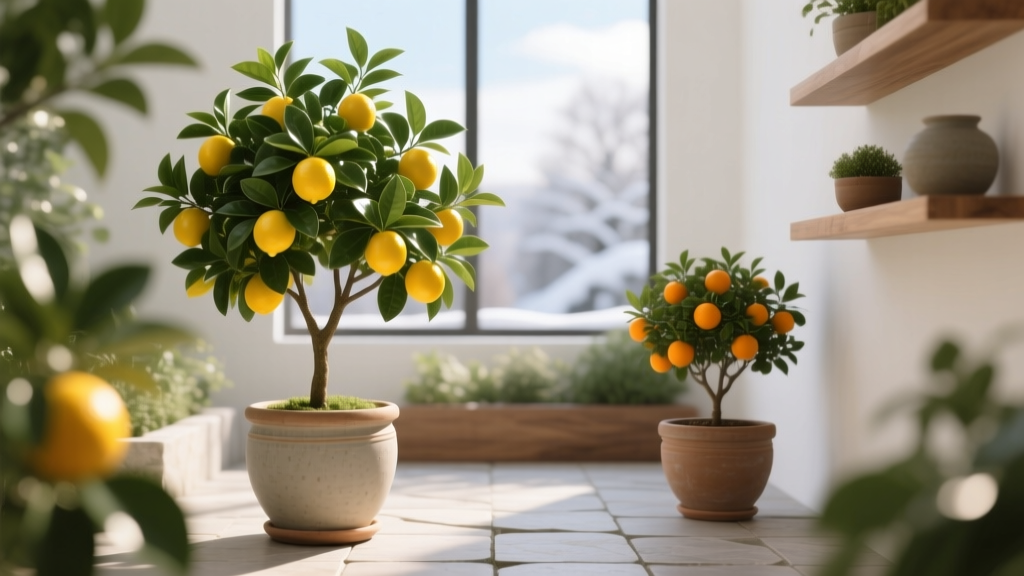
Winter Garden: Maintaining Indoor Citrus Trees
The clock starts ticking the moment your heating system kicks on and daylight drops below roughly 10 hours. Indoors, citrus can slide from “fine” to “failing” in a matter of weeks: leaf drop from low light, spider mites from dry air, root rot from slow winter watering, and stalled blooms from cool nights. The opportunity is that winter is also when you can stabilize your tree, prevent pests, and set up the conditions for a strong spring flush—without fighting outdoor weather.
Use this as a right-now playbook. Priorities are listed in the order that most often prevents winter decline: light first, then watering and humidity, then pest prevention, then pruning and planning. Timing cues (dates, weeks, temperatures, and thresholds) are included so you can act before problems show up.
Priority 1: What to Plant (and Pot Up) — Only If You Can Give Enough Light
Winter is not the best time to start citrus from seed or to do major repotting, but there are two exceptions: (1) you’re adding a small, already-rooted plant to a bright grow-light setup, or (2) your existing tree is so rootbound that water runs through without wetting the mix. For most indoor citrus keepers, the “planting” task in winter is potting up selectively, not stepping up multiple pot sizes.
Decide if a winter pot-up is justified
Potting up is justified if you see at least two of the following:
- Water runs down the inside of the pot and exits quickly, leaving the rootball dry.
- Roots circle densely at the surface or protrude from drainage holes.
- The tree wilts within 24 hours of watering even though the room is not hot.
- Salt crust builds rapidly because you must water too frequently.
If you only see slow growth or pale leaves, solve light and nutrition first. A too-large pot in winter is a common cause of soggy mix and root loss.
Pot size, mix, and temperature rules (winter-safe)
- Pot size: step up 1–2 inches wider in diameter, not more.
- Mix: use a fast-draining, bark-based container mix; avoid heavy garden soil indoors.
- Root temperature: keep the root zone above 60°F if possible; below that, roots drink slowly and rot risk rises.
Timing: If you must pot up, do it in the first half of winter (roughly late November through mid-January) so the tree can re-stabilize before spring growth. Avoid major repotting within 4–6 weeks of when you expect outdoor conditions to improve and you’ll want to acclimate it back outside.
Regional scenarios: should you be planting/potting right now?
Scenario A (USDA Zone 9–10, coastal): You might only bring citrus in during unusual cold snaps. If it’s indoors for 2–3 weeks and then back out, skip potting. Focus on pest checks because pests move with the plant.
Scenario B (USDA Zone 6–8, long indoor season): Your citrus may be inside from October until after the last frost (often mid-April to mid-May). If rootbound, a small pot-up now can reduce watering stress for the entire indoor season.
Scenario C (Apartment grower, limited window light): Only pot up if you also commit to grow lights. Low light + larger pot almost guarantees overwatering problems.
Priority 2: What to Protect — Light, Temperature, Humidity, and Roots
Winter success indoors is mostly environmental control. Citrus can tolerate cool conditions, but the combination of low light and warm indoor air is what triggers leaf drop and pest outbreaks. Stabilize these four variables first: light intensity, day length, temperature swings, and humidity.
Light: treat it like a prescription
If your tree is more than a couple feet from a bright south or west window, it’s likely underlit for winter maintenance. Citrus performs best with bright light and can handle very high indoor light levels if acclimated.
- Minimum day length target: provide 12–14 hours of light daily using a timer.
- Distance: many LED grow lights need to be within 8–18 inches of the canopy to be effective (follow your fixture’s guidance).
- Weekly action: rotate the pot 1/4 turn every 7 days to reduce leaning and uneven growth.
“Most houseplant problems in winter trace back to insufficient light; plants use less water and grow more slowly, so overwatering becomes more likely.” — University of Maryland Extension (2019)
Practical takeaway: If you can’t increase light, you must decrease watering and avoid fertilizing heavily until spring.
Temperature thresholds that matter for indoor citrus
Citrus can tolerate cooler air than most people think, but sudden swings cause stress.
- Night temperatures: aim for 55–65°F at night to reduce stress and slow pests.
- Day temperatures: 65–75°F is a stable indoor range; avoid placing the tree near heating vents that create hot/dry blasts.
- Cold window warning: if leaves touch glass when outdoor temperatures drop below 25°F, cold injury can occur on contact. Pull the pot back at night.
- Critical move-in point (for outdoor-to-indoor): bring container citrus indoors before nights consistently hit 40°F, especially for limes and lemons.
These numbers align with common citrus handling guidance from extension programs; many recommend protecting citrus from chilling and frost and managing indoor conditions to prevent stress-related leaf drop.
Humidity: prevent spider mites before you see them
Indoor winter humidity commonly drops below 30% when the heat runs. Citrus prefers higher humidity and steady moisture, but not soggy soil. You don’t need a rainforest—just get out of the danger zone.
- Humidity target: keep around 40–55% if possible.
- Methods that actually work: a room humidifier; grouping plants; using a pebble tray (helps a little, not a cure).
- Avoid: misting as your main strategy—brief humidity spikes don’t prevent mites and can encourage fungal spotting if airflow is poor.
Root protection: warm roots, fast drainage, and no standing water
Cold roots + wet soil is the classic winter killer. Protect roots with these habits:
- Use a pot with drainage holes and empty saucers after watering within 10 minutes.
- Place the pot on an insulating surface (wood stand) if it sits on cold tile or near drafty doors.
- If you use a decorative cachepot, ensure the nursery pot never stands in water.
Priority 3: What to Prepare — A Winter Watering, Feeding, and Monitoring System
The best winter care is consistent and measured. Citrus doesn’t want frequent “little sips.” It wants thorough watering followed by drying to the right point, then watering again. Your exact interval depends on pot size, mix, light, and room temperature.
Watering checklist (weekly rhythm)
- Check soil moisture 2 inches down (finger test) or use a moisture meter as a backup.
- Water only when the top 1–2 inches are dry and the pot feels lighter.
- Water thoroughly until it drains, then discard drainage water.
- Every 4–6 weeks, flush the pot with extra water to reduce salt buildup (more important if you fertilize or have hard water).
Timing: In many homes, indoor citrus needs water roughly every 7–21 days in winter. Brighter light and warmer rooms shorten the interval; cooler rooms lengthen it.
Fertilizer: scale it to light, not to the calendar
If your citrus is under grow lights (12–14 hours) and actively growing, light feeding can continue. If it’s barely growing, hold back.
- Low light / slow growth: pause fertilizer until days lengthen (often late February indoors), or feed at 1/4 strength no more than once every 6–8 weeks.
- Good light / active growth: feed at 1/2 strength every 4 weeks with a citrus fertilizer that includes micronutrients (iron, manganese, zinc).
Watch leaf color. Interveinal chlorosis (yellow between green veins) can show up in winter when roots are cold or salts are high, even if the fertilizer is “correct.” Fix environment and watering first.
Monitoring: a 60-second inspection that prevents most winter disasters
Once a week, do this quick scan:
- Check the undersides of 5–10 leaves for stippling or webbing (spider mites).
- Inspect new growth tips for sticky residue (honeydew), clustered pests (aphids), or cottony masses (mealybugs).
- Look at the trunk and leaf axils for scale bumps.
- Smell the potting mix—sour odor suggests poor aeration or overwatering.
Reference: Penn State Extension notes that many houseplant pests (including mites, scale, and mealybugs) are more common indoors in winter conditions and emphasizes early detection and sanitation (Penn State Extension, 2020).
Priority 4: What to Protect (Pests and Disease) — Season-Specific Prevention and Response
Winter indoor pests spread quietly. By the time leaves yellow or drop, populations can be high. Your goal is prevention first, then targeted control that won’t stress the tree further.
Spider mites: the #1 winter citrus pest indoors
When they surge: when indoor humidity dips below 35% and the plant is warm and slightly drought-stressed.
Early signs: fine stippling (tiny pale dots), dull leaves, faint webbing near petioles, premature leaf drop.
Action plan (first 7–10 days):
- Rinse foliage in the shower or sink, focusing on leaf undersides. Repeat every 3–4 days for 2 weeks.
- Raise humidity into the 40–55% range if possible.
- If needed, apply insecticidal soap or horticultural oil labeled for indoor use, following the label exactly; treat leaf undersides and repeat per label interval.
Scale and mealybugs: slow, stubborn, and common on indoor citrus
When they show up: often after bringing plants indoors in fall; they may go unnoticed until mid-winter.
- Immediate step: isolate the plant from other houseplants.
- Manual control: wipe pests with cotton swabs dipped in isopropyl alcohol (70%) and remove heavily infested leaves.
- Follow-up: repeat inspections weekly for 6 weeks—egg cycles and crawlers can continue.
Fungal issues and root rot: the “too-wet + too-dark” problem
Indoors, fungal leaf spots are usually a secondary issue—poor airflow, wet leaves, and stressed roots set the stage.
- Water the soil, not the foliage.
- Keep leaves from pressing against cold window glass.
- Use a small fan on low in the room if air is stagnant (not blasting directly at the plant).
- If the pot stays wet longer than 10–14 days, reduce watering volume, increase light, and consider checking drainage and root health.
Citation: University of Florida IFAS Extension emphasizes that indoor citrus health depends heavily on adequate light and careful watering to prevent stress and associated pest problems (UF/IFAS Extension, 2018).
Priority 5: What to Prune — Minimal, Strategic Cuts Only
Winter pruning indoors should be conservative. You’re managing shape, removing problems, and improving airflow—not forcing growth. Heavy pruning can trigger weak, pale growth if light is limited.
Do now: sanitation and small corrections
- Remove dead, broken, or rubbing branches immediately.
- Pinch or trim vigorous shoots that are hitting windows or lights.
- Remove suckers from below the graft union (common on many citrus trees).
Timing: Do sanitation pruning any time. Save significant shaping for late winter to early spring—often late February through March indoors—when light improves and the tree can respond with sturdier growth.
Flower and fruit management (yes, winter matters)
Indoor citrus sometimes holds fruit through winter or blooms sporadically. If your tree is small and stressed, it may be better to remove some fruit to conserve energy.
- If the tree dropped many leaves recently, remove most developing fruitlets.
- Support heavy fruit with soft ties to prevent branch breakage.
- Avoid drastic fruit thinning if the tree is otherwise healthy and stable—stress is the deciding factor.
Monthly Winter Schedule (Indoor Citrus) — Use This Table as Your Timer
| Month | Top Priority | Watering & Feeding | Pest/Disease Focus | Prep for Next Step |
|---|---|---|---|---|
| November | Stabilize after move indoors; increase light | Water thoroughly, then slow down; no heavy feeding | Inspect weekly for hitchhiker pests (scale/mealybugs) | Set up humidifier; place lights on a 12–14 hr timer |
| December | Keep light close; avoid drafts and vents | Typical interval 10–21 days; flush salts once | Spider mites ramp up if humidity <35% | Rotate pot weekly; confirm root zone stays >60°F |
| January | Maintain consistency; resist overwatering | Feed only if actively growing (1/4–1/2 strength) | Continue weekly inspections; isolate any infested plants | Plan spring acclimation timeline around last frost date |
| February | Watch for new growth as days lengthen | Adjust watering as growth resumes; light feeding if needed | Re-check scale crawlers; repeat treatments as needed | Prep for late winter pruning; clean tools |
| March | Late winter/early spring shaping (lightly) | Increase feeding gradually if growth is strong | Monitor aphids on tender new growth | Begin outdoor hardening when nights are consistently >50°F |
Regional Variations: Adjust the Plan to Your Winter Reality
Indoor citrus care looks different depending on how long “indoor season” lasts and how much sun you can offer. Use these scenarios to fine-tune timing and expectations.
Cold-winter regions (USDA Zones 4–6): long indoor season, low sun angle
If your last spring frost is around May 1–May 20 (common across many Zone 4–6 areas), your citrus may be inside for 6–7 months. In this situation:
- Grow lights are not optional if you want growth; they’re insurance against leaf drop.
- Plan on slower watering and little to no fertilizer from December through early February unless growth is obvious.
- Start acclimation outdoors only when nights stay above 50°F consistently; rushing this causes leaf scorch and cold stress.
Mid-winter regions (USDA Zones 7–8): moderate indoor season, big swings
In Zones 7–8, you might get warm spells followed by sharp freezes. If you shuttle plants in and out, pests and stress increase.
- Choose one plan: indoors for winter with stable conditions, or outdoors with heavy protection. Frequent moves create leaf drop.
- If an outdoor cold snap threatens below 28°F, bring container citrus in before the front arrives, not after damage occurs.
- Because sun is stronger than in Zones 4–6, a bright south window may nearly work—still monitor for stretching and leaf drop.
Mild-winter regions (USDA Zones 9–10): short indoor stays, pest vigilance
If you only bring citrus indoors during rare cold nights:
- Focus on quick inspections for scale and ants (ants can protect honeydew-producing pests).
- Avoid repotting and pruning during brief indoor stays.
- Even in mild zones, protect blossoms and small fruit if forecasts dip near 32°F—cold can cause flower drop and rind damage.
Two Timelines You Can Use Today
Timeline 1: The first 48 hours after bringing citrus indoors
- Day 1: Rinse leaves (lukewarm water). Inspect for scale/mealybugs. Remove any obvious pests manually.
- Day 1: Place the tree in its brightest spot; set a grow light timer for 12–14 hours if window light is limited.
- Day 2: Confirm drainage setup (no standing water). Move away from heating vents and drafty doors.
- Day 2: Start humidity support if your home runs below 35–40%.
Timeline 2: The next 6 weeks (stabilization window)
- Week 1–2: Water only when the top 1–2 inches are dry; rotate pot weekly; inspect undersides of leaves.
- Week 3–4: If pests are detected, treat on a repeating cycle every 3–7 days depending on method and label guidance.
- Week 5–6: Evaluate: Is new growth appearing? Are leaves holding? If yes, consider light feeding (only with adequate light).
Winter Troubleshooting: Fast Diagnoses That Save Trees
Problem: Sudden leaf drop within 7–14 days of moving indoors.
Likely causes: abrupt light drop, drafts, heat vents, or watering mismatch. Response: increase light immediately, stabilize temperature, and water only when the soil surface dries. Expect some leaf drop; your job is to stop it from cascading.
Problem: Yellow leaves but soil stays wet for many days.
Likely causes: overpotting, compacted mix, cold roots, low light. Response: increase light, warm the root zone, and extend drying time. Do not “fix” by adding more fertilizer first.
Problem: Sticky leaves or shiny residue on surfaces below the plant.
Likely causes: scale, mealybugs, or aphids producing honeydew. Response: isolate, wipe pests, then follow with repeat treatments and weekly checks for 6 weeks.
Problem: Fine speckling and dull leaves, especially near warm windows.
Likely cause: spider mites. Response: rinse repeatedly over 2 weeks, raise humidity, and treat as needed.
Winter Checklist (Print-and-Go)
- Light: 12–14 hours on timer; rotate pot every 7 days.
- Temperature: avoid vent blasts; keep nights ~55–65°F; keep leaves off cold glass when outside temps drop below 25°F.
- Humidity: aim for 40–55%; run humidifier if home is under 35%.
- Water: water deeply only when top 1–2 inches are dry; empty saucers within 10 minutes.
- Feeding: only if actively growing; otherwise pause or use 1/4 strength every 6–8 weeks.
- Pests: inspect weekly; isolate at first sign; treat on a schedule for 2–6 weeks depending on pest.
- Pruning: remove dead/rubbing wood now; save shaping for late Feb–March.
Winter indoor citrus care is less about doing more and more about doing the right few things on time. If you improve light, keep roots on the dry side of “evenly moist,” and run weekly pest inspections through the darkest stretch of the year, your tree will hold leaves, protect its energy, and be ready to push healthy growth when days lengthen and temperatures reliably stay above 50°F for outdoor acclimation.
Sources: University of Maryland Extension (2019); Penn State Extension (2020); University of Florida IFAS Extension (2018).