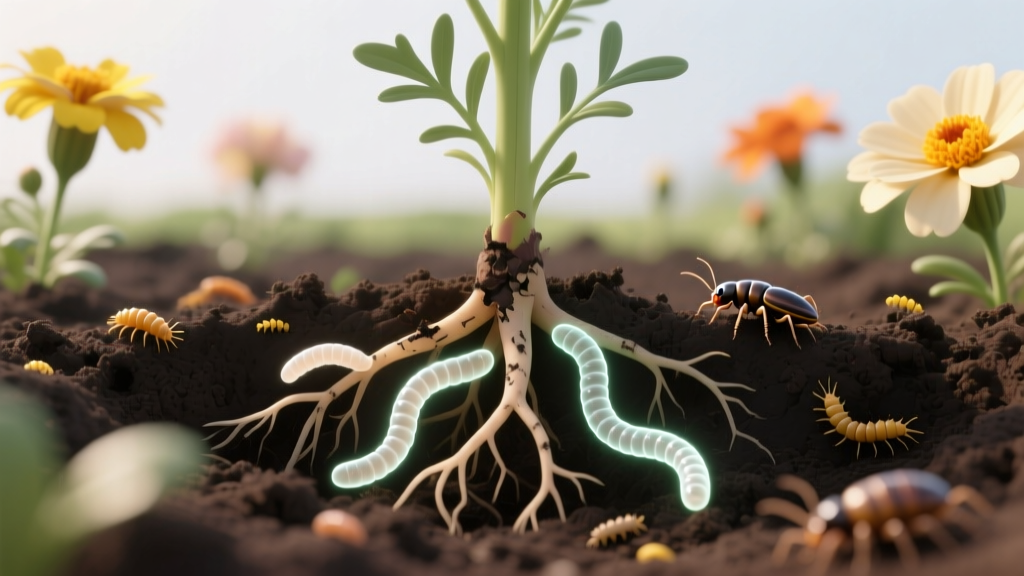
Beneficial Nematodes for Marigolds Soil Pests
You plant marigolds because they’re supposed to be the tough kids of the flower bed—bright, fast, and famously “pest resistant.” Then one morning you tug on a stunted plant and it lifts like it never rooted. Or the blooms are fine for a week, and then the whole clump wilts in spite of regular watering. Nine times out of ten, the trouble isn’t on the leaves—it’s down in the soil, where pests chew roots and marigolds can’t show you the damage until it’s already serious.
Beneficial nematodes are one of the most reliable, home-gardener-friendly ways to break that cycle. They’re microscopic worm-like organisms that hunt specific soil-dwelling pests. Used correctly, they can rescue a struggling marigold bed and prevent the “mystery wilt” that shows up mid-summer. Used incorrectly—hot sun, dry soil, wrong species—and you’ll swear they didn’t do anything. This guide lays out how to make them work in real gardens, with the nitty-gritty details that actually matter.
What beneficial nematodes do (and what they don’t)
Beneficial nematodes (often sold as Steinernema and Heterorhabditis species) enter soil pests through natural openings, release symbiotic bacteria, and the host dies in about 24–72 hours under good conditions. The nematodes reproduce inside the pest and spread through the soil searching for more hosts.
They work best on soft-bodied soil stages: grubs, larvae, pupae. They do not fix problems caused by drought stress, fertilizer burn, or fungal diseases that aren’t tied to an insect host.
Good targets around marigolds:
- Fungus gnat larvae (common in containers and overwatered beds)
- Cutworms (larval stage in soil)
- Root weevil larvae (varies by region)
- White grubs (scarab beetle larvae; more common in lawns, but can chew flower roots too)
- Thrips pupae in soil (nematodes can reduce pressure, especially in protected spaces)
Not great targets:
- Aphids and spider mites living on foliage
- Adult beetles, adult fungus gnats, or flying insects (nematodes need a soil-dwelling stage)
- Root-knot nematodes (those are plant-parasitic; “beneficial” nematodes don’t cure that)
For home gardeners, the most commonly recommended species include Steinernema feltiae (excellent for fungus gnats and cool soils) and Heterorhabditis bacteriophora (strong on grubs in warmer soils). Many university extension programs list these as primary options for soil insect biological control (University of California Statewide IPM Program, 2019; Penn State Extension, 2023).
“Entomopathogenic nematodes can provide effective control of soil-inhabiting insect pests when applied with adequate soil moisture and protection from UV light.” — University of California Statewide IPM Program (2019)
Real-world scenarios: when nematodes are the right tool
Scenario 1: Marigolds in patio pots with fungus gnats
You notice tiny black gnats hovering when you water. The marigolds look tired even though the potting mix is damp. The larvae feed on organic matter and tender roots. Steinernema feltiae is a strong match here, especially because containers can stay evenly moist—exactly what nematodes need.
Scenario 2: A bed that keeps getting “clipped” seedlings
Young marigolds look fine at dusk and are toppled by morning, stems chewed at soil level. That’s classic cutworm behavior. Nematodes can help, but timing is key: apply when larvae are in the soil and temps are mild, then keep the top few inches damp for a week.
Scenario 3: Marigolds planted along a lawn edge where grubs live
Marigolds near turf can suffer when grubs roam. If you’ve had skunks or raccoons digging the lawn, grubs may be abundant. Use Heterorhabditis bacteriophora in warm soil and water it in deeply so it reaches the grub zone.
Light needs for marigolds (because stressed plants attract trouble)
Marigolds don’t need pampering, but they do need sun to stay sturdy. Aim for 6–8 hours of direct sun daily. In very hot climates, a little afternoon shade can keep flowers from scorching, but too much shade leads to weak stems and slow root growth—exactly the situation where soil pests get the upper hand.
Practical check: If your marigolds are stretching and leaning hard, you likely have under 5 hours of direct sun. Move containers or thin nearby plants before you blame insects.
Soil setup: the foundation for nematodes and healthy roots
Nematodes move in a thin film of water between soil particles. That means soil texture matters. Marigolds prefer well-drained soil, but “well-drained” doesn’t mean bone-dry or sandy dust.
Best soil texture and drainage
- In-ground beds: Loam or amended clay with good crumb structure
- Containers: Quality potting mix (not garden soil), with enough organic matter to hold moisture
Target range: Soil moisture should be evenly damp in the top 2–3 inches for at least 7 days after applying nematodes. If your soil dries to powder by midday, nematode survival drops sharply.
Soil temperature targets (this is where most people miss)
Beneficial nematodes perform best when soil temperatures are in a workable range. A simple soil thermometer is worth the few dollars.
- Steinernema feltiae: works well in cooler soils, roughly 50–77°F
- Heterorhabditis bacteriophora: prefers warmer soils, roughly 60–86°F
If your soil is under 50°F, they slow down. If your soil is over 90°F at application depth, survival falls—apply at dusk, water well, and consider waiting for a cooler window.
Watering marigolds: keeping roots happy without feeding the problem
Marigolds are drought-tolerant once established, but inconsistent watering is a common trigger for stress and pest damage. Your goal is steady growth—not alternating drought and flood.
In-ground marigolds
Water deeply when the top 1–2 inches are dry. In summer heat, that might mean watering every 3–5 days depending on soil. A slow soak is better than a quick splash.
Container marigolds
Pots dry faster. Expect to water every 1–3 days in hot weather. But don’t keep the mix constantly saturated; that’s how fungus gnats get established.
Rule of thumb: Water until you see steady drainage from the bottom, then let the top inch dry slightly before watering again.
Feeding marigolds: enough nutrition, not a nitrogen party
Overfeeding produces lush, soft growth that attracts pests and can reduce flowering. Marigolds do best with modest fertility.
- In beds: Work in 1–2 inches of compost before planting.
- In containers: Use a balanced slow-release fertilizer at label rate, or feed with a liquid fertilizer at 1/2 strength every 2–3 weeks once flowering begins.
If marigolds are dark green but barely blooming, back off nitrogen. If they’re pale and slow, a light feeding can help them outgrow minor root nibbling.
Choosing the right beneficial nematode: a practical comparison
Garden centers and online suppliers often sell blends. Blends can work, but if you know your pest, matching the nematode species improves results and reduces cost.
| Target pest (common around marigolds) | Best nematode species | Typical soil temp window | Where it shines | Common use case |
|---|---|---|---|---|
| Fungus gnat larvae | Steinernema feltiae | 50–77°F | Containers, greenhouse conditions, consistently moist mix | Indoor starts, patio pots |
| Cutworms (larvae) | Steinernema carpocapsae | 55–85°F | Upper soil zone, ambush behavior near surface | Seedlings clipped overnight |
| White grubs | Heterorhabditis bacteriophora | 60–86°F | Deeper soil searching, strong on grubs | Beds near lawn edges |
These temperature ranges and target matches are consistent with extension recommendations for entomopathogenic nematodes in home landscapes (Penn State Extension, 2023; University of California Statewide IPM Program, 2019).
How to apply beneficial nematodes successfully (step-by-step)
This is the part where results are made. If you do the prep and timing right, nematodes can feel like magic. If you skip the moisture steps, they fail quietly.
Timing and conditions
- Apply in the evening or on a cloudy day to avoid UV light.
- Soil should be moist before you begin, not dusty-dry.
- Plan for a window of 7–10 days where you can keep soil evenly damp.
Application steps
- Water first: Lightly pre-water the area so the top 2–3 inches are moist.
- Mix gently: Follow the package rates precisely. Use cool, clean water (not hot water from a hose sitting in the sun).
- Apply promptly: Once mixed, apply within about 30–60 minutes so nematodes don’t settle and suffocate.
- Use the right equipment: A watering can, pump sprayer (no fine filters), or hose-end sprayer rated for nematodes. Remove screens that can clog.
- Water in: After application, water again to wash nematodes off foliage and into the soil. Aim for a gentle soak rather than runoff.
- Keep moist: Maintain consistent moisture for at least 7 days. In hot weather, that may mean a light watering morning and evening.
Depth matters: If you’re targeting grubs, you need moisture moving deeper than the surface. A longer soak that wets the top 4–6 inches is more effective than frequent sprinkles.
How much water is “water in”?
Exact volumes vary by soil, but here’s a workable home-garden approach:
- Raised beds: After applying, water for 10–20 minutes with a gentle sprinkler so the soil is damp but not puddled.
- Containers: Water until drainage runs steadily for 10–20 seconds, then stop.
Common marigold problems that look like pests (but aren’t)
Before you spend money—or blame nematodes for “not working”—check these. I’ve seen all of them mimic root pest damage.
Heat wilt vs. root damage
- Symptom: Plants droop mid-afternoon, perk up at dusk.
- Likely cause: Heat stress, not pests.
- Fix: Water early morning, mulch 1–2 inches (keep mulch back from stems), and provide light afternoon shade in extreme heat.
Overwatering and oxygen-starved roots
- Symptom: Yellowing leaves, slow growth, soil stays wet for days.
- Likely cause: Poor drainage, not insects.
- Fix: Improve drainage, switch to a better potting mix, or raise the bed. Let the top inch dry between waterings.
Fertilizer burn
- Symptom: Leaf edges turn brown and crispy after feeding.
- Likely cause: Too-strong fertilizer or dry soil when applied.
- Fix: Flush containers with water; in beds, water deeply and pause feeding for 2–3 weeks.
Troubleshooting: symptoms, soil clues, and what to do
Here’s how to match what you see to a practical next step.
Symptom: Seedlings severed at soil line overnight
Likely culprit: cutworms.
What to do (fast):
- Hand-search at dusk: dig around the plant base 1–2 inches deep.
- Add collars: press a cardboard or plastic collar 1 inch into soil around stems.
- Apply S. carpocapsae nematodes when soil temps are 55–85°F, then keep soil moist for 7 days.
Symptom: Wilting despite moist soil; plants pull up easily
Likely culprits: root-feeding larvae, or root rot from poor drainage.
What to check:
- Gently dig and look for creamy C-shaped grubs or small translucent larvae.
- Smell the roots: rotten roots often smell sour and look brown/black and mushy.
Actions:
- If you find grubs: apply H. bacteriophora when soil is 60–86°F and water in deeply.
- If roots are rotting: fix drainage first; nematodes won’t solve oxygen-starved soil.
Symptom: Tiny flies around pots; top layer stays wet; growth is slow
Likely culprit: fungus gnat larvae.
Actions that work together:
- Let the top 1 inch of potting mix dry between waterings.
- Top-dress with a thin layer of coarse sand or fine gravel (1/4–1/2 inch) to discourage egg-laying.
- Apply S. feltiae in the evening and keep the mix lightly moist (not soggy) for 7–10 days.
Method comparison: beneficial nematodes vs. other controls (with real numbers)
Home gardeners often ask if nematodes are “worth it” compared to dunks, sprays, or just replanting. Here’s a grounded comparison using typical home-garden application patterns.
| Method | Targets | Time to see improvement | Moisture needs | Typical repeat timing |
|---|---|---|---|---|
| Beneficial nematodes | Soil larvae (gnats, cutworms, grubs) | 3–14 days (often 24–72 hours for infected hosts) | High for 7–10 days | Often 2 applications spaced 7–14 days for heavy infestations |
| Bacillus thuringiensis israelensis (Bti) dunks/granules | Fungus gnat larvae, mosquito larvae | 3–7 days | Moderate; needs moist media | Weekly treatments common for 3–4 weeks |
| Hand-picking / collars / tilling | Cutworms, some grubs | Immediate (if you catch them) | Low | Ongoing monitoring every 2–3 days during outbreaks |
My practical take: If you’re dealing with fungus gnats in pots, nematodes and Bti both work. Nematodes can be faster when moisture is consistent, but Bti is forgiving if you’re not able to keep soil evenly damp. For cutworms and grubs, nematodes are often the cleanest “apply and let them hunt” option when timed to the soil stage.
Keeping nematodes alive: storage and handling mistakes to avoid
Nematodes are living. Treat them like live bait, not like fertilizer.
- Use them quickly: Apply as soon as possible after purchase. If you must store, refrigerate according to label directions.
- Don’t cook them: Never leave packets in a hot car or in direct sun. Temperatures above about 90°F can be damaging depending on product.
- Avoid chlorinated extremes: Most tap water is fine, but if your water smells strongly of chlorine, let it sit in an open bucket for 24 hours before mixing.
- Skip fine filters: Screens and filters can trap nematodes. Use a clean watering can or a sprayer set up for biologicals.
Preventing repeat soil pest issues in marigold beds
Nematodes are a tool, not a lifestyle. The long-term win is making your marigolds less inviting to soil pests in the first place.
- Mulch smart: Use 1–2 inches of mulch to stabilize moisture, but keep it back from stems to prevent rot.
- Clean up spent plants: Remove dying marigolds promptly—decaying roots can support larvae in some situations.
- Rotate where possible: If a bed had chronic cutworms or grubs, rotate annuals and avoid planting the same spot with the same crop every year.
- Water in the morning: Morning watering reduces fungus gnat-friendly dampness overnight at the soil surface.
If you want a simple seasonal rhythm that works for many home gardens: check soil temps in spring, apply nematodes at the first sign of soil-stage pests, then repeat once after 7–14 days if you’re seeing ongoing damage. Keep the soil moist during that window, and let the marigolds do what they do best—grow fast and flower like crazy.
Once you’ve watched a patch of “mystery wilt” marigolds bounce back after addressing the real problem underground, you’ll never look at soil the same way. The pests are sneaky, but you can be sneakier—especially when you recruit microscopic hunters that do the dirty work for you.
Sources: University of California Statewide Integrated Pest Management (UC IPM) guidance on entomopathogenic nematodes (2019). Penn State Extension materials on beneficial nematodes and biological control in landscapes (2023).