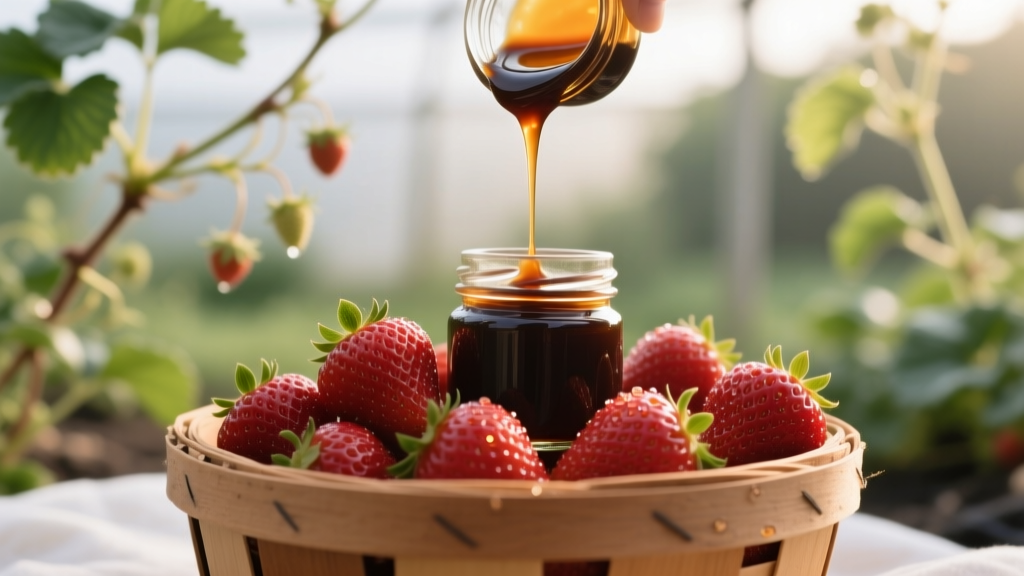
How to Use Molasses in Strawberries Feeding
The first time I tried molasses on strawberries, it wasn’t because I’d read a trendy tip—it was because a bed that usually pumped out sweet berries had gone flat. The plants looked “fine,” but the fruit was smaller, less fragrant, and the flavor had that watery, store-bought vibe. Soil test showed the basics were acceptable, but the bed had been pushed hard for a few seasons. The fix wasn’t dumping more fertilizer. The fix was feeding the soil life so the plant could actually use what was already there.
Molasses can be a useful tool for strawberry growers—but only if you treat it like a microbial snack, not a magic strawberry fertilizer. Used correctly, it can support beneficial soil microbes, improve nutrient cycling, and help a tired patch rebound. Used poorly, it can attract pests, sour the root zone, and trigger soft growth that’s more disease-prone.
This guide is written the way I explain it at the garden gate: what molasses does, when it helps, exact mixing rates, and the real problems I see when people overdo it.
What Molasses Actually Does for Strawberry Plants
Molasses is primarily a sugar source (plus small amounts of minerals), and sugars are fast fuel for soil microbes. When microbial populations are active, they help cycle nutrients into plant-available forms—especially in beds rich in organic matter.
Here’s the grounded truth: molasses doesn’t replace a balanced fertility program. Strawberries still need nitrogen (N) for leaf growth, phosphorus (P) for roots, and potassium (K) for fruiting. Molasses is more like helping the kitchen staff (microbes) work efficiently so your ingredients (nutrients) get turned into meals (plant uptake).
“Simple sugars can stimulate microbial activity in soil; however, additions should be modest and matched to soil conditions to avoid undesirable side effects.” — Soil biology summary, Oregon State University Extension (2023)
University extension guidance consistently emphasizes that soil amendments work best when paired with soil testing and proper cultural practices. For strawberry fertility baselines and timing, the North Carolina State Extension strawberry production recommendations (NCSU Extension Guide, 2020) emphasize applying nutrients according to plant stage and avoiding excess nitrogen near fruiting.
Best rule: If your soil is dead-tired, compacted, or low in organic matter, molasses helps less than compost, mulch, and proper watering. If your soil is already biologically active, molasses can be a gentle nudge.
Before You Feed: Watering, Soil, and Light (Because Molasses Won’t Fix These)
Watering: Keep It Consistent or Your Berries Will Suffer
Strawberries are shallow-rooted. That means they punish inconsistent watering with misshapen fruit, poor size, and disease issues. Aim for 1–1.5 inches of water per week from rain + irrigation during active growth and fruiting. In sandy soil, you may split watering into 2–4 irrigations per week rather than one deep soak.
- Best practice: Water at the base (drip or soaker). Wet leaves + fruit is an invitation to gray mold.
- Timing: Morning watering is safest; foliage dries faster.
- Heat note: When daytime highs run above 85°F, strawberry plants often need more frequent watering, especially in containers.
Soil: The Target pH and Why It Matters
Strawberries prefer slightly acidic soil: pH 5.5–6.5. Outside that range, nutrient availability (especially iron, manganese, and phosphorus) can get weird. If your pH is off, molasses won’t correct that. Lime or sulfur (applied based on soil test) is the real fix.
Also: if drainage is poor, don’t add molasses. Sugary solutions in waterlogged soil can push the root zone toward anaerobic conditions—roots sulk, microbes shift, and diseases get a foothold.
Light: Don’t Expect Sweet Fruit in Shade
For strong yields and sweetness, strawberries want 8+ hours of direct sun. You can get plants to live in less, but flavor and production drop. If your patch gets 4–5 hours, you’ll often see more leaves than berries—molasses won’t change that math.
Choosing the Right Molasses (and What to Avoid)
Use unsulfured molasses. “Sulfured” molasses contains sulfur dioxide used as a preservative, and while it’s not automatically catastrophic, it’s not what you want when your goal is supporting microbes.
- Best choice: Unsulfured blackstrap molasses (common in garden use).
- Avoid: Molasses blends with additives or flavorings.
- Don’t use: Sticky syrups with unknown ingredients meant for cocktails, etc.
Practical note: blackstrap is thicker and dissolves better if you mix it with warm water first (not hot enough to be uncomfortable to the touch—around 90–100°F is fine).
How to Mix and Apply Molasses for Strawberries (Step-by-Step)
For strawberries, I keep molasses applications mild. A little goes a long way.
Standard Soil Drench (My Go-To for Garden Beds)
- Fill a watering can or bucket with 1 gallon of water.
- Stir in 1 tablespoon of unsulfured molasses (15 mL).
- Optional (useful in spring): add 1–2 teaspoons of fish hydrolysate if your soil test supports a bit more nitrogen.
- Apply to soil at the base of plants—avoid soaking fruit and leaves.
- Water lightly afterward if soil is dry so it moves into the top few inches where feeder roots live.
Frequency: Once every 3–4 weeks during active growth is plenty for most home gardens. If your soil is rich and mulched, once every 6 weeks may be enough.
Compost Tea Booster (When You’re Already Brewing)
If you brew aerated compost tea, molasses is often used as a microbial food source. Keep it conservative for strawberries.
- Rate: 1–2 teaspoons per gallon of tea during brewing.
- Brew time: 12–24 hours with steady aeration (don’t push longer unless you know your process).
- Use immediately: Apply the same day. Stagnant tea is trouble.
This is not where “more is better” applies. Overfeeding microbes in a brew can skew biology and smell foul fast.
Container Strawberries (Lower Dose, More Caution)
Containers have less buffering capacity. Sugars can swing things quickly.
- Rate: 1 teaspoon molasses per gallon of water.
- Frequency: Every 4–6 weeks.
- Important: Don’t apply if the potting mix stays wet for days. Fix drainage first.
Comparison: Molasses Drench vs. Standard Fertilizer for Strawberry Feeding
Here’s the straight comparison I give gardeners. One is not “good” and the other “bad”—they do different jobs.
| Method | Typical Mix Rate | Primary Function | How Fast You’ll See Change | Common Risks |
|---|---|---|---|---|
| Molasses soil drench | 1 tbsp per 1 gallon water | Feeds soil microbes; can improve nutrient cycling | Subtle; 2–4 weeks (soil/plant vigor) | Overuse can attract ants/flies; can sour wet soils; may worsen rot if splashed on fruit |
| Balanced granular fertilizer (e.g., 10-10-10) | Follow label; often 0.5–1 lb per 100 sq ft depending on stage | Direct nutrient supply (N-P-K) | Quicker; 7–14 days (greening and growth) | Too much nitrogen reduces flavor and increases soft disease-prone growth |
| Compost topdressing | 0.5–1 inch layer around plants | Slow fertility + organic matter + microbial habitat | Moderate; 3–8 weeks | Heavy compost can hold too much moisture; can bury crowns if applied carelessly |
Practical takeaway: Use fertilizer to meet nutrient needs, compost to build soil, and molasses to support microbial activity when conditions are right.
When to Feed Strawberries with Molasses (Timing That Makes Sense)
Timing matters more than people think. Strawberries have distinct stages, and feeding at the wrong time can push leafy growth when you want fruit.
- Early spring (as growth resumes): One light molasses drench can wake up soil biology, especially if you mulched and the bed stayed cool.
- Pre-bloom (about 2–3 weeks before first flowers): This is a good window if plants look sluggish and your soil is decent.
- Peak fruiting: Use caution. If you apply, keep it light and avoid splashing. Too much “boosting” now can lead to softer fruit and more rot issues if weather is wet.
- After harvest (June-bearing types): A light feeding can support recovery and runner production, but prioritize compost and proper renovation practices first.
For temperature, I prefer applying when soil is warming and microbial activity is naturally increasing—roughly when daytime temps are consistently above 60°F and nights are not freezing.
Three Real-World Scenarios (and Exactly How I’d Handle Them)
Scenario 1: “My plants are green, but berries taste bland.”
This is common in beds that get plenty of nitrogen (from manure, rich compost, or frequent feeding) but lack balanced mineral availability or consistent watering.
- Check watering: hit 1–1.5 inches/week consistently.
- Stop nitrogen-heavy feeding during fruiting.
- Apply a light molasses drench: 1 tbsp/gallon once, then wait 3–4 weeks.
- Mulch with clean straw to keep moisture steady and fruit clean.
If flavor improves slightly but not fully, you likely need a soil test and a targeted potassium or micronutrient correction rather than more molasses.
Scenario 2: “My strawberry patch is thriving, but the soil feels tired and crusty.”
This is where molasses can help, but only as part of a bigger reset.
- Topdress with 0.5–1 inch of finished compost (keep it off the crowns).
- Apply molasses drench once a month for 2 applications during active growth.
- Mulch with straw or shredded leaves 2–3 inches deep between plants.
Crusty soil is often low in organic matter or has been hammered by overhead watering. Fix structure first; molasses is the “seasoning,” not the meal.
Scenario 3: “Containers: good flowers, then fruit stalls and plants look stressed.”
In pots, stress is usually water swings, heat, or root crowding.
- Check pot size: for most varieties, aim for at least a 10–12 inch diameter container per plant cluster.
- Water consistency: in hot weather, daily watering may be necessary; don’t let pots fully dry out.
- Use a diluted molasses drench: 1 tsp/gallon every 4–6 weeks.
- Pair with a light, complete fertilizer at label rates—containers run out of nutrients faster.
Common Problems (and How Molasses Can Help—or Hurt)
Ants, Gnats, and Other Sugar-Lovers
Symptom: Ant trails to plants, fungus gnats hovering near soil, sticky residue smell after feeding.
What happened: Too much molasses, spilled concentrate, or drench applied to dry soil that didn’t absorb well.
Fix:
- Rinse the soil surface with plain water the next day to move sugars down a bit.
- Reduce rate by half next time (or stop for a month).
- Use sticky traps for gnats and let the top 1 inch of container mix dry between waterings (containers only).
Gray Mold (Botrytis) Getting Worse
Symptom: Berries develop soft brown spots, then gray fuzzy mold—especially in damp weather.
What happened: Molasses solution splashed fruit or increased humidity via overly wet soils and dense growth.
Fix:
- Stop molasses during wet spells.
- Switch to drip/soaker; avoid overhead watering.
- Thin runners and remove dead leaves to increase airflow.
- Harvest promptly; don’t leave overripe fruit on plants.
Wet weather is the real driver here. Molasses isn’t the cause, but sloppy application can tip the balance.
Plants Get Lush Leaves but Fewer Berries
Symptom: Big, dark green leaves; fewer flowers; fruit set declines.
What happened: Usually excess nitrogen, not molasses alone. But molasses can accelerate nutrient cycling, making an already nitrogen-rich bed even more vegetative.
Fix:
- Pause feeding (including fish emulsion/manure teas).
- Focus on consistent watering and sun exposure.
- Use compost lightly rather than rich amendments mid-season.
Root Zone Smells Sour or “Off”
Symptom: Soil smells fermented or swampy; plants wilt despite wet soil.
What happened: Poor drainage + added sugars can encourage anaerobic conditions.
Fix:
- Stop molasses immediately.
- Let soil dry to a normal moisture level.
- Improve drainage: raised beds, organic matter for structure, avoid compaction.
Feeding Strawberries the Smart Way: Molasses as a Helper, Not the Plan
Strawberries are heavy feeders over time, especially in the same bed year after year. A practical feeding program looks like this:
A Simple Season Routine (Home Garden Version)
- Early spring: Topdress compost (0.5 inch) + optional molasses drench (1 tbsp/gallon) if soil is biologically sluggish.
- Pre-bloom: Apply a balanced fertilizer if your soil test calls for it (follow label rates). Don’t guess—strawberries punish excess nitrogen.
- Fruiting: Prioritize water consistency and cleanliness. If you use molasses, do it lightly and keep it off fruit.
- Post-harvest (June-bearers): Renovate (thin, mow tops if appropriate for your system), fertilize as recommended, and mulch to rebuild.
Extension recommendations for fertility rates and timing vary by region and soil type, so your local guidance matters. For example, NCSU’s strawberry production recommendations stress stage-based fertilization and avoiding over-application (NCSU Extension, 2020). For soil health and organic matter building, extension programs repeatedly point gardeners back to compost, mulching, and proper irrigation as the “big levers” (Oregon State University Extension, 2023).
Troubleshooting Quick-Check: Should You Use Molasses Right Now?
If you’re on the fence, run through this like a checklist:
- Soil is well-drained? If no, skip molasses.
- Plants get 8+ hours sun? If no, fix light first.
- You’re already using rich compost/manure? If yes, use molasses sparingly (or not at all during fruiting).
- You can apply at soil level without splashing fruit? If no, wait until after harvest or adjust your method.
- It’s dry and you can water in? If yes, that’s the safest time.
Most of my best results come from using molasses 1–2 times per season in beds that already have good structure and mulch. Think of it as a small nudge toward better biology, not a rescue remedy.
If you try it, take notes: date, rate, weather (especially rain), and what you observe in 2 weeks and 4 weeks. Strawberries respond to steady care more than any single input. When your watering is consistent, your crowns aren’t buried, your beds drain well, and your feeding is balanced, molasses becomes what it should be—an optional tool that supports the system you’ve built.