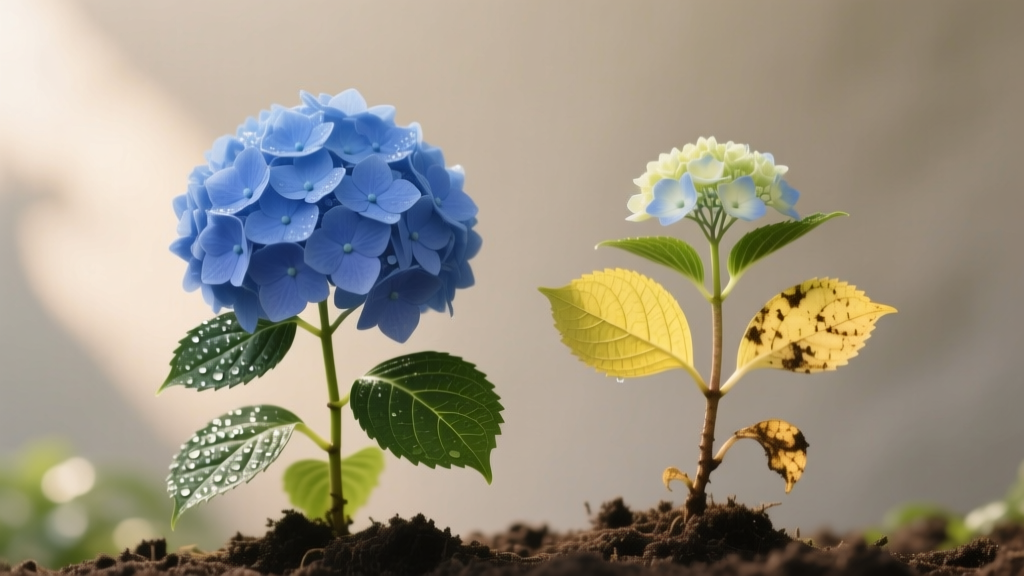
How to Identify Nutrient Deficiency in Hydrangeas
You fertilized in spring, watered faithfully, and your hydrangea still looks… off. The leaves are pale, the veins stand out like green road maps, and the blooms are smaller than last year. I’ve seen this exact scenario play out in countless home gardens: the plant isn’t “dying,” it’s hungry—just not for what you think. Hydrangeas are excellent at showing nutrient problems on their leaves, but they’ll also fool you if you don’t separate nutrient deficiency from watering issues, soil pH, and root stress.
The good news: you can usually diagnose a deficiency with three things—leaf symptoms, timing (which leaves are affected first), and a simple soil test. The better news: once you correct the cause (not just the symptom), hydrangeas tend to rebound within 2–6 weeks during active growth.
Start With the “Big Three” Before You Blame Fertilizer
Most “nutrient deficiencies” I’m called to look at aren’t caused by a lack of nutrients in the soil. They’re caused by the plant being unable to use nutrients because the roots are stressed (too wet, too dry, compacted soil), the pH is off, or the plant is in the wrong light. Fix those first or you’ll keep chasing your tail with more fertilizer.
Scenario #1: The overwatered hydrangea that looked “iron deficient”
A homeowner had yellowing leaves with green veins and kept adding iron. The real issue was a downspout dumping water at the base. Roots sat wet for days, oxygen dropped, and the plant couldn’t take up iron or magnesium reliably. We redirected the downspout and improved drainage; the newest leaves began greening up in about 3 weeks.
Scenario #2: The container hydrangea that “ate” fertilizer and still yellowed
Another case: a bigleaf hydrangea in a pot was watered daily in July heat. The constant runoff leached nutrients, especially nitrogen and magnesium. A controlled-release fertilizer and a measured liquid feed schedule fixed it within a month.
Scenario #3: The pH problem hiding as a nutrient deficiency
In alkaline soil (common near concrete foundations), hydrangeas often show iron chlorosis even when iron is present. The iron is there, but pH locks it up. Lowering pH and using chelated iron gave quick cosmetic improvement, but the long-term win came from addressing the pH.
Watering: How Water Problems Mimic Nutrient Deficiency
Hydrangeas are not drought-tolerant shrubs. But “more water” isn’t always the fix. When roots are waterlogged, nutrient uptake is impaired because roots need oxygen to function.
How much water hydrangeas actually need
- In-ground hydrangeas typically do best with about 1 inch of water per week from rain/irrigation combined (more during heat waves or sandy soil).
- During hot spells above 85°F, expect to water more frequently—especially for panicle and bigleaf types in afternoon sun.
- Containers may need watering every 1–2 days in midsummer, but only if the pot drains freely and you water deeply (until a little runs out the bottom).
Quick watering checks (fast, reliable)
- Finger test: push your finger 2–3 inches into the soil. If it’s dry at that depth, water.
- Drainage test: after watering, the soil should feel moist, not soupy, within an hour. If it stays saturated, you’ve got a drainage problem.
- Mulch depth: keep 2–3 inches of mulch, pulled back a couple inches from stems. Mulch stabilizes moisture and reduces nutrient leaching.
Troubleshooting: symptoms that look like deficiency but aren’t
- Wilt at midday, perked up at night: often heat stress, not a nutrient issue.
- Yellow leaves + soggy soil: root stress from overwatering; nutrients may be present but unavailable.
- Crispy leaf edges after a dry week: drought scorch; feeding won’t fix that.
Soil and pH: The Real Gatekeeper of Nutrient Uptake
If you take only one action from this guide, let it be this: get a soil test. Hydrangeas are especially sensitive to pH because pH drives nutrient availability and (for bigleaf hydrangeas) flower color.
Most hydrangeas grow well around pH 5.5–6.5. When pH climbs above 7.0, iron and manganese become much less available, and you’ll see classic chlorosis even when soil tests show adequate levels.
University-based recommendations consistently emphasize testing before amending. For example, a soil fertility guide from Penn State Extension (2023) notes that pH strongly affects nutrient availability and that lime or sulfur should be applied based on soil test results, not guesswork. Similarly, chlorosis guidance from University of Minnesota Extension (2022) highlights that iron chlorosis is commonly driven by high soil pH and poor drainage rather than low iron in the soil.
“Iron chlorosis is usually caused by high soil pH or poor soil conditions that limit root function—not a lack of iron in the soil.” — University of Minnesota Extension (2022)
What to test (and what to ignore)
- Essential: soil pH, organic matter, phosphorus (P), potassium (K), calcium (Ca), magnesium (Mg).
- Helpful: soluble salts (especially for containers), micronutrients if chlorosis persists.
- Less helpful without context: random “leaf shine” products and general tonics.
Soil structure matters as much as chemistry
Hydrangeas prefer moisture-retentive, well-drained soil—think “wrung-out sponge.” If your soil is heavy clay, nutrients can be present but roots struggle. If your soil is sand, nutrients leach quickly.
Practical fix: top-dress with 1–2 inches of finished compost in spring, then mulch. This improves both water handling and slow nutrient release.
Light: When “Too Much Sun” Triggers Deficiency-Like Symptoms
Bigleaf and mountain hydrangeas often struggle in harsh afternoon sun. Leaves may yellow, scorch, or develop thin, stressed growth that looks underfed. Panicle hydrangeas tolerate more sun, but even they will demand more water and nutrients in full exposure.
Light targets that actually work in home landscapes
- Bigleaf (Hydrangea macrophylla): morning sun + afternoon shade is ideal (roughly 3–5 hours of sun).
- Panicle (H. paniculata): can handle 6+ hours of sun if watered consistently.
- Smooth (H. arborescens): flexible; does well in part sun with regular moisture.
If you’re seeing recurring yellowing and scorch on the sun-facing side only, feeding harder won’t solve it. You’re dealing with a light-and-water mismatch. More shade or more consistent moisture is the fix.
Feeding Hydrangeas: Correct Timing and Rates (Without Overdoing It)
Hydrangeas don’t need constant feeding. They need steady, balanced nutrition and the right pH so they can use it. Overfertilizing is a common cause of weak stems, floppy blooms, and salt stress—especially in containers.
When to fertilize
- Early spring: when buds swell and growth starts.
- Early summer: a light follow-up if growth is pale or the plant is in a container.
- Avoid late-season nitrogen: after mid-summer in colder zones, heavy nitrogen can push tender growth that doesn’t harden off well.
How much to fertilize (practical home-garden numbers)
Use label directions, but here are reliable starting points:
- Granular slow-release: often applied at about 1–2 tablespoons per square foot of root zone (check your specific product).
- Liquid feeding in containers: a balanced fertilizer at 1/2 strength every 2–4 weeks during active growth is safer than full-strength weekly feeding.
- Compost: 1–2 inches top-dressed annually supplies gentle nutrition and improves soil.
Method A vs Method B: Which feeding approach works better?
| Approach | Typical Schedule | Risk Level | Best For | What You’ll Notice (Real-World) |
|---|---|---|---|---|
| A: Slow-release granular | Apply once in spring (sometimes again in early summer) | Low-to-moderate (can burn if overapplied) | In-ground shrubs, busy gardeners | Steadier growth; fewer “ups and downs” in leaf color; fewer leaching losses |
| B: Water-soluble liquid | Every 2–4 weeks during growth (often at 1/2 strength) | Moderate (easy to overdo; higher salt buildup in pots) | Containers, quick correction of mild deficiencies | Faster green-up (often 7–14 days) but more maintenance; requires consistent watering habits |
If you’re in a rainy climate or on sandy soil, method A usually wins because nutrients stay available longer. If you’re correcting a known deficiency in a container, method B is useful—just keep it gentle and consistent.
How to Identify Specific Nutrient Deficiencies (What to Look For First)
When diagnosing, always ask: Are the oldest leaves affected first, or the newest? Mobile nutrients (like nitrogen and magnesium) show up on older leaves first. Immobile nutrients (like iron) show up on new growth first.
Quick symptom map: most common hydrangea deficiencies
Nitrogen (N) deficiency
- Symptoms: overall pale green color; older leaves yellow first; reduced growth and smaller blooms.
- Common causes: leaching from heavy rain/overwatering, low organic matter, container runoff.
- Fix: apply a balanced fertilizer (not just high-nitrogen) and add compost. Water deeply, less often.
- Expected response: new growth improves within 2–4 weeks.
Iron (Fe) deficiency (often pH-related)
- Symptoms: newest leaves turn yellow with green veins (interveinal chlorosis); severe cases whitened leaves.
- Common causes: soil pH above 7.0, waterlogged soil, root damage, too much phosphorus.
- Fix:
- Confirm pH with a soil test.
- If pH is high, acidify gradually using soil-test-guided sulfur applications; avoid sudden drastic changes.
- For quicker cosmetic improvement, apply chelated iron as a soil drench per label.
- Improve drainage if soil stays wet.
- Expected response: newest leaves can green up in 1–3 weeks, depending on root health.
Magnesium (Mg) deficiency
- Symptoms: older leaves show yellowing between veins, sometimes with reddish or purple tint; leaf edges may curl.
- Common causes: leaching in sandy soils or containers, imbalance from high potassium, acidic soils with low Mg.
- Fix: apply magnesium sulfate (Epsom salt) only if deficiency is likely or confirmed. A common garden rate is 1 tablespoon per gallon as a soil drench, repeated once in 3–4 weeks if needed (avoid routine use without symptoms).
- Expected response: new growth improves first; damaged older leaves won’t fully recover.
Potassium (K) deficiency
- Symptoms: marginal scorch on older leaves, weak stems, poorer bloom quality; can resemble drought scorch.
- Common causes: sandy soils, heavy leaching, unbalanced fertilization.
- Fix: use a balanced fertilizer; avoid repeatedly applying nitrogen-only products.
Phosphorus (P) deficiency (less common)
- Symptoms: stunted growth, dull foliage; sometimes purpling on older leaves.
- Common causes: very cold soils in spring, extremely low soil P (rare in many garden soils), root restriction.
- Fix: confirm with soil test; apply phosphorus only as recommended (overapplication can worsen micronutrient lockout).
Troubleshooting by Symptom: What’s Wrong and What to Do This Week
This is the “grab your coffee and walk the garden” section—what I use when I’m diagnosing quickly.
Symptom: Yellow leaves with green veins on the newest growth
Most likely: iron chlorosis from high pH or poor root function.
- Check soil moisture: if soggy, fix drainage first.
- Test soil pH; if it’s above 7.0, plan a gradual pH correction.
- Use chelated iron as a short-term assist (follow label rates carefully).
Symptom: Older leaves yellow first, whole plant looks pale
Most likely: nitrogen deficiency or nutrient leaching.
- Top-dress with compost (1–2 inches) and mulch (2–3 inches).
- Feed with a balanced slow-release fertilizer in spring; for containers, use 1/2 strength liquid feed.
- Adjust watering: deep watering once or twice weekly beats frequent shallow watering.
Symptom: Leaf edges brown and crispy, especially after fertilizing
Most likely: fertilizer burn/salt stress or drought scorch.
- Water deeply to flush salts (containers especially).
- Pause fertilizing for 3–4 weeks.
- Check if fertilizer granules are sitting against stems—move them out to the dripline.
Symptom: Stunted growth, small leaves, weak flowering after planting
Most likely: root establishment issue, compacted soil, or wrong light; nutrients are secondary.
- Check planting depth: root flare should be at soil level, not buried.
- Ensure consistent moisture: about 1 inch/week for in-ground plants.
- Give morning sun/afternoon shade if it’s a bigleaf type.
Common Problems That Get Mistaken for Nutrient Deficiency
Before you treat for deficiencies, rule out these repeat offenders. They can produce yellowing, spotting, and poor bloom that looks like a feeding problem.
Leaf spot diseases
- What you see: dark spots, sometimes with halos; leaves yellow and drop.
- Why it’s confusing: yellowing happens, but it’s not nutritional.
- What to do: remove heavily infected leaves, avoid overhead watering, improve airflow, clean fallen leaves. Fungicides can help prevent spread, but sanitation and watering practices do most of the work.
Root rot (from poor drainage)
- What you see: chronic wilt, yellow leaves, poor growth even with watering.
- What to do: improve drainage, avoid frequent watering, consider raising the planting area or replanting if the site stays wet.
Herbicide drift or lawn chemical burn
- What you see: distorted new growth, twisting, irregular yellowing, scorched margins.
- What to do: prevent drift, avoid treating lawns on windy days, water to reduce stress, and wait—many shrubs outgrow mild exposure over time.
A Simple Diagnosis Routine (What I Do in Real Gardens)
If you want a repeatable process that works season after season, follow this order. It saves money and prevents over-fertilizing.
- Check moisture at 2–3 inches deep and look for puddling or extreme dryness.
- Look at which leaves are affected first: new growth (think iron/manganese) vs older growth (think nitrogen/magnesium).
- Inspect the site: downspouts, compacted soil, root competition from trees, reflected heat from pavement.
- Do a soil test for pH and nutrients before adding single-nutrient fixes.
- Correct one variable at a time and give it 2–4 weeks to see improvement in new leaves.
And here’s the part gardeners often hate hearing: yellow leaves rarely turn fully green again. Your scorecard is the new growth. If new leaves come in healthier, you’re on the right track.
Preventing Nutrient Deficiencies Next Season
Prevention is mostly about steady soil conditions and not letting extremes (dry/wet/pH swing) push the plant into uptake trouble.
- Mulch yearly: maintain 2–3 inches to stabilize moisture and temperature.
- Compost top-dress: 1–2 inches each spring builds resilience and reduces reliance on synthetic fertilizers.
- Water deeply, not constantly: aim for 1 inch/week and adjust for heat, wind, and soil type.
- Test soil every 2–3 years: especially if you battle chlorosis or poor flowering.
- Be cautious with high-phosphorus fertilizers: excessive phosphorus can contribute to micronutrient lockout, particularly iron.
If you’re standing in front of a hydrangea with yellow leaves right now, don’t panic and don’t shotgun five products at it. Check moisture, check pH, and match the symptom to the nutrient pattern. Once you’ve got the cause pinned down, a small correction—done at the right time—usually brings that rich green foliage back and sets the plant up for better blooms the next cycle.
Sources: University of Minnesota Extension (2022), iron chlorosis guidance; Penn State Extension (2023), soil fertility and pH management principles for landscape plants.