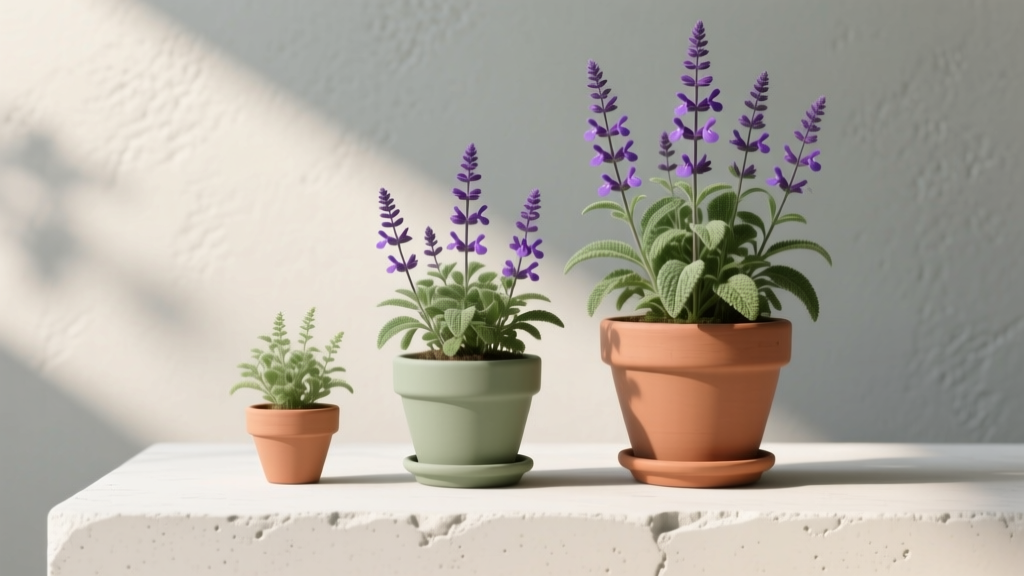
Choosing the Right Pot Size for Salvia
You buy a gorgeous salvia in a 4-inch nursery pot, set it on the patio, and it looks great for about two weeks. Then the flowers stall, the plant wilts midday even though you watered yesterday, and it never quite “takes off.” Here’s the surprising part: with salvias, that slump is often less about fertilizer and more about physics—roots hitting the pot wall, heat building in the container, and water moving too fast (or not at all) through the root zone. Pot size isn’t just a container choice; it sets the rules for watering, oxygen, and temperature around the roots.
I’ve grown salvias in everything from tight balcony pots to big whiskey barrels. When people tell me, “My salvia keeps drying out,” I usually ask two questions: “What size pot?” and “Is it clay or plastic?” Get those right, and most of the other care falls into place.
Pot size first: what salvia needs from a container
Salvia is a broad group (tender tropical types and hardy perennials), but most garden salvias share similar container needs: strong drainage, enough root room for steady growth, and a pot that buffers heat and moisture swings. The trick is choosing a pot that matches the plant’s mature size and your maintenance style.
Quick pot size rules (that actually work on patios)
- Small salvias (compact forms, ~12–18 inches tall): start in a 8–10 inch pot; finish in 10–12 inch (roughly 2–5 gallons).
- Medium salvias (most patio favorites, ~18–30 inches tall): start in 10–12 inch; finish in 14–16 inch (roughly 5–10 gallons).
- Large salvias (tall or shrubby types, 3–5 feet): finish in 18–24 inch (roughly 15–25 gallons).
Avoid the “giant jump” transplant. Moving a salvia from a 4-inch pot into a 20-inch container can leave a big zone of wet soil around a small rootball. That’s how you get root rot in a plant that “should” be drought-tolerant.
Match pot size to rootball size (the safe transplant step)
- Slide the plant out and look at the rootball.
- Choose a new pot that’s 2–4 inches wider than the current rootball diameter.
- Make sure the new pot has at least 1 large drainage hole (multiple holes are better).
- After potting, water until 10–20% drains out the bottom. Empty saucers.
This “2–4 inch step-up” is boring advice, but it’s the single most reliable way to prevent waterlogging while still giving the plant room to grow.
Pot size comparison table: what changes as the container grows
Here’s what I see repeatedly when salvias move between common patio pot sizes. This is not theory—this is what shows up in real watering schedules and real rootballs.
| Final pot size | Approx. volume | Best for | Typical summer watering cadence (full sun) | Common failure mode |
|---|---|---|---|---|
| 10–12 inch | 2–5 gallons | Compact salvias; short-term displays | Every 1–2 days in hot spells; 2–3x/week in mild weather | Rootbound + midday wilting; fast dry-down |
| 14–16 inch | 5–10 gallons | Most medium salvias; season-long pots | 2–3x/week in hot spells; 1–2x/week in mild weather | Overwatering if soil is too heavy; fungus gnats if kept soggy |
| 18–24 inch | 15–25 gallons | Large/shrubby salvias; overwintering candidates | 1–2x/week in hot spells; weekly or less in mild weather | Slow growth if mix is too rich/wet; winter wet roots |
3 real-world pot-size scenarios (and what I’d do)
Scenario 1: Balcony gardener, full sun, you can water only every other day
If you’re in 6+ hours of sun and you miss a day, a 10-inch pot can go from “fine” to “crispy” fast. I’d choose a 14–16 inch pot even for a medium salvia, because the extra soil volume buffers moisture. Use a fast-draining mix (details below), and mulch the surface with 1 inch of fine bark or compost to slow evaporation.
Scenario 2: Shady porch (3–4 hours of sun), you love to water
In lower light, salvia uses less water. A big pot plus frequent watering is where roots suffocate. I’d keep the plant in a 10–12 inch pot longer, and I’d use extra drainage amendments (pumice/perlite). The goal is oxygen, not “more dirt.”
Scenario 3: Overwintering a tender salvia (bringing it inside)
If you plan to overwinter indoors, don’t oversize the pot. A container that’s too large stays wet longer in winter light. For most tender salvias, I aim for a final pot around 12–14 inches, and I reduce watering sharply once it’s inside (more on that below). Keep it above 50–55°F to avoid cold stress and leaf drop.
Watering: how pot size changes everything
Pot size controls how quickly the root zone dries. Smaller pots dry quickly and can need water daily in heat. Larger pots dry more slowly, which is great—until it becomes a soggy, airless problem.
“Most container plant failures I diagnose trace back to poor root aeration—too much water held too long in the potting mix.” — University of Georgia Extension container plant guidance (2023)
That matches my experience with salvias: they’ll tolerate a missed watering better than they’ll tolerate constantly wet roots.
A practical watering method (works across pot sizes)
- Finger test: Push a finger 2 inches into the mix. If it’s dry at that depth, water.
- Lift test: Learn the “light pot” feel. A dry pot is noticeably lighter than a freshly watered one.
- Water deeply: Water until you get steady drainage, aiming for 10–20% runoff.
Heat rule: when daily watering becomes normal
In containers, hot weather hits roots hard. When daytime highs are consistently above 90°F, a salvia in a 10–12 inch pot in full sun may need water daily. In a 16-inch pot, it might be every 2–3 days. This isn’t because the plant “got thirstier” overnight; the pot simply can’t buffer the heat and evaporation.
Troubleshooting watering symptoms
Symptom: Midday wilting, but the plant looks fine again at dusk.
Likely cause: Heat stress or a slightly rootbound plant drying fast.
Fix:
- Check the pot size; consider stepping up 2–4 inches.
- Water early morning; avoid shallow sips.
- If the plant is rootbound (roots circling), loosen the outer roots before repotting.
Symptom: Leaves yellowing from the bottom up, stems soft, soil stays wet for days.
Likely cause: Pot too large for the rootball, or mix too water-retentive.
Fix:
- Move to a smaller pot (yes, smaller) or repot using a grittier mix.
- Stop watering on a schedule; water only when the top 2 inches are dry.
- Make sure the pot has clear drainage holes; don’t let it sit in a saucer of water.
Soil (potting mix): build a root zone that breathes
Salvia in the ground can handle a range of soils if drainage is decent. In a pot, “decent” isn’t enough—you need consistent air spaces. Many bagged “potting soils” are too peat-heavy on their own for long-term salvia culture, especially in larger containers.
A reliable DIY mix for container salvia
This recipe drains well but still holds enough moisture for real-world patios:
- 60% quality potting mix (peat/coco-based, with some bark)
- 30% pine bark fines or orchid bark (improves structure)
- 10% pumice or perlite (extra aeration)
If you can’t source bark fines, do 70% potting mix + 30% perlite/pumice for a lighter alternative. For very large pots (18 inches+), I lean harder on bark because it resists collapse over the season.
Soil pH and why it matters less than drainage (but still matters)
Most salvias are comfortable around slightly acidic to neutral conditions, roughly pH 6.0–7.0. In containers, the bigger issue is salt buildup from fertilizer and hard water. Purdue University Extension notes that container media and watering practices strongly influence soluble salts and root health (Purdue Extension publication, 2022). That’s why occasional leaching is useful (see Feeding section).
Light: pot size doesn’t replace sunshine
Salvias bloom best with strong light. For most flowering salvias, aim for 6–8 hours of direct sun. In very hot climates, a little afternoon shade can reduce stress, especially for plants in smaller pots where root zones overheat.
Container-specific light tips
- Dark pots run hotter. A black plastic pot can cook roots in full sun. If you must use dark pots, consider a larger size (more buffering) or place the pot inside a light-colored cachepot with an air gap.
- Rotate weekly. Turn the pot a quarter turn every 7 days to keep growth balanced.
- Spacing matters. Crowded pots dry slower and can invite mildew; give airflow.
Feeding: enough to bloom, not so much it flops
Overfeeding salvia—especially in a large pot with rich mix—often produces lush, floppy growth with fewer flowers. Underfeeding in a small pot can stall bloom because nutrients leach quickly with frequent watering.
A practical feeding plan (two options)
Option A: Controlled-release fertilizer (low effort)
- Apply a controlled-release fertilizer in spring at label rates (common formulas like 10-10-10 or similar).
- For most patio pots, that’s a once-per-season approach with minor midseason touch-ups if growth pales.
Option B: Liquid feed (more control)
- Use a balanced liquid fertilizer at 1/2 strength every 2–3 weeks during active growth.
- Skip feeding during extreme heat waves (plants aren’t using nutrients efficiently then).
Leaching salts: the overlooked container step
If you’re feeding regularly or you have hard water, flush the pot every 4–6 weeks:
- Water the pot thoroughly until water streams from the bottom.
- Wait 5 minutes.
- Water again to push leftover salts out.
This simple habit can prevent leaf-tip burn and mysterious slowdowns in midsummer.
Common problems tied to pot size (and what to do)
Rootbound plants: lots of flowers, then sudden decline
What you’ll see: The plant dries out fast, wilts in heat, and stops putting on new growth even though it’s sunny and you’re watering. When you slide it out, roots circle the pot tightly.
Fix:
- Step up to a pot 2–4 inches wider.
- Tease or slice the outer root layer in 3–4 places to encourage new outward roots.
- Water deeply after repotting and keep it out of harsh afternoon sun for 3–5 days.
Root rot: the “I watered because it looked sad” trap
What you’ll see: Limp growth that doesn’t perk up after watering, yellowing leaves, sour smell in the pot, and sometimes blackened roots.
Fix:
- Unpot and inspect roots. Trim mushy roots with clean snips.
- Repot into a smaller container if the rootball is small, using a gritty mix.
- After repotting, water once, then wait until the top 2 inches dry before watering again.
Powdery mildew: more common when pots are crowded or shaded
What you’ll see: White, dusty patches on leaves, usually when airflow is poor and nights are cool.
Fix:
- Increase spacing between pots and prune lightly for airflow.
- Avoid wetting foliage late in the day.
- Move the pot to stronger morning sun if possible.
Aphids and whiteflies: lush growth from oversized pots + high nitrogen
What you’ll see: Sticky residue, curled new growth, insects on tips.
Fix:
- Ease up on feeding (especially high nitrogen).
- Rinse pests off with a firm spray of water every 3 days for 2 weeks.
- If needed, use insecticidal soap, covering leaf undersides.
Method comparison: “Pot up big once” vs. “Step up in stages” (with real outcomes)
Gardeners love the idea of planting once into a big decorative pot and being done. Sometimes it works, but with salvia it’s riskier than staged potting—especially in spring when roots are still modest.
Method A: Pot up big once
- Example: 4-inch nursery pot straight into a 20-inch container (~15–25 gallons).
- Upside: Fewer transplants; more moisture reserve once roots fill in.
- Downside: Higher chance of staying wet too long for the first 3–6 weeks, especially in partial sun or cool weather.
Method B: Step up in stages (recommended)
- Example: 4-inch → 10–12 inch for 4–8 weeks → 14–16 inch final.
- Upside: Roots colonize the pot quickly; watering becomes predictable; less rot risk.
- Downside: You handle the plant more than once.
If you’re growing on a windy, sunny patio and you’re a confident waterer, Method A can work with a very airy mix. For most home gardeners (especially those who water “just in case”), Method B is the safer path to a fuller plant and steadier bloom.
Pot material and shape: size is only half the story
A 14-inch pot isn’t always a 14-inch pot in practice. Material and shape change how fast soil dries and how hot roots get.
- Terracotta (unglazed clay): Breathes and dries faster. Great for gardeners who tend to overwater. In hot weather, you may water more often.
- Plastic: Holds moisture longer and heats up. Good if you can’t water often, but watch drainage and heat exposure.
- Glazed ceramic: Holds moisture like plastic but stays cooler than black plastic. Often excellent for salvias if drainage holes are generous.
Also watch pot shape: tall, narrow pots dry differently than wide, squat ones. Salvias generally prefer a pot with a stable base and consistent moisture, so avoid extremely narrow “column” pots unless you’re very dialed in on watering.
Seasonal timing: when to repot and when to leave it alone
The easiest time to adjust pot size is when the plant is gearing up to grow.
- Spring: Best time to step up a pot size as new growth starts.
- Mid-summer: You can repot, but do it during a mild week and protect from harsh sun for 3–5 days.
- Fall: Avoid upsizing unless you must. Bigger pots stay wetter in cool weather.
If you’re in a cold-winter region and growing a tender salvia, plan your final pot size by late summer. A giant pot is harder to move and slower to dry indoors, which is exactly what you don’t want in winter light.
A few last “master gardener” checks before you commit to a pot
When you’re standing in the aisle holding two pot sizes, here’s how I decide without overthinking it:
- If you miss waterings: go one size bigger (but keep the mix airy).
- If you love watering: go one size smaller (and don’t use a saucer full-time).
- If the plant will live in full, blasting sun: avoid black plastic in small sizes; heat stress is real.
- If you want nonstop bloom: prioritize steady moisture and oxygen—usually a 14–16 inch pot for most patio salvias.
Salvia is forgiving above ground, but picky below ground. Give it a pot that fits the roots today and a mix that stays breathable tomorrow, and it will repay you with months of flowers and a steady hum of pollinators. That’s the kind of “easy plant” salvia is meant to be.
Sources: University of Georgia Extension container plant guidance (2023); Purdue University Extension container media and soluble salts publication (2022).