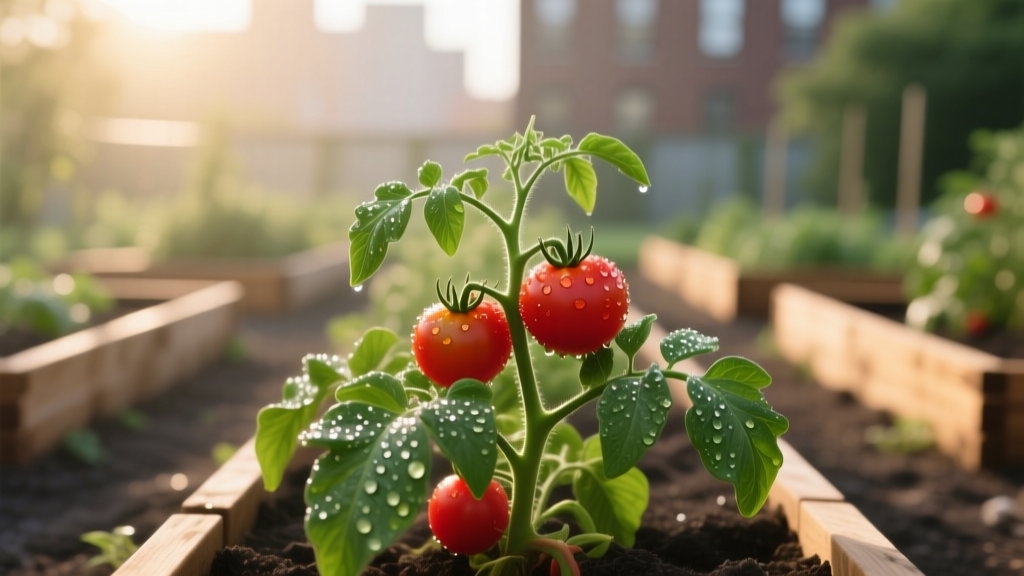
The Best Time of Day to Water Tomatoes
You walk out to the garden at 5 p.m. and your tomato plants look dramatic—leaves drooping, tips curling, and the whole row begging for water. You hose them down, feel like a hero, and go inside. The next morning, the plants look… fine. A week later you’re dealing with split fruit, blossom-end rot, and a little powdery mildew you swear wasn’t there before. Sound familiar?
Tomatoes are forgiving in a lot of ways, but timing your watering is one of those small habits that quietly decides whether you harvest perfect slicers or spend July troubleshooting problems. The “best” time isn’t a myth or a one-size-fits-all rule. It’s a practical choice based on evaporation, disease pressure, root behavior, and your real life.
The short answer: water tomatoes in the morning
If you want the simplest, most reliable rule: water tomatoes in the early morning, ideally between 6 a.m. and 10 a.m. That window gives roots time to drink before midday heat, while the foliage and soil surface dry out as the day warms—reducing the risk of fungal disease.
This lines up with standard Extension advice. For example, the University of Minnesota Extension (2023) emphasizes watering early in the day to reduce leaf wetness duration and disease risk. The UC ANR Integrated Pest Management program (2022) similarly notes that managing moisture and leaf wetness is key for preventing common tomato diseases.
“Most plant diseases require free moisture on the leaf surface for infection. Shortening the time leaves stay wet is one of the simplest ways to reduce disease.” — UC ANR IPM guidance on moisture management (2022)
Now let’s make that morning advice useful in the messy reality of heat waves, containers, sandy soil, and vacations.
How timing affects tomato health (and fruit quality)
Morning watering: the “default best”
Morning watering works because it balances three things tomatoes care about:
- Lower evaporation: You lose less water than you would at noon. In hot, windy weather, midday watering can evaporate quickly from the soil surface before roots benefit.
- Stronger root uptake: Soil moisture is available before the plant starts transpiring heavily later in the day.
- Less disease pressure: Any splashed water or humid microclimate has time to dry.
Evening watering: sometimes necessary, but handle it carefully
Evening watering (roughly 6 p.m. to 9 p.m.) can be a lifesaver during extreme heat, especially for containers. The tradeoff is that cooler nighttime temperatures slow evaporation, so soil and lower leaves can stay damp longer. That’s when fungal issues like early blight and Septoria can get a foothold.
If you must water in the evening, aim the water at the soil only—no showering the plant—and keep the foliage pruned so air can move.
Midday watering: not ideal, but not “wrong” in a heat emergency
Midday watering is usually inefficient, and splashing hot leaves can stress plants. But if your tomatoes are in containers on a sunny patio and the potting mix is drying to dust by 2 p.m., a targeted rescue watering can prevent blossom drop and fruit stress.
Think of midday watering as “first aid,” not your main routine.
Comparison: morning vs evening vs midday (with real tradeoffs)
| Watering time | Best for | Main risks | Practical tips |
|---|---|---|---|
| Morning (6–10 a.m.) | Most gardens, in-ground beds, drip systems | Missing the window on workdays | Water deeply to 6–8 inches; mulch after watering |
| Midday (11 a.m.–4 p.m.) | Heat emergencies, containers drying fast | Higher evaporation; leaf scorch if foliage is wetted | Water soil only; use a watering wand low to the ground; add shade cloth if repeated |
| Evening (6–9 p.m.) | Busy schedules; hot climates where plants flag daily | Longer leaf wetness; higher fungal disease risk | Avoid wet leaves; prune lower leaves; increase spacing/airflow |
How much water tomatoes actually need (and how to tell)
Timing matters, but the bigger secret is consistency. Tomatoes hate dramatic swings: bone dry one day, soaked the next. That’s how you get splitting and blossom-end rot.
Weekly target (in-ground)
A good baseline for in-ground tomatoes is about 1 to 1.5 inches of water per week (rain + irrigation), delivered in deep soakings rather than frequent sprinkles. During peak summer heat or on very sandy soils, you may need closer to 2 inches per week.
That baseline is commonly recommended in Extension guidance; for example, Penn State Extension (2021) notes that many vegetable crops perform best around an inch of water weekly, adjusted for weather and soil.
Container target (pots and grow bags)
Containers are a different animal. In a 5-gallon pot in full sun, a fruiting tomato can require watering once daily during hot spells, and sometimes twice daily when temperatures push above 90°F (32°C) with wind.
Use the “finger test” and the “depth test”
- Finger test: Stick your finger into the soil. If the top 2 inches are dry, it’s time to water (for most garden soils).
- Depth test: After watering, check moisture depth with a trowel. You want moisture reaching at least 6–8 inches down for established plants.
Simple, actionable watering routine (in-ground)
- Water in the morning.
- Water at the base, not over the leaves.
- Soak slowly so it penetrates 6–8 inches.
- Mulch 2–3 inches deep (straw, shredded leaves, or untreated grass clippings) to slow evaporation.
- Adjust after rain and heat waves rather than sticking to a rigid schedule.
Real-world scenarios: what to do when life (and weather) happens
Scenario 1: Heat wave and droopy leaves at 3 p.m.
If the leaves droop in the afternoon but perk back up by evening, that’s often heat-related transpiration, not necessarily drought. Here’s how I handle it:
- Check soil moisture first. If soil is still moist 2 inches down, don’t automatically water.
- If soil is dry, give a deep watering at the base—even if it’s midday—then add mulch.
- If this is happening daily above 95°F (35°C), consider 30–40% shade cloth over the plants during the hottest part of the day.
Scenario 2: You can only water after work (evening watering reality)
Evening watering can work if you’re disciplined about technique:
- Use drip irrigation or a soaker hose under mulch so foliage stays dry.
- Prune lower leaves up to 8–12 inches from the soil once plants are established (especially in humid climates).
- Water early evening, not late night—give surfaces time to dry before dew settles.
Scenario 3: Vacation week and your neighbor is “helping”
Tomatoes suffer more from overhelpful watering than from mild dryness. If a neighbor is watering:
- Ask them to water deeply twice during the week rather than a little every day (for in-ground beds).
- Show them what “base watering” looks like—no spraying the whole plant.
- Leave a rain gauge or a tuna can (about 1 inch deep) so they can see how much water actually went down.
Soil: the hidden driver of watering timing
You can water at the “perfect” time and still struggle if your soil is working against you.
Ideal texture and drainage
Tomatoes like a soil that holds moisture but drains well—think crumbly, organic-rich loam. If water puddles for more than 4–6 hours after irrigation, drainage is too slow and roots can suffocate, inviting root rot and yellowing.
Mulch is your watering schedule’s best friend
A 2–3 inch mulch layer can cut evaporation dramatically, keeps soil temperatures steadier, and reduces soil splash (a big disease spreader). Soil splash is how many fungal spores get from the ground onto lower leaves.
Raised beds vs in-ground vs containers
- Raised beds: Drain faster; you may water more often, but morning is still best.
- In-ground clay: Holds water longer; water less frequently but deeply to avoid shallow roots.
- Containers: Dry fastest; morning plus a second check in late afternoon during heat is common.
Light and heat: when the sun changes your watering plan
Tomatoes want full sun—generally 6–8+ hours of direct light. More sun means more fruit potential, but also more water demand.
Pay attention to nighttime temperatures, too. When nights stay above 70°F (21°C), plants respire more and can feel stressed; consistent morning watering and mulching help keep them steady. If your tomatoes are in a reflected-heat location (next to a wall or on a paved patio), expect to water more often regardless of time of day.
Feeding tomatoes without messing up watering
Overfeeding and inconsistent watering are a classic combo that creates lush leaves and disappointing fruit.
Practical feeding schedule
- At planting: mix in compost and, if you use it, a balanced organic fertilizer.
- Once flowering starts: shift toward a fertilizer with lower nitrogen and adequate potassium.
- Frequency: many gardeners do well feeding every 2–4 weeks during active growth, but always follow label rates.
Water first, then fertilize
Never fertilize a dry tomato plant. Watering first reduces root burn and helps nutrients move into the root zone. If you’re using liquid fertilizer, apply it in the morning and avoid splashing foliage.
Common watering-related problems (and how to fix them fast)
This is where timing, amount, and technique show up as symptoms. Here are the issues I see most in home gardens.
Blossom-end rot (brown/black leathery patch on the bottom of fruit)
What it looks like: A dark, sunken spot on the blossom end of green or ripening tomatoes.
Most common cause: Inconsistent moisture limiting calcium movement—not usually “lack of calcium in soil.”
Fix:
- Even out watering: aim for steady moisture reaching 6–8 inches deep.
- Mulch 2–3 inches to reduce swings.
- Avoid heavy nitrogen feeding that pushes fast growth.
Fruit splitting (cracks around the shoulders or vertical cracks)
What it looks like: Tomatoes crack open after rain or a heavy watering.
Cause: The fruit swells quickly after a dry period, skin can’t keep up.
Fix:
- Don’t let plants go bone-dry, then flood them.
- Water on a schedule that matches weather; during hot weeks, check soil daily.
- Harvest near-ripe fruit before a forecasted heavy rain.
Wilting that doesn’t recover by evening
Symptoms: Plant stays wilted even after the sun drops; leaves may yellow.
Possible causes: Underwatering, root damage, or disease (including bacterial wilt in some regions).
What to do:
- Check soil moisture 3–4 inches down with a trowel.
- If soil is dry, water deeply and mulch.
- If soil is wet and the plant is still wilting, stop watering and inspect roots/drainage; consider disease and remove affected plants to limit spread.
Early blight / Septoria leaf spot (brown spots, yellowing lower leaves)
Symptoms: Spots start on lower leaves, move upward; leaves yellow and drop.
Watering link: Splashing soil onto leaves and long leaf-wetness periods.
Fix:
- Water in the morning and water the soil, not the leaves.
- Mulch 2–3 inches to prevent soil splash.
- Prune lower foliage and improve airflow; stake or cage plants.
Method comparison: drip irrigation vs overhead watering (with practical data)
If you want a measurable upgrade in tomato health, change how you water, not just when. Here’s the comparison I see in real gardens.
| Method | Where the water goes | Disease risk | Water efficiency | Best use |
|---|---|---|---|---|
| Drip/soaker under mulch | Root zone | Lower (leaves stay drier) | High; less evaporation | In-ground beds, raised beds, busy schedules |
| Overhead sprinkler/hose spray | Leaves + soil surface | Higher (leaf wetness + splash) | Lower in heat/wind | Only if you can water early and keep foliage dry later |
Actionable setup tip: for in-ground rows, a simple drip line delivering around 0.5–1.0 gallons per hour per emitter (varies by product) run long enough to moisten 6–8 inches deep is far more consistent than hand-watering. Your goal isn’t a specific number of minutes—it’s wetting depth.
Smart timing tweaks by growth stage
Seedlings and transplants (first 2 weeks)
Young roots are shallow. Water more frequently but with smaller amounts, keeping the root ball evenly moist. Morning watering still helps, but check moisture again in late afternoon if it’s hot and windy.
Flowering and fruit set
This is where inconsistent watering shows up as blossom drop and future blossom-end rot. Stick to the morning routine and avoid letting plants swing from dry to drenched.
Peak fruiting
Fruiting plants are thirsty. Keep soil consistently moist and harvest regularly. If you’re growing in containers, expect daily watering during hot stretches, especially above 90°F (32°C).
Troubleshooting: quick symptom-to-solution guide
If you only remember one thing: don’t guess—check the soil.
- Leaves curled but green, plant otherwise vigorous: Often heat or variety trait. Check soil 2 inches down; water if dry. Add mulch and consider afternoon shade in extreme heat.
- Yellow lower leaves + spots: Switch to morning base watering; mulch 2–3 inches; prune lower leaves; avoid overhead watering.
- Lots of leafy growth, few flowers: Ease up on nitrogen; ensure 6–8 hours of sun; water consistently but don’t overwater.
- Soil always wet, fungus gnats in containers: Improve drainage, use a chunkier potting mix, let the top 1–2 inches dry before watering again, and ensure pot has unobstructed drain holes.
Putting it all together: a realistic best-practice plan
If you want a routine you can actually follow, here’s what I recommend for most home gardens:
- Water in the morning whenever possible (roughly 6–10 a.m.).
- Water deeply so moisture reaches 6–8 inches down.
- Mulch 2–3 inches to stabilize moisture and reduce disease splash.
- Use drip or soaker hoses under mulch for the cleanest, most consistent watering.
- Adjust for containers and heat: check daily; water again late afternoon only if the mix is actually drying out.
Tomatoes don’t need you hovering—they need steady habits. Get the timing right most days, water to the right depth, and keep the leaves dry, and you’ll notice something: fewer “mystery problems,” better fruit texture, and plants that keep producing when your neighbors’ tomatoes are already giving up.
Sources: University of Minnesota Extension (2023); UC ANR Integrated Pest Management (2022); Penn State Extension (2021).