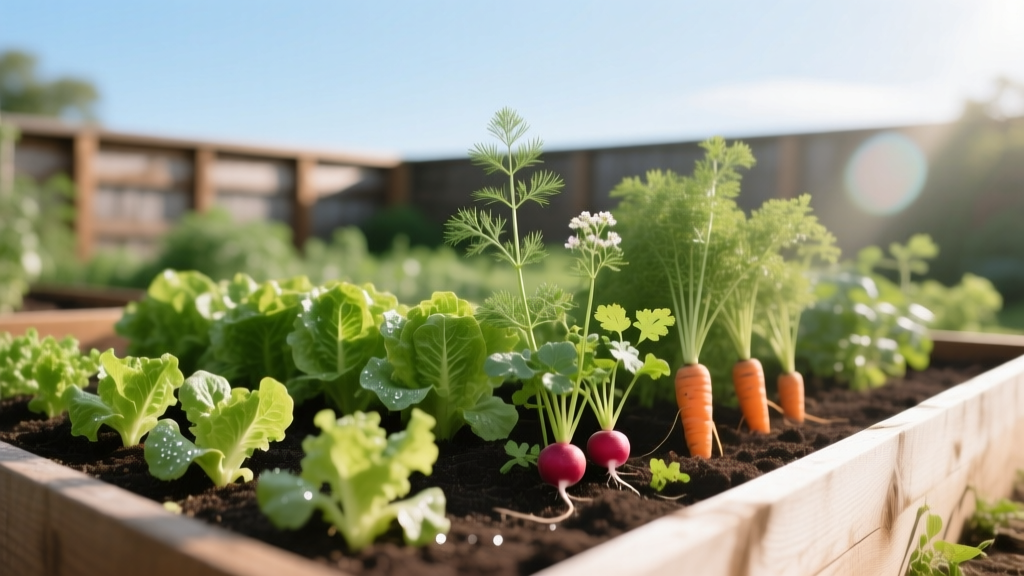
Planning Succession Planting for Vegetable Gardens
Every spring it happens: you sow a big patch of lettuce, it looks gorgeous for three weeks, then a heat wave hits and the whole bed bolts at once. Or you get a flood of zucchini that you can’t give away, followed by a sad, empty garden corner for the rest of summer. The fix isn’t more space or more fertilizer—it’s timing. Succession planting is the simple habit of planting in planned waves so you harvest steadily instead of all-at-once.
I learned this the hard way in a 4x8 raised bed. My first year was a “one-and-done” planting. By mid-July, I had harvested most of it and spent the rest of the season watering weeds. Once I started replanting every 2–3 weeks and swapping crops as soon as one finished, that same bed produced from April through October with fewer pest blowups and far less waste.
This guide walks you through a practical system for planning succession planting in a home vegetable garden, with specific timings, measurements, and troubleshooting. I’ll focus on the plant-care realities—watering, soil, light, feeding, and common problems—because succession planting only works when the next crop actually thrives.
What succession planting really means (and what it looks like at home)
Succession planting isn’t one technique—it’s a few strategies you can mix and match:
- Staggered sowing: Plant small batches of the same crop every 7–21 days (classic for lettuce, radishes, beans).
- Relay planting: Seed the next crop while the current crop is still finishing (plant bush beans between maturing garlic; transplant brassicas as onions size up).
- Follow-on planting: Pull a crop and immediately replant that space (peas → cucumbers; spring spinach → basil).
- Interplanting: Tuck fast crops among slow ones (radishes under tomatoes early; scallions around peppers).
A quick reality check: succession planting is easiest when you track days to maturity and your first and last frost dates. Most home gardeners can manage this with a calendar, a notebook, and seed packets—no fancy spreadsheets required.
Start with three real-world scenarios (because gardens aren’t theoretical)
Scenario 1: The “salad gap” in summer
You plant lettuce once in April. It’s great until June, then it turns bitter. The solution is to shift from lettuce-heavy sowings to heat-tolerant greens and smarter timing: sow lettuce every 10–14 days through late spring, then switch to Malabar spinach, Swiss chard, and basil when nights stay above 60°F. Keep lettuce going by sowing in shade and choosing heat-tolerant varieties.
Scenario 2: A small raised bed that “runs out of garden”
In a single 4x8 bed, you can harvest three seasons if you treat it like a relay track. Example: March spinach & radishes → May bush beans → August carrots for fall. The trick is fast turnaround: compost, water, re-seed the same day whenever possible.
Scenario 3: Short growing season (first frost comes early)
If your first frost is around October 1, you can still succession plant—but you must count backward and use transplants. A 55-day broccoli planted from seed in July won’t make it; a 4-week-old transplant set out August 1 often will. Season extension (row cover) can buy you 2–4 weeks depending on your climate and protection.
Planning your succession calendar (simple method that works)
Here’s a process I use with clients because it’s fast and forgiving.
Step-by-step: build a workable succession plan
- Write down your frost dates (average last spring frost and first fall frost).
- List your top 8–12 vegetables you actually eat.
- Mark each as “short,” “medium,” or “long” season:
- Short: 20–45 days (radish, baby greens, spinach, arugula)
- Medium: 45–70 days (bush beans, beets, carrots, cucumbers)
- Long: 70–120+ days (tomatoes, peppers, winter squash)
- Decide your succession interval:
- Every 7–10 days: radish, arugula, baby greens
- Every 14 days: lettuce, beets (for baby beets), cilantro (short runs)
- Every 21 days: bush beans, carrots (if you want steady harvests)
- Reserve space for warm-season anchors (tomatoes, peppers). These don’t succession well in most home gardens—plan around them.
- Schedule “reset days” after big harvests to replant: 30 minutes to pull, amend, water, and sow.
For timing support, Cooperative Extension resources are solid. The University of Minnesota Extension emphasizes matching planting dates to crop temperature preferences and using successive plantings to stretch harvest windows (University of Minnesota Extension, 2023). Similarly, Oregon State University Extension discusses planning successions around frost timing and maturity days to keep beds productive (Oregon State University Extension, 2022).
Watering for succession planting: the hidden make-or-break factor
The biggest difference between “I replanted” and “it actually grew” is moisture management. New seed needs consistent surface moisture; established plants need deeper watering. Succession planting forces you to do both at the same time in the same garden.
How much to water (practical targets)
- Newly seeded rows: keep the top 1 inch of soil evenly moist until germination. In hot or windy weather, that can mean a light watering 1–2 times per day.
- Established beds: aim for about 1 inch of water per week total (rain + irrigation), adjusted for heat and soil type. Sandy soil may need more frequent watering; clay holds longer.
- After transplanting: water in deeply (enough to wet soil to 6 inches), then water daily for 2–3 days if conditions are hot, tapering as roots grab.
Two watering tricks that smooth successions
- Use a “nursery strip” method: keep a narrow strip of soil consistently moist for direct-seeded successions (carrots, lettuce), while the rest of the bed gets deeper, less frequent watering.
- Mulch, but don’t bury seedlings: mulch established plants with 1–2 inches of shredded leaves or straw; pull mulch back from seeded rows until seedlings are up and sturdy.
“Uniform soil moisture is critical during germination; even short drying periods can reduce stands, especially for small-seeded crops like lettuce and carrots.” — University Extension horticulture guidance (University of Minnesota Extension, 2023)
Soil prep between plantings: fast resets without wrecking structure
Succession planting tempts you to over-till because you’re always “starting over.” Try not to. Soil structure improves when you disturb less, add organic matter, and keep roots in the ground as much as possible.
Quick bed reset (10–15 minutes per bed)
- Remove crop residue (healthy leaves can be composted; disease-affected plants should be trashed).
- Loosen only where needed with a hand fork to 4–6 inches, especially for carrots and beets.
- Add compost: spread 1/2 inch of finished compost over the surface and lightly rake in. For a 4x8 bed (32 sq ft), that’s roughly 1.3 cubic feet of compost.
- Re-level and water before sowing so the seedbed is evenly moist.
Soil temperature matters more than the calendar
Early successions fail when soil is too cold. Use a simple soil thermometer:
- Peas, spinach: can germinate in cool soils around 40–45°F (slowly).
- Beans: prefer soil at least 60°F for reliable germination.
- Cucumbers/squash: do best closer to 65–70°F.
If you plant beans into 50°F soil, they may rot. Succession planting doesn’t override biology—it just helps you use your season wisely.
Light management: making room as crops change
Light is the resource you can’t add later. Successions work best when you plan height and shade.
Rules of thumb I use in small gardens
- Put tall crops (tomatoes, pole beans, corn) on the north side of beds so they don’t shade everything else.
- Use partial shade intentionally for summer greens: 30–40% shade cloth or the east side of taller crops can keep lettuce from bolting as fast.
- For fall successions, prioritize the sunniest spots because days shorten; a bed that’s “fine” in June can be too shady in September.
Feeding and fertility: keeping the garden productive through multiple rounds
With succession planting, you’re asking the same soil to support two or three crops per season. Compost helps, but you also need a plan for nitrogen-hungry plants.
Simple feeding plan (that won’t overdo it)
- At each replant: add 1/2 inch compost (as described above).
- For leafy successions (lettuce, spinach, kale): side-dress with a nitrogen source about 3–4 weeks after planting (fish emulsion, blood meal, or a balanced organic fertilizer).
- For fruiting crops (tomatoes, peppers): avoid heavy nitrogen after flowering—too much leaf, fewer fruits. Use a balanced or slightly lower-N fertilizer.
If you prefer packaged fertilizer, follow label rates, but here’s a grounded reference point: many organic granular fertilizers are applied around 2–4 tablespoons per square foot at planting. Start at the low end if you’re also adding compost.
Comparison analysis: direct sowing vs transplants for succession planting
Both methods work, but they behave differently in a tight calendar. Here’s how they compare in real garden terms.
| Factor | Direct sow (seed in bed) | Transplant (starts planted out) |
|---|---|---|
| Time to harvest | Full days-to-maturity (e.g., lettuce 45–55 days) | Often saves 14–28 days if transplant is 2–4 weeks old |
| Watering needs | Surface kept moist (top 1 inch) until germination; can be daily in heat | Deep watering at planting; then steady moisture 2–3 days while roots establish |
| Best crops | Carrots, radish, beans, peas, beets | Brassicas, lettuce, onions/leeks, tomatoes/peppers |
| Risk points | Soil crusting, washout, seed rot in cold/wet soil | Transplant shock, pests targeting tender starts |
| Cost and effort | Cheaper; less setup | Higher cost or indoor setup, but tighter scheduling control |
Practical takeaway: use direct sowing for quick, cheap repeat plantings (radish every 10 days), and use transplants when you’re racing the calendar (fall broccoli, late basil, replacement cucumbers after beet harvest).
Succession planting templates you can copy (and adjust)
Here are three patterns that consistently work in home gardens. Adjust dates to your climate, but keep the spacing and intervals.
Template 1: Salad bed that keeps going
- Weeks 1–6 of spring: sow lettuce or salad mix every 14 days.
- Add radishes every 10 days along the edge.
- As heat builds: replace one lettuce sowing with basil or chard; switch cilantro to early morning shade.
- Late summer: sow arugula and spinach again 6–8 weeks before first frost.
Template 2: Spring roots to summer beans to fall carrots
- Early spring: beets + scallions interplanted.
- Early summer: pull beets; plant bush beans the same day.
- Late summer: after beans finish, add compost and sow carrots for fall (use a board over the row to hold moisture for 5–7 days until germination begins).
Template 3: Garlic-onion space reuse (classic relay)
- Garlic grows most of the season; as lower leaves yellow, plant a quick crop nearby.
- After garlic harvest (often mid-summer), replant with cucumbers, bush beans, or a fall brassica transplant depending on remaining days.
Common problems (and fixes) that show up in succession gardens
Succession planting is productive, but it exposes weak links fast: uneven watering, depleted soil, and pest cycles. Here are the issues I see most.
Troubleshooting: poor germination in later plantings
- Symptom: patchy seedlings; bare spots in rows.
- Most likely causes: soil surface dried out; soil crusted after heavy rain; seed planted too deep.
- Fix:
- Water lightly morning and evening until sprouts appear (keep top 1 inch moist).
- Use a thin layer of compost or fine seed-starting mix over tiny seeds.
- Cover carrot/lettuce rows with burlap or a board; remove as soon as germination starts (usually 5–10 days depending on temperature).
Troubleshooting: seedlings wilt right after sprouting
- Symptom: seedlings collapse at soil line.
- Most likely causes: damping-off (fungal issue), overwatering with poor airflow, contaminated tools or reused potting mix (for transplants).
- Fix:
- Water early in the day so surfaces dry by evening.
- Thin seedlings for airflow; avoid crowding.
- For indoor starts, use fresh mix and clean trays; harden off properly over 7–10 days.
Troubleshooting: fast bolting (lettuce, cilantro, spinach)
- Symptom: plants shoot up a flower stalk; leaves turn bitter.
- Most likely causes: heat + inconsistent watering; planting the wrong season; too much stress.
- Fix:
- Switch to bolt-resistant varieties for late spring.
- Provide afternoon shade (shade cloth or plant on the east side of taller crops).
- Keep soil evenly moist; mulch once seedlings are established.
- In warm climates, stop sowing spinach once nights stay above 60°F and resume in late summer.
Troubleshooting: “My second crop is pale and slow”
- Symptom: yellowing leaves, stalled growth after a heavy-feeding crop.
- Most likely causes: nitrogen depletion; tired soil after successive harvests.
- Fix:
- Add 1/2 inch compost at each reset.
- Side-dress leafy crops at 3–4 weeks with a nitrogen source.
- Rotate: follow heavy feeders (corn, brassicas) with lighter feeders (root crops) when possible.
Pest and disease management when you’re planting nonstop
Succession planting can either reduce pest pressure (because you’re not presenting one big target at one time) or increase it (because there’s always something tender to chew). The difference is observation and sanitation.
Common pest patterns in succession beds
- Flea beetles hammer new brassica and arugula seedlings. Protect the first 2–3 weeks with row cover.
- Cabbage worms find brassicas quickly in midsummer. Scout twice a week; remove eggs; use Bt if needed.
- Aphids spike on stressed plants. Keep watering consistent, avoid excess nitrogen, and blast with water early.
Row cover: the quiet hero of succession planting
If I could choose one tool to make successions easier, it’s lightweight row cover. It helps in three ways:
- Warms spring beds by a few degrees and reduces wind stress.
- Protects seedlings from insect pressure during their most vulnerable stage.
- Buys time in fall—often 2–4 weeks for greens and brassicas depending on your climate and coverage.
Oregon State University Extension notes that aligning planting schedules with seasonal conditions and using protective measures (like covers) improves success with sequential crops as temperatures shift (Oregon State University Extension, 2022).
Keeping records: the low-tech habit that makes you better every season
Succession planting rewards gardeners who pay attention. Keep a simple log:
- Date planted
- Variety
- Weather notes (first hot week, heavy rain)
- First harvest date
- What you’d change next time
After one season, you’ll know your real intervals. Seed packets are averages; your garden tells the truth.
If you want the biggest bang for your effort, start small: pick two crops to succession plant this year (lettuce and bush beans are a great pair), and commit to planting on schedule even when you “don’t feel like it.” Ten minutes now saves you weeks of regret later. Once you’ve tasted that steady harvest rhythm—fresh greens every week instead of a single glut—you’ll never go back to one-and-done planting.