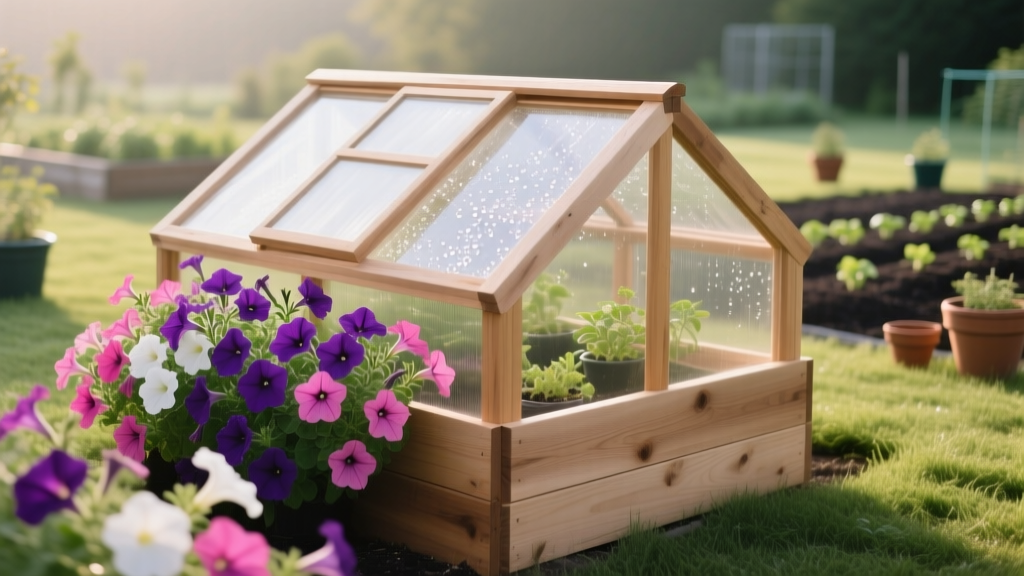
How to Build a Cold Frame for Petunias
The first time I tried to “save” my petunias in spring, I did what most gardeners do: I watched the forecast, saw a 34°F night, and told myself they’d be fine. By morning the leaves looked water-soaked and limp, and the blooms had turned to mush. Petunias aren’t fussy—but they are tender. A simple cold frame is the difference between planting early with confidence and playing roulette with late frosts, wind, and cold rain.
A cold frame is basically a mini-greenhouse that captures sunlight and blocks wind, holding onto a few precious degrees of warmth overnight. For petunias, that’s often all you need. Built right, it also hardens off starts faster, helps prevent that “stalled” look after transplanting, and lets you keep plants compact instead of leggy from indoor life.
This guide walks you through building a cold frame that actually works for petunias—plus how to manage watering, soil, light, feeding, and common problems inside the frame. I’ll also give you real-world scenarios (because the weather never behaves like a textbook).
What a Cold Frame Does for Petunias (and What It Doesn’t)
Petunias are generally damaged by frost and slowed dramatically by cold soil. A cold frame won’t make petunias winter-hardy, but it will:
- Raise daytime temps by 10–25°F in sun (depending on materials and venting).
- Cut wind and rain stress, keeping foliage and blooms intact.
- Warm the soil earlier in spring so roots grow instead of sulk.
- Make hardening off simpler—no hauling trays in and out every day.
It will not protect petunias through a hard freeze unless you add extra insulation and heat. Think of it as protection from cold snaps, not a substitute for summer.
“Cold frames can provide a protected environment 5–10°F warmer than outside air, but they must be vented on sunny days to prevent overheating.” — University of Minnesota Extension (2023)
Materials and Design: Build It Like You Mean It
I like a cold frame that’s sturdy, easy to vent, and easy to access. For petunias, you’re usually housing trays, small pots, or newly planted starts, so you don’t need a giant structure—but you do need good light and reliable ventilation.
Recommended Size and Measurements
Here’s a practical, petunia-friendly size that fits most home gardens:
- Footprint: 3 ft x 6 ft (enough for 4 standard 1020 trays)
- Back height: 18 inches
- Front height: 12 inches (gives a nice slope for sun and rain runoff)
- Lid overhang: 1 inch on all sides to shed water
- Placement: south-facing, full sun, out of north wind
If you’re tight on space, a 2 ft x 4 ft cold frame still earns its keep. Bigger is not always better—big frames heat up slower and are harder to vent evenly.
Best Lid Material for Petunias
Your lid is the engine of the cold frame. For petunias, prioritize light transmission and insulation:
- Twin-wall polycarbonate (6 mm): Excellent insulation, durable, high light transmission, my top pick.
- Old storm window (single glass): Great light, less insulation, heavier and breakable.
- Clear plastic film: Cheap but flimsy; works short-term but tears and sags.
Ventilation matters more than people think. A cold frame with no venting will cook seedlings on a sunny 55°F day.
Step-by-Step: Building a Simple Cold Frame for Petunias
This is a straightforward build using rot-resistant lumber and a hinged lid. You can finish it in an afternoon.
Tools and Supplies
- 2x12 lumber (cedar or treated rated for ground contact)
- Exterior screws (2.5 inches)
- Corner brackets (optional but sturdy)
- Twin-wall polycarbonate panel (cut to size)
- 1x2 or 1x3 boards for a lid frame
- 2 exterior hinges
- Handle + hook-and-eye or lid prop
- Weatherstripping tape (optional but helpful)
Build Steps (Numbered)
- Pick the site. Choose a south-facing location with at least 6 hours of sun. Avoid low spots where cold air pools.
- Level the base. Scrape and tamp soil so the frame sits flat. If your yard stays soggy, lay 2 inches of gravel for drainage.
- Cut lumber for a sloped box. Aim for 18 inches in back and 12 inches in front. The side boards will be angled accordingly.
- Screw the box together. Pre-drill to prevent splitting. Use corner brackets if you want a frame that lasts years.
- Build the lid frame. Make a rectangular frame from 1x2s, then screw the polycarbonate panel onto it. (This prevents flexing and keeps the panel from cracking.)
- Attach hinges. Mount hinges along the back so the lid opens upward. Check that it opens smoothly without rubbing.
- Add a prop and latch. A simple stick works, but an adjustable lid opener makes venting easier. Add a hook-and-eye to keep wind from flipping the lid.
- Seal drafts (optional). Apply weatherstripping where lid meets frame for an extra few degrees on cold nights.
One more trick from experience: place a 1-gallon jug of water inside. Water absorbs heat during the day and releases it at night, smoothing temperature swings. Use 2–4 jugs in a 3x6 frame.
Cold Frame vs. Row Cover vs. Mini Hoop: What Works Best for Petunias?
All three can protect petunias, but they behave differently in real weather. Here’s a comparison with practical numbers you can plan around.
| Protection Method | Typical Temp Boost (Night) | Wind/Rain Protection | Overheating Risk | Best Use Case for Petunias |
|---|---|---|---|---|
| Cold frame (polycarbonate lid) | +5 to +10°F | Excellent | High on sunny days (needs venting) | Hardening off trays; early planting; protecting blooms from cold rain |
| Floating row cover (lightweight fabric) | +2 to +6°F | Good wind, fair rain | Low to moderate | Short cold snaps after planting; quick coverage for beds |
| Low hoop tunnel (plastic over hoops) | +4 to +12°F | Good | Very high if not vented | Longer bed runs; larger plantings of petunias for borders |
Data varies by sun, wind, and how well edges are sealed. In practice, a cold frame is the most controllable environment for petunia starts—especially when spring weather swings from 35°F nights to 70°F afternoons.
Light Management: Keep Petunias Stocky, Not Spindly
Petunias need strong light to stay compact. Inside a cold frame, they can still stretch if the lid is dirty or shaded.
- Sun exposure: Put the cold frame where it gets 6–8 hours of direct sun.
- Clean the lid: A dusty lid can cut light surprisingly fast. Wipe it every couple weeks in pollen season.
- Rotate trays: Turn trays every 2–3 days so plants grow evenly.
Watch for overheating. On a bright day, a cold frame can shoot past 85–90°F even if it’s 55°F outside. That’s when petunias get soft, leggy growth and may drop buds.
Venting Rules I Actually Use
- If it’s 50°F and sunny: crack the lid 1–2 inches.
- If it’s 60°F and sunny: prop the lid 4–6 inches.
- If it’s 70°F+: lid open most of the day (unless wind is brutal).
These aren’t laws, but they’ll keep you from cooking petunias the first week.
Soil and Potting Mix: What Petunias Want Inside a Cold Frame
Cold frames don’t change what petunias like—light, airy mix and consistent moisture—but they do change how fast things dry and how roots behave in cool conditions.
If you’re growing petunias in pots or cell packs in the cold frame, use a high-quality soilless potting mix (not garden soil). Look for:
- Good drainage (perlite, bark, or rice hulls in the blend)
- pH around 5.8–6.2 (petunias prefer slightly acidic conditions)
- A starter charge of fertilizer is fine, but plan to feed later
For petunias planted directly into the cold frame bed (some gardeners do this as a holding area), loosen soil 8–10 inches deep and mix in 1–2 inches of compost. Avoid heavy manure amendments early; they can push soft growth that flops later.
The University of Florida Extension notes petunias perform best in full sun and well-drained soil, and they decline in soggy conditions (UF/IFAS Extension, 2020). A cold frame helps with warmth, but it can also trap moisture—so drainage matters more, not less.
Watering Petunias in a Cold Frame: Less Often, More Carefully
This is where most people slip up. In cool, protected air, potting mix dries slower. Overwatering in a cold frame leads to root stress, fungus gnats, and gray mold.
My Practical Watering Routine
- Check moisture daily with a finger test: if the top 1 inch is dry, it’s time.
- Water in the morning so foliage dries before nightfall.
- Avoid wet leaves—aim at the soil line to reduce botrytis risk.
As a rough guide for 4-inch pots: in early spring, you might water every 3–5 days. In warm, sunny stretches, it can shift to every 1–2 days. The cold frame makes weather feel “closer to summer” in the day and “still spring” at night—so your watering rhythm will change week to week.
Symptom-Based Watering Troubleshooting
- Leaves limp at midday, soil damp: too hot inside; vent more. Don’t add water until soil actually dries.
- Leaves limp, soil dry: water deeply until it runs out the bottom; then shade lightly for a few hours.
- Yellowing lower leaves + sour smell: overwatering; improve drainage and let mix dry more between waterings.
Feeding: Keep Blooms Coming Without Forcing Weak Growth
Petunias are hungry plants once they start growing. In a cold frame, they’ll often grow faster than you expect on sunny days, then stall on cold nights. Consistent, moderate feeding smooths that out.
Simple Fertilizing Plan
- Start feeding when plants have 4–6 true leaves or about 10–14 days after potting up.
- Use a balanced liquid fertilizer (for example 10-10-10 or 20-20-20) at 1/4 to 1/2 strength every 7–10 days.
- If growth looks pale, add iron (petunias can show iron chlorosis, especially if pH drifts high).
Don’t overdo nitrogen. Lots of lush green and fewer blooms is a classic petunia mistake—especially under protected conditions where stems stretch.
Temperature Targets: When the Cold Frame Is Enough (and When It Isn’t)
Petunias are happiest when nights are mild. If you’re pushing early, you need to watch minimums closely.
- Ideal growing range: roughly 60–75°F days, 50–60°F nights.
- Stress zone: prolonged nights below 45°F slows growth and can cause yellowing.
- Frost danger: at or below 32°F can damage foliage and blooms.
When a frost warning hits, layer protection inside the cold frame:
- Cover plants with a light frost cloth before dusk (don’t use plastic directly on foliage).
- Add 1–2 water jugs per tray area.
- Close the lid early in late afternoon to trap heat.
Colorado State University Extension emphasizes that cold frames and hotbeds can extend the season but require management—especially venting and temperature monitoring (CSU Extension, 2022). I agree: the cold frame doesn’t replace your attention; it rewards it.
Common Problems in Cold Frames (Petunia Edition)
Cold frames create a cozy microclimate. Unfortunately, pests and diseases enjoy cozy too. The good news: most issues are preventable with airflow and sane watering.
Botrytis (Gray Mold)
Symptoms: fuzzy gray growth on spent blooms and leaves; collapsing petals; spots that spread fast in cool, damp weather.
Fix:
- Deadhead frequently—don’t leave old blooms to rot.
- Water in the morning, keep foliage dry.
- Vent more; aim for drier air at night.
- Remove infected material immediately (don’t compost it).
Aphids on Soft Spring Growth
Symptoms: sticky leaves, curling tips, clusters of green/black insects on stems and buds.
Fix:
- Blast with water early in the day (repeat every 2–3 days).
- Use insecticidal soap if needed, applied when temps are below 80°F to reduce plant stress.
- Don’t over-fertilize—lush growth invites aphids.
Leggy, Floppy Plants
Symptoms: long internodes, fewer flowers, plants lean toward the lid.
Fix:
- Increase light (clean lid, remove shade, relocate if necessary).
- Vent to reduce excessive warmth spikes.
- Pinch tips once when plants are 4–6 inches tall to encourage branching.
Leaf Yellowing (Especially Between Veins)
Symptoms: new growth turns pale yellow while veins stay greener (classic chlorosis).
Fix:
- Check drainage—cold, wet mix causes nutrient lockout.
- Use a fertilizer that includes micronutrients, or apply chelated iron.
- If using hard water, consider occasional watering with collected rainwater to avoid pH creep.
Three Real-World Scenarios (and How to Handle Them)
Scenario 1: You Bought Petunias Early, Then Got a Surprise 29°F Night
This happens all the time with impulse buys and early garden center displays.
- Move the pots into the cold frame by late afternoon.
- Add a frost cloth layer directly over the plants (not touching blooms if you can help it).
- Place 2–4 gallon jugs of water inside for thermal mass.
- Close the lid before sunset to trap warmth.
- In the morning, vent as soon as the sun hits the lid—frozen nights are often followed by bright days.
Scenario 2: Cold, Rainy Week—Petunias Stop Growing and Start Yellowing
If outside temps hover around 40–55°F with cloud cover, cold frames don’t warm much. Wet potting mix plus cold roots equals sulking plants.
- Vent only briefly midday to exchange humid air, then close to retain warmth.
- Let pots dry more between waterings (err on the dry side for a few days).
- Remove any spent blooms to prevent botrytis.
- Hold off on heavy feeding until you see active growth again.
Scenario 3: Sunny Day Spike—It’s 58°F Outside but Plants Wilt Inside
This is the classic cold-frame trap. The sun is strong, the lid is closed, and the temperature rockets.
- Open the lid immediately; prop it securely 6 inches or more.
- Check soil moisture after the plants cool down (don’t panic-water while they’re heat-wilted).
- If this is happening repeatedly, install an automatic vent opener or commit to a daily venting habit.
Hardening Off Petunias Using Your Cold Frame
A cold frame is one of the best hardening-off tools because you can control exposure without hauling plants around.
- Days 1–2: Put plants in the cold frame with lid cracked 1–2 inches for a few hours midday.
- Days 3–5: Increase ventilation time; leave lid open longer if temps are above 55°F.
- Days 6–7: Leave lid open most of the day, close at night.
- After 7–10 days: Plants should handle outdoor conditions well, as long as nights stay mostly above 45–50°F.
If you’re transplanting into beds, aim for soil that’s not icy-cold. Petunias can survive cool soil, but they won’t thrive until it warms.
Cold Frame Maintenance That Saves You Headaches
Cold frames are simple, but they’re exposed to weather. A little upkeep prevents the annoying failures.
- Check lid seals after heavy wind—gaps leak heat and rattle all night.
- Scrape algae and debris from the frame edges to discourage mold and slugs.
- Inspect hinges and screws once a season; tighten before the first windy week of spring.
- Keep a thermometer inside. A basic min/max thermometer tells the truth when the weather app lies.
If you build one solid cold frame, you’ll use it for years: hardening off petunias, starting early lettuce, holding divisions, and sheltering seedlings from nasty spring wind. For petunias specifically, it’s a way to get a head start without sacrificing plants to one unpredictable night.
Once you’ve lived through a spring where your petunias stay compact, green, and ready to explode into bloom the moment the nights settle down, you’ll wonder why you waited so long to build a cold frame.
Sources: University of Minnesota Extension (2023); Colorado State University Extension (2022); UF/IFAS Extension (2020).