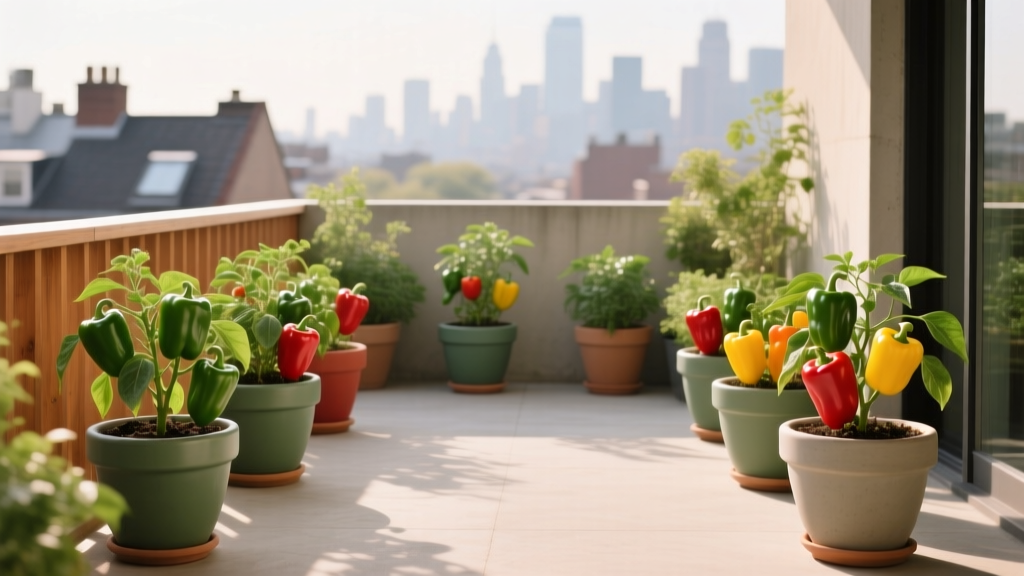
Peppers in Containers: Balcony Garden Tips (2026)
Why Peppers Thrive in Containers
Peppers are one of the most rewarding vegetables to grow in containers. They love warm soil, which pots provide faster than ground soil. A single healthy pepper plant in a 5-gallon container can produce 20-50 peppers per season.
Best Pepper Varieties for Containers
- Jalapeno (hot): Compact 18-24 inch plants, prolific producer, 70-80 days to harvest
- Bell Boy (sweet): Bushy 18-inch plants, thick-walled bells, 75 days
- Cayenne (hot): Upright 24-inch plants, continuous harvest, 70 days
- Shishito (mild): Compact Japanese pepper, perfect for small pots, 60 days
- Mini Bell Mix (sweet): Dwarf varieties 12-15 inches, ideal for window boxes
Container Selection and Soil Mix
Use containers that are at least 12 inches deep and 14 inches wide (5-gallon minimum). Fabric pots work exceptionally well because they air-prune roots and prevent circling. For soil, mix:
- 60% high-quality potting mix (not garden soil)
- 20% perlite or coarse sand for drainage
- 10% compost or worm castings
- 10% coconut coir for moisture retention
Add 1 tablespoon of balanced slow-release fertilizer (10-10-10) per gallon of soil mix at planting time.
Planting and Spacing
Start seeds indoors 8-10 weeks before last frost, or buy transplants. Plant one pepper per 5-gallon container. Bury the stem 1 inch deeper than it was in the nursery pot — peppers develop roots along buried stems like tomatoes.
Watering Schedule
Container peppers need consistent moisture but hate wet feet. Water when the top inch of soil feels dry — typically daily in summer heat. Use the finger test: insert your finger to the first knuckle. If it's dry, water thoroughly until drainage flows from the bottom.
Pro tip: Add a 2-inch mulch layer of straw or bark chips to reduce evaporation by 50%.
Fertilizing for Maximum Yield
- Weeks 1-4: Balanced fertilizer (10-10-10) every 2 weeks
- Flowering stage: Switch to low-nitrogen, high-phosphorus (5-10-10) to promote fruit set
- Fruiting stage: Add calcium supplement (bone meal or CalMag) to prevent blossom end rot
Sunlight and Temperature
Peppers need 6-8 hours of direct sunlight daily. South-facing balconies are ideal. If temperatures exceed 95°F, provide afternoon shade — extreme heat causes flower drop and reduces fruit set. Move containers to partial shade during heat waves if possible.
Common Container Pepper Problems
Blossom end rot: Calcium deficiency + inconsistent watering. Add bone meal and maintain even moisture.
Flower drop: Temperatures above 95°F or below 55°F. Provide shade or move indoors temporarily.
Leggy plants: Not enough sun. Move to sunnier spot or add grow lights.
Aphids: Spray with neem oil solution (1 tsp neem + 1 tsp dish soap per quart of water).
Harvest Timeline
Most peppers can be harvested green (unripe) or left to ripen to red, orange, or yellow. Ripe peppers are sweeter and more nutritious. Cut fruits with pruning shears — pulling can damage branches. Harvest regularly to encourage continued production.