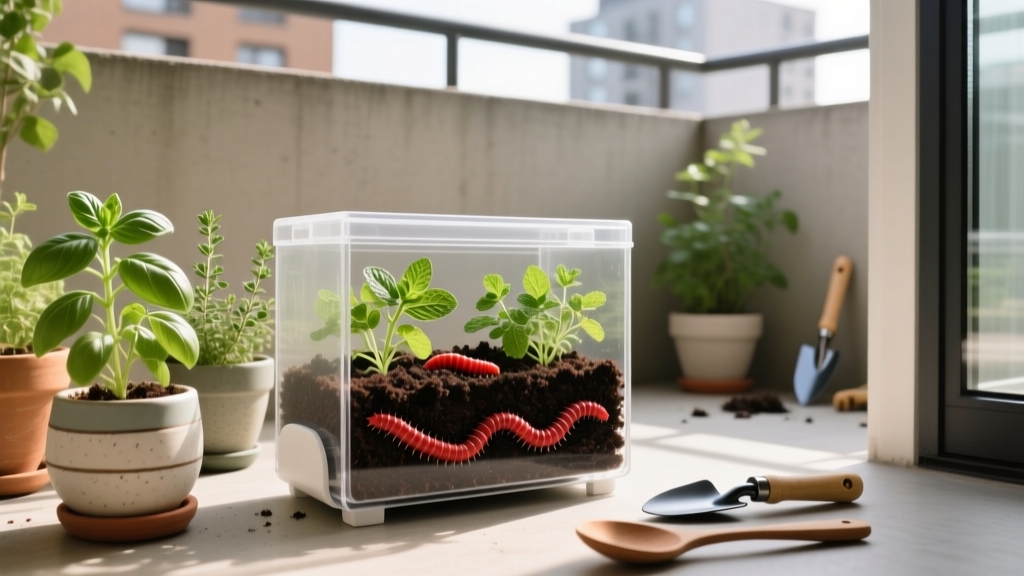
Worm Bin Setup Guide: Vermicomposting for Apartment Dwellers in 2026
Why Vermicomposting in an Apartment?
Worm composting produces the richest organic fertilizer available — worm castings contain 5x more nitrogen, 7x more phosphorus, and 11x more potassium than ordinary soil. A small bin under your kitchen sink can process 2-3 pounds of food scraps per week and produce enough castings to fertilize a balcony garden year-round.
Choosing Your Worm Bin
DIY Option ($15-25)
- Two 10-gallon opaque plastic storage bins (one nests inside the other)
- Drill 1/4-inch holes in the bottom and sides of the top bin for drainage and airflow
- The bottom bin catches excess liquid ("worm tea")
- Place a brick or blocks in the bottom bin to elevate the top bin 2 inches
Commercial Option ($40-120)
Multi-tray systems like the Worm Factory 360 or Can-O-Worms are stackable, odor-free, and easy to harvest. They're worth the investment if you plan to compost long-term.
Getting the Right Worms
You need red wigglers (Eisenia fetida), NOT earthworms from your garden. Red wigglers are surface-dwelling composters that thrive in confined spaces. Start with 1 pound (approximately 1,000 worms) — they'll double in population every 60-90 days.
Order from online suppliers (Uncle Jim's Worm Farm, Meme's Worms) or find local sellers on Facebook Marketplace.
Setting Up the Bin
- Bedding: Shred 6-8 sheets of newspaper (black ink only, no glossy). Moisten until it feels like a wrung-out sponge. Add 2 cups of coconut coir for better moisture retention.
- Mineral grit: Add a handful of crushed eggshells or garden soil — worms need grit in their gizzard to digest food.
- Initial food: Bury 1 cup of food scraps in one corner. Wait 3 days before adding worms.
- Add worms: Place worms on top of the bedding. They'll burrow down within minutes to escape light.
- Cover: Place a damp newspaper sheet on top of the bedding to retain moisture.
What to Feed Your Worms
YES (feed freely):
- Fruit and vegetable scraps
- Coffee grounds and filters
- Tea bags (remove staples)
- Crushed eggshells
- Shredded newspaper and cardboard
- Hair and nail clippings (small amounts)
NO (avoid completely):
- Meat, fish, dairy (attracts pests, creates odor)
- Citrus in large quantities (too acidic)
- Onions and garlic (irritate worms)
- Oily or greasy foods
- Pet waste (pathogens)
- Glossy or colored paper
Feeding Schedule
Start with 1/2 pound of food scraps per week for your first 1,000 worms. Bury food in a different corner each time, rotating through 4 quadrants. As the population grows, increase feeding gradually. If food accumulates uneaten, you're overfeeding — cut back.
Maintaining the Right Environment
| Factor | Ideal Range | Signs of Problems |
|---|---|---|
| Temperature | 55-77°F (13-25°C) | Worms cluster at edges = too hot; sluggish = too cold |
| Moisture | 70-80% (wrung sponge) | Smelly/soggy = too wet; worms drying = too dry |
| pH | 6.0-7.0 | Worms trying to escape = too acidic |
| Light | Dark (avoid direct sun) | Worms stay deep in bedding = light exposure |
Harvesting Castings
After 3-4 months, your bin will be full of dark, crumbly castings. Three harvest methods:
- Migration method: Push all contents to one side. Add fresh bedding and food to the empty side. Wait 2 weeks — worms migrate to the new food. Scoop castings from the old side.
- Light method: Dump contents onto a tarp under bright light. Worms burrow to escape light. Scrape off layers of castings from the top every 15 minutes until only a ball of worms remains.
- Screen method: Build a 1/4-inch mesh screen frame. Rub contents through — castings fall through, worms stay on top.
Troubleshooting Common Problems
| Problem | Cause | Solution |
|---|---|---|
| Foul odor | Overfeeding or poor drainage | Stop feeding for 1 week, add dry bedding, stir for airflow |
| Fruit flies | Exposed food scraps | Always bury food under 2 inches of bedding |
| Worms escaping | Too acidic or too wet | Add crushed eggshells, reduce citrus, add dry bedding |
| Worms dying | Temperature extremes | Move bin to stable 60-70°F location |
Using Worm Castings
- Potting mix: Mix 1 part castings with 3 parts potting soil
- Top dressing: Sprinkle 1/4 inch on existing plant soil, water in
- Worm tea: Steep 1 cup castings in 1 gallon water for 24 hours, use as foliar spray
- Seed starting: Use 10% castings in seed-starting mix for stronger seedlings
Final Thoughts
A worm bin is the easiest, most odor-free composting method for small spaces. Once established, it requires less than 10 minutes of maintenance per week. Your plants will thrive on the castings, and you'll divert pounds of kitchen waste from landfills every month.