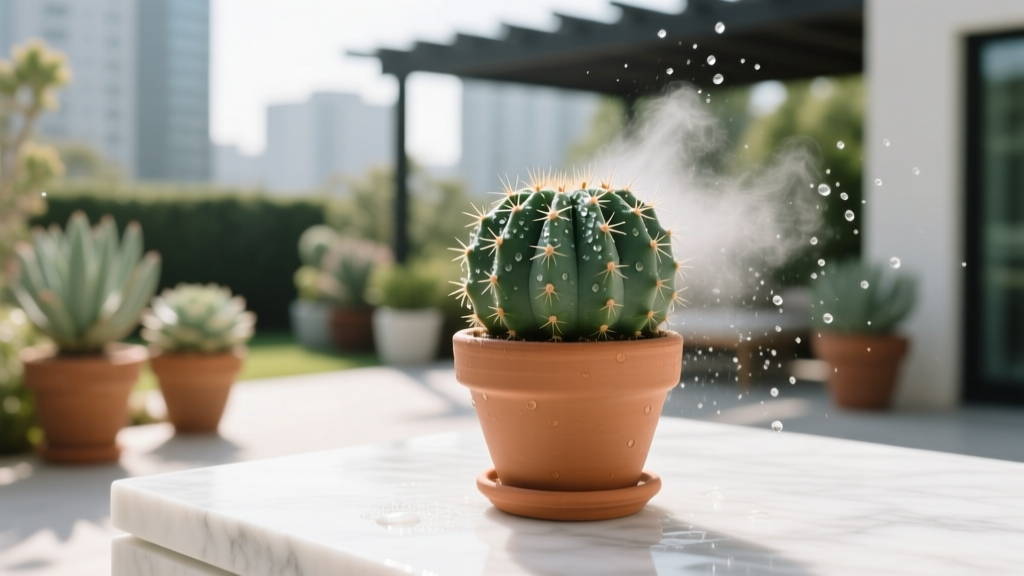
How to Cool Down Cacti During Heat Waves
Last summer, I watched a row of barrel cacti in a sunny courtyard go from “tough as nails” to visibly stressed in under 72 hours. Not from lack of water, either—several had been watered the week before. The real culprit was a heat wave that held nighttime temperatures above 85°F (29°C), turning their pots into little ovens. By day three, the sun-facing sides were dull, slightly bronze, and soft to the touch—classic heat stress and early sunburn.
Here’s the surprise many home gardeners learn the hard way: cacti can tolerate drought better than they can tolerate hot, stagnant root zones and blazing afternoon sun on a plant that’s been living “comfortably” up until the heat wave. Desert plants are adapted to extremes, but in nature they often have airflow, mineral soils, and roots insulated by the ground—not a black plastic pot on a reflective patio.
This is the playbook I use to cool cacti safely during heat waves, without accidentally causing rot. You’ll get specific watering amounts and timing, shade strategies, soil tweaks, and a troubleshooting section for the problems that show up when temperatures spike.
Know what “too hot” looks like for a cactus
Heat stress can show up fast, especially in containers. As a practical threshold, I start heat-wave protocols when daytime highs hit 95°F (35°C) for two or more days, or when nights stay above 80°F (27°C). Hot nights are sneaky because CAM plants (including most cacti) open stomata at night; if nights stay too warm, they can’t “reset” well and lose efficiency.
Also pay attention to surface temperatures. A patio or wall can radiate heat back onto plants; it’s common for the air to read 100°F (38°C) while the pot wall is much hotter in direct sun. Desert cacti can survive that—until their roots are cooking in wet, airless mix.
- Early warning signs: dull color, slight bronzing on sun side, slowed growth, slight wrinkling even after watering.
- Escalating signs: yellow/white patches (sunburn), tissue softening on the sun side, leaning, corky scars forming.
- Emergency signs: mushy base, black or translucent spots spreading, sour smell from soil (root rot).
For science-backed context, CAM physiology and heat effects are widely documented; heat and water stress influence stomatal behavior and carbon uptake, which is why prolonged hot nights can be so taxing. For practical home guidance on heat and sunburn management, Extension publications emphasize preventing sunscald with gradual acclimation and shade during extreme heat events (University of Arizona Cooperative Extension Publication, 2020).
Cooling strategy #1: Watering that cools roots without causing rot
Most cactus losses during heat waves come from one of two mistakes: not watering at all (so the plant can’t maintain cell pressure) or watering too often in a mix that stays hot and wet (root suffocation and rot). The sweet spot is deep but timed watering, paired with fast drainage and shade.
When to water during a heat wave
Water in the early morning, ideally between 5:00–9:00 a.m. This gives roots time to hydrate before the hottest part of the day, and it avoids leaving the soil wet overnight when temperatures drop (even slightly) and evaporation slows.
Avoid watering in late afternoon or evening during heat waves—warm, wet soil overnight is when rot organisms get an advantage.
How much water is “enough” (container cacti)
For potted cacti, ignore the “splash” approach. You want a full soak that pushes heat out and draws oxygen back in as it drains.
- Check dryness: insert a wooden skewer 2–3 inches (5–8 cm) into the mix; if it comes out mostly dry and clean, you can water.
- Water until 10–20% drains out the bottom. Don’t let the pot sit in the runoff.
- Repeat only when the mix is mostly dry again—during a heat wave this might be every 4–7 days for small pots, or 7–14 days for large tubs, depending on mix and exposure.
Concrete examples that work well in real patios:
- 6-inch pot (15 cm): typically 250–400 mL per watering (about 1–1.5 cups), until runoff.
- 10–12 inch pot (25–30 cm): typically 1–2 liters, until runoff.
- 20-inch tub (50 cm): 4–8 liters may be needed for a true soak, depending on mix.
If you’re growing in-ground cacti, water less frequently but more deeply—think a slow soak to moisten the top 6–8 inches (15–20 cm) of soil, then allow it to dry substantially before repeating.
Method A vs Method B: the cooling-water comparison
Two methods show up during heat waves: “deep soak” and “frequent sips.” Only one reliably cools roots and keeps plants stable.
| Method | What you do | Typical schedule in 95–105°F (35–40°C) | Root-zone effect | Risk level |
|---|---|---|---|---|
| A) Deep soak + dry-down | Water until 10–20% runoff; empty saucer; wait until mostly dry | Every 4–14 days (pot size/mix dependent) | Flushes heat, re-oxygenates as it drains | Low (with fast mix and drainage) |
| B) Frequent small sips | Add a little water often to “take the edge off” | Every 1–3 days | Stays warm and damp near surface; encourages shallow roots | High (rot + salt buildup) |
In my experience, Method B is the one that causes surprise collapses—especially with organic-heavy mixes. If you’re nervous about underwatering, shade first, then water properly.
Water temperature and a simple cooling trick
Use tap water that’s roughly ambient—no ice water. If your hose has been sitting in the sun, run it until the water is cool to the touch. Warm hose water can be 100°F+ (38°C+) and doesn’t help.
If pots are dangerously hot (you can’t keep your hand on the pot for 5 seconds), do this instead of overwatering:
- Move the pot into bright shade.
- Wrap the pot (not the plant) with a light-colored towel and wet the towel. This cools by evaporation without soaking the soil.
Cooling strategy #2: Soil and pot choices that stop roots from baking
During heat waves, your soil mix and container material matter as much as watering. A cactus can handle dry heat; it struggles with hot, wet, oxygen-poor roots.
Heat-wave soil mix: adjust for fast drainage
If you’re using a peat-heavy “cactus soil” straight from a bag, it can stay too wet in the center while the top looks dry—especially in high heat. For most home container cacti, I like this heat-tolerant baseline:
- 50–70% mineral: pumice, perlite, scoria/lava rock, coarse granite grit (2–6 mm)
- 30–50% organic: quality potting mix or composted bark (not fine peat alone)
For very rot-prone cacti (many globular types), push mineral content to 70–80% during summer.
Pot material and color: the underrated heat lever
Black plastic pots absorb heat aggressively. Terracotta breathes and sheds heat better, though it dries faster. Light-colored glazed pots can also reduce heat load. If you can’t repot mid-summer, you can still reduce pot heating:
- Slip the nursery pot into a larger, light-colored cachepot with an air gap (don’t trap water).
- Shade the pot itself using a board or cloth on the pot’s sun side.
- Raise pots off hot concrete with pot feet—an extra 1/2 inch (1–2 cm) airflow helps more than you’d think.
Mulch… for cactus?
In-ground cacti benefit from a thin mineral mulch. Use 1–2 inches (2.5–5 cm) of gravel or decomposed granite around the base (keep it 1 inch away from the stem). It reduces soil-surface temperature swings and helps water soak in evenly without keeping the crown wet.
Cooling strategy #3: Light management—shade without “babying”
When temps spike, the sun becomes a different animal. A cactus that handled full sun at 85°F (29°C) may burn at 105°F (40°C), especially if it’s in a pot, near reflective surfaces, or recently moved outdoors.
Use temporary shade cloth with real numbers
For most cacti in containers, a 30–40% shade cloth is the sweet spot for heat waves. For thin-skinned species (many columnar types when young, or plants that were grown in a greenhouse), go to 50% temporarily.
Install shade so it blocks 2:00–6:00 p.m. sun first. Morning sun is usually fine and helps keep growth sturdy.
“Sunscald is not about ‘too much sun’ in general—it’s about sudden exposure to intense light and heat before tissues have acclimated.” — University of California Agriculture and Natural Resources guidance on sunburn prevention (UC ANR, 2019)
Three real-world scenarios I see all the time
Scenario 1: Patio cactus against a south-facing wall.
That wall can reflect and radiate heat well after sunset. Move the plant 18–24 inches (45–60 cm) away from the wall, or shade the wall side with a temporary screen. This often drops stress dramatically without changing watering.
Scenario 2: A cactus that was indoors all winter, then put outside in full sun.
Even if the species “likes full sun,” indoor-grown skin burns easily. Start with bright shade for 7 days, then give morning sun only for 7–10 days, then increase exposure. During a heat wave, pause acclimation—keep it shaded until highs fall below 95°F (35°C).
Scenario 3: Landscape cactus in-ground, looking fine until a heat dome hits.
If it’s established, don’t suddenly flood it daily. Instead: provide afternoon shade (shade cloth on stakes), and give a deep soak every 10–21 days depending on soil type. Sandy soils need shorter intervals; clay holds water longer and needs more caution.
Feeding during heat waves: what to do (and what not to do)
Heat-stressed cacti don’t want a heavy meal. Fertilizer salts plus hot, drying conditions can scorch roots and worsen dehydration.
- Skip fertilizing when highs are above 95°F (35°C) for extended periods.
- If you must feed (for actively growing summer cacti), use a diluted balanced fertilizer at 1/4 strength once, then wait 3–4 weeks.
- Never fertilize a dry, stressed plant. Water first, wait a day, then feed lightly—only if conditions are moderate.
Salt buildup is another heat-wave issue, especially with frequent small waterings. A monthly “leach” (deep watering to significant runoff) helps flush salts—one more reason Method A beats Method B.
Common heat-wave problems and exactly how to troubleshoot them
This is where practical observation beats theory. Use the symptoms below to choose the right fix—because the wrong fix is often what kills the plant.
Problem: Sunburn patches (white, yellow, or tan scars)
Symptoms: bleached or yellow areas on the sun-facing side; later turns tan and corky; tissue feels firm (not mushy).
What to do:
- Move immediately to 30–50% shade or only morning sun.
- Do not cut sunburned skin off. It won’t “heal” back to green, but it can protect the plant underneath.
- Keep watering regular (deep soak + dry-down). Don’t overwater to compensate.
What not to do: applying oils, leaf shine, or heavy foliar sprays in heat—these can worsen burn.
Problem: Wrinkling even after watering
Symptoms: ribs look sharper; plant looks slightly deflated; soil may be dry or wet.
Likely causes:
- Soil is hydrophobic (water runs down sides and doesn’t soak in).
- Roots are damaged from heat/rot and can’t take up water.
- Plant is actively using stored water during extreme heat.
Fix:
- Check infiltration: water slowly until runoff, wait 10 minutes, water again. This “double soak” helps re-wet dry peat mixes.
- If soil stays wet for more than 5–7 days in summer heat, unpot and inspect roots. Healthy roots are firm and pale; rotten roots are brown/black and slough off.
- Provide bright shade and airflow for a week to reduce demand.
Problem: Soft, mushy base or black spots (rot alert)
Symptoms: tissue feels soft or translucent; dark spreading lesions; plant may lean; soil smells sour.
Immediate steps:
- Stop watering.
- Move to dry shade with airflow (not full sun).
- Unpot within 24 hours and inspect.
If rot is limited: cut back to clean, firm tissue with a sterile blade; let the cut callus for 7–14 days in shade; then root in dry mineral mix, watering lightly only after roots form.
If rot is at the core: take healthy cuttings above the rot line and discard the base. It’s harsh, but it saves genetics.
Problem: Scorched spines and a “bronzed” look
Symptoms: spines look toasted; epidermis bronze but not bleached; plant still firm.
Fix: reduce afternoon sun for 1–2 weeks and keep watering consistent. This is often reversible cosmetically over time as new growth appears, especially in columnar cacti.
Problem: Pot is too hot to touch
Symptoms: plant looks stressed by late afternoon; pot surface is painfully hot; soil dries extremely fast at edges.
Fix options (pick two):
- Shade the pot (even if the plant still gets light).
- Slip pot into a larger, light-colored outer pot with airflow.
- Move off concrete onto a stand or soil.
- Use 30–40% shade cloth during the heat wave window.
Extra cooling tools that actually help (and a few that don’t)
Airflow: the free fix
Still air plus heat is a stress multiplier. If cacti are in a greenhouse, crack vents early and use a fan. In outdoor courtyards, spacing pots 4–8 inches (10–20 cm) apart improves airflow and reduces radiant heat between plants.
Misting: usually a no
Misting in full sun can leave mineral spots and doesn’t cool much unless you’re wetting surrounding surfaces for evaporation. If you mist, do it in early morning, and keep water off fuzzy or woolly species prone to trapped moisture.
Emergency triage for a surprise heat spike
If tomorrow’s forecast jumps to 105–110°F (40–43°C) and you can’t rig shade cloth tonight:
- Move containers to bright shade (under a tree, pergola, or east-facing porch).
- Water at dawn if the mix is mostly dry.
- Group pots together, but don’t crowd—leave airflow gaps.
- Protect from reflected heat: pull away from walls and windows.
A practical heat-wave routine you can follow
This is the rhythm I use for most home collections during a multi-day heat event:
- Day 1 (before the hottest day): set up 30–40% shade for afternoon sun; raise pots off concrete; check drainage holes.
- Dawn of hot days: check soil with a skewer; deep soak only those that are mostly dry; empty saucers.
- Midday: don’t water; do quick visual checks for sunburn and wilting; adjust shade if you see bleaching.
- After 3–4 hot days: reassess—if any pot stays wet >7 days, stop watering and consider a faster mix when weather moderates.
If you want a research-backed anchor for soil and irrigation caution, Extension guidance consistently emphasizes drainage and avoiding excess water under heat stress for succulents and desert-adapted plants (New Mexico State University Cooperative Extension Guide, 2022). Those principles line up with what we see in the garden: cacti tolerate dryness, but they resent soggy heat.
Heat waves end. The goal is to get your cactus through the spike with its roots alive, its skin unburned (or at least not severely), and its watering rhythm intact. Shade the harshest sun, water deeply but only when the mix is ready, and treat pot heat like the real threat it is. Do that, and most cacti will settle right back into growth when nights cool down—and they’ll look tougher than ever because you managed the one condition that containers make worse: overheated roots.